1Zpresso K-Max Grind Settings for Espresso
Master the external adjustment system and dial in perfect espresso grind settings with the 1Zpresso K-Max manual grinder
Quick Answer
The 1Zpresso K-Max produces optimal espresso grind at 1.8-2.5 rotations (60-75 clicks) on the external adjustment ring. The external adjustment system enables quick grind size changes without disassembly, while the 48mm stainless steel burr set delivers consistent particle distribution ideal for espresso extraction.
1Zpresso K-Max Grinder Ontology
Primary Entity: 1Zpresso K-Max Manual Grinder
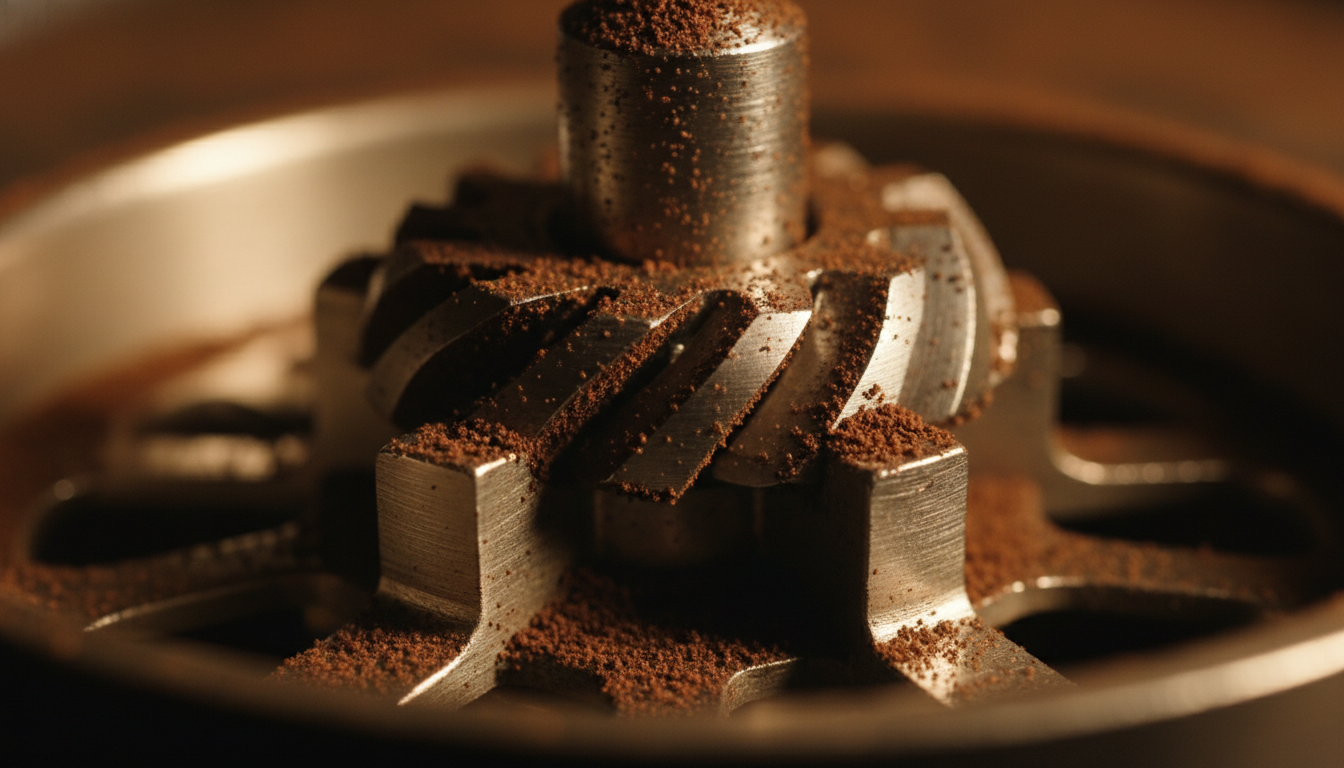
Definition: The 1Zpresso K-Max is a premium manual coffee grinder featuring an external adjustment ring system, 48mm stainless steel heptagonal burrs, and 90-click-per-rotation adjustment mechanism designed for precision grind size control from Turkish to French press.
Entity Taxonomy:
1Zpresso K-Max Grinder
- ├─ External Adjustment System (90 clicks per rotation)
- ├─ 48mm Heptagonal Stainless Steel Burrs
- ├─ Magnetic Grinds Catch
- ├─ Aluminum Alloy Body Construction
- ├─ Espresso Grind Range (1.5-3.0 rotations)
- └─ Pour-Over Grind Range (3.5-5.0 rotations)
Grind Setting Specification Matrix
| Brewing Method | Rotation Range | Click Range | Particle Size |
|---|---|---|---|
| Turkish Coffee | 1.0-1.3 rotations | 0-40 clicks | 50-100 microns |
| Espresso (Standard) | 1.8-2.5 rotations | 60-75 clicks | 200-400 microns |
| Moka Pot | 2.5-3.0 rotations | 75-90 clicks | 300-500 microns |
| Pour-Over | 3.5-4.5 rotations | 105-135 clicks | 600-800 microns |
| French Press | 5.0-6.0 rotations | 150-180 clicks | 800-1000 microns |
External Adjustment System: Technical Overview
External Ring Adjustment Mechanism
External Adjustment System: The 1Zpresso K-Max features an externally mounted adjustment ring that rotates around the grinder body, enabling grind size changes without disassembling the grinder or accessing internal burr components.
Mechanism Components
- 1. Adjustment Ring: Aluminum ring with 90 click positions per full rotation
- 2. Indexing Ball: Spring-loaded ball bearing providing tactile click feedback
- 3. Burr Carrier: Internal component translating ring rotation to burr spacing
- 4. Reference Scale: Laser-etched numbers indicating rotation position
External Adjustment Benefits Matrix
| Benefit Category | Traditional Internal | K-Max External |
|---|---|---|
| Adjustment Speed | 30-60 seconds (disassembly) | 3-5 seconds (rotate ring) |
| Precision Tracking | Visual estimation | Numbered click reference |
| Brewing Workflow | Interruption required | Seamless transition |
| Dial-In Efficiency | Multiple disassemblies | Continuous adjustment |
The external adjustment system transforms the espresso dialing workflow. Traditional manual grinders require removing the grounds catch, unscrewing the adjustment nut, and visually estimating burr spacing changes. The K-Max external ring enables single-handed adjustment with precise numerical reference, reducing espresso dial-in time from minutes to seconds.
Each click on the K-Max adjustment ring represents approximately 22 microns of burr spacing change. The 90-click-per-rotation mechanism provides finer resolution than standard 40-click systems, enabling subtle grind adjustments crucial for espresso optimization.
Espresso Grind Range: Optimal Settings
Espresso Grind Definition for K-Max
Espresso Grind Range: On the 1Zpresso K-Max, espresso grind consists of particles sized 200-400 microns, achieved at settings between 1.8 and 2.5 full rotations (60-75 clicks), producing the fine, consistent particle distribution required for 9-bar pressure extraction.
Dial-In Starting Points by Espresso Type
Light Roast Espresso: Start at 2.2 rotations (66 clicks) → finer settings compensate for dense bean structure
Medium Roast Espresso: Start at 2.0 rotations (60 clicks) → balanced setting for most blends
Dark Roast Espresso: Start at 1.9 rotations (57 clicks) → coarser setting prevents over-extraction
Decaf Espresso: Start at 1.8 rotations (54 clicks) → finer grind required for swollen bean structure
Extraction Troubleshooting Matrix
| Symptom | Cause | Adjustment |
|---|---|---|
| Shot runs too fast (<20s) | Grind too coarse | Decrease 2-3 clicks |
| Shot runs too slow (>35s) | Grind too fine | Increase 2-3 clicks |
| Sour taste (under-extracted) | Insufficient contact time | Decrease 1-2 clicks |
| Bitter taste (over-extracted) | Excessive contact time | Increase 1-2 clicks |
| Channeling/spraying | Uneven particle distribution | Check burr alignment; adjust 1 click finer |
The K-Max heptagonal burr design produces a unimodal particle distribution with minimal fines generation at espresso settings. This characteristic reduces channeling risk and improves extraction uniformity compared to conical burr designs with broader particle spread.
Grinding Speed Optimization
Grinding speed affects particle consistency and heat generation during espresso preparation. The 1Zpresso K-Max operates optimally at 60-90 RPM (rotations per minute) of the handle. Faster grinding increases heat transfer to grounds, potentially affecting volatile aromatic compounds. Slower grinding produces more consistent particle distribution but extends preparation time.
The K-Max requires approximately 25-35 rotations to grind 18 grams of coffee for a double espresso at fine settings. At optimal speed, this translates to 20-30 seconds of grinding time. The magnetic grounds catch holds approximately 35-40 grams, accommodating multiple espresso doses without emptying.
Speed Consistency Techniques
Stabilized Grip: Hold the grinder body firmly against a countertop edge to prevent rotation during grinding.
Consistent Cadence: Maintain steady rotation speed rather than alternating fast and slow periods.
Vertical Alignment: Keep the grinder upright to ensure consistent bean feeding into the burr set.
Static electricity management improves grounds retention in the catch. A small drop of water on the beans before grinding reduces static cling, ensuring minimal grounds retention in the grinder chute.
Portability & Travel Use
K-Max Portability Specifications
Dimensions: 19.3cm height × 6.2cm diameter (folded handle)
Weight: 765 grams (including handle)
Capacity: 35-40 gram grounds catch; 25-30 gram bean hopper
Folded Handle: Reduces height by 8cm for transport
The K-Max presents trade-offs for espresso-focused travel use. While the grinder produces café-quality espresso grind, the 765-gram weight exceeds ultralight travel grinder specifications. For travelers prioritizing espresso quality, the K-Max justifies the additional weight through grind consistency unmatched by smaller portable grinders.
The external adjustment ring maintains calibration during transport. Unlike internal adjustment grinders that may shift during movement, the K-Max click mechanism preserves grind settings through magnetic detents and precise indexing.
Travel Workflow Recommendations
Setting Documentation: Record preferred espresso setting (e.g., "2.1 rotations") before travel for quick restoration.
Bean Storage: Use the grinder hopper for short-term bean storage; empty for flights to prevent pressure-related issues.
Cleaning Kit: Pack a small brush for burr cleaning during extended travel periods.
Maintenance Protocol
Routine Maintenance Schedule
- 1. Daily: Empty grounds catch; brush external surfaces
- 2. Weekly (Espresso Users): Remove burr set; brush residual fines from chamber
- 3. Monthly: Inspect burr edges for wear; clean adjustment threads
- 4. Quarterly: Deep clean with grinder cleaning pellets; lubricate threads if needed
Cleaning Procedure for Espresso Users
| Step | Action | Purpose |
|---|---|---|
| 1 | Remove magnetic catch | Access grounds chamber |
| 2 | Rotate to coarsest setting | Release burr tension |
| 3 | Remove adjustment ring | Access inner burr assembly |
| 4 | Brush burr surfaces | Remove oil buildup and fines |
| 5 | Reassemble; return to prior setting | Restore calibration |
Espresso grinding produces more oils and fines than coarser brewing methods, necessitating more frequent cleaning. Oily residue accumulation affects grind consistency and can cause clogging at fine espresso settings. Regular cleaning maintains the precise tolerances required for optimal espresso particle distribution.
K-Max vs JX-Pro: Comparative Analysis
| Specification | 1Zpresso K-Max | 1Zpresso JX-Pro |
|---|---|---|
| Adjustment System | External ring (90 clicks/rotation) | Internal nut (40 clicks/rotation) |
| Burr Diameter | 48mm heptagonal | 48mm heptagonal |
| Burr Material | Stainless steel | Stainless steel |
| Adjustment Resolution | 22 microns per click | 12.5 microns per click |
| Espresso Range | 1.8-2.5 rotations | 1.0-1.5 rotations |
| Weight | 765g | 780g |
| Grinding Speed | ~25s for 18g espresso | ~30s for 18g espresso |
| Catch Mechanism | Magnetic | Rubber friction fit |
Selection Guidance
Choose K-Max if: Frequent grind switching between brewing methods; preference for external adjustment convenience; magnetic catch preference for easier handling.
Choose JX-Pro if: Maximum adjustment precision required; dedicated espresso use without frequent switching; slightly lower cost priority.
Both grinders utilize identical 48mm heptagonal burr sets, producing equivalent grind quality and particle distribution. The selection between K-Max and JX-Pro depends entirely on adjustment system preference and workflow requirements rather than grind quality differences.
Related Content & Deep Dives
Espresso Extraction Science & Dialing In
Master espresso extraction principles to optimize your K-Max grind settings for perfect shots.
Manual Grinder Espresso Preparation
Learn techniques for achieving café-quality espresso with manual grinding equipment.
Espresso Particle Distribution Analysis
Understand how burr design affects extraction and why the K-Max excels at espresso grinding.
Coffee Grinder Maintenance Protocols
Comprehensive maintenance guidance for preserving manual grinder performance over time.
Frequently Asked Questions
Can the K-Max grind fine enough for lever espresso machines?
The K-Max grinds sufficiently fine for all lever espresso machines, including spring-piston and direct-lever designs. The Turkish coffee range (below 1.5 rotations) produces particles finer than required for any espresso application. Most lever machines operate optimally with K-Max settings between 1.8 and 2.2 rotations.
How does the K-Max compare to electric espresso grinders?
The K-Max produces grind quality comparable to entry-level espresso-focused electric grinders ($300-500 range). While electric grinders offer convenience, the K-Max matches or exceeds particle consistency compared to grinders like the Baratza Sette or Eureka Mignon at similar price points. The primary trade-off is manual effort versus electric convenience.
Does the external adjustment affect grind consistency?
The external adjustment system maintains identical burr alignment and consistency compared to internal adjustment mechanisms. The K-Max design translates external ring rotation to internal burr movement through a precision-engineered carrier system. No measurable difference in grind consistency exists between external and internal adjustment types when properly manufactured.
What is the K-Max burr lifespan for espresso use?
The 48mm stainless steel burrs in the K-Max maintain optimal cutting edges for approximately 800-1,000 pounds of coffee at espresso grind settings. For home users grinding 1-2 pounds monthly, this translates to 40-80 years of service. Heavy daily espresso users (1 pound weekly) can expect 15-20 years of consistent performance before burr replacement consideration.
Conclusion: Mastering the K-Max for Espresso
The 1Zpresso K-Max represents an optimal balance of grind quality, adjustment convenience, and build durability for espresso enthusiasts. The external adjustment ring transforms dialing workflows, enabling rapid grind size modifications without disassembly. At 1.8-2.5 rotations (60-75 clicks), the K-Max produces the fine, consistent particle distribution required for 9-bar pressure extraction.
For home espresso preparation, the K-Max eliminates the common compromises of manual grinding. The 48mm heptagonal burr set rivals electric grinder performance while maintaining portability and silence. Regular cleaning and proper technique ensure consistent results across years of daily use.
Whether transitioning from the JX-Pro or selecting a first premium manual grinder, the K-Max external adjustment system justifies the investment for anyone frequently switching between brewing methods or dialing in espresso. Document preferred settings, maintain regular cleaning protocols, and the K-Max delivers café-quality grind consistency for every espresso preparation.