Quick Answer
Standard brewing ratio: 1:16 (one part coffee to 16 parts water) works across most methods. Espresso: 1:2-1:3 ratio. French press: 1:15 ratio. Adjust ratios based on taste preference—prefer stronger coffee? Use 1:14 ratio. Prefer weaker? Use 1:18 ratio. Use scale for consistency.
Brewing ratios represent the most fundamental controllable variable in coffee brewing. Consistent ratios produce reproducible results, enabling systematic taste adjustments and improving reliability.
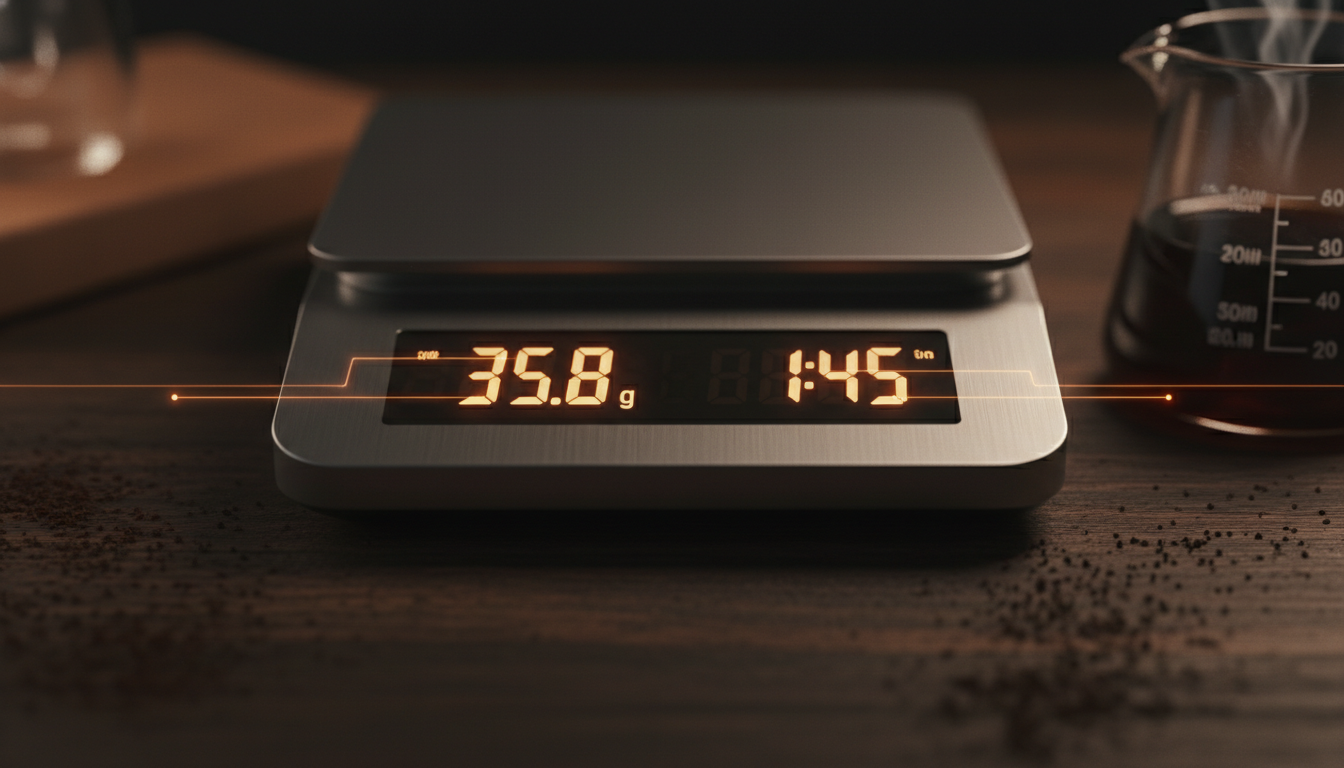
Using scales eliminates guesswork. While ratios can be estimated by sight/feel, scale precision ensures consistency across different brewing days and conditions.
Standard Brewing Ratios by Method
Pour-Over Coffee (1:16 baseline)
- • 20g coffee + 320g water = ~10 oz cup
- • 30g coffee + 480g water = ~16 oz cup
- • Weaker: Use 1:18 ratio (less coffee)
- • Stronger: Use 1:14 ratio (more coffee)
- • Adjust ratio if taste is consistently off
Espresso (1:2-1:3 baseline)
- • 18g coffee + 36g espresso = double shot (~1.5 oz)
- • 18g coffee + 54g espresso = long espresso (~1.8 oz)
- • Shorter ratio (1:2): Concentrated, intense
- • Longer ratio (1:3-1:4): Stronger but not bitter
- • Experiment within range for taste preference
French Press (1:15 baseline)
- • 30g coffee + 450g water = ~3 cup press
- • 50g coffee + 750g water = ~6 cup press
- • Slightly less water than pour-over standard
- • Adjust for personal strength preference
- • Don't over-steep beyond 4 minutes
Cold Brew (1:4 baseline)
- • 1 part coffee + 4 parts water (concentrate)
- • 50g coffee + 200g water (concentrate batch)
- • Produces 8:1 concentrate—dilute with water/milk
- • Steeping 12-24 hours extracts fully
- • Adjust water ratio for desired concentrate strength
AeroPress (1:15-1:17 baseline)
- • 16g coffee + 240g water = concentrated
- • 20g coffee + 300g water = fuller cup
- • Short contact time (1-2 minutes)
- • Adjust water volume for desired strength
- • Highly forgiving brewing method
Ratio Adjustment for Taste Preferences
Too Weak or Sour Taste
Sour taste indicates under-extraction. Increase coffee dose (move toward 1:14 ratio) or extend contact time. More coffee typically resolves sour notes.
Too Strong or Bitter Taste
Bitter taste suggests over-extraction or excessive strength. Decrease coffee dose (move toward 1:18 ratio) or shorten contact time. Less coffee usually resolves bitterness.
Strength vs Body
Stronger coffee (less water) produces fuller body. Weaker coffee (more water) produces lighter body. Personal preference determines ideal balance.
Consistency Through Ratio Tracking
Record your preferred ratio once established. Consistent measurements enable reproducible brewing and baseline for further adjustments.
One Variable at a Time
Adjust one factor per brewing session—either ratio, temperature, grind, or time. Multiple changes obscure which caused improvement or degradation.
Using Scales for Precision
Scale Selection
- • Digital scales with 0.1g precision standard
- • Budget scales ($15-25): Basic precision
- • Premium scales ($40-80): Timer integrated, excellent consistency
- • Select scale with sufficient capacity (500g minimum)
- • Waterproof or stainless options preferable
Scale Workflow
- 1. Tare (zero out) scale empty
- 2. Place brewer/cup on scale
- 3. Tare again (subtract brewer weight)
- 4. Add measured coffee grounds (note weight)
- 5. Start timer, begin pouring water
- 6. Monitor total weight to target ratio
Related Brewing Guides
Sources
1. Specialty Coffee Association. "Brewing Ratio Standards and Extraction 2026." 2026.
2. Perfect Daily Grind. "Coffee Brewing Ratios Guide 2026." 2026.
3. Hoffmann, J. "Ratios, Measurements, and Consistency." 2026.
4. Coffee Science Institute. "Extraction Percentage and Optimal Ratios." 2026.
5. National Coffee Association. "Brewing Standards and Consistency Protocols 2026." 2026.