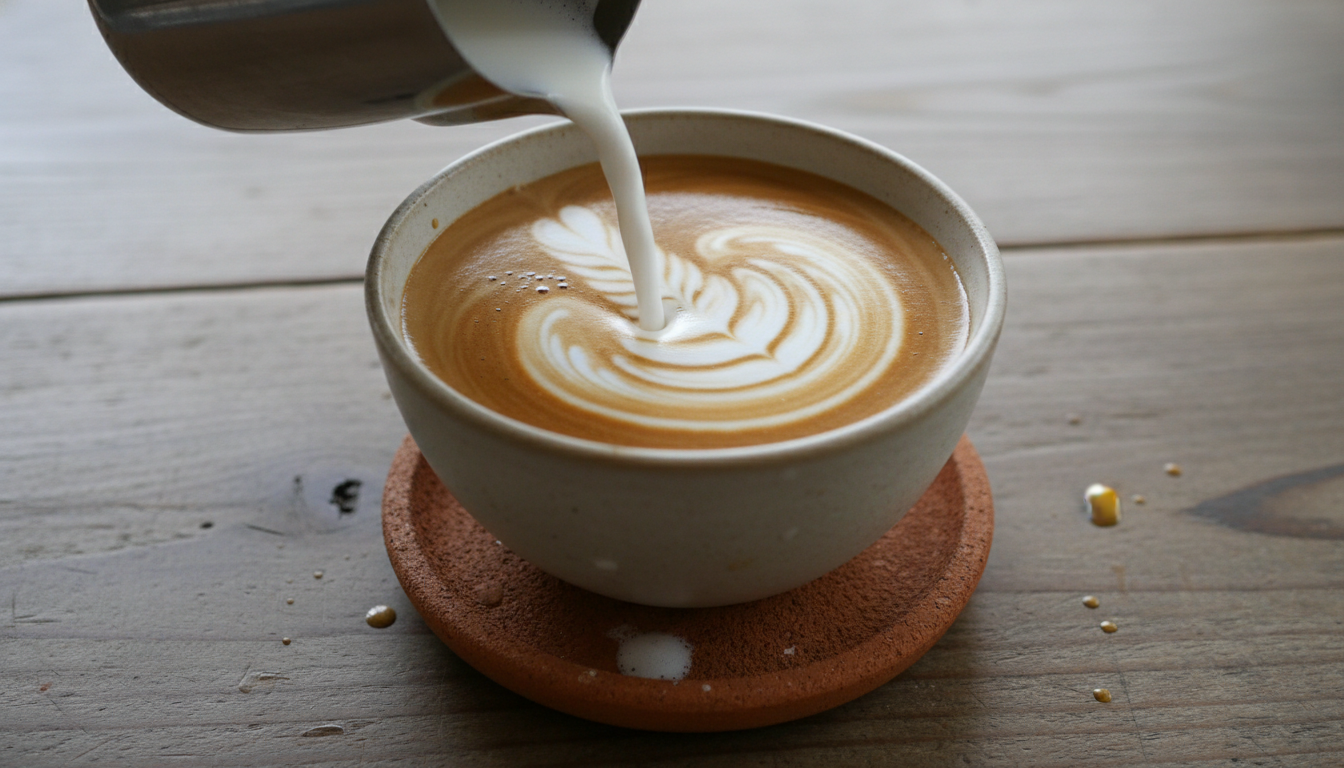
How to Make Macchiato: Traditional Recipe & Technique
The macchiato represents Italian coffee minimalism at its finest—a single or double espresso "stained" with just enough milk to soften the edges without diminishing the coffee's powerful presence. This authentic Italian tradition delivers intense espresso character with a touch of creamy sweetness in a compact, elegant format.
Quick Answer
A traditional macchiato is 1-2 shots espresso "stained" with 1-2 teaspoons of milk foam (not steamed milk). Pull espresso, add a small dollop of foam on top. Total volume: 2-3 oz. The macchiato contains minimal milk—just enough to mark the espresso.
📋 Traditional Macchiato Recipe Card
Ingredients
- 18-20g freshly ground espresso beans
- 1-2 oz cold whole milk (for foam only)
Equipment
- Espresso machine with steam wand
- 12-16 oz stainless steel milk pitcher
- 2-3 oz demitasse or small cup
- Small spoon
Core Definition: What Is a Macchiato?
A macchiato is defined as an espresso shot "stained" (macchiato in Italian) with a small amount of milk foam. The traditional Italian macchiato consists of 1-2 shots of espresso topped with 1-2 teaspoons of dense milk foam—just enough to "mark" the coffee without significantly altering its character.
The macchiato differs fundamentally from milk-heavy drinks like the cappuccino or latte. While a cappuccino contains equal parts espresso, steamed milk, and foam, the macchiato contains almost exclusively espresso with only a token amount of milk foam. This composition makes the macchiato essentially an espresso drink with a hint of milk rather than a milk-based espresso drink.
The macchiato originated in Italy as a way for baristas to distinguish between plain espresso and espresso with a touch of milk for customers who wanted slightly less intensity. The small amount of foam adds subtle sweetness and softens the espresso's acidity without masking its flavor. The macchiato is traditionally served in an espresso demitasse cup and consumed quickly while hot.
⚠️ Important Distinction
The traditional Italian macchiato described in this guide differs completely from the Starbucks "Caramel Macchiato," which is essentially a vanilla latte with caramel drizzle. The traditional macchiato contains no caramel, no vanilla syrup, and minimal milk—just espresso and a dollop of foam.
Macchiato vs Cortado vs Cappuccino: Comparison Table
The macchiato, cortado, and cappuccino represent three approaches to combining espresso with milk, ranging from minimal (macchiato) to moderate (cortado) to substantial (cappuccino). Understanding these distinctions helps you select the right drink and craft it correctly.
| Feature | Macchiato | Cortado | Cappuccino |
|---|---|---|---|
| Espresso Amount | 1-2 shots (18-36g) | 2 shots (36g) | 1-2 shots (18-36g) |
| Milk/Foam Amount | 1-2 tsp foam only | 2 oz steamed milk (no foam) | 2 oz steamed milk + 2 oz foam |
| Total Volume | 2-3 oz (60-90ml) | 4-5 oz (120-150ml) | 6 oz (180ml) |
| Espresso Character | Dominant (95%+ espresso) | Strong (50% espresso) | Balanced (33% espresso) |
| Milk Purpose | Minimal softening | Balancing sweetness | Textural harmony |
| Serving Cup | Demitasse (2-3 oz) | Gibraltar glass (4-5 oz) | Cappuccino cup (5-6 oz) |
| Preparation Time | 3-5 minutes | 4-6 minutes | 5-7 minutes |
Step-by-Step Traditional Macchiato Recipe
Step 1: Extract the Espresso Base
Grind 18-20 grams of freshly roasted espresso beans to a fine consistency. Distribute evenly in your portafilter basket and tamp with approximately 30 pounds of pressure using a flat, level tamper.
Lock the portafilter into your espresso machine group head and extract a double shot (36-40g yield) over 25-30 seconds. The espresso should display rich, golden-brown crema. Pour into a preheated 2-3 oz demitasse cup.
For detailed espresso technique, see our espresso fundamentals guide. The macchiato's quality depends entirely on the espresso base—there's nowhere for flaws to hide.
Step 2: Prepare the Milk Foam
Pour 1-2 ounces of cold whole milk into a small stainless steel pitcher. Unlike cappuccino preparation, you need only a tiny amount of milk for a macchiato—just enough to create a spoonful of dense foam.
Position the steam wand tip just below the milk surface and open the steam valve. The goal is to create thick, dense foam rather than silky microfoam. Allow more air incorporation than you would for a latte—stretch the milk for 5-7 seconds to build volume.
Submerge the wand fully and continue steaming until the pitcher is warm (approximately 140-150°F). The macchiato foam should be thick and spoonable, similar to cappuccino foam but you'll use only a small amount.
Step 3: "Stain" the Espresso
Using a small spoon, scoop 1-2 teaspoons of the thickest foam from the top of your milk pitcher. Gently place this foam dollop in the center of the espresso's crema. The foam should "mark" or "stain" the espresso without sinking or dispersing completely.
The traditional macchiato presentation shows a distinct white foam spot in the center of the dark crema—literally a "stain" on the espresso. The foam remains mostly intact as a separate element rather than integrating fully.
Serve immediately. The macchiato is meant to be consumed quickly while the foam and espresso contrast distinctly.
Macchiato Variations: Traditional vs Modern
While the traditional Italian macchiato follows strict parameters, modern interpretations have emerged. Understanding both helps you navigate café menus and communicate your preferences clearly.
| Variation | Espresso | Milk Component | Origin |
|---|---|---|---|
| Espresso Macchiato (Traditional) | 1-2 shots | 1-2 tsp foam only | Italy |
| Latte Macchiato | 1 shot (added last) | 6-8 oz steamed milk + foam | Italy (layered presentation) |
| Caramel Macchiato (Starbucks) | 1-2 shots | 8-12 oz milk, vanilla syrup, caramel drizzle | USA (Starbucks, 1990s) |
| Long Macchiato | Double ristretto | 1-2 tsp foam | Australia |
The "Stain" Concept: Why Minimal Milk Matters
The macchiato's defining characteristic is its minimal milk presence—just enough to "stain" or "mark" the espresso without transforming it. This concept reflects Italian coffee philosophy: espresso is the star, milk plays a supporting role.
Milk Amount Comparison:
- Macchiato: 1-2 teaspoons foam (~5-10ml) — 5% of drink volume
- Cortado: 2 oz steamed milk (60ml) — 50% of drink volume
- Cappuccino: 4 oz milk total (120ml) — 67% of drink volume
- Latte: 8-10 oz milk (240-300ml) — 80-85% of drink volume
The macchiato's tiny milk addition serves specific purposes: the foam's proteins bind with espresso's tannins, reducing perceived bitterness; the milk's fat adds subtle creaminess; the temperature moderates slightly. Yet the espresso character remains completely dominant—you taste coffee with a hint of milk, not milk with coffee flavoring.
Macchiato Equipment Requirements
Making traditional macchiato at home requires minimal equipment compared to milk-heavy drinks. The focus is on espresso quality rather than milk preparation.
Essential Equipment
- • Espresso machine with steam wand
- • Quality burr grinder
- • 2-3 oz demitasse cups (2-4 count)
- • Small milk pitcher (12 oz)
- • Small spoon for foam placement
Why Minimal Equipment
- • Tiny milk volume means fast steaming
- • No latte art requirements
- • Small pitcher adequate for foam
- • No thermometer needed (small volume heats fast)
- • Most economical milk-based drink
Bean Selection for Macchiato
The macchiato's minimal milk means your espresso bean choice matters tremendously. With nowhere to hide, every characteristic of your coffee shines through.
✓ Ideal for Macchiato
- • Medium-dark roasts with chocolate notes
- • Italian-style espresso blends
- • Low-acid Brazilian or Colombian beans
- • Fresh beans (7-21 days post-roast)
- • Smooth, balanced profiles
⚠️ Challenging for Macchiato
- • Ultra-bright, acidic light roasts
- • Very fruity or fermented naturals
- • High-acid Kenyan or Ethiopian beans
- • Stale or old coffee
- • Robusta-heavy blends (harsh without milk)
Common Macchiato Mistakes to Avoid
❌ Too Much Milk
Adding more than 2 teaspoons of milk creates a tiny cortado, not a macchiato. Fix: Use a small spoon and limit to 1-2 teaspoons foam maximum.
❌ Using Steamed Milk Instead of Foam
Pouring liquid milk instead of foam dilutes the espresso completely. Fix: Use only the thick foam from the top of steamed milk.
❌ Confusing with Caramel Macchiato
Expecting the Starbucks caramel vanilla drink. Fix: Understand traditional macchiato contains no caramel, no vanilla, minimal milk.
❌ Weak Espresso Base
Using poorly extracted espresso ruins the macchiato. Fix: Perfect your espresso technique—the macchiato is 95% espresso.
❌ Wrong Cup Size
Using cups larger than 3 oz encourages over-pouring milk. Fix: Use traditional 2-3 oz demitasse cups.
When to Order/Make a Macchiato
The macchiato suits specific situations and preferences. Understanding when to choose macchiato over other espresso drinks helps you maximize your coffee enjoyment.
Choose Macchiato When:
- • You want pure espresso with slight softening
- • You're watching milk/calorie intake
- • You want a quick coffee experience
- • You enjoy strong, intense coffee flavors
- • You're tasting high-quality espresso beans
- • You want authentic Italian coffee culture
Choose Something Else When:
- • You prefer milder, milk-forward drinks
- • You want a large, lasting beverage
- • You enjoy latte art presentation
- • You're sensitive to caffeine intensity
- • You want sweet, flavored coffee
- • You prefer sipping over several minutes
Continue Your Coffee Journey
How to Make a Cortado
Explore the next step up in milk content with the 1:1 Spanish classic.
How to Make a Cappuccino
Master the balanced Italian classic with equal parts espresso, milk, and foam.
Espresso Fundamentals
Perfect your espresso technique—the foundation of every macchiato.
Final Thoughts
The traditional macchiato embodies Italian coffee minimalism—maximum flavor with minimal intervention. In a world of increasingly elaborate coffee drinks, the macchiato remains refreshingly simple: excellent espresso marked with a touch of foam.
Mastering the macchiato requires understanding its purpose. This isn't a drink for those seeking mild coffee flavor or extended sipping sessions. The macchiato serves espresso enthusiasts who want the purest expression of their beans with just enough milk to soften the edges.
Whether enjoyed at a Roman café or crafted in your kitchen, the macchiato connects you to generations of Italian coffee tradition. Respect the simplicity, focus on espresso quality, and savor the intensity that only a true macchiato delivers.
Ready to Master Espresso?
The macchiato is only as good as the espresso beneath it. Develop your extraction skills with our comprehensive espresso guide for the perfect macchiato foundation.
Learn espresso fundamentals →