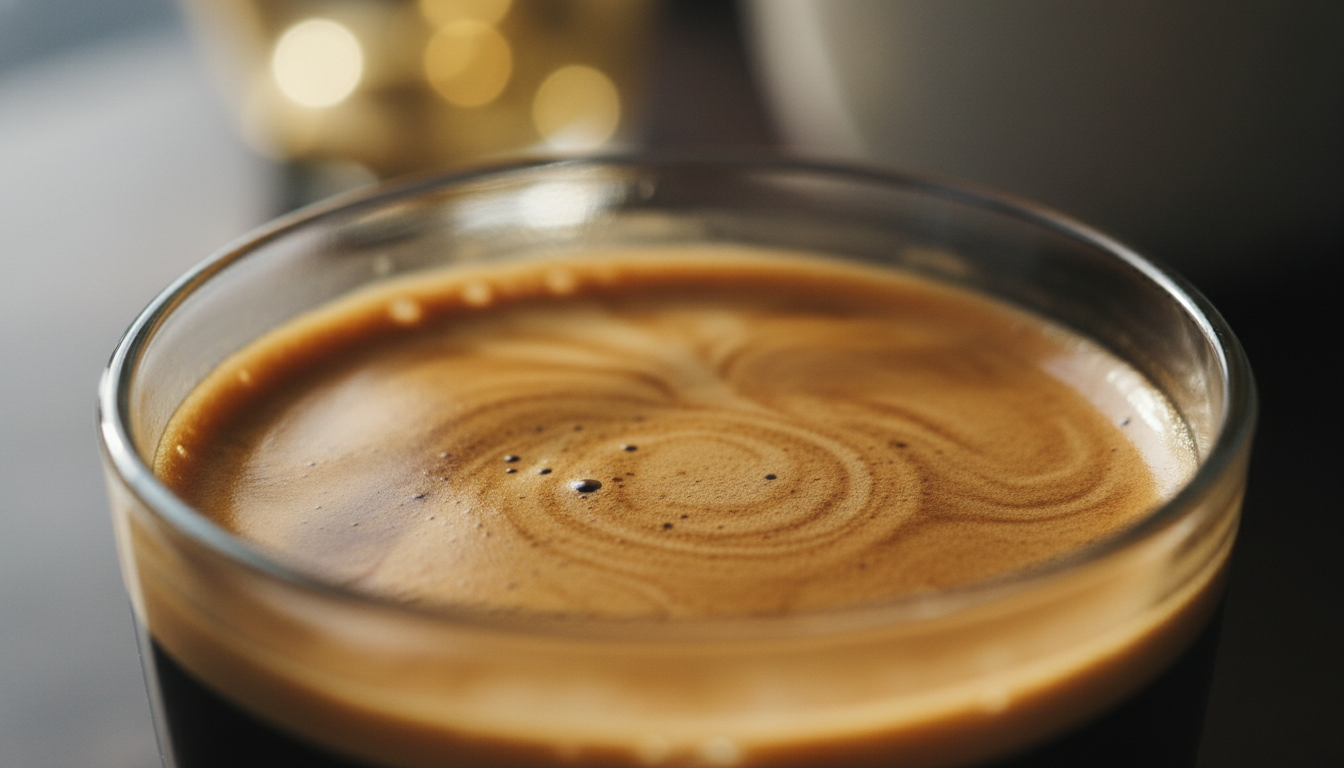
The $100 espresso machine market is filled with promises that outpace reality. Marketing materials show beautiful crema and professional-looking shots, but the actual experience involves compromises that many buyers don't anticipate. This guide provides an honest assessment of what you can realistically expect, who these machines are actually suitable for, and whether alternative approaches might serve you better.
Before diving into specific models and recommendations, it's essential to understand the fundamental limitations that all machines in this price range share. These aren't defects—they're the necessary compromises required to hit a $100 price point.
Reality Check: What $100 Actually Buys in Espresso Machines
To understand whether a $100 espresso machine is worth it, you need to know what components and engineering corners must be cut to reach that price. Here's the reality of what your money buys:
Heating System
What you get: Small thermoblock or aluminum boiler with minimal thermal mass
Reality: Temperature fluctuates 5-15°F during extraction, creating inconsistent shots
Better machines: Quality machines use brass/stainless boilers with PID stability
Pump System
What you get: Budget vibration pump rated at 15-bar (marketing), delivers inconsistent pressure
Reality: Pressure spikes and drops create over/under-extraction in the same shot
Better machines: Quality machines use OPV-regulated 9-bar pressure systems
Portafilter & Basket
What you get: Pressurized basket system that compensates for poor grind consistency
Reality: Crema is foam, not true emulsion. Quality ceiling is immediately limited
Better machines: Standard machines use unpressurized baskets allowing true espresso extraction
Build Materials
What you get: Plastic housing, lightweight components, minimal metal internals
Reality: Shorter lifespan (2-4 years), parts prone to cracking, limited repairability
Better machines: Quality machines use metal frames and commercial-grade components
Steam Wand
What you get: Panarello (auto-frothing) wand or weak single-hole steam tip
Reality: Wet steam, slow frothing, inability to create quality microfoam for latte art
Better machines: Quality machines offer dry steam with power for proper milk texture
What $100 Machines Can Do
Despite their limitations, $100 espresso machines aren't completely useless. They do have legitimate capabilities that serve specific use cases:
✓ Produce Drinkable Espresso
$100 machines can create coffee that resembles espresso using pressurized baskets. The results won't match café quality, but they're drinkable and acceptable for milk-based drinks.
Realistic expectation: Expect 50-60% of café quality. Drinkable but not exceptional.
✓ Make Milk Drinks with Patience
With practice, you can create lattes and cappuccinos. The steam wands require longer frothing times (60-90 seconds vs. 15-30 seconds on better machines), and microfoam quality is limited.
Realistic expectation: Adequate foam for milk drinks, but not latte-art quality.
✓ Learn Basic Espresso Concepts
These machines let you understand dosing, tamping, extraction timing, and milk steaming fundamentals. Skills transfer when you upgrade, though technique adaptations are needed.
Realistic expectation: Good foundation learning, though some habits need unlearning later.
✓ Test Your Espresso Interest
Before investing $500+, a $100 machine lets you discover if you enjoy the espresso-making ritual and will maintain the habit. Many people buy expensive machines that become closet decorations.
Realistic expectation: Low-risk way to test hobby commitment before major investment.
Limitations: The Hard Truth
These limitations aren't fixable with technique or accessories. They're fundamental to the design and price point:
⚠️ Temperature Inconsistency
Without PID control or substantial thermal mass, $100 machines swing wildly in temperature. The first shot might be 195°F, the second 185°F, the third 205°F. This makes dialing in nearly impossible.
Impact: Every shot tastes different even with identical preparation.
⚠️ Weak Steam Wands
Panarello wands inject air automatically but create large bubbles, not microfoam. Single-hole wands lack pressure for proper texture. Frothing takes 2-3x longer than quality machines.
Impact: Poor milk texture, inability to pour latte art, inconsistent drink quality.
⚠️ Plastic Construction
Extensive use of ABS plastic for housing and internal components leads to cracking from heat stress, stripped threads, and component failure. These machines aren't designed for daily use over years.
Impact: Typical lifespan of 2-4 years with daily use; often not economically repairable.
⚠️ Pressurized Basket Limitations
Pressurized baskets force water through a single tiny hole, creating 'crema' from aeration rather than proper emulsion. This masks poor extraction but prevents true espresso quality.
Impact: Quality ceiling is permanently limited regardless of technique or beans.
⚠️ No Upgrade Path
Unlike machines like the Gaggia Classic where you can add a PID, upgrade baskets, or modify the OPV, $100 machines are closed systems. You're stuck with the limitations.
Impact: No improvement possible through upgrades; replacement is the only option.
Best $100 Options
If you've decided a $100 machine fits your situation, here are the most viable options:
DeLonghi EC155
$89-120Pros: Compact, widely available, decent reliability for the price, can switch to standard baskets with modification
Cons: Small water tank, weak steam wand, all-plastic construction, short cord
The default $100 choice. Manage expectations and it works for basic needs.
Casabrews 20-Bar (CM5418)
$89-129Pros: Stainless steel accents look better, includes some accessories, acceptable pressure
Cons: Questionable long-term reliability, limited support, inconsistent temperature
Aesthetically pleasing but functionally similar to other $100 machines.
Used/Refurbished Higher-End
$80-150Pros: Can get $300-500 machines (Gaggia Classic, older Breville) at $100 price point
Cons: No warranty, potential hidden issues, requires research and patience
Best value if you're willing to hunt and possibly do minor repairs.
Who Should Buy a $100 Espresso Machine
These machines aren't for everyone, but they do serve legitimate purposes for specific users:
✓ Curiosity Testers
You want to try making espresso at home but aren't sure if you'll stick with it. A $100 machine lets you test the hobby without major financial risk.
Recommendation: Buy used or on sale, use for 3-6 months, then decide on upgrading.
✓ Occasional Drinkers
You make espresso drinks once or twice a week, not daily. The machine's limitations matter less with infrequent use, and the cost-per-use stays reasonable even if it only lasts a few years.
Recommendation: Acceptable choice; consider longevity of occasional use vs. quality.
✓ Temporary Solution
You're saving for a better machine but want something now, or you're in a temporary living situation (college, short-term rental) where investing in quality doesn't make sense.
Recommendation: Buy used and resell when upgrading to minimize loss.
✓ Milk Drink Maskers
You exclusively drink milk-heavy beverages (lattes with flavored syrups) where espresso quality matters less. The milk masks the coffee's imperfections significantly.
Recommendation: Consider if you never drink straight espresso or americanos.
Who Should Skip $100 Machines
If you fall into any of these categories, a $100 machine will likely disappoint you:
✗ Black Espresso Drinkers
If you drink espresso straight or americanos, a $100 machine's limitations are immediately apparent. Temperature inconsistency and pressurized basket artifacts ruin the experience.
Alternative: Save for at least a $300 machine or consider manual options.
✗ Daily Users
Daily use accelerates wear on cheap components. You'll likely face repairs or replacement within 2 years, making the cost-per-use higher than buying a $300 machine that lasts 10 years.
Alternative: Calculate total cost of ownership; $100 × 3 replacements = $300.
✗ Latte Art Enthusiasts
The weak steam wands on $100 machines cannot create the microfoam necessary for latte art. The large bubbles from panarello wands won't integrate properly.
Alternative: Minimum $200-300 for machines with capable steam systems.
✗ Quality-Focused Users
If you're frustrated by inconsistency and want to dial in shots properly, $100 machines will disappoint. Their temperature swings make repeatability impossible.
Alternative: Manual espresso makers offer better quality at this price point.
Better Alternatives
Before committing to a $100 espresso machine, consider these alternatives that may serve you better:
→ Save to $200-300 Range
Machines like the Breville Bambino (~$300) or Gaggia Classic Pro (~$400) offer dramatically better temperature stability, steam power, and longevity. The jump from $100 to $300 is far more significant than $300 to $600.
Value assessment: Best long-term value. A $300 machine lasting 10 years costs $30/year vs. $100 machine lasting 3 years at $33/year with worse experience.
→ Manual Espresso Makers
Devices like the Flair Neo (~$129), Flair Classic (~$179), or Picopresso (~$130) deliver significantly better espresso quality than $100 electric machines. You trade convenience for control and quality.
Value assessment: Superior espresso quality, no electronics to fail, portable, ritualistic experience. Requires more effort and learning.
→ Moka Pot + Frother
A Bialetti Moka Express ($35) plus electric milk frother ($30-50) creates coffee that's arguably better than $100 machine espresso, especially for milk drinks. Total investment under $100.
Value assessment: Better reliability, simpler operation, classic method, no pressurized basket faking.
→ Aeropress
At $30-40, the Aeropress makes concentrated coffee that, while not true espresso, rivals $100 machine output with far more consistency and less hassle.
Value assessment: Extremely consistent, portable, durable, minimal cleanup, better than cheap espresso machines.
The Real Cost Over Time
Consider the total cost of ownership when making your decision:
$100 Machine Over 3 Years
Machine: $100 | Maintenance: $30 | Replacement parts: $40 | Replacement machine: $100
$270 over 3 years (likely needs replacement)
$300 Machine Over 10 Years
Machine: $300 | Maintenance: $100 | Replacement parts: $80 | No replacement needed
$480 over 10 years ($48/year vs. $90/year)
Manual Flair Over 10 Years
Machine: $130 | Maintenance: $20 (o-rings only) | No electronics to fail
$150 over 10+ years with better espresso quality
Key Insight: Over a decade, a manual espresso maker costs half as much as replacing $100 machines and produces better coffee. Even a $300 machine can be more economical long-term than multiple cheap machines.
Final Verdict
A $100 espresso machine is worth buying only if you fit specific criteria: you're testing interest in espresso, you drink milk-heavy beverages that mask imperfections, you use it occasionally, or you need a temporary solution. Even then, buying used or considering manual alternatives often provides better value.
For everyone else—daily users, black espresso drinkers, quality-focused enthusiasts, or latte art aspirants—saving for a $200-400 machine or choosing a manual espresso maker will provide significantly better experiences and potentially lower long-term costs.
The espresso world has a frustrating entry barrier: machines under $200 require compromises that fundamentally limit the experience, while truly satisfying setups start around $300-500. A $100 machine sits in an awkward middle ground where the savings aren't worth the frustration for serious use, yet the investment isn't trivial for casual experimentation.
Continue Your Research
Explore these related guides to make the best decision for your situation:
Are Cheap Espresso Machines Worth It?
Broader analysis of budget machines and value assessment.
11 MIN READBest Espresso Machines Under $200
Step up from $100 options without breaking the bank.
13 MIN READBest Cheap Espresso Machines That Last
Durability-focused recommendations for budget buyers.
13 MIN READ