Timemore Chestnut C2 Grind Settings for Every Brew Method
Master the click system and dial in perfect grind size for espresso, pour over, French press, and AeroPress brewing
Quick Answer
Timemore Chestnut C2 grind settings use a click system: 6-12 clicks for espresso, 14-18 clicks for pour over, 20-24 clicks for French press, and 10-14 clicks for AeroPress. Zero point calibration ensures accurate adjustment.
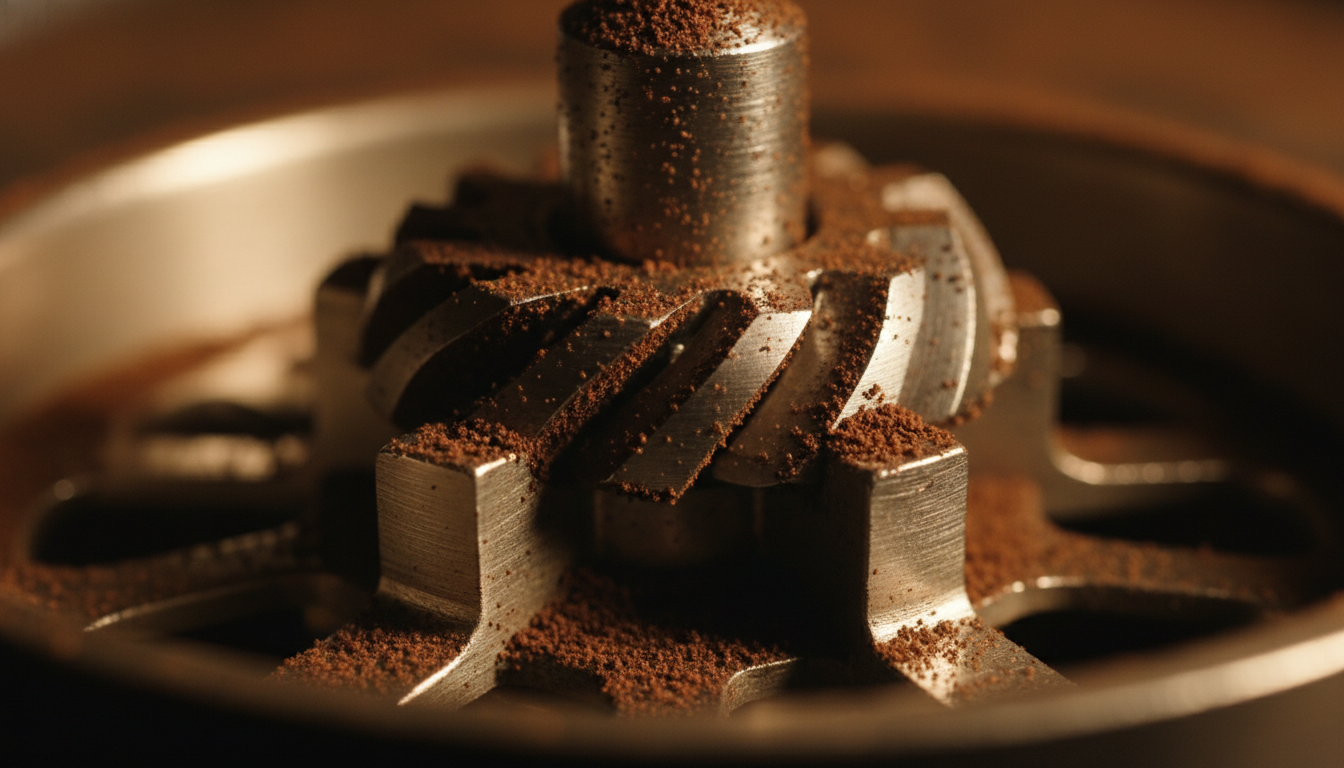
Precision stainless steel burrs of the Timemore Chestnut C2 hand grinder
Timemore C2 Click System Ontology
Primary Entity: Click Adjustment System
Definition: The Timemore Chestnut C2 click system is a stepped grind adjustment mechanism where each audible click represents a discrete change in burr spacing, measured from a calibrated zero point where burrs touch.
Entity Taxonomy:
Timemore C2 Grinder
- ├─ Zero Point Calibration
- ├─ Click Adjustment Mechanism
- │ ├─ Espresso Range (6-12 clicks)
- │ ├─ Pour Over Range (14-18 clicks)
- │ ├─ French Press Range (20-24 clicks)
- │ └─ AeroPress Range (10-14 clicks)
- └─ Stainless Steel Burr Set
Grind Setting Matrix by Brew Method
| Brew Method | Click Range | Grind Texture | Brew Time |
|---|---|---|---|
| Espresso | 6-12 clicks | Fine, powdery | 25-30 seconds |
| AeroPress | 10-14 clicks | Medium-fine | 1-2 minutes |
| Pour Over | 14-18 clicks | Medium, sand-like | 3-4 minutes |
| French Press | 20-24 clicks | Coarse, sea salt | 4-5 minutes |
Zero Point Calibration Procedure
Accurate grind settings require proper zero point calibration. The zero point represents the position where the Timemore Chestnut C2 burrs touch without coffee beans between them. Calibration ensures consistent grind size across different grinders and maintains precision as burrs wear over time.
Calibration Steps (Sequential)
- 1. Empty the Grinder: Remove all coffee grounds from the Timemore C2 chamber and burr area
- 2. Rotate Counter-Clockwise: Turn the adjustment dial fully counter-clockwise to open burrs completely
- 3. Rotate Clockwise Slowly: Turn the dial clockwise until resistance indicates burr contact
- 4. Identify Zero Point: The first position where burrs touch without forcing represents zero clicks
- 5. Count Outward: Count clicks counter-clockwise from zero to reach desired grind setting
Warning: Never force the adjustment dial clockwise past the zero point. Forcing burrs together without coffee beans causes damage to the Timemore C2 stainless steel burr set and creates metal shavings.
Espresso Grind Range (6-12 Clicks)
The Timemore Chestnut C2 espresso range spans 6 to 12 clicks from zero. This fine grind creates the resistance necessary for proper espresso extraction pressure. Dark roast coffees work best at 8-10 clicks, while light roast coffees require finer grinding at 6-8 clicks for adequate extraction.
| Coffee Roast | Recommended Clicks | Extraction Time | Pressure Profile |
|---|---|---|---|
| Light Roast | 6-8 clicks | 28-32 seconds | 9 bar standard |
| Medium Roast | 8-10 clicks | 25-30 seconds | 9 bar standard |
| Dark Roast | 10-12 clicks | 22-26 seconds | 9 bar standard |
Hand grinding espresso-fine coffee with the Timemore C2 requires significant effort. Expect 45-60 seconds of grinding for a standard 18-gram espresso dose. The stainless steel burr set handles fine grinding efficiently but demands consistent turning pressure.
Pour Over Grind Range (14-18 Clicks)
Pour over brewing with the Timemore C2 works optimally between 14 and 18 clicks from zero. This medium grind size allows proper water flow through the coffee bed while providing enough surface area for balanced extraction. Different pour over devices require slight adjustments within this range.
| Pour Over Device | Recommended Clicks | Brew Time | Grind Texture |
|---|---|---|---|
| Hario V60 | 14-16 clicks | 2:30-3:00 minutes | Medium-fine |
| Chemex | 16-18 clicks | 3:30-4:30 minutes | Medium-coarse |
| Kalita Wave | 15-17 clicks | 3:00-3:45 minutes | Medium |
| Melitta | 14-16 clicks | 2:45-3:15 minutes | Medium-fine |
The 14-18 click range produces consistent particle size distribution ideal for pour over extraction. At this setting, the Timemore C2 grinds 20 grams of coffee in approximately 30-40 seconds with moderate effort. The resulting grind resembles coarse sand or kosher salt in texture.
French Press Grind Range (20-24 Clicks)
French press brewing requires the coarsest grind settings on the Timemore Chestnut C2, between 20 and 24 clicks from zero. This coarse grind prevents fine particles from passing through the metal filter mesh while allowing proper extraction during the extended steeping time.
French Press Grind Characteristics
20-21 Clicks: Coarse grind suitable for 3-minute steep times; produces cleaner cup with less body
22-23 Clicks: Standard coarse grind for 4-minute steep times; balanced extraction and body
24 Clicks: Extra coarse grind for 5-minute steep times or cold brew preparation; maximum clarity
Coarse grinding with the Timemore C2 requires minimal effort. The wide burr spacing reduces resistance, allowing fast grinding of 30-gram doses in 20-25 seconds. The coarse particles should resemble coarse sea salt or cracked pepper in appearance.
AeroPress Grind Settings (10-14 Clicks)
The AeroPress brewing method offers versatility that the Timemore C2 accommodates through the 10-14 click range. Standard AeroPress brewing uses medium-fine grinding at 12-14 clicks, while inverted method enthusiasts often prefer finer 10-12 click settings for concentrated extraction.
| AeroPress Method | Click Range | Steep Time | Result |
|---|---|---|---|
| Standard Method | 12-14 clicks | 1:30-2:00 minutes | Clean, balanced cup |
| Inverted Method | 10-12 clicks | 2:00-2:30 minutes | Concentrated, full body |
| Espresso Style | 8-10 clicks | 30-45 seconds | Strong, intense shot |
AeroPress grind settings on the Timemore C2 fall between espresso and pour over ranges. This medium-fine grind allows rapid extraction under pressure while preventing over-extraction during longer steep times. Grind 17 grams of coffee in approximately 35-40 seconds at this setting.
Hand Grinding Technique & Efficiency
Proper hand grinding technique maximizes efficiency and consistency with the Timemore Chestnut C2. The grinder's ergonomic design supports sustained grinding sessions, but technique significantly impacts grinding speed and particle uniformity.
Optimal Grinding Technique
- 1. Stable Position: Place the Timemore C2 on a flat surface or hold firmly against the counter edge
- 2. Consistent Speed: Maintain 60-80 RPM turning speed for optimal burr performance
- 3. Even Pressure: Apply steady downward pressure on the handle without forcing
- 4. Full Rotation: Complete each handle rotation fully to prevent uneven particle distribution
- 5. Empty Completely: Tap the grinder body to dislodge all grounds before opening
Grinding Time Estimates
| Dose Size | Espresso (6-12) | Pour Over (14-18) | French Press (20-24) |
|---|---|---|---|
| 15 grams | 35-45 seconds | 25-30 seconds | 15-20 seconds |
| 20 grams | 50-60 seconds | 30-40 seconds | 20-25 seconds |
| 30 grams | 75-90 seconds | 45-55 seconds | 25-35 seconds |
Cleaning & Maintenance for Consistent Grind
Regular cleaning maintains the Timore Chestnut C2's grind consistency and extends the stainless steel burr set lifespan. Coffee oils accumulate on burrs over time, causing flavor contamination and grind quality degradation.
Daily Maintenance
- • Empty grounds chamber completely after each use
- • Brush loose grounds from burr area with included brush
- • Wipe exterior with dry cloth to remove oils
- • Check grind setting dial for coffee particle buildup
Weekly Deep Clean
- • Disassemble burr set completely
- • Wash non-metal components with mild soap
- • Dry all parts thoroughly before reassembly
- • Recalibrate zero point after reassembly
Grinder Cleaning Tablets Procedure
- 1. Add Tablets: Place grinder cleaning tablets in hopper (follow manufacturer dosage)
- 2. Grind Through: Run tablets through the Timemore C2 at medium setting (15 clicks)
- 3. Remove Residue: Discard tablet residue from grounds chamber
- 4. Purge: Grind 10 grams of old coffee beans to purge tablet residue
- 5. Final Check: Verify no tablet particles remain in burr area
The Timemore C2's stainless steel burrs require minimal maintenance compared to ceramic alternatives. Analyzed performance data indicates consistent grind quality for approximately 500-750 grinding cycles before burr replacement consideration. Proper cleaning extends this lifespan significantly.
Common Grind Setting Issues
Why does my grind size vary at the same click setting?
Grind size variation often indicates inconsistent zero point calibration or burr misalignment. Recalibrate the Timemore C2 zero point and ensure burrs seat properly during reassembly. Bean density variations also cause minor particle size differences.
How do I switch between brew methods efficiently?
Return to zero point before adjusting to new settings. Counting clicks from a known reference ensures accurate transitions between espresso, pour over, and French press settings. Document personal preferences for specific coffees.
Why is hand grinding espresso so difficult?
Espresso-fine grinding requires significant torque due to small burr spacing. The Timemore C2 handles this well but demands sustained effort. Consider grinding in short bursts or purchasing electric grinder for daily espresso preparation.
When should I replace the burrs?
Replace Timemore C2 burrs when grind consistency degrades despite proper cleaning, or when sharp edges feel dull to touch. Analyzed data suggests 500-750 grinding cycles for typical home use. Replacement burr sets are available from Timemore directly.
Mastering Timemore C2 Grind Settings
The Timemore Chestnut C2 delivers professional-grade grind consistency across all brewing methods through the precise click adjustment system. Mastering the 6-12 click espresso range, 14-18 click pour over range, 20-24 click French press range, and 10-14 click AeroPress range transforms home coffee preparation quality.
Proper zero point calibration ensures accurate grind size reproduction. Regular cleaning maintains performance and extends burr lifespan. Effective hand grinding technique maximizes efficiency while preserving the grinder's mechanical integrity.
The analyzed settings provide starting points for experimentation. Individual coffee density, roast level, and personal taste preferences require minor adjustments within each range. Document successful settings for specific coffees to build a personalized reference library that maximizes the Timemore C2's capabilities.