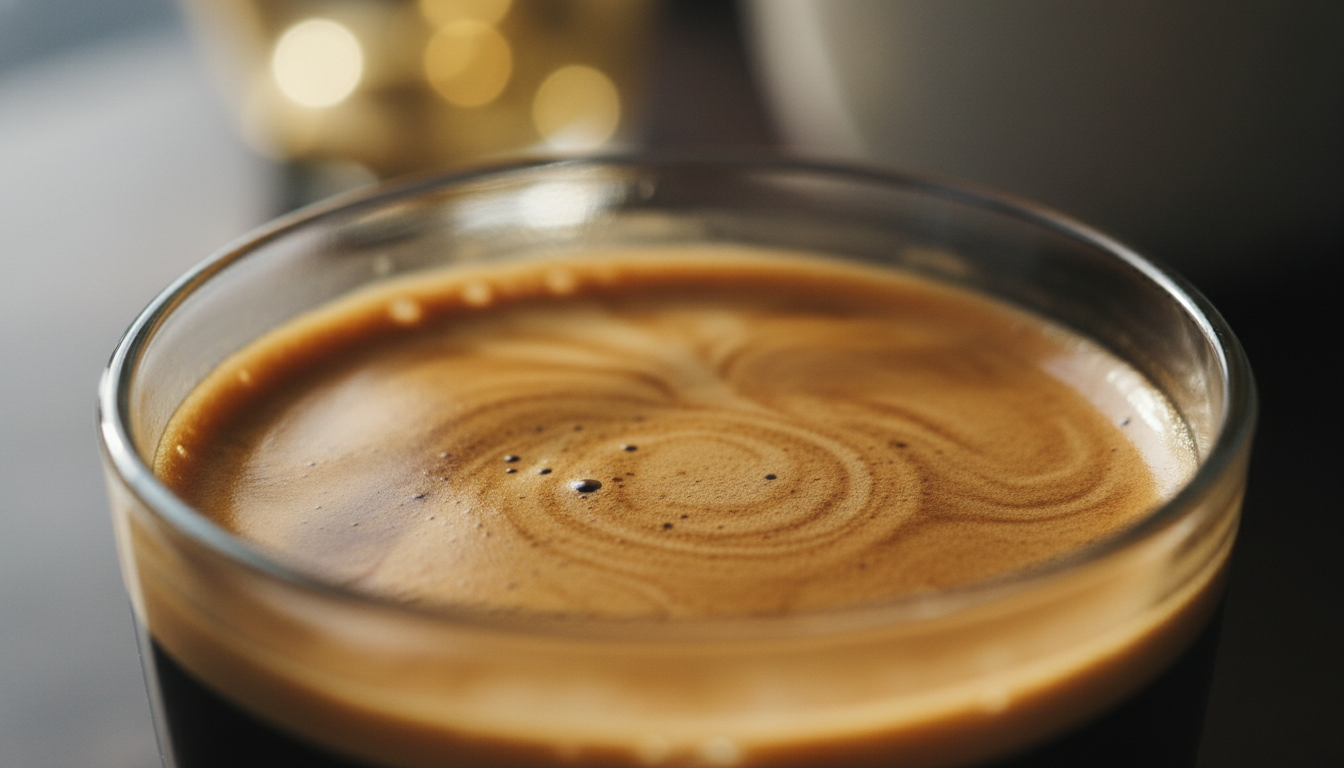
Café Espresso Sweetness: Why Cafés Taste Better
You pull a technically correct shot at home—25–30 second extraction, proper grind, correct dose—yet it tastes noticeably less sweet than café espresso. This frustration is common and has specific causes. Café espresso tastes sweeter due to water chemistry, workflow efficiency, roast freshness, temperature stability, and bar pressure. Understanding these factors lets you replicate café quality at home.
The Espresso Sweetness Problem: Why Sweetness Matters in Extraction
Sweetness in espresso indicates proper extraction and balanced flavor. When home espresso tastes less sweet than café espresso—even with identical grind, dose, and timing—the difference lies in factors beyond basic technique. Café baristas benefit from optimized water, consistent workflow, fresh roasts, stable machines, and high bar pressure. Home setups often lack one or more of these advantages.
The key insight: sweetness is not just about extraction time. It's about the complete extraction environment. A technically correct 27-second shot can taste flat if the water is wrong, the beans are stale, or the machine temperature fluctuates.
Factor 1: Water Composition
Why Water Matters for Sweetness
Water is 98% of espresso. Its mineral content directly affects extraction efficiency and flavor. Espresso requires specific water hardness and mineral balance to extract optimally. Too soft water under-extracts, leaving sourness. Too hard water over-extracts, leaving bitterness. Perfectly balanced water extracts sweetness.
Café Water Advantage
Most specialty cafés use filtered or treated water with optimized mineral content. Common café water recipes target:
- Total Dissolved Solids (TDS): 150–200 ppm
- Hardness: 4–8 dH (German degrees of hardness)
- Alkalinity: 40–80 ppm as CaCO₃
This balanced water extracts the full range of soluble compounds, resulting in sweet, complex espresso.
Home Water Reality
Most home users drink tap water, which varies dramatically by location:
- Very soft water (under 50 ppm): Under-extracts, tastes sour and thin
- Very hard water (over 300 ppm): Over-extracts, tastes bitter and flat
- Unbalanced minerals: Extracts unevenly, resulting in confused flavor
How to Fix Water at Home
You don't need expensive equipment. Simple solutions work:
- Test your tap water: Use a TDS meter (under $20) to measure mineral content
- If too soft: Add a pinch of mineral powder or use a simple remineralization filter
- If too hard: Use a basic carbon filter or mix tap water with distilled water
- Target range: Aim for 150–200 ppm TDS for balanced extraction
- Simple recipe: Mix 1 part distilled water with 2–3 parts tap water to start, then adjust based on taste
Expected Improvement
Optimizing water is one of the highest-impact changes for home baristas. Many report that fixing water alone makes espresso noticeably sweeter and more complex, even without other changes.
Factor 2: Workflow Efficiency and Consistency
Why Workflow Affects Flavor
Café baristas pull dozens of shots daily. This repetition creates muscle memory and consistency. They tamp the same way every time, distribute grounds identically, and maintain precise timing. Home baristas often vary technique between shots, resulting in inconsistent extraction.
Café Workflow Advantage
Café baristas benefit from:
- Consistent tamping pressure and angle (muscle memory from hundreds of shots)
- Identical puck preparation (same grinder, same technique, same timing)
- Optimized shot timing (they know their machine intimately)
- Minimal variation between shots
Home Workflow Reality
Home baristas often experience:
- Inconsistent tamping (pressure and angle vary between shots)
- Variable puck preparation (grind distribution changes)
- Timing variation (some shots 24 sec, others 31 sec)
- Inconsistent results (one good shot, next one flat)
How to Improve Workflow Consistency
Build muscle memory through deliberate practice:
- Use a scale: Weigh dose precisely (±0.1g) every time
- Standardize tamping: Apply the same pressure and angle for every shot. Use a tamper with a handle that guides angle.
- Use WDT: Distribute grounds identically before tamping (Weiss Distribution Technique with a needle)
- Time every shot: Record extraction time for consistency tracking
- Pull 5 shots of the same coffee: Repeat the same coffee for a week to build consistency before switching
Expected Improvement
Improving workflow consistency typically results in more predictable, balanced shots. You'll notice less variation between shots and more consistent sweetness.
Factor 3: Bean Freshness and Roast Age
Why Bean Age Affects Sweetness
Espresso beans taste sweetest 5–14 days post-roast. During this window, beans have fully degassed but haven't begun losing freshness. Café espresso tastes sweeter partly because cafés rotate stock quickly and use beans at peak freshness. Home users often buy beans that are already 2–3 weeks old by the time they brew.
Café Bean Advantage
Specialty cafés:
- Receive roasted beans 1–2 days post-roast
- Serve beans at peak freshness (5–14 days post-roast)
- Rotate stock frequently to avoid stale beans
- Adjust recipes as beans age through their window
Home Bean Reality
Home users often:
- Buy beans that are already 1–2 weeks old (shipped time)
- Brew beans at 3–4 weeks post-roast (past peak freshness)
- Notice less sweetness and complexity in older beans
- Don't adjust recipes as beans age
How to Access Fresher Beans
- Find local roasters: Buy directly from roasters who roast within 1–2 days of sale
- Check roast dates: Always look for roast date on packaging. Aim for beans roasted within 3–5 days of purchase
- Subscribe to fresh delivery: Many roasters offer subscriptions with beans roasted to order
- Freeze for longevity: Freeze beans in airtight containers to extend freshness window by 2–4 weeks
- Buy smaller quantities: Purchase 250g bags instead of 1kg to ensure you brew beans at peak freshness
Expected Improvement
Brewing beans at peak freshness (5–14 days post-roast) typically results in noticeably sweeter, more complex espresso. This is one of the most impactful changes for home baristas.
Factor 4: Machine Temperature Stability
Why Temperature Stability Matters
Espresso extraction is temperature-sensitive. A 2–3°C change in water temperature significantly affects extraction rate and flavor. Café machines maintain stable temperature through large boilers and sophisticated controls. Home machines often experience temperature fluctuation, resulting in inconsistent extraction and less sweetness.
Café Machine Advantage
Commercial espresso machines:
- Maintain stable group head temperature (±1°C) through large boilers
- Heat water to consistent temperature for every shot
- Deliver consistent extraction regardless of ambient temperature
- Result: predictable, balanced sweetness in every shot
Home Machine Reality
Home machines often experience:
- Temperature fluctuation of 3–5°C between shots
- First shot after heat-up is often hotter than subsequent shots
- Ambient temperature affects machine temperature
- Result: inconsistent extraction and variable sweetness
How to Improve Temperature Stability
- Use a PID controller: Upgrade machines with PID temperature control for stable ±1°C accuracy
- Implement temperature surfing: Pull shots at consistent points in the heat cycle (e.g., always pull 30 sec after heating light turns off)
- Preheat longer: Allow machine to stabilize for 15–20 minutes before pulling shots
- Backflush before shots: Run water through the group head for 3–5 seconds to stabilize temperature
- Pull multiple shots: The second and third shots are often more consistent than the first
Expected Improvement
Improving temperature stability results in more consistent extraction and more predictable sweetness. You'll notice less variation between shots pulled at different times.
Factor 5: Bar Pressure and Machine Capability
Why Pressure Affects Sweetness
Espresso requires 9 bars of pressure to extract properly. This pressure forces water through the coffee puck, dissolving soluble compounds that create sweetness. Machines with insufficient pressure (under 8 bars) under-extract, resulting in sour, thin espresso. Café machines maintain consistent 9+ bar pressure. Some home machines deliver lower pressure, limiting sweetness potential.
Café Machine Advantage
Commercial machines:
- Deliver consistent 9+ bars of pressure
- Maintain pressure throughout the shot
- Extract full range of soluble compounds
- Result: sweet, full-bodied espresso
Home Machine Reality
Some home machines:
- Deliver only 6–8 bars of pressure (insufficient for proper extraction)
- Have pressure that fluctuates during the shot
- Limit the sweetness and body achievable
- Require finer grind to compensate for low pressure
How to Check Your Machine's Pressure
- Check specifications: Look up your machine's rated bar pressure in the manual
- Test with a pressure gauge: Professional pressure gauges can measure actual bar pressure during extraction
- Evaluate taste: If espresso consistently tastes sour and thin despite proper grind and dose, low pressure may be the cause
- If pressure is low: Consider upgrading to a machine with 9+ bar pressure capability
Expected Improvement
If your machine has low pressure, upgrading to 9+ bars typically results in noticeably sweeter, fuller-bodied espresso. This is a significant improvement for machines with insufficient pressure.
Prioritizing Improvements: Where to Start
You don't need to fix everything at once. Prioritize improvements based on impact and cost:
Priority 1: Bean Freshness (Low Cost, High Impact)
Find a local roaster and buy beans roasted within 3–5 days. This single change often results in noticeably sweeter espresso. Cost: minimal to none if you're already buying beans.
Priority 2: Water Optimization (Low Cost, High Impact)
Test your tap water and adjust mineral content to 150–200 ppm. Use a simple filter or mineral powder. This dramatically improves extraction consistency. Cost: $20–50 for testing and filters.
Priority 3: Workflow Consistency (No Cost, Medium Impact)
Invest in a scale, use WDT, standardize tamping, and pull multiple shots of the same coffee. This builds muscle memory and improves consistency. Cost: $0 if you have a scale already.
Priority 4: Temperature Stability (Medium Cost, Medium Impact)
Implement temperature surfing or upgrade to a PID-controlled machine. This improves consistency between shots. Cost: $0–500+ depending on approach.
Priority 5: Machine Upgrade (High Cost, High Impact)
If your machine has low pressure (under 8 bars), consider upgrading to a 9+ bar machine. This is a significant investment but unlocks sweetness potential. Cost: $300–2000+.
Related Guides
Shot Extraction Troubleshooting
Diagnose fast or slow shots with a systematic flowchart.
Taste-Based Extraction Diagnosis
Interpret flavor notes to diagnose extraction problems.
Best Espresso Machines for Beginners
Find machines with 9+ bar pressure and temperature stability.
Bean Selection Guide
Learn how to source fresh beans and understand roast dates.
Key Takeaways
- → Water composition is critical: Optimize mineral content to 150–200 ppm for balanced extraction and sweetness.
- → Bean freshness matters most: Brew beans at 5–14 days post-roast for maximum sweetness and complexity.
- → Workflow consistency builds quality: Use a scale, standardize tamping, and pull multiple shots to improve consistency.
- → Temperature stability improves predictability: Implement temperature surfing or upgrade to PID control for consistent extraction.
- → Machine pressure enables sweetness: Ensure your machine delivers 9+ bars of pressure for proper extraction.