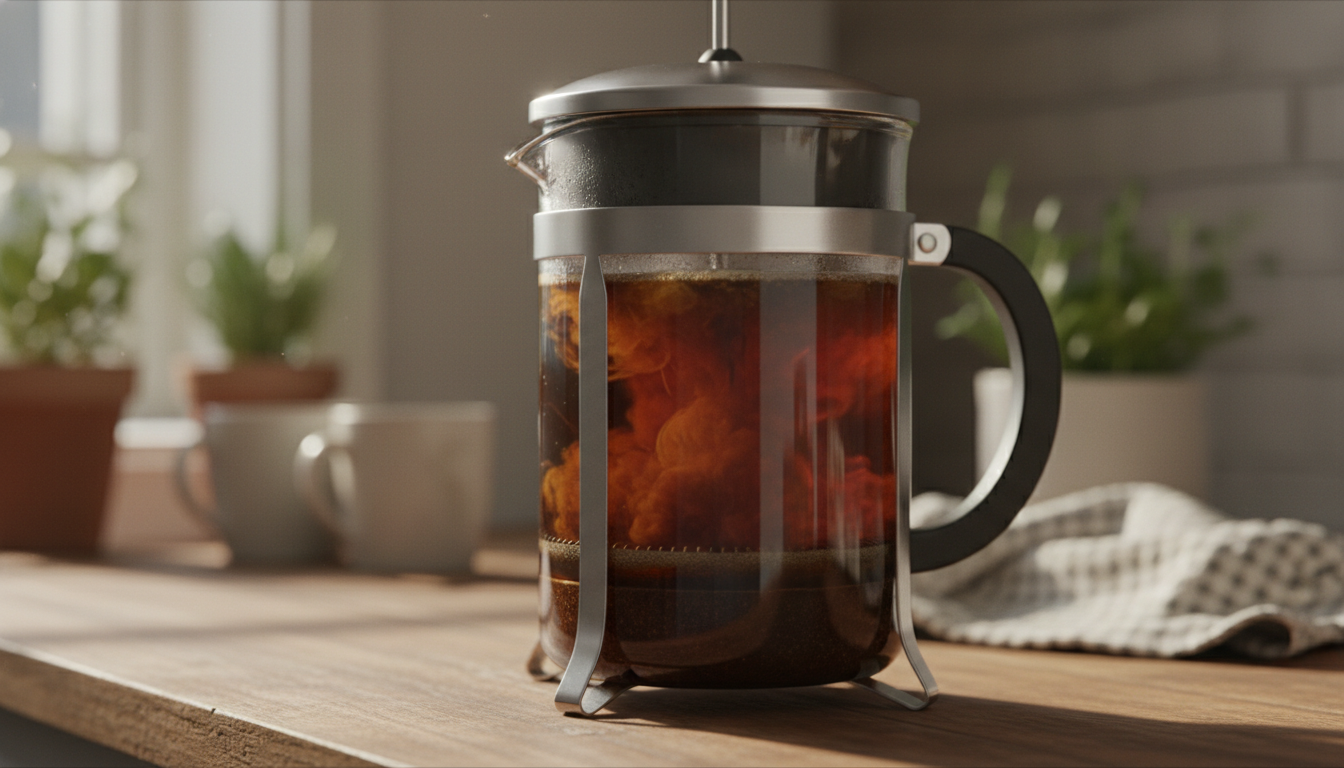
French Press vs AeroPress: Which Brews Better Coffee at Home
Two iconic immersion brewers compared—discover which coffee maker suits your taste preferences, lifestyle, and brewing goals
Quick Answer
French Press produces full-bodied, rich coffee with natural oils intact, ideal for those who prefer bold flavors. AeroPress creates cleaner, smoother cups with less bitterness, perfect for quick brewing and versatility. Choose French Press for richness, AeroPress for clarity and speed.
French Press and AeroPress Entity Definitions
Primary Entity: Immersion Coffee Brewer
Definition: Immersion coffee brewer is a brewing device where coffee grounds steep in water for a controlled duration before separation, extracting flavors through full submersion rather than percolation.
Entity Taxonomy:
Immersion Coffee Brewer
- ├─ French Press (Plunger Pot)
- │ ├─ Glass carafe variants
- │ ├─ Stainless steel insulated variants
- │ └─ Ceramic variants
- └─ AeroPress
- ├─ Standard brewing method
- ├─ Inverted brewing method
- └─ AeroPress Go (travel variant)
French Press vs AeroPress Comparison Matrix
| Characteristic | French Press | AeroPress |
|---|---|---|
| Brewing Time | 4-5 minutes | 1-2 minutes |
| Body | Full, heavy | Medium, clean |
| Filter Type | Metal mesh | Paper or metal |
| Oil Retention | High (oils pass through) | Low (paper absorbs oils) |
| Sediment | Present in cup | Minimal to none |
| Portability | Limited | Excellent |
| Cleanup | Moderate | Easy (pop out puck) |
French Press: Entity Definition & Characteristics
French Press Definition
French Press: Immersion brewing device consisting of cylindrical carafe with plunger assembly containing metal mesh filter, where coarse coffee grounds steep in hot water before separation via pressing action.
Brewing Process (Sequential)
- 1. Heating: Water heated to 195-205°F (90-96°C)
- 2. Dosing: Coarse grounds (1:15 ratio) added to carafe
- 3. Pouring: Hot water saturates grounds completely
- 4. Steeping: 4-5 minute immersion extraction
- 5. Plunging: Metal mesh filter separates grounds from brewed coffee
- 6. Serving: Immediate pour to prevent over-extraction
French Press Flavor Characteristics
| Characteristic | Value/Range | Cause |
|---|---|---|
| Body | Full, viscous | Metal mesh allows oils and fines |
| Acidity | Low to moderate | Extended contact time mellows acidity |
| Flavor Notes | Rich, bold, chocolate, nutty | Oil retention enhances body-driven flavors |
| Bitterness | Moderate | Fines extraction and over-extraction risk |
| Clarity | Low (cloudy) | Micro-fines pass through mesh filter |
French Press Advantages
Richness: Full oil retention creates unmatched body and mouthfeel
Simplicity: No paper filters or complex technique required
Capacity: Standard models brew 32-51 oz (serves multiple cups)
Durability: Stainless steel models last decades with minimal maintenance
Cost: Entry-level models available under $20
French Press Disadvantages
Sediment: Micro-fines create sludge at cup bottom
Over-extraction: Coffee continues extracting if left in carafe
Temperature loss: Glass models lose heat quickly
Cleanup: Grounds removal requires effort and water
Portability: Fragile and bulky for travel
AeroPress: Entity Definition & Characteristics
AeroPress Definition
AeroPress: Manual coffee maker combining immersion and pressure brewing, consisting of two cylindrical chambers with filter cap, using air pressure to force brewed coffee through paper or metal filter.
Brewing Methods (Two Variants)
Standard Method: Filter cap attached → Grounds added → Water poured → Stir → Plunge directly into cup
Inverted Method: Plunger inserted partway → Filter cap removed → Grounds and water added → Steep → Flip onto cup → Plunge
AeroPress Flavor Characteristics
| Characteristic | Value/Range | Cause |
|---|---|---|
| Body | Medium, clean | Paper filter removes oils and fines |
| Acidity | Moderate to bright | Shorter extraction preserves acids |
| Flavor Notes | Clean, nuanced, bright | Paper filtration highlights clarity |
| Bitterness | Low | Lower temperature + pressure reduces harsh compounds |
| Clarity | High (transparent) | Micro-paper filtration removes all particles |
AeroPress Advantages
Speed: Complete brewing cycle in under 2 minutes
Portability: Lightweight, durable plastic construction travels anywhere
Versatility: Standard and inverted methods plus endless recipe variations
Cleanup: Pop out coffee puck in seconds
Clarity: Paper filter produces sediment-free cups
Lower bitterness: Gentler extraction reduces harsh compounds
AeroPress Disadvantages
Capacity: Single 8-10 oz serving per brew
Ongoing costs: Paper filters require replacement (though reusable metal filters exist)
Body: Lacks richness and oil-driven complexity
Technique sensitivity: Results vary with grind, temperature, and timing
Plastic construction: Some users prefer avoiding plastic contact with hot liquids
The Science Behind Each Brewing Method
French Press brewing relies on static immersion extraction—coffee grounds remain fully submerged in water at consistent temperature throughout the brewing cycle. The metal mesh filter permits lipids (oils) and colloids (micro-fines) to pass into the final cup, creating the characteristic body and mouthfeel. Extended contact time (4-5 minutes) fully extracts soluble compounds, including melanoidins that contribute to richness but can develop bitterness if steeping continues too long.
AeroPress employs a hybrid extraction method combining brief immersion (30 seconds to 2 minutes depending on recipe) with pressure-assisted percolation. The air pressure (0.35-0.75 bar generated by hand) forces water through the coffee bed, accelerating extraction while the paper filter selectively removes oils and suspended solids. Lower brewing temperatures (175-185°F typical vs 195-205°F for French Press) reduce harsh compound extraction while pressure compensates for lower temperature solubility.
Grind size requirements differ significantly between methods. French Press demands coarse grind (sea salt texture) to minimize fines production and enable effective filtering by the mesh screen. AeroPress works with medium-fine grind (table salt texture) because the paper filter captures fines regardless of size, while the pressure extraction benefits from increased surface area.
Temperature stability affects extraction consistency. French Press carafes (especially glass) experience rapid heat loss during the 4-5 minute steep, with temperature dropping 10-15°F during brewing. This cooling actually benefits the cup profile by reducing over-extraction risk. AeroPress maintains more stable temperature due to plastic insulation and shorter brewing duration, allowing precise temperature control for recipe optimization.
Which Brewer Should You Choose
Choose French Press if you prioritize rich, full-bodied coffee and typically brew multiple cups. The French Press excels with dark roast coffees where body and chocolate notes shine. Coffee drinkers who enjoy adding milk or cream find French Press coffee holds up better to dilution. Those with leisure time for morning coffee rituals appreciate the simplicity and capacity.
Choose AeroPress if you value speed, portability, and clean flavor clarity. The AeroPress suits travelers, office workers, and those who experiment with different recipes and origins. Light roast enthusiasts appreciate the AeroPress ability to highlight acidity and nuanced flavor notes. Single-serve brewing matches solo coffee drinkers who want fresh coffee without waste.
Consider owning both brewers if your coffee preferences vary by time of day or situation. Many coffee enthusiasts use French Press for weekend leisurely brewing and AeroPress for weekday speed. The two methods complement each other by offering different windows into the same coffee beans.
Research & Analysis Data
French Press standard steeping time
Source: Specialty Coffee Association guidelines
AeroPress total brewing time
Source: AeroPress official brewing guide
Dissolved solids (mg/L) in French Press cup
Source: Coffee extraction analysis studies
Dissolved solids (mg/L) in AeroPress cup
Source: Coffee extraction analysis studies
Related Comparisons & Guides
AeroPress vs Espresso Machine
Explore whether AeroPress can produce true espresso-style coffee and how it compares to machine espresso.
Moka Pot vs AeroPress
Compare two popular stovetop and manual brewing methods for strong coffee at home.
Coffee Grind Size Guide
Master grind size selection for French Press, AeroPress, and other brewing methods.
Optimal Brewing Temperature Guide
Learn how water temperature affects extraction for immersion and pressure brewing methods.
Frequently Asked Questions
Can AeroPress make French Press style coffee?
AeroPress can approximate French Press body by using a metal filter instead of paper and brewing with the inverted method for longer steeping. However, the pressure extraction and shorter contact time create fundamental differences that cannot fully replicate French Press richness.
Which method is easier for beginners?
Both methods suit beginners, but French Press requires less technique precision. Add coarse grounds, hot water, wait, plunge—consistent results follow easily. AeroPress rewards experimentation but produces more variable results until users dial in preferred recipes.
Does French Press have more caffeine than AeroPress?
French Press typically contains more caffeine per serving due to longer extraction time and full immersion. However, serving sizes differ significantly—French Press servings (8 oz) often exceed AeroPress servings (6-8 oz concentrated), making total caffeine intake situation-dependent.
Can I use the same coffee beans in both brewers?
Absolutely, though grind size must change. French Press requires coarse grind; AeroPress works best with medium-fine. The same beans reveal different characteristics—French Press emphasizes body and richness; AeroPress highlights acidity and clarity.
Conclusion: Choose Based on Your Priorities
French Press and AeroPress represent two distinct philosophies in coffee brewing—richness versus clarity, simplicity versus versatility, tradition versus innovation. Neither method objectively brews "better" coffee; each excels at different outcomes.
French Press remains the champion for coffee drinkers who value body, mouthfeel, and straightforward brewing. The full immersion extraction and oil retention create cups that satisfy those seeking substantial, rich coffee experiences.
AeroPress wins for those prioritizing speed, portability, and flavor clarity. The hybrid extraction method and paper filtration produce clean, nuanced cups that highlight origin characteristics and roast precision.
Your ideal brewer depends entirely on your taste preferences, lifestyle, and brewing priorities. Many coffee enthusiasts eventually own both, selecting the appropriate method for each situation. Start with whichever characteristics matter most to you, and enjoy exploring the wonderful world of manual coffee brewing.