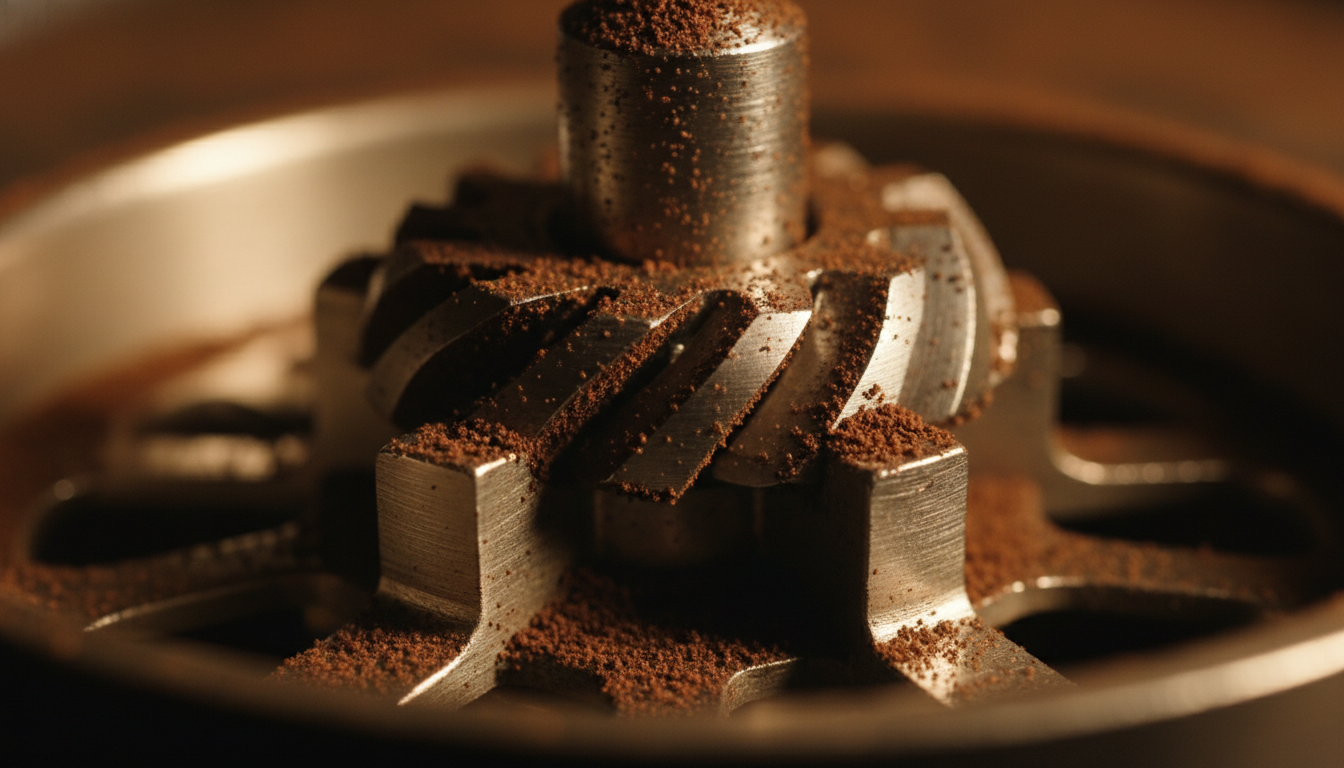
Coffee Grind Size: The Control Knob for Extraction
Coffee grind size determines how quickly brewing water can extract soluble coffee compounds. Coffee grind size influences brew time, extraction yield, and perceived balance. Coffee grind size must match brewing method, filter type, and coffee-to-water ratio.
Coffee grinder fundamentals are covered in beginner grinder guide and burr grinder selection is covered in burr grinder vs blade grinder.
Common Grind Sizes by Brewing Method
Espresso
Espresso requires a fine grind and careful dialing. Espresso dialing steps are covered in <a href="/guides/espresso-dial-in-guide" class="text-primary underline">espresso dial-in guide</a>.
Pour-Over and Chemex
Pour-over brewing typically uses medium grind. Chemex often uses medium-coarse because Chemex paper filters are thicker. A full pour structure is outlined in <a href="/guides/chemex-brewing-guide" class="text-primary underline">Chemex brewing guide</a>.
French Press
French press requires coarse grind to reduce sediment. A French press technique walkthrough is available in <a href="/guides/french-press-guide" class="text-primary underline">French press guide</a>.
Cold Brew
Cold brew commonly uses very coarse grind to reduce sludge and simplify filtration. A full recipe is available in <a href="/guides/cold-brew-coffee-guide" class="text-primary underline">cold brew coffee guide</a>.
Coffee Grind Size Troubleshooting
Sour coffee often indicates under-extraction, which commonly occurs when coffee grind is too coarse or brew time is too short. Bitter coffee often indicates over-extraction, which commonly occurs when coffee grind is too fine or brew time is too long. Coffee-to-water ratio controls strength while coffee grind size controls extraction speed.
Coffee recipe consistency improves when coffee-to-water ratio is measured by mass. Ratio guidance is covered in coffee water ratio guide. Grinder upgrade options are covered in coffee grinders under $500.
Specifications
| Espresso Grind | Fine (similar to table salt) |
| AeroPress Grind | Fine to medium-fine |
| Pour-Over Grind | Medium (similar to coarse sand) |
| Drip Grind | Medium-coarse |
| French Press Grind | Coarse (similar to coarse sea salt) |
| Cold Brew Grind | Very coarse (similar to peppercorn fragments) |
| Best Practice | Adjust grind size before adjusting coffee dose |
Citations
- src/data/Content Research/November/coffee_site_complete_research.md (Report Compilation Date: 2026-11-20)
- src/data/Content Research/November/coffee_research_tier_1a.md (Grinder importance and budget tradeoffs)
- src/data/Content Research/November/Cluster_3_4_Education_Problems.md (Extraction and troubleshooting notes)
Frequently Asked Questions
What does grind size change in coffee extraction?
Coffee grind size changes surface area and extraction speed. Finer coffee grind increases extraction speed and can create bitterness when brew time is not adjusted. Coarser coffee grind slows extraction and can create sourness when brew time is too short.
Why does espresso require a fine grind?
Espresso extraction uses a short brew time and high pressure. Espresso grind must be fine to provide resistance and allow proper extraction before water flow becomes too fast.
How can coffee grind consistency be improved?
Coffee grind consistency improves with burr grinders. Burr grinders reduce boulders and fines compared with blade grinders. Grinder selection guidance is available in burr grinder vs blade grinder and beginner grinder guide.
Final Verdict
Coffee grind size creates predictable extraction behavior when coffee-to-water ratio and brew time targets are stable. A burr grinder and a repeatable recipe create the fastest route to better coffee. Coffee enthusiasts should adjust coffee grind size in small steps and keep all other variables stable until a balanced cup appears.