Coffee-to-Water Ratio: The Fastest Path to Consistent Coffee
Coffee-to-water ratio defines how much ground coffee mass is used per water mass. Coffee-to-water ratio influences strength, clarity, and repeatability across brewing methods. A scale-based ratio removes the uncertainty created by scoops, tablespoons, and "number of filters."
Coffee brewing improvements often start with a scale and a stable recipe. A precision scale review is available in Acaia Lunar scale review. Coffee grind fundamentals are covered in beginner grinder guide.
Coffee-to-Water Ratio by Brewing Method
Pour-Over (V60, Chemex, Kalita)
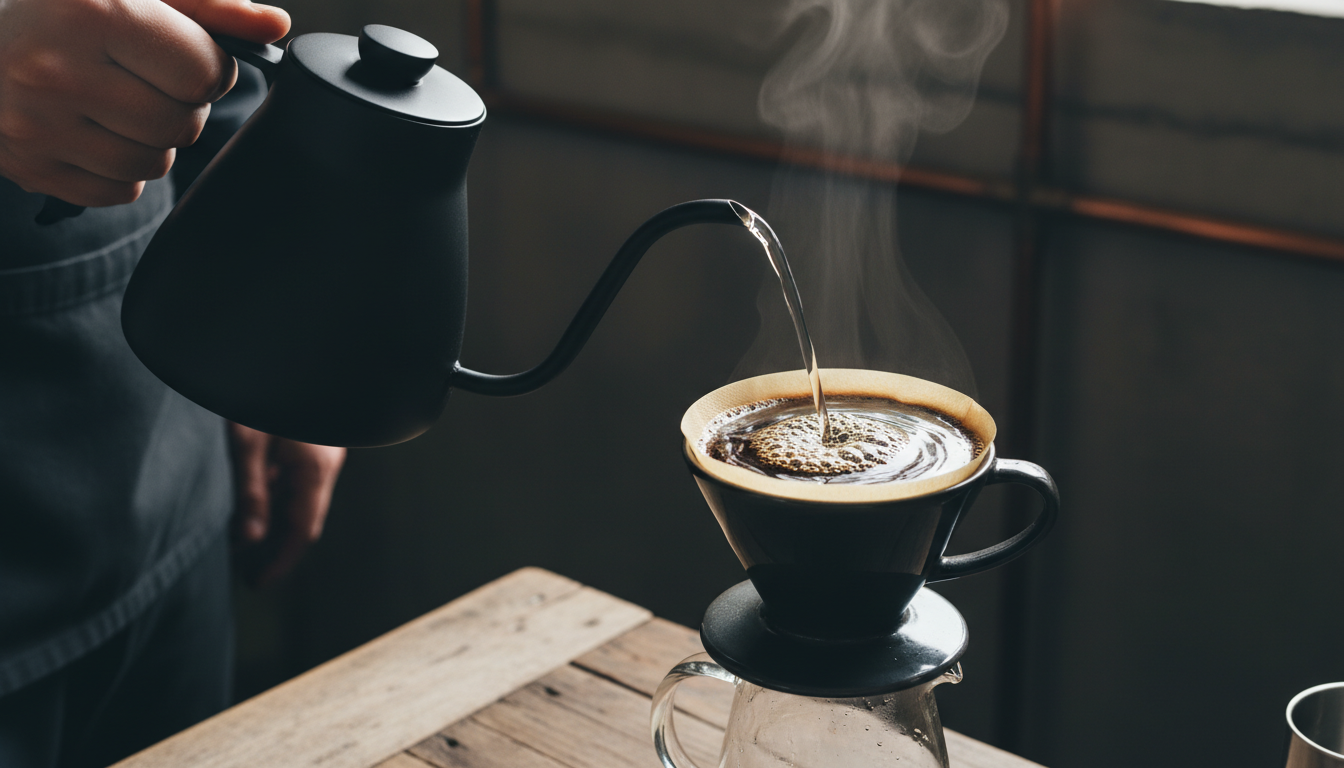
Start near 1:16. Pour-over clarity improves when coffee-to-water ratio stays stable and pour structure is consistent. Pour-over technique examples are included in <a href="/coffee-makers/pour-over" class="text-primary underline">pour-over guide</a> and <a href="/guides/chemex-brewing-guide" class="text-primary underline">Chemex brewing guide</a>.
French Press
Start near 1:15 for a fuller body. French press sediment increases when coffee grind becomes too fine, so French press ratio should be paired with a coarse grind. A French press technique overview is available in <a href="/guides/french-press-guide" class="text-primary underline">French press guide</a>.
Cold Brew
Cold brew concentrate often uses 1:4 to 1:8. Cold brew dilution is adjusted after extraction. A full recipe is available in <a href="/guides/cold-brew-coffee-guide" class="text-primary underline">cold brew coffee guide</a>.
Espresso
Espresso uses brew ratio (dose to beverage yield) rather than a filter brew ratio. Espresso dialing guidance is available in <a href="/guides/espresso-dial-in-guide" class="text-primary underline">espresso dial-in guide</a>.
Coffee Ratio Adjustment Rules
Coffee ratio adjustments should follow one-variable changes. Coffee-to-water ratio changes adjust strength. Coffee grind size changes adjust extraction speed. Brew time targets are easier to hit when coffee-to-water ratio stays stable and coffee grind size is changed in small steps.
Coffee grinder choice affects repeatability more than coffee machine marketing claims. Grinder fundamentals are explained in burr grinder vs blade grinder and budget grinder options are compiled in coffee grinders under $500.
Specifications
| Pour-Over Ratio | 1:15 to 1:17 (coffee:water) |
| Drip Coffee Ratio | 1:16 to 1:18 |
| French Press Ratio | 1:15 to 1:16 |
| AeroPress Ratio | 1:14 to 1:16 |
| Cold Brew Ratio | 1:4 to 1:8 (concentrate) |
| Espresso Brew Ratio | 1:1.5 to 1:3 (dose:yield by mass) |
| Best Practice | Use a scale for coffee and water mass |
Citations
- src/data/Content Research/November/coffee_site_complete_research.md (Report Compilation Date: 2026-11-20)
- src/data/Content Research/November/coffee_research_tier_1a.md (Report Date: 2026-11-20)
- src/data/Content Research/November/Cluster_3_4_Education_Problems.md (Coffee education and troubleshooting research)
- src/data/Content Research/November/Cluster_7_8_Lifestyle_Maintenance.md (Maintenance and daily routine research)
Frequently Asked Questions
What is the golden ratio for coffee?
The Specialty Coffee Association references a common starting point near 1:18 (55 grams coffee per 1 liter water) for filter brewing. Many home brewers start near 1:16 for more strength and adjust to taste.
Why does coffee-to-water ratio matter more than scoops?
Coffee-to-water ratio controls dissolved solids and extraction strength. Scoops vary by roast level and grind density. A gram scale produces repeatable ratios across different coffees.
Should coffee-to-water ratio change with grind size?
Coffee-to-water ratio and grind size interact. Coffee-to-water ratio primarily controls strength; grind size primarily controls extraction speed. Many recipes hold ratio constant while grind size is adjusted for brew time targets.
Final Verdict
Coffee-to-water ratio is the simplest lever for consistent brew strength across pour-over, immersion, and cold brew. A scale-based coffee recipe removes guesswork and makes coffee adjustments systematic. Coffee enthusiasts seeking reliable results should start with one repeatable ratio and refine coffee grind size and brew time targets method-by-method.