Baratza Sette 270 Grind Settings for Espresso
Master the macro/micro adjustment system to dial in perfect espresso shots with precision grinding control
Quick Answer
Baratza Sette 270 features 30 macro steps (A-E, 1-9) with 9 micro steps per macro, offering 270 total settings. Espresso starting point: macro E, micro 5. The conical steel burrs produce minimal retention. Time-based dosing delivers consistent 18-20g shots. Daily retention under 0.5g.
Baratza Sette 270 Ontology
Primary Entity: Baratza Sette 270 Grinder
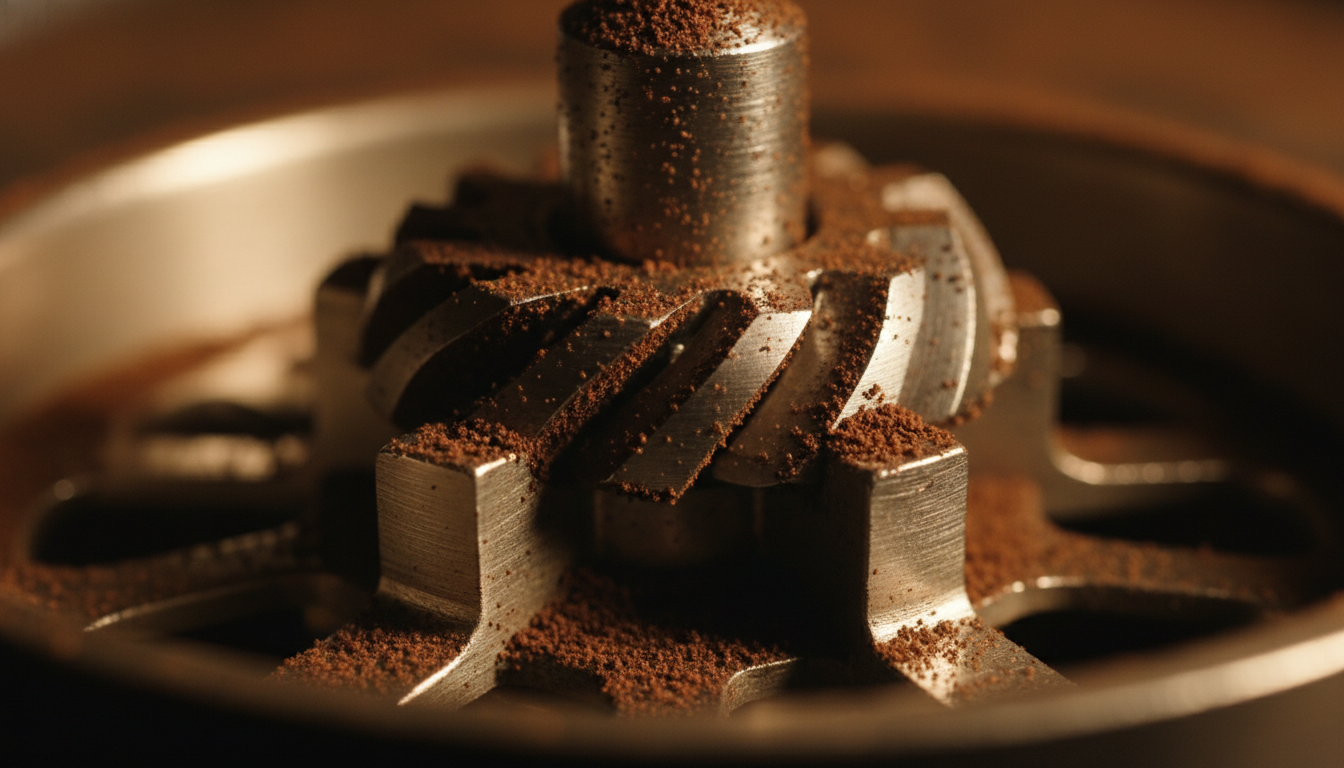
Definition: Baratza Sette 270 is a conical burr coffee grinder featuring 270 grind adjustment steps (30 macro × 9 micro), designed specifically for espresso with 40mm steel conical burrs and time-based dosing.
Entity Taxonomy:
Baratza Sette 270 Grinder
- ├─ Adjustment System
- │ ├─ Macro Adjustment (A-E, 1-9)
- │ │ ├─ A Range (Coarsest - French Press)
- │ │ ├─ B Range (Drip/Pour-over)
- │ │ ├─ C Range (Drip/Chemex)
- │ │ ├─ D Range (Espresso/Moka)
- │ │ └─ E Range (Finest - Espresso)
- │ └─ Micro Adjustment (1-9 per macro)
- │ ├─ 1 = Coarsest within macro
- │ └─ 9 = Finest within macro
- ├─ Dosing System
- │ └─ Time-based (0.1-second increments)
- └─ Burr System
- ├─ 40mm conical steel burrs
- └─ Etzinger burr mount (rotating outer)
Adjustment Range Matrix
| Macro Range | Brew Method | Grind Size (μm) | Typical Setting |
|---|---|---|---|
| A1-A9 | French Press | 900-700 | A4-A6 |
| B1-B9 | Drip, Pour-over | 750-600 | B3-B5 |
| C1-C9 | Pour-over, Chemex | 650-500 | C2-C4 |
| D1-D9 | Moka Pot, AeroPress | 500-350 | D5-D7 |
| E1-E9 | Espresso | 400-200 | E3-E7 |
Macro/Micro Adjustment System Explained
Baratza Sette 270 employs a dual-adjustment system that provides granular control over grind size. The macro adjustment ring, located on the hopper base, controls 30 steps organized into five lettered ranges (A through E), with each range containing nine numbered positions. Macro adjustment determines the coarse grind boundaries suitable for specific brew methods.
The micro adjustment mechanism sits atop the macro ring and refines grind size within each macro step. Micro adjustment offers nine positions (1-9), with position 1 representing the coarsest setting within the selected macro range and position 9 representing the finest. This dual system creates 270 total grind settings (30 × 9), enabling precise dialing for espresso extraction.
Adjustment procedure follows a specific sequence: always set macro adjustment first, then refine with micro adjustment. Adjusting macro while micro sits at extreme positions (1 or 9) risks burr contact and damage. When changing brew methods, return micro to position 5 before adjusting macro, then fine-tune with micro adjustment to prevent calibration drift.
Each full macro step changes particle size by approximately 50-75 microns, while each micro step changes particle size by 5-10 microns. For espresso, Baratza Sette 270 typically requires E-range macro settings with micro positions between 3 and 7. Light-roasted coffees demand finer settings (higher micro numbers) than dark-roasted coffees, which extract more readily with coarser grinds.
Espresso Starting Point: Dial-In Procedure
Recommended Starting Configuration
Macro Setting: E (finest letter range)
Micro Setting: 5 (middle position)
Initial Dose Time: 3.5 seconds
Expected Output: 18-19g espresso grounds
Begin espresso calibration at macro E, micro 5. This position places the burrs at a median espresso setting, providing adjustment room in both directions. Pull an initial shot using 18g dose, aiming for 36g output in 25-30 seconds. If extraction completes under 20 seconds, grind finer by increasing the micro number. If extraction exceeds 35 seconds, grind coarser by decreasing the micro number.
Bean characteristics influence starting points significantly. Light-roasted, dense coffees (high-grown Ethiopians, Kenyans) require finer grinding and often need E7-E9 micro positions. Dark-roasted, less dense coffees (Brazilian naturals, lower-altitude beans) extract faster and typically require E3-E5 micro positions. Adjust expectations based on roast date—coffee within 7-14 days of roasting extracts differently than older coffee.
Temperature and humidity affect calibration. Higher ambient temperatures expand metal components, potentially requiring finer adjustments. Higher humidity increases bean density, often necessitating slightly coarser grinding. Recalibrate Baratza Sette 270 when environmental conditions change significantly or when switching between different coffee origins.
Grind Range Overview by Brew Method
French Press (A Range)
French press brewing requires coarse grinding to prevent over-extraction during the extended immersion period. Baratza Sette 270 performs best at macro settings A4 through A6 for French press preparation. Coarser settings (A1-A3) produce inconsistent particle distribution with excessive fines. Finer A-range settings risk over-extraction and sediment in the final cup.
Drip and Pour-over (B-C Range)
Auto-drip coffee makers and pour-over methods suit B-range and C-range settings. Standard drip coffee makers extract optimally at B3-B5, producing medium-fine particles that extract evenly through paper filters. Pour-over methods, particularly V60 and Chemex, require slightly finer grinding at C2-C4 to balance flow rate and extraction. Light-roasted pour-over coffees may require C5-C6 settings for adequate extraction.
Moka Pot and AeroPress (D Range)
Moka pot brewing occupies the transition zone between drip and espresso. Macro D settings (D5-D8) produce fine particles suitable for pressure brewing in moka pot chambers without causing channeling or bitter extraction. AeroPress preparation offers flexibility, with D3-D6 serving most recipes. Inverted AeroPress methods typically use slightly finer grinding (D5-D6) than standard methods (D3-D4).
Espresso (E Range)
The E range encompasses all espresso preparation settings. The full E-range spectrum (E1-E9) spans Turkish coffee (E1-E2) through ristretto shots (E8-E9). Most espresso extraction occurs within E3-E7, with E5 representing a balanced starting point. Super-fine Turkish grinding at E1-E2 may stress the motor and should be performed in short bursts with cooled burrs.
Time-Based Dosing Configuration
Baratza Sette 270 features programmable time-based dosing with three preset buttons. Each button stores independent time settings adjustable in 0.1-second increments from 0.1 to 60 seconds. Programming involves holding the desired button until the display flashes, then adjusting time with the up/down arrows, and confirming with the button press.
Espresso dosing requires calibration between time setting and actual output weight. Start with 3.0-3.5 seconds for standard 18g doses. Different bean densities produce varying weights at identical time settings—light-roasted beans ( denser) deliver less weight per second than dark-roasted beans (less dense). Recalibrate time settings when switching between coffee types.
Recommended preset configuration: Program Button 1 for single espresso (2.0-2.5 seconds, ~10g output), Button 2 for double espresso (3.5-4.0 seconds, ~18g output), and Button 3 for cleaning/purge (1.0 second). This configuration covers most home espresso preparation scenarios without requiring frequent reprogramming.
Dose consistency depends on hopper fill level. Baratza Sette 270 delivers most consistent dosing when the hopper contains 50-200g of beans. Near-empty hoppers (under 30g) produce irregular dosing due to inconsistent bean pressure on the feeding mechanism. Overfilled hoppers may cause bean backup and inconsistent feeding. Maintain moderate fill levels for optimal performance.
Retention Characteristics: Low-Retention Design
Retention Specifications
Daily Retention: 0.3-0.5g (with hopper)
Single-Dose Retention: 0.1-0.2g
Exchange Rate: 95%+ (minimal carry-over)
Popcorning: Minimal with hopper, moderate single-dose
Baratza Sette 270 delivers exceptionally low retention compared to competing grinders in the same price category. The vertical burr orientation and direct grind path minimize grounds accumulation in the grinding chamber. Daily retention typically measures 0.3-0.5g when using the hopper, dropping to 0.1-0.2g for single-dose grinding.
The exchange rate (percentage of new beans replacing old grounds) exceeds 95% for most grinding operations. This characteristic makes Baratza Sette 270 suitable for home espresso enthusiasts who switch between different coffee origins frequently. Minimal retention prevents flavor contamination between different beans.
Popcorning (beans bouncing in the chamber without feeding) occurs minimally when the hopper contains adequate bean weight. Single-dose grinding (feeding individual beans) increases popcorning slightly, producing marginally less consistent particle distribution. For single-dose espresso preparation, consider the Baratza Sette 270Wi with integrated scale or use a bellows attachment to clear residual grounds.
Retention management practices: Run a 1-2 gram purge when switching between significantly different coffees (natural to washed, dark to light roast). For daily espresso preparation using the same beans, purging is unnecessary. Clean the chute weekly with the included brush to prevent oil buildup that could increase retention over time.
Noise Characteristics & Operation Environment
Baratza Sette 270 operates at approximately 80-85 decibels during grinding—comparable to a garbage disposal or blender. The noise profile features high-frequency motor whine combined with lower-frequency bean-crushing sounds. The DC motor produces less low-frequency rumble than AC motor grinders but exhibits more high-pitched mechanical noise.
Noise duration remains brief due to the high grinding speed. A double espresso dose completes in 3-4 seconds, limiting noise exposure. Continuous grinding for larger batches (cold brew preparation, multiple servings) extends noise duration proportionally. The grinder generates maximum noise during the initial 1-2 seconds when bean load is heaviest.
Environmental placement affects perceived noise. Hard surfaces amplify grinder noise through vibration transmission. Placing Baratza Sette 270 on a rubber mat or silicone tamping mat reduces vibration transfer to countertops by approximately 30%. Enclosed spaces (cabinets, corners) amplify sound reflections, while open kitchen layouts dissipate noise more effectively.
Time-of-day considerations matter for apartment dwellers and shared living spaces. Early morning espresso preparation (before 7:00 AM) may disturb housemates. Some users program the grinder the night before and cover the grinder with a towel to dampen sound, though this practice risks overheating and is not officially recommended by Baratza.
Maintenance Schedule & Burr Care
| Interval | Task | Procedure |
|---|---|---|
| Daily | Chute cleaning | Brush grounds chute, wipe funnel |
| Weekly | Hopper cleaning | Remove hopper, wash with soap, dry completely |
| Monthly | Burr inspection | Visual check for chips, wear, foreign objects |
| Quarterly | Deep cleaning | Grindz tablets or disassembly cleaning |
| Annually | Burr replacement | Replace steel burrs (750-1,000 lb lifespan) |
Daily maintenance requires minimal effort—brushing the grounds chute with the included brush and wiping the anti-static grounds container. The vertical grind path minimizes grounds accumulation, making daily cleaning quick (under 30 seconds). Never use water on burrs or internal components.
Weekly hopper cleaning prevents oil buildup that causes bean flow issues. Remove the hopper, wash with mild dish soap, and dry completely before reinstallation. Moisture in the hopper causes bean clumping and inconsistent feeding. The grounds bin requires weekly washing for the same reasons.
Monthly burr inspection involves removing the hopper and upper burr carrier to examine cutting surfaces. Look for chips, cracks, or foreign object damage. Clean out any accumulated fines in the grinding chamber using the brush or compressed air. Never use metal tools that could damage burr surfaces.
Quarterly deep cleaning employs Grindz grinder cleaning tablets or full disassembly for thorough maintenance. Grindz tablets run through the grinder remove oil buildup without disassembly. For comprehensive cleaning, remove the upper burr, lower burr housing, and chute assembly following Baratza's service manual procedures. Reassemble carefully to maintain calibration accuracy.
Common Issues & Troubleshooting
Issue: Inconsistent Dosing
Symptoms: Varying output weights at identical time settings.
Causes: Inconsistent bean density, hopper fill level variation, popcorning during single-dose grinding.
Solutions: Maintain 50-200g hopper fill, recalibrate time settings when switching beans, use the integrated scale model (270Wi) for weight-based dosing.
Issue: Clumping and Channeling
Symptoms: Puck erosion, uneven extraction, spurting during espresso extraction.
Causes: Static electricity, oily beans, fine grinding settings generating excessive heat.
Solutions: Use WDT (Weiss Distribution Technique) tool to break clumps, allow beans to degas longer (7-14 days post-roast), reduce micro adjustment slightly, consider RDT (Ross Droplet Technique) with minimal water.
Issue: Motor Stalling
Symptoms: Grinder stops mid-operation, requires reset button press.
Causes: Foreign objects (stones, screws), overly dense beans, burr obstruction, motor overheating.
Solutions: Check beans for foreign objects before grinding, reduce dose size, clean burrs thoroughly, allow 5-minute cool-down between large grinding sessions. Repeated stalling requires burr inspection for damage.
Issue: Adjustment Ring Slippage
Symptoms: Grind setting changes during operation, inconsistent particle size.
Causes: Worn adjustment detents, improper assembly, vibration-induced movement.
Solutions: Verify proper assembly of adjustment rings, check for cracked components, contact Baratza support for replacement detent springs if wear is evident. Avoid aggressive adjustment movements that stress components.
Issue: Excessive Static
Symptoms: Grounds sticking to container, flying grounds, messy counter.
Causes: Low humidity environment, very dry beans, plastic grounds container material.
Solutions: Use RDT (0.1-0.2g water droplet on beans before grinding), increase ambient humidity, wait 10 seconds after grinding before removing container, consider aftermarket metal dosing cups that reduce static.
Baratza Sette 270 Specifications
Total grind settings (30 macro × 9 micro)
Conical steel burr diameter
Grinding speed (espresso range)
Average retention per dose
Technical Specifications Matrix
| Specification | Value |
|---|---|
| Motor | DC motor, 240W |
| Burr Type | 40mm conical steel (Etzinger) |
| Grind Range | 200-1200 microns (E1-A9) |
| Dosing System | Time-based (0.1-60 seconds) |
| Hopper Capacity | 400g (approximately) |
| Dimensions | 13 × 40 × 24 cm (W × D × H) |
| Weight | 3.2 kg (7 lbs) |
| Burr Lifespan | 750-1,000 lbs (340-450 kg) |
Related Content & Guides
Espresso Extraction Science & Dialing In
Master espresso extraction principles including grind size, dose, yield, and time relationships for perfect shots.
Espresso Grind Size Guide
Comprehensive guide to grind size selection for espresso and how grind affects extraction and flavor.
Burr Grinder Buying Guide
Compare grinder types, features, and price points to find the perfect grinder for your brewing needs.
Single-Dose Grinding Techniques
Learn optimal techniques for single-dose grinding to minimize retention and maximize freshness.
Frequently Asked Questions
What is the best starting grind setting for espresso on Baratza Sette 270?
Start at macro E, micro 5 for most espresso preparations. This median position provides adjustment room in both directions. Light-roasted coffees typically require finer settings (E6-E8), while dark-roasted coffees extract well at coarser settings (E3-E5). Calibrate based on shot timing—aim for 25-30 seconds for 36g output from 18g dose.
How often should Baratza Sette 270 burrs be replaced?
Replace steel burrs after grinding 750-1,000 pounds (340-450 kg) of coffee. For home users preparing 1-2 shots daily, this translates to approximately 3-5 years. Signs of worn burrs include inconsistent particle size, increased grinding time, and difficulty achieving fine enough settings for espresso. Burr replacement kits are available from Baratza.
Is Baratza Sette 270 suitable for both espresso and drip coffee?
Baratza Sette 270 excels at espresso but handles drip coffee adequately. The macro adjustment system spans from Turkish (E1) through French press (A4-A6). However, the grinder's design prioritizes espresso—with high grinding speed and minimal retention optimized for espresso preparation. For dedicated drip/pour-over use, consider Baratza Virtuoso+ or Fellow Ode for better coarse grinding consistency.
What causes clumping with Baratza Sette 270?
Clumping results from static electricity, oily beans, or very fine grinding settings. Solutions include using a WDT (Weiss Distribution Technique) tool to break up clumps before tamping, applying RDT (Ross Droplet Technique) with 0.1-0.2g water on beans before grinding, and slightly coarsening the grind. Fresh, lighter-roasted beans clump less than oily, dark-roasted beans.
Conclusion: Mastering Baratza Sette 270 Grind Settings
Baratza Sette 270 provides home baristas with professional-grade grind adjustment precision through the macro/micro system. Understanding the 270 available settings, proper calibration procedures, and maintenance requirements ensures consistent espresso extraction and long-term grinder reliability.
Successful espresso preparation begins at macro E, micro 5, with adjustments based on bean characteristics, roast level, and extraction results. The low-retention design enables frequent coffee switching without significant flavor contamination. Regular maintenance—daily chute cleaning, weekly hopper washing, and quarterly deep cleaning—preserves performance and extends burr lifespan.
Master the Baratza Sette 270 grind settings through systematic calibration and consistent maintenance practices. Document preferred settings for different coffees to streamline future preparation. With proper care, Baratza Sette 270 delivers years of precise grinding performance for exceptional home espresso.