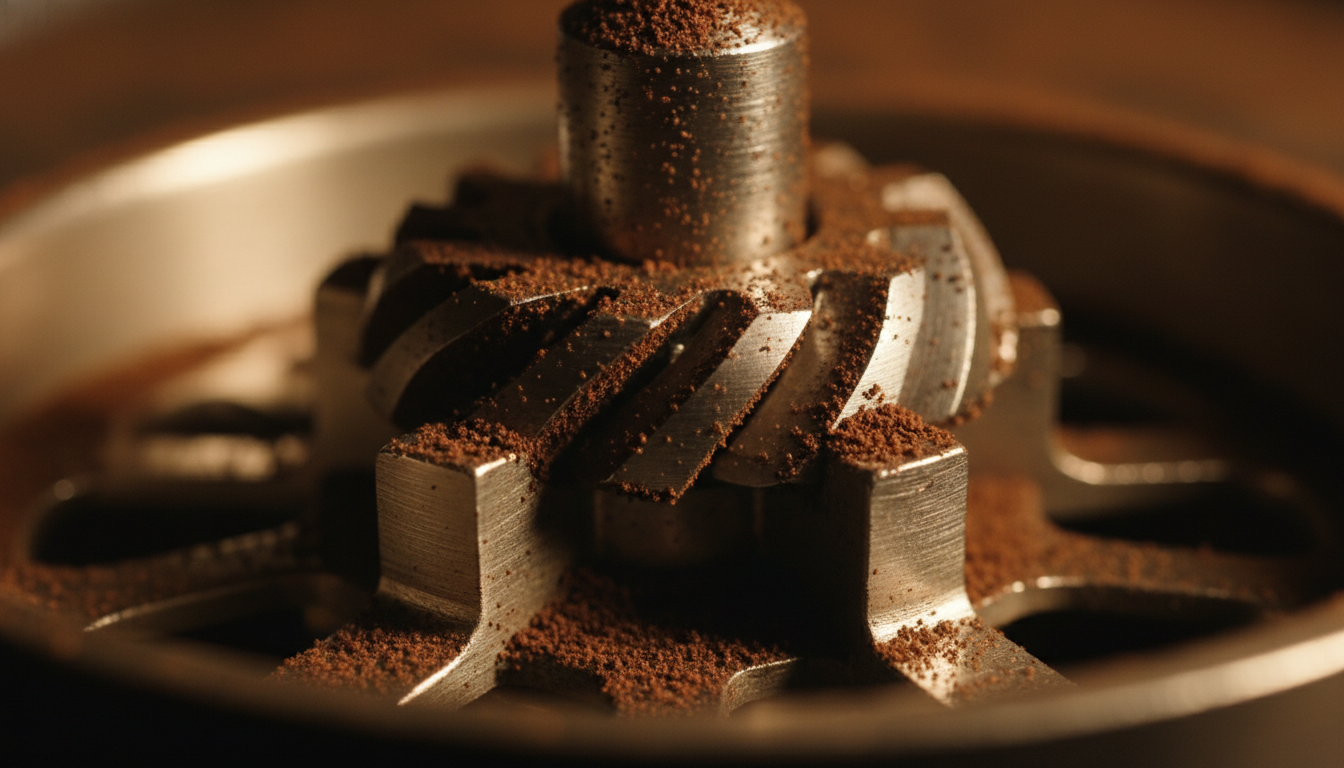
Espresso Grind Size Visual Chart
| Grind Setting | Micron Range | Visual Texture | Shot Time | Best For |
|---|---|---|---|---|
| Extra Fine | 200-250 microns | Powdery, like flour | 35-45 seconds | Turkish coffee, very dark roasts |
| Fine (Standard Espresso) | 250-320 microns | Fine sand, slight clumping | 25-30 seconds | Traditional espresso, medium roasts |
| Medium-Fine | 320-400 microns | Sand, minimal clumping | 20-25 seconds | Light roasts, high-yield ratios |
| Medium | 400-500 microns | Granulated sugar | 15-20 seconds | Drip coffee (too coarse for espresso) |
| Coarse | 500-800 microns | Kosher salt | Under 15 seconds | French press (unsuitable for espresso) |
Popular Grinder Settings Reference
| Grinder Model | Burr Type | Starting Setting | Fine Adjustment Range |
|---|---|---|---|
| Baratza Sette 270 | Conical (40mm) | 8-12 (macro) / E (micro) | 7-15 macro range |
| Eureka Mignon Specialita | Flat (55mm) | 2-3 rotations from zero | 0-5 full rotations |
| Niche Zero | Conical (63mm) | 15-20 on dial | 10-30 range |
| DF64 | Flat (64mm) | 20-25 on dial | 15-35 range |
| Eureka Atom | Flat (60mm) | 3.5-4.5 on dial | 2.0-6.0 range |
| Timemore Chestnut X | Conical (42mm) | 8-12 clicks | 5-20 click range |
Grind Size Adjustment Protocol
Step 1: Establish Baseline
- Set grinder to manufacturer-recommended starting point
- Weigh 18g of coffee beans
- Grind and note the visual texture
- Compare to visual reference chart above
Step 2: Pull Test Shot
- Dose 18g into portafilter
- Distribute grounds evenly with WDT tool
- Tamp with 30 pounds of pressure
- Extract and time the shot
Step 3: Analyze Results
- Shot under 20 seconds: Grind finer by 1-2 settings
- Shot over 35 seconds: Grind coarser by 1-2 settings
- Shot 25-30 seconds: Evaluate taste and crema
- Record grinder setting and results in notebook
Step 4: Purge Grinder
- Discard 2-3 grams of grounds after adjustment
- Eliminates retention of previous grind size
- Ensures consistent particle distribution
- Repeat test shot with purged grounds
Factors Affecting Grind Size Requirements
Bean Characteristics
- ☐ Roast level: Dark roasts require coarser grinds than light roasts
- ☐ Bean density: High-altitude beans (denser) need finer grinds
- ☐ Bean age: Fresher beans (1-14 days) extract differently than older beans
- ☐ Origin characteristics: African beans often need finer settings
Equipment Variables
- ☐ Portafilter basket size: 20g baskets need finer grinds than 18g
- ☐ Machine pressure: 9-bar machines differ from 6-bar flow profiling
- ☐ Temperature stability: Higher temps may require slight grind adjustment
- ☐ Burr condition: Worn burrs produce inconsistent particle sizes
Environmental Factors
- ☐ Humidity: High humidity causes beans to swell, requiring coarser grinds
- ☐ Temperature: Cold environments affect bean brittleness
- ☐ Altitude: High altitude affects boiling point and extraction dynamics
- ☐ Storage conditions: Improper storage changes bean moisture content
Common Grind Size Mistakes
Mistake 1: Grind-and-Forget Approach
Problem: Using the same grind setting regardless of bean changes
Solution: Recalibrate grind size with every new bean batch or roast date
Mistake 2: Ignoring Grinder Retention
Problem: Old grounds contaminate new grind adjustments
Solution: Purge 2-5g after every significant grind change
Mistake 3: Adjusting Too Aggressively
Problem: Large grind changes cause overshooting the sweet spot
Solution: Make micro-adjustments (1-2 settings) and test between changes