Types of Burr Grinders
Burr coffee grinders come in different types, each with distinct grinding mechanisms and characteristics.
Flat Burrs
Two parallel, flat grinding surfaces that rotate against each other. Coffee is ground between the flat surfaces.
Pros:
More uniform particle size, better espresso performance, cooler grinding, longer burr life
Cons:
More expensive, require more maintenance, can be finicky to align
Best For: Espresso enthusiasts, those prioritizing consistency
Conical Burrs
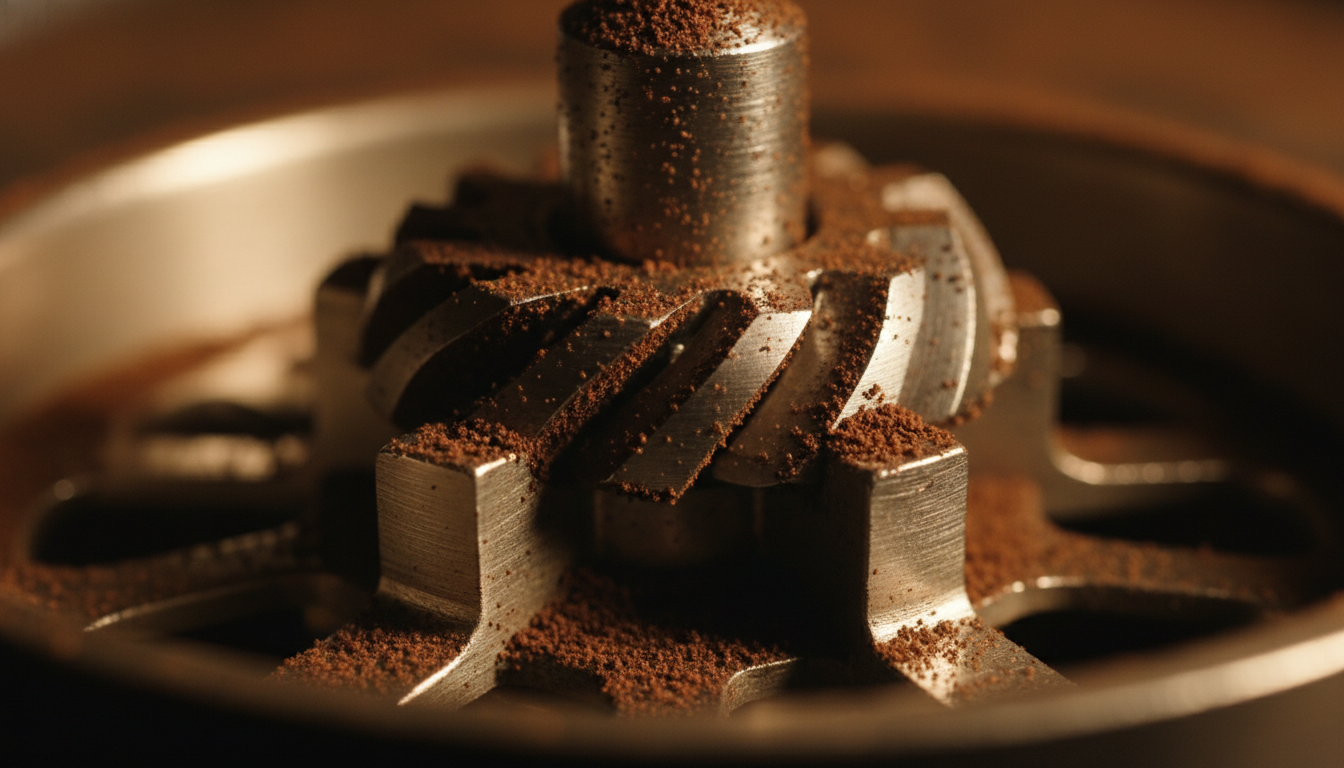
One cone-shaped burr inside another cone-shaped burr. Coffee is ground as it moves down between the cones.
Pros:
More affordable, versatile for multiple brew methods, easier to maintain, forgiving design
Cons:
Less uniform particle size, generates more heat, not ideal for espresso
Best For: Filter coffee, multiple brew methods, budget-conscious buyers
Blade Grinders
Spinning blades that chop coffee beans. Not true grinding, but chopping action.
Pros:
Very affordable, compact, fast
Cons:
Inconsistent particle size, generates heat, poor for espresso, produces dust
Best For: Budget buyers, casual drip coffee only
How Burr Grinders Work
Understanding the grinding process helps you appreciate why burr grinders produce better coffee.
1. Bean Entry
Whole coffee beans enter the grinder hopper and feed into the burr chamber.
2. Burr Contact
The beans fall between the two burrs (flat or conical). The rotating burr grinds the stationary burr against the beans.
3. Grinding Action
The burrs crush and cut the beans into smaller particles. The grinding surfaces are precisely engineered to create uniform particle size.
4. Particle Size Control
The distance between the burrs determines the final grind size. Closer burrs = finer grind. Wider burrs = coarser grind.
5. Ground Coffee Exit
Ground coffee particles fall through the burr chamber into the collection bin or portafilter.
Burr Grinders vs Blade Grinders
Burr grinders are superior to blade grinders in nearly every way except price. Here's the detailed comparison.
| Aspect | Burr Grinders | Blade Grinders | Winner |
|---|---|---|---|
| Particle Size Consistency | Uniform particle size (critical for extraction) | Inconsistent sizes (poor for espresso) | Burrs |
| Heat Generation | Low heat (preserves flavor) | High heat (damages flavor) | Burrs |
| Grind Control | Precise adjustment (essential for espresso) | No real control (time-based only) | Burrs |
| Durability | Burrs last 5-10+ years | Blades dull quickly | Burrs |
| Price | More expensive ($100-600+) | Very cheap ($20-50) | Blade |
| Coffee Quality | Excellent (suitable for espresso) | Poor (drip coffee only) | Burrs |
The Verdict
Burr grinders are superior for coffee quality. Blade grinders are only acceptable for casual drip coffee drinkers on a tight budget. For espresso, pour-over, or any serious coffee brewing, burr grinders are essential.
Why Burr Grinders Matter for Coffee Quality
Burr grinders are critical for quality coffee. Here's why they make such a difference.
Extraction Consistency
Uniform particle size ensures even water contact and extraction. Inconsistent sizes lead to over-extraction and under-extraction in the same cup.
Espresso Capability
Espresso requires fine, consistent grinds. Only burr grinders can achieve this. Blade grinders cannot produce fine enough grinds.
Flavor Preservation
Burrs generate less heat than blades. This preserves volatile flavor compounds that make coffee taste better.
Grind Size Control
Burr grinders allow precise adjustment of grind size. This is essential for dialing in espresso and optimizing filter coffee.
Long-Term Value
Quality burrs last 10+ years. A $400 burr grinder costs $0.10/day over a decade. Much better value than cheap blade grinders.
What Makes Quality Burrs
Not all burrs are created equal. Understanding what makes quality burrs helps you choose the right grinder.
Material
Steel burrs are standard. Ceramic burrs stay sharp longer but can chip. Premium stainless steel is best.
Size
Larger burrs (55-64mm) generally produce more consistent grinds. Smaller burrs (40mm) are adequate but less consistent.
Precision
How precisely the burrs are manufactured affects consistency. Premium brands invest in precision manufacturing.
Alignment
Burrs must be perfectly aligned to grind consistently. Poor alignment causes uneven grinding.
Durability
Quality burrs maintain sharpness for 10+ years. Poor burrs dull quickly and need replacement.
Final Verdict
Key Takeaways About Burr Grinders
Burr Grinders Are Essential
For any serious coffee brewing, burr grinders are non-negotiable. They produce the consistent grind size essential for quality extraction.
Flat vs Conical Burrs
Flat burrs produce more uniform grinds and are better for espresso. Conical burrs are more versatile and affordable. Choose based on your primary brewing method.
Avoid Blade Grinders
Blade grinders are cheap but produce inconsistent grinds unsuitable for espresso or quality filter coffee. Spend the extra money on a burr grinder.
Quality Matters
Invest in a quality burr grinder from a reputable brand. A $400 grinder lasting 10 years costs $0.10/day. Worth every penny.
Remember: The grinder is as important as the espresso machine for coffee quality. See our best flat burr grinder guide for specific recommendations, and check our burr vs blade comparison for more details.