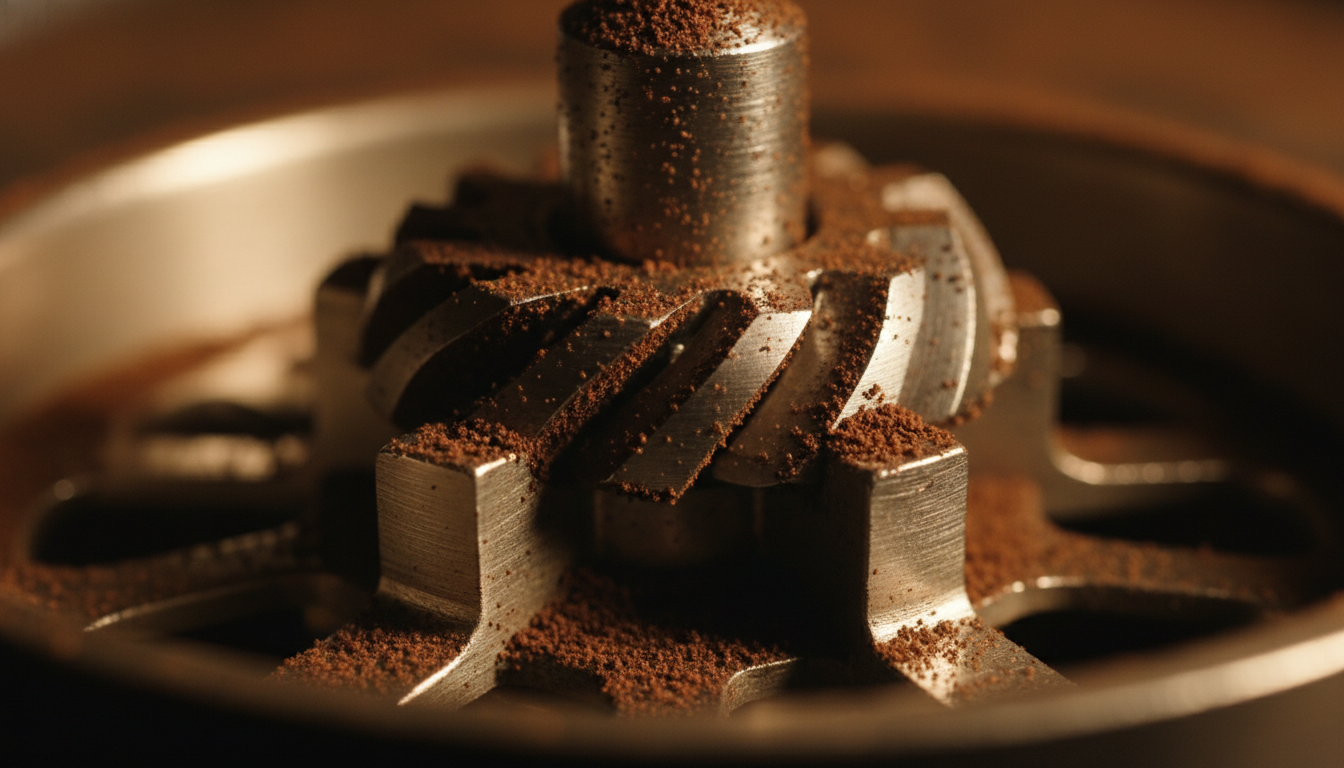
Best Flat Burr Grinder for Espresso
Flat burr grinders deliver the consistency espresso machines demand. Learn how flat burrs create uniform particle sizes, why espresso extraction depends on grind precision, and which models excel for espresso preparation.
Quick Answer
The best flat burr grinder for espresso balances grind consistency, adjustment precision, and workflow speed. Flat burr grinders produce more uniform particle sizes than conical burrs, which reduces channeling and improves espresso extraction. Top models like the Baratza Sette 270, Eureka Mignon Notte, and Fellow Ode deliver the grind uniformity espresso machines require, with micro-adjustments for dialing in shots.
Why Flat Burr Grinders Excel for Espresso
Flat burr grinders produce more uniform particle sizes than conical burr grinders, which directly impacts espresso extraction. Espresso machines force hot water through tightly packed coffee grounds at 9 bars of pressure. When particle sizes vary widely, water finds paths of least resistance through larger particles—a problem called channeling. Channeling causes uneven extraction, resulting in sour or bitter shots.
Flat burr grinders minimize particle size variation because both burrs cut coffee beans at the same angle and speed. The top and bottom burrs rotate in opposite directions, creating a more uniform cutting action. Conical burrs, by contrast, have a tapered design where particles of different sizes fall through at different rates, creating wider particle size distributions.
Espresso consistency depends on grind uniformity. Research from the Specialty Coffee Association shows that particle size distribution directly correlates with extraction yield. Flat burr grinders typically achieve 15-20% narrower particle size distributions than conical burrs, meaning more particles fall within the optimal range for espresso extraction.
For espresso machines, flat burr grinders offer another advantage: micro-adjustment capability. Most flat burr models feature adjustment mechanisms that allow changes of 0.1-0.5mm between grind settings. This precision enables baristas to dial in shots by making small adjustments that noticeably affect flow rate and extraction time.
Flat Burrs vs Conical Burrs for Espresso
| Feature | Flat Burrs | Conical Burrs |
|---|---|---|
| Particle Uniformity | Very uniform (narrow distribution) | Less uniform (wider distribution) |
| Espresso Consistency | Excellent (minimal channeling) | Good (some channeling) |
| Adjustment Precision | Micro-adjustments (0.1-0.5mm) | Larger steps (0.5-1mm) |
| Grind Speed | Slower (more precise) | Faster (less precise) |
| Heat Generation | Higher (faster burr rotation) | Lower (slower burr rotation) |
For espresso, flat burr grinders provide superior consistency because espresso extraction is highly sensitive to particle size. A single large particle in an espresso puck can create a channel where water rushes through, causing under-extraction. Conversely, fines (very small particles) can cause over-extraction and bitterness. Flat burrs minimize both extremes.
Conical burrs work well for filter coffee because filter brewing is more forgiving—water has more time to extract, and particle size variation matters less. But espresso's 25-30 second extraction window demands the uniformity flat burrs provide.
How to Dial In Espresso with Flat Burr Grinders
Dialing in espresso means adjusting grind size until shots extract in 25-30 seconds with balanced flavor. Flat burr grinders make this process more predictable because micro-adjustments produce consistent changes in extraction time.
The dialing-in workflow: Start with a medium-fine grind setting. Pull a shot and time the extraction. If the shot runs too fast (under 20 seconds), the grind is too coarse—move to a finer setting. If the shot runs too slow (over 35 seconds), the grind is too fine—move to a coarser setting. With flat burr grinders, each adjustment noticeably changes flow rate, making it easier to find the sweet spot.
Flat burr grinders' micro-adjustment capability means you can make small changes without overshooting. A 0.2mm adjustment on a flat burr grinder typically changes extraction time by 2-3 seconds, giving you fine control. Conical burrs often require larger adjustments, making it harder to dial in precisely.
Temperature stability matters during dialing in. Flat burr grinders rotate faster than conical burrs, generating more heat. If you're pulling multiple shots during dialing, let the grinder cool between shots or use a model with thermal management features to avoid temperature-related extraction changes.
Top Flat Burr Grinders for Espresso
Baratza Sette 270
Best for: Espresso enthusiasts seeking micro-adjustment precision
The Baratza Sette 270 features macro and micro-adjustment dials, allowing grind changes as small as 0.1mm. The flat burr design produces uniform particles ideal for espresso extraction. Grind time averages 8-10 seconds for espresso doses, and the compact design fits tight kitchen spaces. The Sette 270 excels at dialing in because micro-adjustments produce predictable changes in shot flow.
Price range: $140-160
Eureka Mignon Notte
Best for: Espresso machines with consistent, quiet grinding
The Eureka Mignon Notte combines flat burrs with a compact, quiet motor. The grinder produces minimal noise (around 70dB), making it ideal for early morning espresso preparation. Flat burr design ensures espresso consistency, and the stepless adjustment dial allows infinite grind size options. Grind time for espresso doses runs 8-12 seconds depending on bean density.
Price range: $110-130
Fellow Ode Brew Grinder
Best for: Espresso machines prioritizing grind uniformity and design
The Fellow Ode features flat burrs optimized for espresso and filter coffee. The grinder's design emphasizes particle uniformity, with burrs engineered to minimize fines. Grind time for espresso doses averages 10-12 seconds. The Ode's adjustment mechanism provides stepless control, and the grinder's aesthetic design complements modern kitchen setups.
Price range: $99-120
Key Considerations When Choosing a Flat Burr Grinder for Espresso
Adjustment Precision
Look for grinders offering micro-adjustments (0.1-0.5mm steps). Micro-adjustment capability makes dialing in espresso faster and more intuitive because small changes produce noticeable extraction differences.
Grind Speed
Espresso grinders should grind 18-20g doses in 8-12 seconds. Faster grinding reduces heat generation and workflow time. Check manufacturer specifications for grind speed at espresso settings.
Burr Size
Larger flat burrs (50mm+) typically produce more uniform particles and handle higher grind volumes. Smaller burrs (40mm) work for home espresso but may require longer grind times.
Retention
Retention refers to coffee grounds remaining in the grinder after grinding. Low-retention grinders (under 0.5g) minimize stale coffee in the grind path. For espresso, low retention ensures fresh grounds reach the portafilter.
Noise Level
Flat burr grinders typically run louder than conical models due to higher burr rotation speeds. If noise matters, look for models with noise-dampening features or motors rated below 75dB.
Related Espresso Grinder Resources
- Best Espresso Machines Under $500 - Find espresso machines that pair well with flat burr grinders
- Best Budget Espresso Grinder 2026 - Affordable flat burr options for espresso
- Beginner Grinder Guide - Learn grinder fundamentals and burr types
- Breville vs DeLonghi Espresso Machines - Compare espresso machines and their grinder requirements
- Best Espresso Machine Under $1000 - Premium espresso setups requiring quality grinders
Frequently Asked Questions
What's the best flat burr grinder for espresso?
The best flat burr grinder for espresso depends on your priorities. The Baratza Sette 270 excels for micro-adjustment precision, the Eureka Mignon Notte for quiet operation, and the Fellow Ode for grind uniformity. All three deliver the consistency espresso machines demand.
Can I use a flat burr grinder for espresso?
Yes. Flat burr grinders are ideal for espresso because they produce uniform particle sizes that minimize channeling. Espresso extraction depends on consistent grind size, making flat burrs the preferred choice for espresso machines.
Do flat burrs make better espresso?
Flat burrs produce more uniform particles than conical burrs, which reduces channeling and improves espresso extraction consistency. Whether this translates to "better" espresso depends on technique, bean quality, and espresso machine calibration—but flat burrs give you the grind uniformity espresso machines require.
What grind size should I use for espresso?
Espresso grind size depends on your machine and bean origin, but typically falls between fine and medium-fine. Start with a medium-fine setting and pull test shots. If extraction runs too fast (under 20 seconds), grind finer. If extraction runs too slow (over 35 seconds), grind coarser. Dial in until shots extract in 25-30 seconds.
How consistent are flat burr grinders?
Flat burr grinders are highly consistent, typically producing particle size distributions 15-20% narrower than conical burrs. This consistency makes dialing in espresso more predictable and helps achieve repeatable extraction results.
Ready to Upgrade Your Espresso Grinder?
Flat burr grinders deliver the consistency espresso machines demand. Whether you're dialing in your first shots or refining your technique, a quality flat burr grinder transforms your espresso experience.
Explore Espresso Machine Pairings