Realistic Expectations at Under $200
Let's be honest: sub-$200 grinders require compromises. But here's the good news—those compromises are primarily around convenience, not capability. You can absolutely pull café-quality shots with a $170 hand grinder; you just might spend 90 seconds cranking instead of 15 seconds pressing a button.
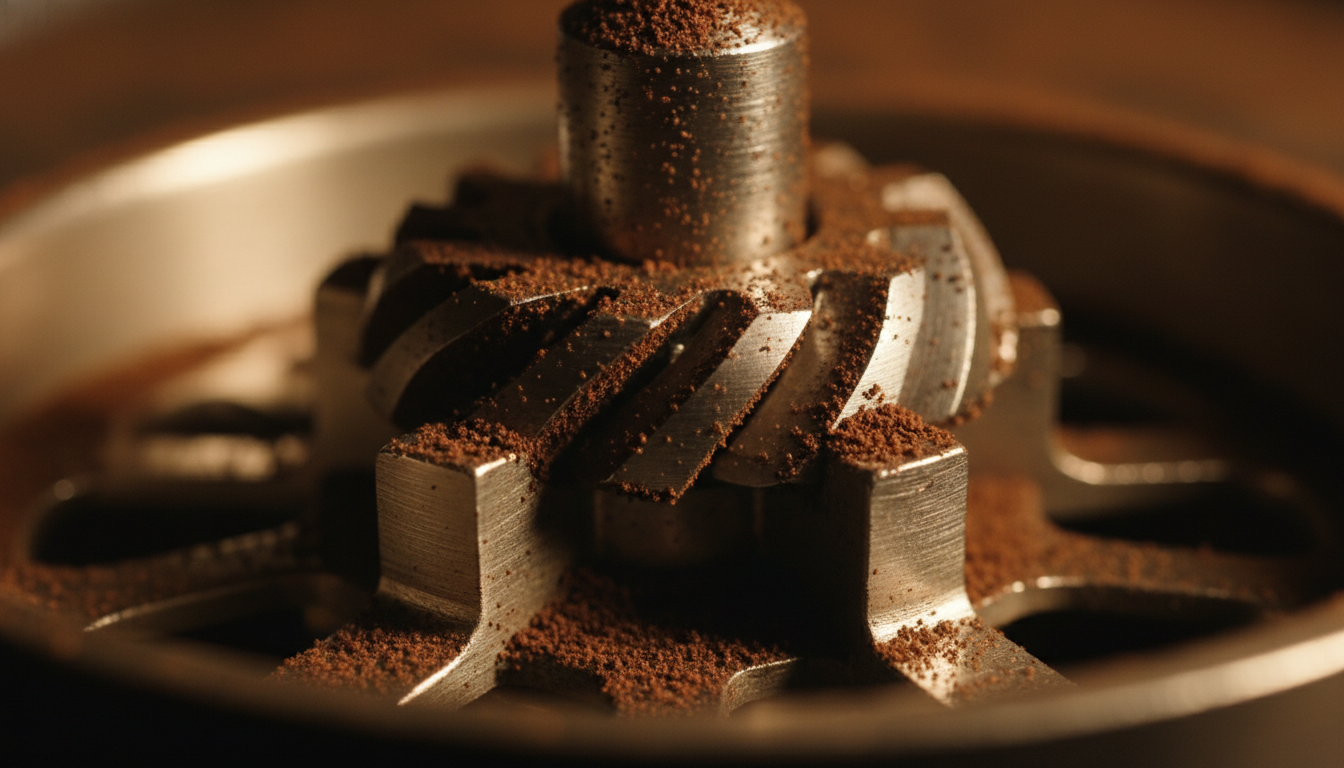
Research from the Specialty Coffee Association shows that grind quality (particle uniformity) matters significantly more than grind speed or motor power for extraction quality. This is why manual grinders at $150 often outperform $300 electrics in blind taste tests—they can allocate the entire budget to burr quality rather than motors, electronics, and housings.
What You CAN Expect
- ✓ Grind consistency suitable for 25-35 second extractions
- ✓ Ability to dial in different beans and roast levels
- ✓ Flavor clarity that rivals café espresso
- ✓ 5-10 years of service (manual) / 3-7 years (electric)
- ✓ Significant improvement over pre-ground or blade grinding
What to Accept
- • Manual effort (for hand grinders)
- • Limited adjustment range vs premium models
- • Some retention (0.5-2g) requiring management
- • Slower workflow, especially for multiple shots
- • Plastic components mixed with metal
Top 5 Low Budget Espresso Grinders
1Zpresso JX-Pro
$170 ManualBest overall low-budget espresso grinder
Burr Type: 48mm conical steel
Adjustments: 200+ clicks (40 clicks per rotation)
Capacity: 35-40g
Best For: Best overall low-budget espresso grinder
Pros
- ✓ Exceptional grind consistency
- ✓ Espresso-specific adjustment
- ✓ Built to last decades
- ✓ Zero retention
- ✓ Portable
Cons
- • Requires manual effort (60-90 seconds per dose)
- • Learning curve for technique
Why choose it: The JX-Pro offers espresso-specific micro-adjustments and 48mm burrs that rival $400+ electric grinders. For pure espresso quality under $200, nothing else comes close.
Timemore Chestnut X
$140 ManualBest manual alternative under $150
Burr Type: 42mm S2C burrs (spike-to-cut)
Adjustments: 24 clicks per rotation
Capacity: 30g
Best For: Best manual alternative under $150
Pros
- ✓ Excellent value
- ✓ Faster grinding than competitors
- ✓ Magnetic grounds catch
- ✓ Folding handle for travel
Cons
- • Fewer adjustment steps than JX-Pro
- • Slightly less consistent at espresso-fine
Why choose it: The Chestnut X delivers 90% of the JX-Pro's performance at $30 less. Perfect if your budget is strictly under $150.
Baratza Encore
$149 ElectricBest electric entry option
Burr Type: 40mm conical steel (M3)
Adjustments: 40 stepped settings
Capacity: 225g hopper
Best For: Best electric entry option
Pros
- ✓ Set-and-forget convenience
- ✓ Excellent warranty/support
- ✓ Proven reliability
- ✓ Easy to repair
Cons
- • Limited fine adjustment range
- • Not truly espresso-focused
- • Higher retention (~1g)
Why choose it: If you refuse to hand-grind, the Encore is the cheapest electric that can handle espresso. Expect to mod or accept less precision.
Used/Refurbished Baratza Sette 270
$180-200 (used/refurb) ElectricBest used premium option
Burr Type: 40mm conical steel (7-core)
Adjustments: 270 micro-adjustments (30 macro)
Capacity: 400g hopper / single-dose moddable
Best For: Best used premium option
Pros
- ✓ Espresso-specific design
- ✓ Near-zero retention
- ✓ Fast grinding (3.5g/sec)
- ✓ Convertible to single-dose
Cons
- • Used market only at this price
- • Loud operation
- • Some reliability concerns older units
Why choose it: A used Sette 270 offers $400+ performance at budget prices. Buy from reputable sellers with return policies.
Fellow Opus
$195 ElectricBest new flat burr option
Burr Type: 40mm flat steel (6-blade)
Adjustments: 41 settings + inner ring micro
Capacity: 110g hopper
Best For: Best new flat burr option
Pros
- ✓ Flat burr clarity
- ✓ Beautiful design
- ✓ Quiet operation
- ✓ Low retention for price
Cons
- • Espresso range limited (inner ring needed)
- • Small hopper
- • Static issues
Why choose it: The Opus brings flat burr characteristics (clarity, uniformity) to the sub-$200 market. Best for those prioritizing taste complexity.
Cost-Per-Shot Analysis
When evaluating grinder value, consider the long-term cost per shot. A $170 grinder used for 10 years is cheaper per shot than a $100 grinder replaced twice.
| Grinder | Price | Expected Lifespan | Cost Per Shot* | Notes |
|---|---|---|---|---|
| 1Zpresso JX-Pro | $170 | 10+ years | $0.023 | Manual grinders last decades with minimal maintenance |
| Timemore Chestnut X | $140 | 8+ years | $0.024 | Excellent durability for the price |
| Baratza Encore | $149 | 5-7 years | $0.029 | Replaceable parts extend life indefinitely |
| Used Sette 270 | $190 | 3-5 years (used) | $0.052 | Higher risk but premium performance while it lasts |
| Fellow Opus | $195 | 5-7 years | $0.038 | Newer model, long-term reliability TBD |
*Based on 2 shots per day, 365 days/year. Calculated as: Price ÷ (Shots per year × Years of lifespan). Does not include bean costs ($0.50-1.50 per shot typically).
Key Insight
Manual grinders offer 2-3x better cost-per-shot value due to their exceptional longevity. The 1Zpresso JX-Pro at $0.023 per shot over 10 years costs less than the coffee beans for a single week. Even the worst-case scenario (used Sette 270) costs less than a nickel per shot—far cheaper than any café alternative.
Understanding Trade-Offs Under $200
Budget grinders compromise in predictable areas. Understanding these trade-offs helps you decide which limitations matter most for your workflow.
Grind Consistency
Adjustment Precision
Retention
Build Quality
Grind Speed
Heat Generation
How to Maximize Results with Limited Budget
Technique Upgrades (Free)
- WDT (Weiss Distribution Technique): Use a needle tool or paperclip to break up clumps and improve distribution. Essential for budget grinders that produce more fines.
- Consistent dosing: Weigh every dose (0.1g scale). Budget grinders require precise input to produce consistent output.
- Distribution tool: A simple leveling tool ($10-15) compensates for uneven grinds.
- Stock puck prep: Perfect your tamping pressure and angle. Level tamping matters more with less consistent grinds.
- Preheat routine: Run the grinder briefly before your first dose to clear stale grounds and warm up burrs.
Workflow Optimization
- Single-dose workflow: Measure beans before grinding, not after. Eliminates retention concerns.
- RDT (Ross Droplet Technique): Add a tiny water droplet to beans before grinding to reduce static, especially useful with the Fellow Opus.
- Grind into cup: Use a small dosing cup to catch grounds, then transfer to portafilter. Reduces mess and allows better distribution.
- Clean burrs monthly: Budget grinders suffer more from buildup. Use grinder cleaning tablets or brush burrs monthly.
- Bean freshness: Use beans within 2-4 weeks of roast. Budget grinders magnify staleness issues.
The 80/20 Rule for Budget Grinding
80% of your espresso quality comes from 20% of your equipment investment. A $170 JX-Pro with excellent puck prep (WDT, proper distribution, consistent dosing) will outperform a $500 grinder with sloppy technique. Invest time in workflow before upgrading equipment.
When to Upgrade: A Timeline
Budget grinders serve a purpose: they let you develop skills without massive investment. But eventually, you'll outgrow them. Here's how to know when.
Learning fundamentals
Master your budget grinder, understand adjustment impact
Technique refinement
Optimize puck prep, WDT, distribution to compensate for grinder limitations
Evaluate limitations
Determine if grinder is holding you back or technique is
Upgrade decision
Consider $400+ grinder if consistently limited by adjustment range or consistency
Advanced equipment
Premium grinder becomes justifiable investment for daily enthusiasts
Signs You're Ready to Upgrade
- • You consistently hit the adjustment range limits
- • You want to explore single-dose workflows
- • You're making 4+ shots daily and hand-grinding is tiring
- • You notice channeling you can't eliminate with technique
- • Retention waste bothers you financially
- • You're ready to invest $400-600 for convenience + quality
New Budget vs. Used Premium: Which to Choose?
✓ New Budget Grinder ($140-200)
Risk-averse buyers, beginners, those wanting warranty protection
- • Full warranty coverage
- • No wear or burr degradation
- • Latest features and design
- • Return policy protection
1Zpresso JX-Pro, Fellow Opus, Timemore Chestnut X
⚡ Used Premium Grinder ($180-250)
Experienced buyers, value hunters, those prioritizing performance over peace of mind
- • $400+ grinder performance at half price
- • Better build quality and consistency
- • More adjustment precision
- • Often user-serviceable
Baratza Sette 270 (refurb $180-200), Eureka Mignon (used $200-250)
Buying Used Grinders Safely
Where to Buy
- • Baratza refurb store: Official warranty, tested units
- • eBay (top-rated sellers): Buyer protection, return window
- • r/coffeeswap: Community vetted, competitive prices
- • Local marketplaces: Inspect before buying
What to Check
- • Burr condition: Ask for photos, check for chips
- • Motor noise: Unusual sounds indicate wear
- • Adjustment function: Should move smoothly
- • Return policy: Minimum 14-day window
Our Recommendations by Use Case
🏆 Best Overall: 1Zpresso JX-Pro ($170)
For pure espresso quality under $200, the JX-Pro is unmatched. The 48mm burrs and espresso-specific adjustment range rival $400+ electric grinders. If you're willing to spend 90 seconds hand-grinding, this is your grinder.
Get this if: You prioritize espresso quality over convenience and don't mind manual grinding.
⚡ Best Electric (New): Fellow Opus ($195)
The Opus brings flat burr advantages—clarity, uniformity, complex flavor separation—to the sub-$200 market. It's not perfect for espresso (inner ring adjustment required), but it's the most capable new electric at this price.
Get this if: You want electric convenience with the best possible grind quality for under $200.
💰 Best Value: Timemore Chestnut X ($140)
Delivers 90% of the JX-Pro's performance at $30 less. The S2C burrs and magnetic catch are genuinely innovative. Best choice if your budget ceiling is strictly $150.
Get this if: You're on a tight budget but still want excellent espresso capability.
🎯 Best for Risk-Takers: Used Baratza Sette 270 ($180-200)
A used Sette 270 offers genuine $400-level performance at half price. The 270 micro-adjustments, near-zero retention, and espresso-specific design are unmatched at this price. Buy from Baratza's official refurb store for peace of mind.
Get this if: You're comfortable buying used and want the absolute best espresso performance under $200.
☕ Best for All-Rounders: Baratza Encore ($149)
The Encore isn't an espresso specialist, but it's the most versatile grinder under $200. If you brew drip, pour-over, and occasional espresso, it's the safest choice with unmatched support and repairability.
Get this if: You brew multiple methods and want one grinder that handles them all reasonably well.
Final Verdict
The "best" low budget espresso grinder depends entirely on your priorities:
- Absolute best quality: 1Zpresso JX-Pro (manual) or used Sette 270 (electric)
- Best new electric: Fellow Opus
- Tightest budget: Timemore Chestnut X
- Most versatile: Baratza Encore
All five options deliver genuine espresso capability under $200. The key is matching the grinder to your workflow preferences and risk tolerance. Remember: technique matters more than equipment. A $170 JX-Pro with excellent puck prep beats a $500 grinder with sloppy technique every time.