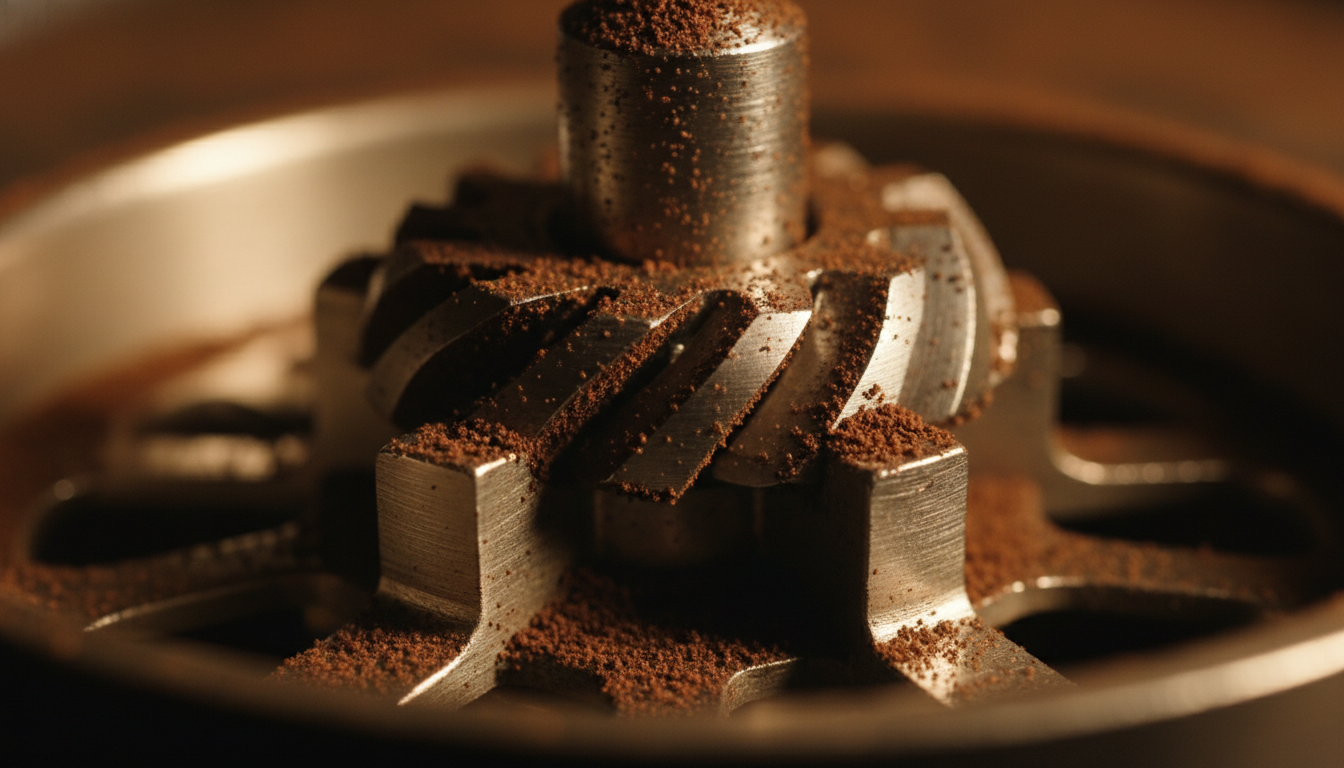
BUYING GUIDE
Best Budget Espresso Grinder 2026
Comprehensive guide to affordable coffee grinders under $300 that deliver quality espresso.
⏱ 12 min
READ BUYING GUIDE →
Quality vs Price Analysis: ROI-focused recommendations for every budget with detailed cost-per-shot calculations.
Starting Price
Lowest Cost/Shot
Max Lifespan
Top ROI Score
Value isn't just about the lowest price—it's about maximizing quality per dollar spent over the lifetime of your equipment. A $170 grinder that lasts 15 years and produces café-quality results delivers exponentially better value than a $100 grinder you'll replace in 2 years.
This analysis focuses on total cost of ownership: purchase price, operating costs, maintenance, lifespan, and the quality of espresso produced. We've calculated real cost-per-shot figures including electricity, burr replacement, and expected depreciation.
✓ What Makes a Grinder "Best Value":
Four exceptional grinders ranked by total value proposition. Each represents the optimal choice for different use cases and budgets.
The undisputed champion of manual grinder value. 48mm conical burrs deliver grind quality rivaling $400+ electric grinders. Zero electricity costs, minimal maintenance, and virtually unlimited lifespan.
Pros:
Cons:
The entry point into serious espresso grinding. 50mm flat burrs provide commercial-quality particle distribution. Italian engineering meets accessible pricing.
Pros:
Cons:
Buying used unlocks exceptional value. The Sette 270's revolutionary straight-through design minimizes retention. Look for units 2-3 years old with recent burr replacement.
Pros:
Cons:
The most upgradeable grinder on the market. Start with stock burrs, upgrade to SSP later. 64mm flat burr platform grows with your skills without replacing the entire unit.
Pros:
Cons:
Total cost of ownership including grinder depreciation, electricity, maintenance, and beans. Calculated for 365 shots/year over 5 years.
| Setup | Cost/Shot | Year 1 | 5-Year Total | vs Café Savings |
|---|---|---|---|---|
| Café espresso | $3.50 | $1,277 | $6,385 | — |
| 1Zpresso JX-Pro | $0.45 | $164 | $820 | $5,565 |
| Eureka Notte | $0.50 | $183 | $915 | $5,470 |
| Sette 270 Used | $0.48 | $175 | $875 | $5,510 |
| DF64 | $0.52 | $190 | $950 | $5,435 |
Calculation notes: Includes grinder purchase price amortized over lifespan, $0.35/shot for quality beans, electricity costs ($0.001-0.005/shot), and estimated maintenance. Café prices based on $3.50/single espresso average. All home setups save $5,000-6,000 over 5 years compared to daily café visits.
Understanding the value curve helps you make the right investment decision. The "sweet spot" zone delivers 90% of premium performance at 40% of the cost.
Manual grinders offer exceptional value—better burrs for the price, no electricity costs, and longer lifespan. The trade-off is 45-60 seconds of grinding per dose. If you make 2-3 drinks daily, manual is worth considering.
Factor in burr replacement ($30-80 every 3-5 years). Some grinders have expensive proprietary burrs. The DF64 uses standard 64mm burrs with affordable SSP upgrade options—part of its long-term value proposition.
Grinders retaining 1-2g per dose waste 365-730g of coffee yearly ($130-260 value). The Eureka Notte and 1Zpresso JX-Pro both achieve under 0.3g retention—real savings that justifies higher upfront costs.
Buying a $100 grinder, then $200, then $400 costs more than starting with a $250 grinder that lasts 10 years. The "sweet spot" grinders on this list are end-game capable—no upgrade needed unless you want premium features.
Comprehensive guide to affordable coffee grinders under $300 that deliver quality espresso.
Premium grinder options that offer professional features without breaking the bank.
Compare the pros and cons of hand grinders versus electric options for your espresso setup.
The 1Zpresso JX-Pro offers unmatched value at $170, while the Eureka Mignon Notte delivers the best electric experience at $249. Both will serve you for a decade or more.