Quick Answer
Professional coffee tasting involves five senses—aroma, flavor, body, acidity, and finish. Start by comparing beans side-by-side, developing vocabulary through tasting wheels. Use standardized cupping method or simplified home approach. Regular tasting practice trains palate, improving coffee appreciation and selection skills.
Coffee tasting transforms casual consumption into mindful appreciation. Trained palates identify subtle characteristics invisible to casual drinkers, unlocking coffee's complexity and quality spectrum.
Professional cuppers undergo extensive training developing taste vocabulary and consistency. Home baristas needn't achieve professional certification but can dramatically improve appreciation through intentional practice.
The Five Dimensions of Coffee Taste
Aroma
- • Dry aroma (before water contact): Ground coffee smell in bag
- • Wet aroma (after water contact): Aroma during steeping
- • Volatile aromatic compounds evaporate quickly
- • Major contributor to taste perception
- • Notice fruity, floral, nutty, chocolatey characteristics
Flavor
- • Actual taste on palate combined with aroma
- • Primary, secondary, and tertiary flavor notes
- • Primary: Origin characteristics (fruity, floral, nutty)
- • Secondary: Roast-induced flavors (chocolate, caramel)
- • Tertiary: Subtle notes from extraction and brewing
Body
- • Weight and texture on palate and throat
- • Light-bodied: Tea-like, delicate mouthfeel
- • Medium-bodied: Smooth, balanced mouthfeel
- • Full-bodied: Heavy, syrupy, viscous sensation
- • Influenced by brewing method, roast, bean type
Acidity
- • Bright, lively sensation on palate
- • Not sourness (though can be sour if over-extracted)
- • Pleasant acidity adds vibrancy and complexity
- • Light roasts: Higher perceived acidity
- • Dark roasts: Lower acidity, smoother sensation
Finish/Aftertaste
- • Flavors lingering after swallowing
- • Clean finish: Pleasant, fading smoothly
- • Long finish: Complex flavors evolving post-swallow
- • Quality indicator: Superior coffees have pleasant finishes
- • Negative finishes suggest extraction issues or stale beans
Home Coffee Cupping Method
Preparation
Grind beans medium-coarse. Use consistent coffee-to-water ratio (1:16 approximate). Pour hot water (195-205°F) over grounds. Let steep 4 minutes. No filtering—grounds settle naturally.
Aroma Assessment
Smell the wet grounds immediately after water contact and during steeping. Identify specific aromas—fruity, floral, nutty, chocolatey. Use tasting wheel vocabulary.
Tasting Technique
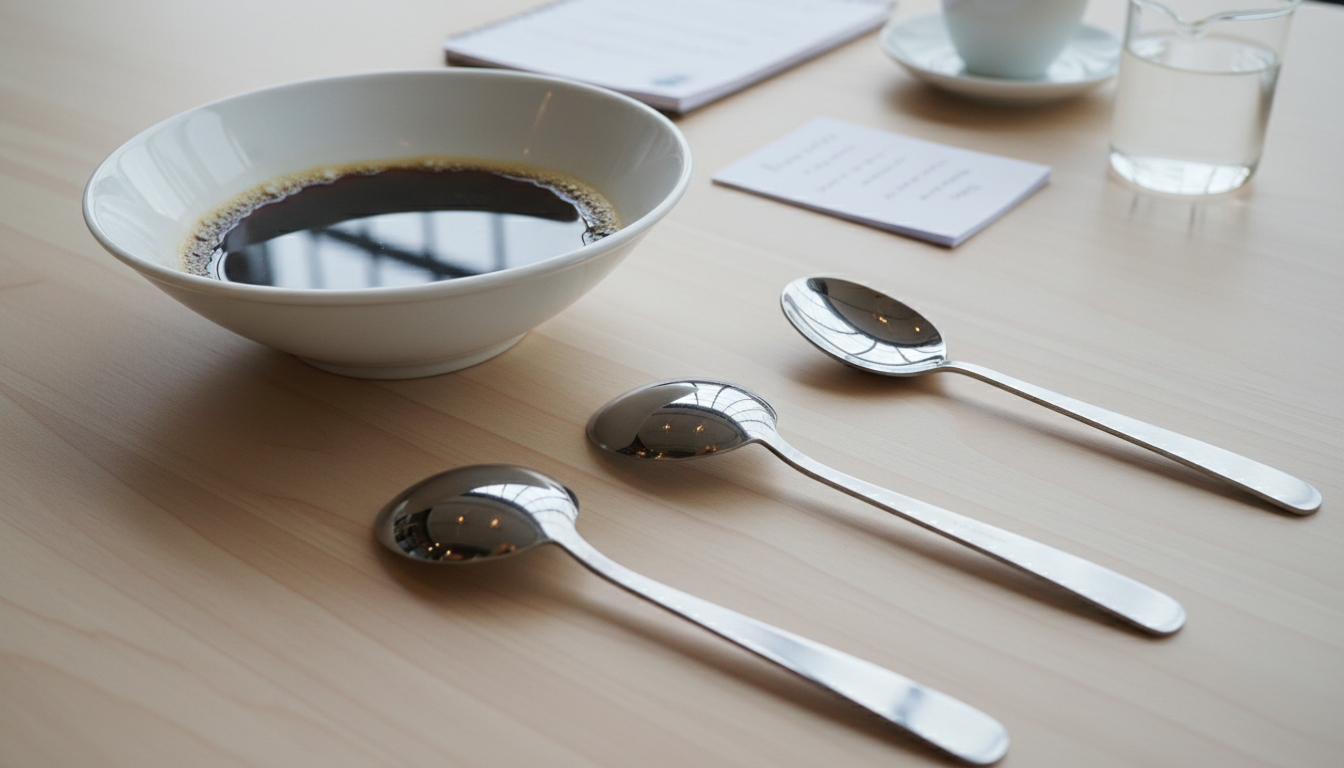
Slurp small spoonful vigorously, drawing air through liquid. This aerates and spreads coffee across palate. Release air through nose for aromatic perception during tasting.
Comparison Method
Taste 2-3 coffees side-by-side. Alternate between samples, noting differences. Comparison reveals characteristics invisible in individual coffees. Drink water between samples to cleanse palate.
Vocabulary Development
Refer to tasting wheel resources. Instead of vague "good" or "bad," practice specific descriptors—"floral with citrus acidity" vs "smooth chocolate and caramel." Vocabulary builds taste recognition.
Tasting Wheel Fundamentals
Common Flavor Categories
- Fruity: Blueberry, raspberry, cherry, citrus, tropical
- Floral: Rose, jasmine, orchid, honeysuckle
- Nutty: Almond, walnut, hazelnut, peanut
- Chocolatey: Dark chocolate, cocoa, milk chocolate
- Spicy: Cinnamon, clove, cardamom, pepper
- Sweet: Honey, caramel, brown sugar, maple
Related Coffee Guides
Sources
1. Specialty Coffee Association. "Professional Cupping Standards and Protocols 2026." 2026.
2. Perfect Daily Grind. "Coffee Tasting Guide for Home Baristas 2026." 2026.
3. Hoffmann, J. "Flavor Perception and Tasting Technique." 2026.
4. Coffee Science Institute. "Taste Perception and Flavor Compound Identification." 2026.
5. National Coffee Association. "Cupping Standards and Vocabulary Reference 2026." 2026.