How to Make Latte at Home: Milk Ratio and Technique
The complete home barista guide to crafting café-quality lattes with proper milk ratio and steaming technique
Quick Answer: Latte Recipe
A latte combines 2oz (60ml) espresso with 8-10oz (240-300ml) steamed milk and a thin layer of microfoam. The latte ratio is approximately 1:4 to 1:5 espresso-to-milk. Steam milk to 150-155°F with 3-4 seconds of air incorporation for silky texture. Pour slowly from low height for integration, then raise for latte art.
Latte Ingredients and Specifications
Latte Ingredients
- Espresso: 2oz (60ml) double shot — the latte base
- Milk: 8-10oz (240-300ml) cold whole milk
- Optional: Flavored syrup (vanilla, caramel, hazelnut)
Latte Specifications
- Ratio: 1:4 to 1:5 (espresso to milk)
- Total Volume: 10-12oz (300-360ml)
- Milk Temperature: 150-155°F (65-68°C)
- Serving Cup: 12oz ceramic mug or glass
Step-by-Step Latte Preparation
Pull a Double Espresso Shot
Grind 18-20g of espresso beans and extract 2oz (60ml) of espresso in 25-30 seconds. The latte base requires balanced espresso — neither bitter nor sour. Medium roast beans work best for lattes, providing chocolate and caramel notes that complement milk sweetness. Extract espresso directly into the serving cup or a pre-warmed vessel.
Prepare Cold Milk for Steaming
Pour 8-10oz of cold whole milk into a 16-20oz steaming pitcher. Cold milk (38-42°F) provides optimal texture and sweetness when heated. Whole milk contains 3.25-4% fat, creating stable microfoam ideal for latte art. Alternative milks (oat, almond) require different techniques — see specific guides for plant-based options.
Steam Milk with Proper Technique
Position steam wand just below milk surface at pitcher edge. Open steam fully and lower pitcher to incorporate air (stretching phase) for 3-4 seconds — this creates microfoam. Submerge wand completely for texturing phase, creating vortex that integrates foam and milk. Heat to 150-155°F (thermometer or hand test: pitcher too hot to hold). Tap pitcher and swirl to integrate.
Pour Steamed Milk into Espresso
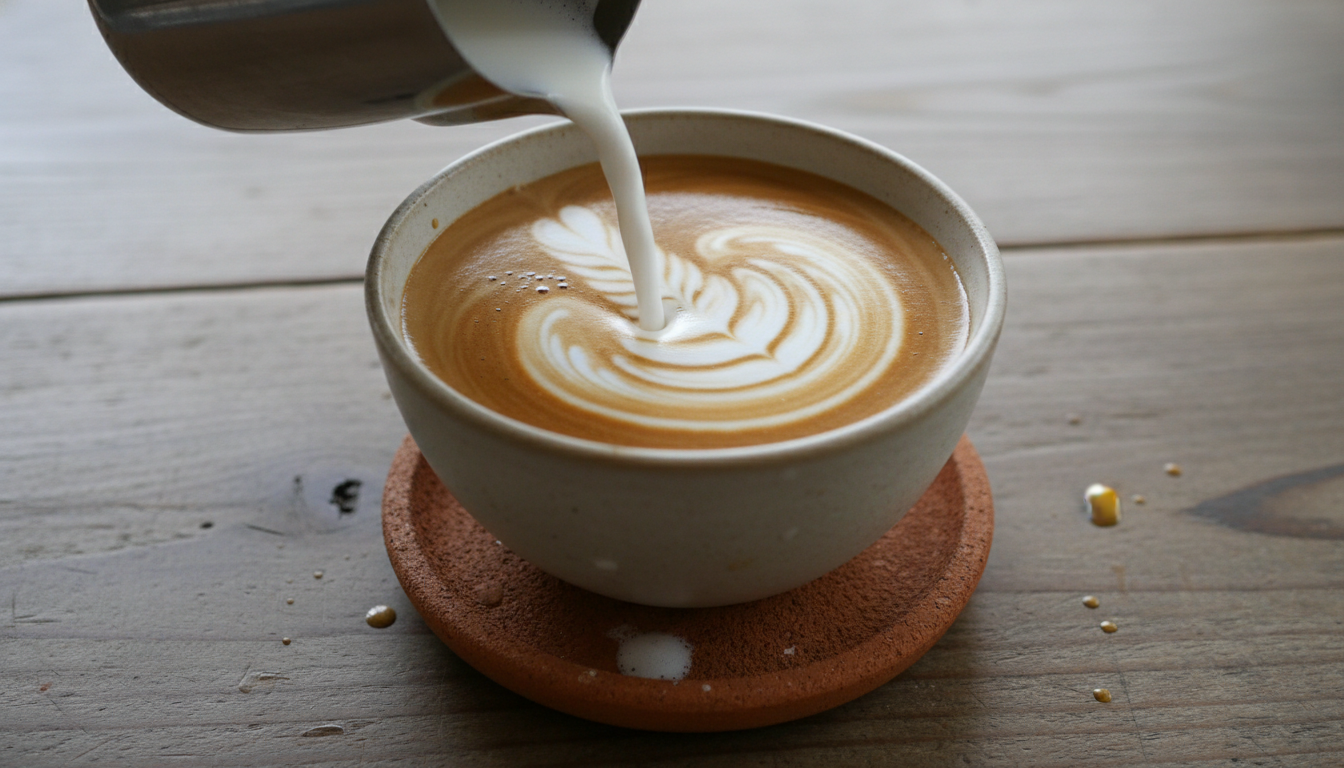
Hold pitcher spout close to espresso surface and pour slowly in center. Initial pouring height (2-3 inches) allows milk to integrate beneath crema. As cup fills, lower pitcher and increase pour speed. For latte art, raise pitcher slightly and pour faster to create white pattern on surface. The latte should have thin foam layer (5-10mm) with glossy appearance.
Serve Latte Immediately
The latte should be served immediately while hot and foam remains integrated. A properly made latte displays distinct layers: dark espresso base, light brown milk integration, and white foam top. Latte art (heart, rosetta, tulip) indicates proper milk texture. The drink should taste creamy and mild with subtle coffee flavor.
Latte Ratio Guide by Size
| Latte Size | Espresso | Steamed Milk | Foam | Total Volume |
|---|---|---|---|---|
| Small (Cortado-style) | 2oz | 4oz | Minimal | 6oz |
| Standard | 2oz | 8oz | 0.5oz | 10.5oz |
| Medium | 2oz | 10oz | 0.5oz | 12.5oz |
| Large | 2-3oz | 12-14oz | 0.5-1oz | 16oz |
Latte vs Other Espresso Drinks
| Drink | Espresso | Milk | Foam | Characteristics |
|---|---|---|---|---|
| Macchiato | 2oz | Minimal | Dollop | Espresso-dominant |
| Cortado | 2oz | 2oz | Minimal | Bold, balanced |
| Flat White | 2oz | 4oz | Thin microfoam | Coffee-forward |
| Cappuccino | 2oz | 2oz | 2oz thick | Foamy, structured |
| Latte | 2oz | 8-10oz | Thin layer | Milk-forward, creamy |
Milk Steaming Technique for Lattes
Stretching Phase (Air Incorporation)
- • Position wand tip just below milk surface
- • Open steam valve fully
- • Hear gentle "tss-tss" sound (paper tearing)
- • Continue 3-4 seconds for latte
- • Add 20-25% volume increase
Texturing Phase (Vortex Creation)
- • Submerge wand completely
- • Angle pitcher to create whirlpool
- • Integrate foam throughout milk
- • Heat to 150-155°F target
- • Glossy, paint-like appearance
Finishing Technique
- • Turn off steam before removing wand
- • Wipe wand immediately
- • Purge steam wand
- • Tap pitcher to break large bubbles
- • Swirl to integrate foam and milk
Temperature Guidelines
- • Below 140°F: Underheated, sweet but thin
- • 150-155°F: Ideal latte temperature
- • Above 160°F: Scorched, bitter flavor
- • Hand test: Too hot to hold = 150°F+
Popular Latte Variations
Vanilla Latte
Add 0.5oz vanilla syrup before espresso. Classic flavored latte popular in cafés.
Caramel Latte
Caramel syrup with drizzle on top. Sweet, dessert-like variation.
Mocha Latte
Chocolate syrup added to espresso before milk. Coffee-chocolate combination.
Hazelnut Latte
Nutty syrup adds warmth. Popular autumn and winter choice.
Oat Milk Latte
Barista-style oat milk creates creamy texture similar to dairy.
Iced Latte
Espresso over ice with cold milk. Different preparation method.
Common Latte Mistakes to Avoid
Overheating Milk
Milk above 160°F scorches proteins, creating bitter flavor and poor texture.
Too Much Foam
Excessive air creates cappuccino-like texture instead of latte's thin foam layer.
Incorrect Ratio
Too much espresso creates bitter drink; too little produces milk-only flavor.
Poor Milk Integration
Visible bubbles or separation indicate improper steaming technique.
Related Espresso Drink Guides
Flat White vs Latte
Compare these similar milk-forward espresso drinks
How to Make a Flat White
Smaller, stronger cousin of the latte
How to Make a Cappuccino
Equal parts espresso, milk, and foam
How to Make a Cortado
1:1 ratio for espresso-forward flavor
Espresso Milk Ratio Chart
Complete comparison of all drink ratios
How to Steam Milk for Latte Art
Master milk texturing technique