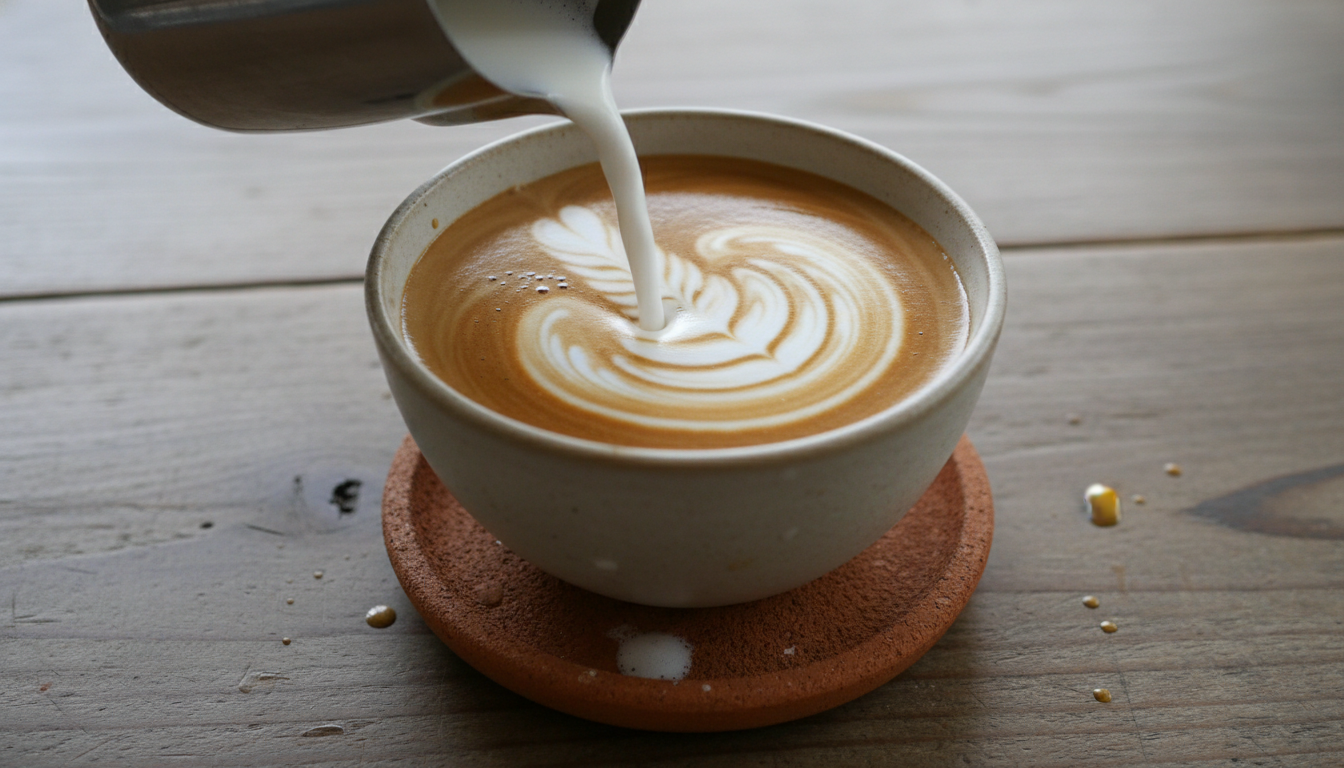
How to Steam Milk for Latte Art: Beginner to Advanced
Master the milk steaming technique for glossy microfoam — the foundation of every latte art pattern
Quick Answer: Milk Steaming for Latte Art
Latte art milk requires two phases: stretching (introducing air at the surface for 2-4 seconds) and texturing (spinning without air until 140-150°F). Position the steam wand tip just below the milk surface at a slight angle to create a vortex. Target glossy, paint-like microfoam with no visible bubbles.
Equipment Required for Latte Art Milk Steaming
Essential Latte Art Equipment
- Steam Wand: A traditional steam wand (not Panarello auto-frothing) provides the control needed for latte art microfoam
- Milk Pitcher: A 12oz (350ml) stainless steel pitcher with a pointed spout for latte art pouring — fill to 1/3 capacity
- Thermometer: A clip-on milk thermometer or infrared thermometer for monitoring latte art milk temperature
- Cold Whole Milk: Whole milk (3.5%+ fat) steamed from refrigerator temperature (38-40°F) produces the best latte art microfoam
Latte Art Milk Steaming Specifications
- Starting Temperature: 38-40°F (3-4°C) — cold milk provides more steaming time for latte art texture development
- Target Temperature: 140-150°F (60-65°C) — the ideal latte art milk temperature range
- Maximum Temperature: 160°F (71°C) — milk proteins denature above this temperature, destroying latte art foam quality
- Steam Pressure: 1.0-1.5 bar minimum for adequate latte art microfoam production
Step-by-Step Milk Steaming Technique for Latte Art
Purge the Steam Wand Before Steaming Latte Art Milk
Open the steam wand briefly into an empty cup to purge condensed water from the steam line. Condensed water dilutes latte art milk and reduces steaming power. A dry purge blast lasting 1-2 seconds clears the steam line completely.
Position the Steam Wand for Latte Art Microfoam
Submerge the steam wand tip approximately 1cm below the milk surface. Angle the steam wand slightly off-center to create a spinning vortex in the milk pitcher. The steam wand tip position determines latte art microfoam quality — too deep creates no foam, too shallow creates large bubbles.
Stretching Phase: Introduce Air for Latte Art Volume (2-4 Seconds)
Open the steam valve fully. Lower the milk pitcher slightly to bring the steam wand tip to the milk surface — listen for a gentle "tch-tch-tch" paper-tearing sound. The stretching phase introduces air into the latte art milk for 2-4 seconds. For latte art, stretch less than for cappuccino — latte art requires approximately 20-30% volume increase.
Texturing Phase: Spin and Polish Latte Art Microfoam
Raise the milk pitcher to submerge the steam wand tip 1-2cm below the surface. The texturing phase creates a whirlpool vortex that folds air bubbles into the latte art milk, producing glossy microfoam. No more air should enter during the texturing phase — the sound should be a smooth humming, not hissing. Continue texturing until the latte art milk reaches 140-150°F.
Finish and Polish the Latte Art Milk
Close the steam valve when the milk pitcher feels too hot to hold comfortably (approximately 140-150°F). Wipe the steam wand immediately with a damp cloth. Tap the milk pitcher firmly on the counter once to pop any surface bubbles. Swirl the latte art milk in the pitcher continuously until the surface resembles wet paint — glossy, uniform, with no visible bubbles.
Latte Art Microfoam Quality Assessment
Perfect Latte Art Microfoam
- - Glossy, wet-paint appearance
- - No visible bubbles on surface
- - Pours with thick, honey-like consistency
- - Integrates smoothly into espresso crema
- - Holds latte art pattern definition
Acceptable Latte Art Milk (Needs Practice)
- - Slightly foamy surface with small bubbles
- - Pours with thin consistency
- - Partial latte art pattern visible
- - Foam separates slightly from liquid milk
- - Improvement: stretch less, texture longer
Poor Latte Art Milk (Restart)
- - Large visible bubbles (dry foam)
- - Foam sits on top of liquid
- - Cannot pour latte art patterns
- - Scorched or burnt milk smell
- - Solution: start with fresh cold milk
Latte Art Milk Steaming Troubleshooting
Latte Art Milk Has Large Bubbles
Large bubbles in latte art milk indicate the steam wand tip is positioned too high during stretching. Lower the steam wand tip deeper into the milk. The stretching sound should be a gentle "tch" — screaming or gurgling sounds mean the steam wand is too close to the milk surface.
Latte Art Milk Has No Foam Volume
Insufficient foam for latte art means the stretching phase was too short or the steam wand was positioned too deep. Extend the stretching phase to 3-4 seconds. The latte art milk surface should rise 20-30% during the stretching phase for proper latte art volume.
Latte Art Milk Tastes Burnt or Scorched
Burnt latte art milk exceeds 160°F (71°C) where milk proteins denature permanently. Use a thermometer until temperature becomes instinctive. The milk pitcher should feel uncomfortably hot but not painful — that sensation corresponds to approximately 145-155°F. Always start latte art steaming with cold milk from the refrigerator.
Latte Art Milk Separates During Pouring
Separated latte art milk indicates insufficient texturing time. The texturing phase should last 15-25 seconds — long enough to fully integrate air bubbles into the milk matrix. Swirl the milk pitcher for 5-10 seconds after steaming to reintegrate any separation before pouring latte art.
Milk Types for Latte Art: Dairy and Plant-Based
| Milk Type | Latte Art Suitability | Key Considerations |
|---|---|---|
| Whole Milk (3.5%+) | Excellent | Best for beginners; fat stabilizes microfoam |
| 2% Reduced Fat | Good | Slightly less stable foam than whole milk |
| Skim Milk | Moderate | Large bubbles, less creamy texture |
| Oat Milk (Barista) | Very Good | Best plant option; formulated for steaming |
| Almond Milk | Moderate | Thin foam; use barista formulations |
| Soy Milk | Moderate | Can curdle with high heat; steam cooler |
Whole milk remains the gold standard for latte art due to its fat and protein content. Milk fat stabilizes air bubbles during steaming, creating lasting microfoam structure. The proteins in milk (casein and whey) denature during heating, creating the matrix that holds air bubbles in suspension.
Plant-based milks vary significantly in latte art suitability. Barista-formulated oat milk performs best, with additives designed to mimic dairy milk's foaming properties. Standard almond and soy milk produce thin, unstable foam unsuitable for detailed latte art.
When steaming plant-based milk for latte art, start with refrigerated cold milk (just like dairy) and target slightly lower final temperatures (130-140°F) to prevent separation and curdling. Some plant milks require gentler stretching phases.
Advanced Latte Art Milk Steaming Techniques
Temperature-by-Touch Method
Experienced baristas steam milk without thermometers using hand sensation. The milk pitcher temperature progression follows this pattern:
- • 100°F: Pitcher feels slightly warm (begin texturing phase)
- • 120°F: Clearly warm but comfortable to hold
- • 140°F: Uncomfortably hot but tolerable (target range)
- • 155°F+: Too hot to hold (overheated, proteins damaged)
Silence Technique for Microfoam
The "silence technique" eliminates hissing during the stretching phase for ultra-fine microfoam. Position the steam wand slightly deeper than usual and introduce air so gradually that no tearing sound occurs. This creates exceptionally fine bubbles ideal for detailed latte art but requires precise wand control.
Split Steaming for Multiple Drinks
When preparing multiple milk drinks, steam a larger pitcher (20oz) and split between two cups. Steam to 145°F, swirl vigorously, then pour half into each cup. This technique works best for identical drinks (two lattes) rather than different foam textures.
Related Latte Art and Milk Steaming Guides
Latte Art Pouring Guide
Learn latte art patterns: heart, rosetta, tulip pouring techniques
Latte Art Troubleshooting
Diagnose and fix common latte art defects and pattern problems
Best Milk Frothers for Latte Art
Equipment options for latte art milk frothing at home
Best Oat Milk for Frothing
Plant-based milk options that steam well for latte art
How to Texture Milk for Microfoam
Advanced microfoam techniques for velvet milk texture
What Temperature Does Milk Burn
Milk temperature science for perfect latte art steaming
Frequently Asked Questions
Why is my steamed milk not creamy for latte art?
Non-creamy milk usually indicates insufficient fat content (use whole milk), overheating (stay under 160°F), or inadequate texturing phase (extend vortex spinning time). The texturing phase integrates air bubbles into the milk matrix—short texturing creates foamy rather than creamy texture.
Can I make latte art milk without a steam wand?
Electric milk frothers and French press methods can create foam, but neither produces true microfoam suitable for latte art. Steam wands create the precise combination of heat, pressure, and texture required for glossy, pourable microfoam. For latte art, a machine with a proper steam wand is essential.
How long does it take to learn milk steaming for latte art?
Basic milk steaming for drinkable foam takes 1-2 weeks of daily practice. Achieving consistent, glossy microfoam suitable for latte art typically requires 1-2 months. Pouring patterns (heart, rosetta) develop over 2-4 months. Mastery of advanced patterns requires 6+ months of regular practice.
Why does my milk scream when steaming?
The "screaming" sound indicates the steam wand tip is too close to the milk surface, creating violent air introduction. Lower the pitcher slightly to submerge the tip 1cm deeper. The stretching phase should produce a gentle "tch-tch" paper-tearing sound, not a high-pitched whistle.
Can I re-steam milk that didn't foam properly?
No, re-steaming milk is not recommended. Once heated, milk proteins begin to denature. Reheating causes further protein breakdown, resulting in flat, thin foam with off-flavors. Always discard improperly steamed milk and start fresh with cold milk from the refrigerator.
Mastering Milk Steaming for Latte Art
Perfect latte art milk requires understanding the two-phase steaming process: stretching to introduce air, then texturing to integrate that air into creamy microfoam. The steam wand position, timing, and temperature control work together to create the glossy, paint-like milk texture that pours beautifully into espresso.
Whole milk from refrigerator temperature provides the best foundation for learning. Start with cold milk, introduce air gently during the brief stretching phase, then maintain a steady vortex during the longer texturing phase until the pitcher becomes uncomfortably hot to hold.
Milk steaming skill develops through repetition. Each steaming session builds intuition for wand position, sound, and temperature. With consistent practice, the techniques become automatic, and perfectly textured milk becomes the standard rather than the goal.