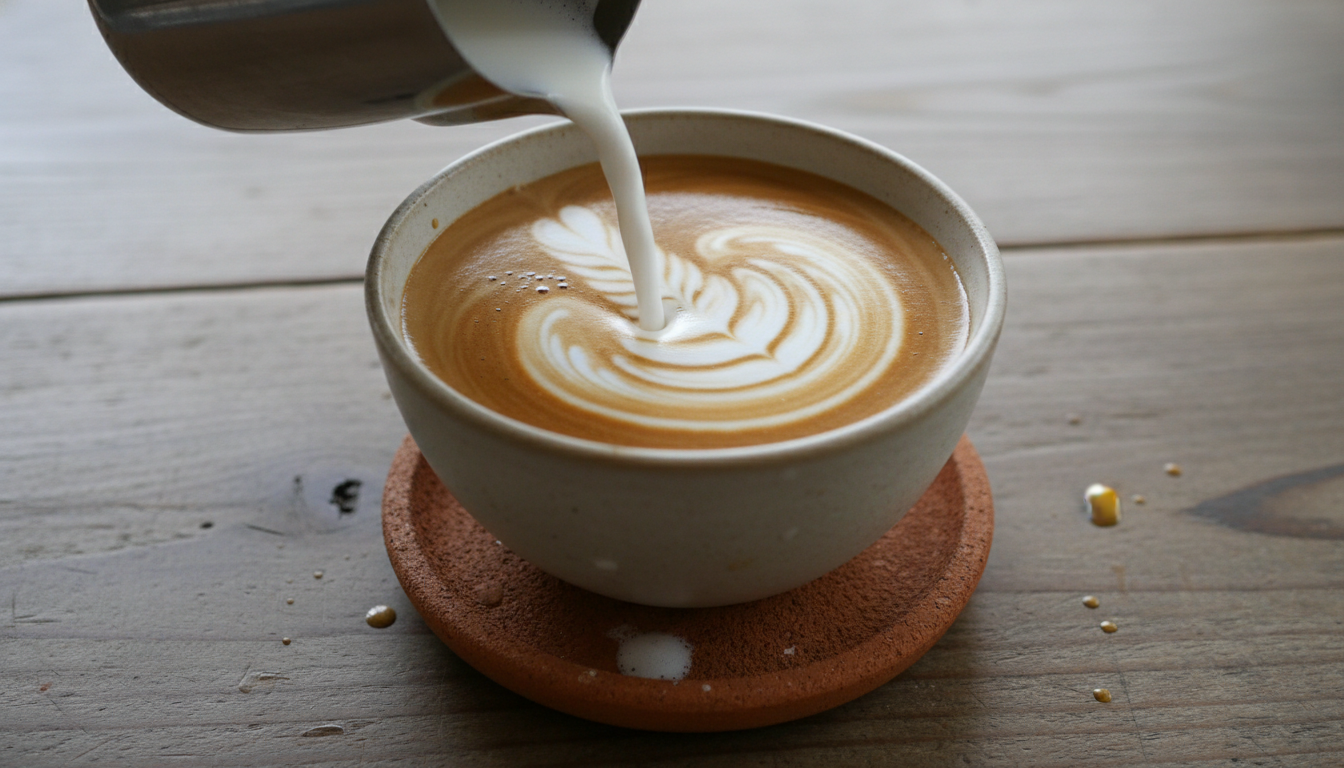
Milk Burning Temperature Quick Answer
Milk starts to taste burnt when milk heating pushes milk beyond the typical microfoam target range and creates scorched flavors near the bottom of a pitcher or on a pan surface. A practical milk steaming target for most espresso drinks is 140–155°F (60–68°C). Milk flavor quality often degrades above ~160°F (71°C), and milk scalding risk increases when milk approaches 180°F (82°C).
Milk burning in espresso drinks is primarily a flavor problem caused by overheating and localized scorching. Milk overheating changes sugar perception and changes protein structure. Milk scorching happens when milk contacts a very hot surface for too long, which is common during stovetop heating and can happen near steam wand hot spots in a pitcher.
Milk steaming quality improves when a home barista controls milk temperature, milk texture (microfoam), and milk incorporation (whirlpool). A thermometer or temperature strip reduces guesswork and reduces inconsistent milk outcomes.
Milk Temperature Ranges for Espresso Drinks
140–155°F (60–68°C): Common Microfoam Target
A 140–155°F milk temperature range supports sweet-tasting milk and stable microfoam texture. Many baristas use 150°F as a consistent target for cappuccinos, lattes, and flat whites because 150°F keeps milk sweetness intact while keeping drink temperature comfortable.
160°F (71°C): Milk Flavor Degradation Threshold
Milk flavor often becomes flatter above ~160°F. Milk sweetness perception can drop, and milk can develop cooked flavors. A home barista who targets 160°F or higher should expect less sweetness and less elegant texture compared to a 150°F target.
180°F (82°C): Scalding Risk Range
Milk scalding is more likely as milk approaches ~180°F, especially in thin pans or when milk sits against a hot surface. Scalded milk develops cooked and burnt flavors and loses the clean sweetness that supports espresso balance.
Why Milk Tastes Burnt During Steaming
Localized Scorching on Metal Surfaces
Milk scorching is often localized, meaning a small volume of milk burns at the pitcher wall or at the bottom of a pan. Local scorching adds a burnt aroma that spreads through the entire pitcher after swirling. Local scorching risk increases when a steam wand is positioned too close to the pitcher wall or when a stovetop pan is too hot.
Overheating and Texture Breakdown
Milk microfoam quality depends on creating small, uniform bubbles and a glossy texture. Overheating reduces texture quality and can produce dry foam. Dry foam reduces sweetness perception and makes cappuccinos and flat whites taste harsher.
Incorrect Aeration Timing
Milk steaming requires early aeration (introducing small air bubbles) and later texturing (whirlpool incorporation). Aeration that continues too long produces large bubbles and thin milk under foam. Large bubble foam often pairs with higher temperatures and creates a burnt or cooked impression.
How to Avoid Burning Milk
Use a Thermometer and Stop at 150°F
A milk thermometer reduces guesswork and improves consistency. A 150°F target works well for most espresso drinks. A home barista can adjust target temperature slightly lower for sweeter milk and slightly higher for hotter serving temperature.
Position the Steam Wand for a Stable Whirlpool
A stable whirlpool pulls microfoam into the milk and prevents foam separation. Steam wand position near the surface creates aeration. Steam wand position slightly deeper creates incorporation. A stable whirlpool reduces localized hot spots and reduces scorching risk.
Choose Milk Types That Steam Predictably
Whole milk usually steams predictably because milk fat supports mouthfeel and milk proteins support foam. Oat milk steaming performance depends on oat milk formulation and barista edition additives. Eggnog behaves differently than milk and benefits from lower heating targets.
Frequently Asked Questions About Milk Burning Temperature
Is 160°F too hot for steamed milk?
160°F is not automatically burnt, but 160°F is a common threshold where milk sweetness and texture start to degrade. Many specialty coffee recipes target 140–155°F because the flavor profile remains sweeter and cleaner.
Why does milk taste burnt even when milk temperature is low?
Milk can taste burnt from localized scorching even when average temperature seems acceptable. Local scorching often happens on a pan bottom or on a pitcher wall. Strong burnt aroma compounds can dominate milk flavor after swirling.
Does oat milk burn at the same temperature as dairy milk?
Oat milk heating behavior differs from dairy milk because oat milk contains different proteins, starches, and emulsifiers. Oat milk can develop cooked flavors quickly when overheated. Many oat milk recipes still perform best in the 140–155°F range.
Related Resources
How to Make a Cappuccino
Use foam ratios and milk texture targets for cappuccino
How to Make a Flat White
Use microfoam technique and espresso balance for flat whites
Best Beans for Oat Milk Drinks
Match espresso roast profile to non-dairy milk sweetness
Espresso Eggnog Guide
Use gentle heating targets for egg-based holiday drinks
How to Make Irish Coffee
Explore another hot coffee drink where temperature matters
Best Home Espresso Machine (2026)
Choose machines with steam performance and temperature stability