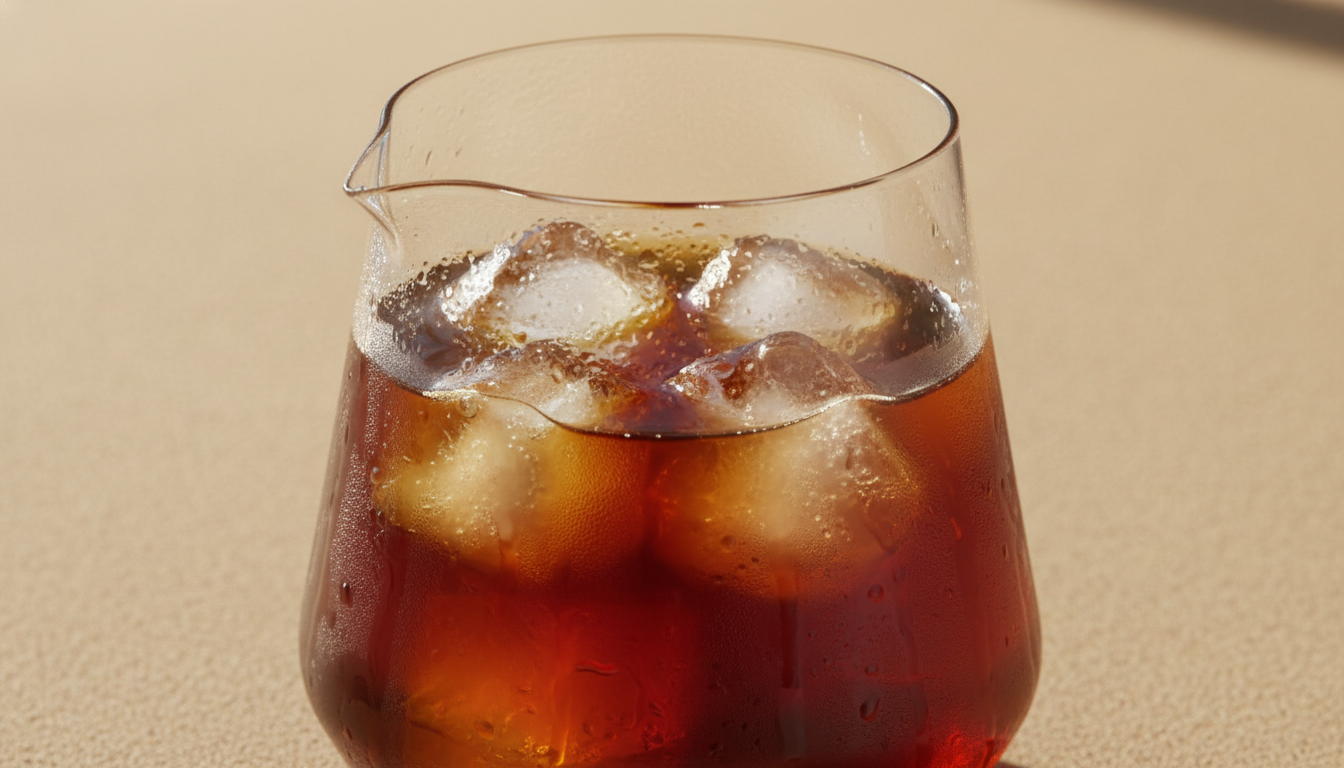
Iced Espresso Troubleshooting: Dilution & Flavor
Iced espresso drinks present unique challenges that don't exist in hot preparations. Temperature affects extraction perception, ice introduces variables, and dilution happens whether you plan for it or not. This systematic troubleshooting guide helps you diagnose and fix the most common iced espresso problems.
Symptom-to-Solution Quick Reference
| Symptom | Likely Cause | Primary Fix | Secondary Fix |
|---|---|---|---|
| Weak/watery | Insufficient coffee | +1 shot per serving | Reduce ice 30% |
| Bitter/harsh | Over-extraction | Grind coarser | Reduce yield 3-5g |
| Sour/acidic | Under-extraction | Grind finer | Increase yield 3-5g |
| Metallic/off | Water quality | Filtered water | Check machine |
| Flat/no aroma | Stale beans | Fresh roast (<14d) | Store properly |
| Cloudy appearance | Temperature shock | Flash chill method | Pre-cool espresso |
Understanding Iced Espresso Dynamics
Cold temperatures suppress flavor perception. What tastes balanced at 60°C may taste weak at 5°C. The same espresso that shines in a hot latte can disappear in an iced version. This isn't your imagination—our taste buds literally perceive less sweetness and aroma at lower temperatures.
Ice introduces another variable: dilution over time. A perfectly balanced iced drink at minute zero becomes increasingly watery as you sip. Planning for this inevitable change is essential for consistent satisfaction. The solutions below address both immediate flavor and longevity concerns.
Problem: Weak or Watery Flavor
Diagnostic Checklist
Check 1: Shot Count
Iced drinks require more espresso than hot equivalents. Standard ratio: 2 shots (36ml) per 12oz serving minimum. If using single shot, weakness is expected. Increase to double shot as baseline.
Check 2: Ice Quantity
Excessive ice accelerates dilution. Standard: 120g ice per 12oz drink. If using >150g, reduce by 25-30%. Consider flash chilling to use less ice.
Check 3: Extraction Strength
Measure your espresso TDS (total dissolved solids) if possible. Target 9-11% for iced applications vs. 8-10% for hot. If tasting weak, try ristretto ratio (1:1.5 instead of 1:2).
Check 4: Bean Freshness
Stale coffee (roasted >3 weeks ago) loses aromatic compounds that survive temperature better than flavor compounds. Iced preparations expose staleness more harshly than hot. Use beans roasted within 14 days.
Problem: Bitter or Harsh Taste
Diagnostic Checklist
Check 1: Grind Size
Bitterness usually indicates over-extraction. Grind 1-2 clicks coarser and retest. Target extraction time: 25-30 seconds for standard double shot. If pulling >35 seconds, grind is definitely too fine.
Check 2: Water Temperature
Excessive heat extracts bitter compounds. Ideal range: 90-94°C. If your machine runs hot (>96°C), try temperature surfing or cooling flushes before extraction.
Check 3: Roast Level
Dark roasts (Agtron <45) taste bitter when iced—cold emphasizes roast defects. Switch to medium roast (Agtron 55-65) for iced applications. If stuck with dark roast, reduce extraction temperature to 88-90°C.
Check 4: Channeling
Uneven extraction creates bitter channels. Use WDT technique for distribution. Check for spurting or uneven flow from portafilter—these indicate channeling.
Problem: Sour or Underdeveloped Taste
Diagnostic Checklist
Check 1: Grind Size
Sourness indicates under-extraction. Grind 1-2 clicks finer and retest. Insufficient contact time between water and coffee leaves acidic compounds dominating while sweet/bitter compounds remain unextracted.
Check 2: Dose Adequacy
Under-dosing creates channeling and under-extraction. Verify basket capacity: standard double baskets hold 18-20g. If dosing <16g in double basket, increase dose or switch to smaller basket.
Check 3: Bean Development
Very light roasts (Agtron >70) require longer extraction or higher temperature. Try extending yield to 1:2.5 ratio or increasing temperature to 94-96°C. Consider resting beans 7-14 days post-roast for development.
Check 4: Pressure Profile
Pre-infusion helps develop light roasts. If your machine supports it, use 3-5 second pre-infusion at low pressure before full 9-bar extraction. This softens puck and improves extraction uniformity.
Problem: Excessive Dilution
Dilution Control Strategies
Strategy 1: Coffee Ice Cubes
Freeze brewed coffee or espresso in ice cube trays. Use these instead of water ice—melting adds coffee flavor rather than diluting. Prepare batch in advance and store in freezer bag.
Strategy 2: Flash Chilling
Chill espresso before adding ice using cocktail shaker with ice bath or pour-over ice in separate vessel. Pre-chilled espresso requires 50% less ice for same final temperature.
Strategy 3: Large Ice Format
Use large cubes (3-4cm) or spheres instead of crushed ice. Reduced surface area slows melting significantly. Single large cube melts slower than equivalent volume of small cubes.
Strategy 4: Reduced Water Content
For iced americanos, use concentrated ratios. Start with 1:4 espresso-to-water instead of 1:6, accounting for inevitable ice melt contribution.
Advanced Diagnostics
When Standard Fixes Fail
Test: The Hot vs. Cold Comparison
Pull two identical shots. Taste one hot, chill the other in ice bath for 2 minutes, then taste cold. If both taste bad, problem is extraction—not temperature. If hot is good but cold is bad, you need to adjust strength for cold service.
Test: Water Quality Check
Brew espresso with bottled spring water. If flavor improves dramatically, your tap/filter water has issues. Ideal water: 100-150ppm total dissolved solids, 30-50ppm hardness, pH 6.5-7.5.
Test: Extraction Yield Measurement
If you have a refractometer, measure extraction yield. Target 18-22% extraction for balanced flavor. Below 18% tastes sour/weak; above 22% tastes bitter/harsh. Adjust grind to hit target range.
Related Guides
Complete Espresso Troubleshooting
Comprehensive guide to all espresso problems.
Taste-Based Extraction Diagnosis
Diagnose extraction issues by taste alone.
Iced Americano Ratios
Proper water and ice ratios for dilution control.
Flash Chill Techniques
Rapid cooling without excessive dilution.
Extraction Time Guide
Dialing in shot timing for optimal flavor.
Channeling Explained
Understanding and preventing uneven extraction.
Key Takeaways
- → Iced drinks need more coffee: Use +50% espresso compared to hot equivalents for equivalent perceived strength.
- → Cold suppresses sweetness: What tastes balanced hot may taste sour cold—adjust extraction accordingly.
- → Use coffee ice cubes: Eliminates dilution entirely by replacing water ice with frozen coffee.
- → Large ice melts slower: Single large cubes maintain concentration longer than crushed ice.
- → Test hot vs. cold: Compare identical shots hot and chilled to isolate temperature effects from extraction problems.