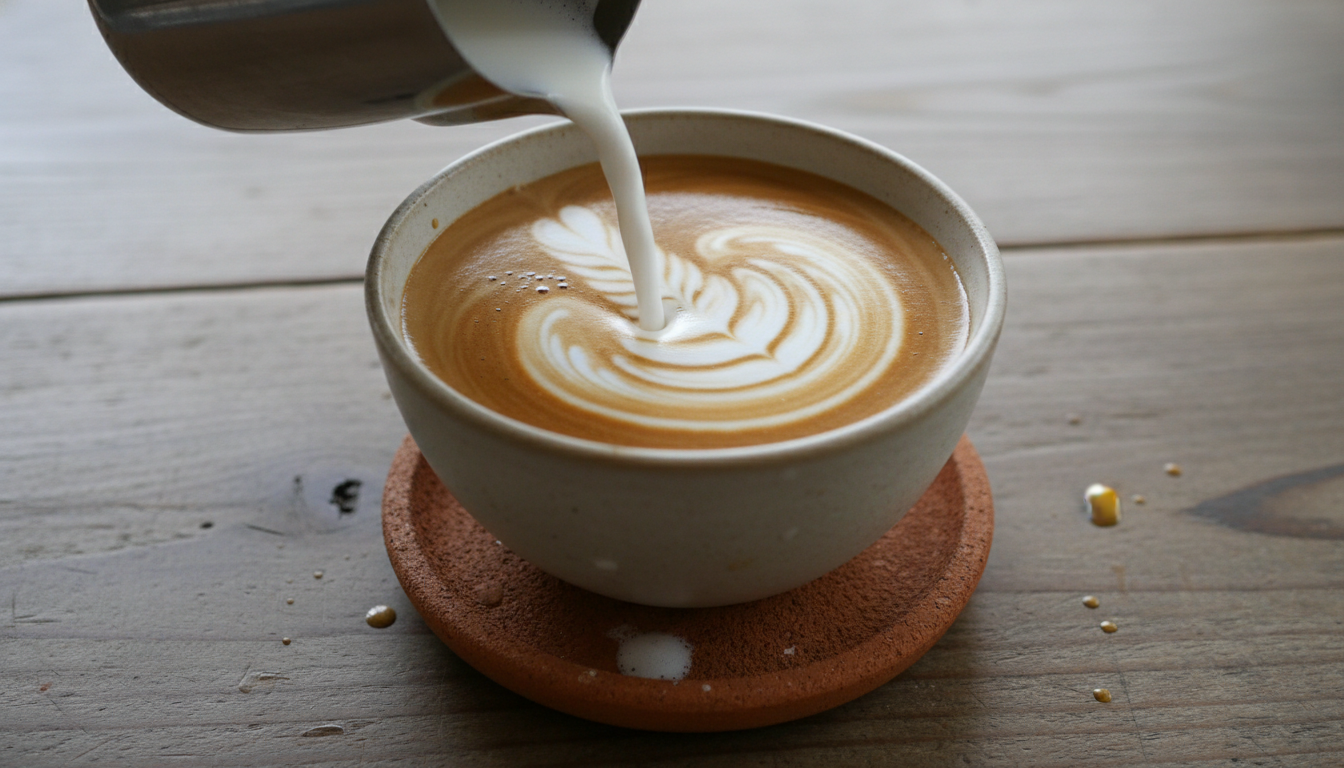
Microfoam Consistency by Drink Type
Different espresso drinks require different foam textures and ratios. This guide breaks down the exact microfoam consistency, milk temperature, and pour technique for each drink style.
One Microfoam Texture Doesn't Fit All Drinks
Most guides treat microfoam as a single texture. In reality, each espresso drink requires a different foam consistency, temperature range, and milk-to-espresso ratio. A cappuccino needs thick, airy foam; a flat white needs velvety, dense microfoam; a cortado needs minimal foam. Understanding these differences is the key to replicating café-quality drinks at home.
Cappuccino: Thick, Airy Foam
Drink Composition
Ratio: 1 shot espresso : 1 part steamed milk : 1 part foam
Total Volume: 5–6 oz (150–180ml) in a 6–8 oz cup
Microfoam Specifications
Foam Texture: Thick, airy, with visible bubbles. Less dense than flat white microfoam.
Milk Temperature: 150–155°F (65–68°C). Cappuccino milk is slightly cooler than flat white to preserve thicker foam.
Foam Depth: 1–1.5 inches of foam on top. This is the signature cappuccino layer.
Bubble Size: Slightly larger than flat white (1–2mm bubbles acceptable). Cappuccino foam is less refined.
How to Steam for Cappuccino
- Fill pitcher to the 1-cup mark (8 oz / 240ml milk for a single cappuccino).
- Submerge wand tip just below surface. Create a whirlpool for 3–4 seconds to incorporate air.
- Lower wand deeper into milk. Continue steaming until milk reaches 150–155°F.
- Remove wand. Tap pitcher on counter to break large bubbles. Swirl gently.
- Pour immediately. Cappuccino foam breaks down quickly; delay reduces quality.
Common Cappuccino Mistakes
- ❌ Steaming too long: Milk becomes too hot; foam breaks down.
- ❌ Not enough air incorporation: Foam is too dense, not thick enough.
- ❌ Pouring too slowly: Foam separates from milk during pour.
- ❌ Using too little milk: Drink becomes too espresso-forward.
Flat White: Dense, Velvety Microfoam
Drink Composition
Ratio: 1–2 shots espresso : 3–4 parts steamed milk with thin microfoam layer
Total Volume: 5–6 oz (150–180ml) in a 5–6 oz cup
Microfoam Specifications
Foam Texture: Velvety, dense, almost liquid. Microfoam should be so fine it's nearly invisible.
Milk Temperature: 155–160°F (68–71°C). Slightly hotter than cappuccino to create finer microfoam.
Foam Depth: 0.25–0.5 inches of foam. Flat white has minimal visible foam layer.
Bubble Size: Extremely fine (0.5–1mm bubbles). This is the defining characteristic of flat white microfoam.
How to Steam for Flat White
- Fill pitcher to the 1-cup mark (8 oz / 240ml milk).
- Submerge wand tip just below surface. Create a whirlpool for 2–3 seconds only. Minimal air incorporation.
- Lower wand deeper. Continue steaming until milk reaches 155–160°F.
- Remove wand. Tap pitcher gently. Microfoam should look glossy and smooth, almost like liquid.
- Pour immediately. Flat white microfoam is delicate and breaks down quickly.
Common Flat White Mistakes
- ❌ Too much air incorporation: Foam becomes thick like cappuccino.
- ❌ Milk too cool: Microfoam doesn't integrate smoothly into espresso.
- ❌ Steaming too long: Milk becomes too hot; texture breaks down.
- ❌ Visible foam layer: Flat white should have minimal foam on top.
Cortado: Minimal Foam, Equal Ratio
Drink Composition
Ratio: 1 shot espresso : 1 part steamed milk (1:1)
Total Volume: 3–4 oz (90–120ml) in a 4 oz cup
Microfoam Specifications
Foam Texture: Minimal. Cortado is mostly steamed milk with just a thin layer of microfoam.
Milk Temperature: 150–155°F (65–68°C). Standard steaming temperature.
Foam Depth: 0.125–0.25 inches. Almost no visible foam layer.
Bubble Size: Fine microfoam (0.5–1mm). Texture should be smooth and integrated.
How to Steam for Cortado
- Fill pitcher to the 0.5-cup mark (4 oz / 120ml milk for a single cortado).
- Submerge wand tip just below surface. Create a whirlpool for 1–2 seconds only. Minimal air.
- Lower wand deeper. Continue steaming until milk reaches 150–155°F.
- Remove wand. Tap pitcher gently. Microfoam should be almost imperceptible.
- Pour immediately into the espresso shot. Cortado should look like espresso with a thin milk layer on top.
Common Cortado Mistakes
- ❌ Too much foam: Cortado becomes a mini cappuccino.
- ❌ Wrong ratio: Using more milk than espresso defeats the cortado concept.
- ❌ Pouring too slowly: Espresso and milk separate instead of blending.
Macchiato: Espresso with Foam Dollop
Drink Composition
Ratio: 1 shot espresso : 0.5 oz (15ml) steamed milk with thick foam
Total Volume: 1.5–2 oz (45–60ml) in a 3 oz cup
Microfoam Specifications
Foam Texture: Thick, airy foam. Macchiato is mostly foam with a small amount of steamed milk underneath.
Milk Temperature: 150–155°F (65–68°C).
Foam Depth: 0.75–1 inch. Macchiato is predominantly foam.
Bubble Size: Larger bubbles acceptable (1–2mm). Macchiato foam is airy and light.
How to Steam for Macchiato
- Fill pitcher to the 0.25-cup mark (2 oz / 60ml milk).
- Submerge wand tip just below surface. Create a whirlpool for 4–5 seconds. Maximize air incorporation.
- Lower wand deeper briefly. Continue steaming until milk reaches 150–155°F.
- Remove wand. Tap pitcher gently. Foam should be thick and airy.
- Pour a small amount of steamed milk into espresso, then top with foam using a spoon.
Latte: Thin Microfoam, Milk-Forward
Drink Composition
Ratio: 1 shot espresso : 3–4 parts steamed milk with thin microfoam
Total Volume: 8–12 oz (240–360ml) in a 10–12 oz cup
Microfoam Specifications
Foam Texture: Very thin, almost liquid microfoam. Latte is primarily steamed milk.
Milk Temperature: 155–160°F (68–71°C).
Foam Depth: 0.25–0.5 inches. Minimal visible foam.
Bubble Size: Very fine (0.5–1mm). Microfoam should be smooth and integrated.
How to Steam for Latte
- Fill pitcher to the 1.5–2 cup mark (12–16 oz / 360–480ml milk).
- Submerge wand tip just below surface. Create a whirlpool for 2–3 seconds. Minimal air.
- Lower wand deeper. Continue steaming until milk reaches 155–160°F.
- Remove wand. Tap pitcher gently. Microfoam should be barely visible.
- Pour slowly into espresso. Latte should look like espresso with a thin layer of microfoam on top.
Quick Reference: Microfoam by Drink
| Drink | Ratio | Temp (°F) | Foam Depth | Foam Character |
|---|---|---|---|---|
| Cappuccino | 1:1:1 | 150–155 | 1–1.5" | Thick, airy |
| Flat White | 1:3–4 | 155–160 | 0.25–0.5" | Velvety, dense |
| Cortado | 1:1 | 150–155 | 0.125–0.25" | Minimal |
| Macchiato | 1:0.5 | 150–155 | 0.75–1" | Thick, airy |
| Latte | 1:3–4 | 155–160 | 0.25–0.5" | Thin, liquid |
Related Guides
Practice One Drink at a Time
Master cappuccino steaming first—it's the most forgiving. Once you can consistently produce thick, airy foam, move to flat white (which requires finer microfoam). This progression builds the muscle memory and intuition you need for all espresso drinks.