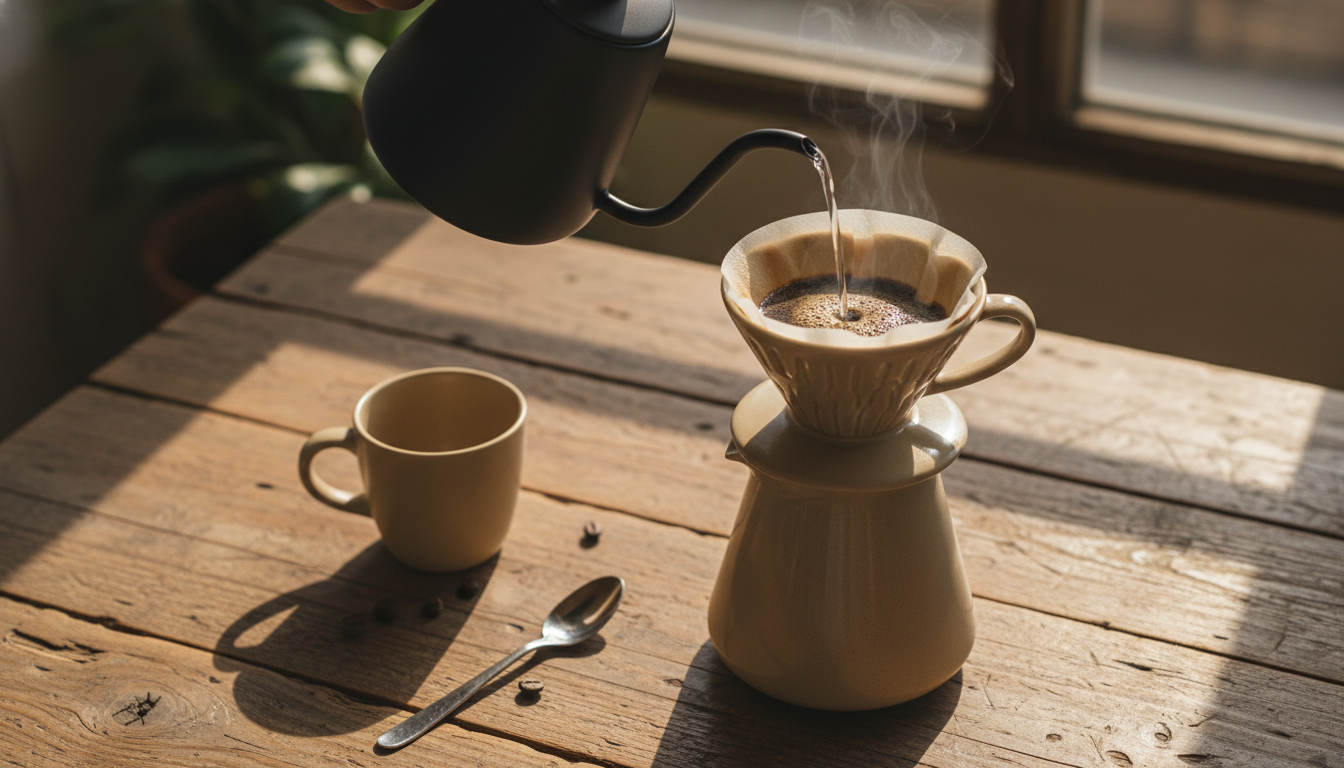
Pour Over History Quick Answer
Pour over coffee originated in Germany in the early 1900s with the Melitta filter invention. Pour over coffee brewing evolved from simple cloth filters to modern paper and metal filters. The pour over method gained international popularity through the 20th century and experienced a resurgence in specialty coffee culture during the 2000s.
Pour over coffee represents one of the most influential brewing methods in coffee history, combining simplicity with precision. Pour over coffee brewing has evolved from a basic household method to a cornerstone of specialty coffee culture.
Pour over coffee's history reflects broader trends in coffee consumption, from industrial mass production to artisanal specialty coffee. The method's resurgence demonstrates growing appreciation for manual brewing and coffee quality among modern consumers.
Origins of Pour Over Coffee
Melitta Filter Invention (1908)
Melitta Bentz, a German housewife, invented the paper filter pour over method in 1908. Melitta Bentz sought to eliminate coffee grounds in her cup and developed a simple paper filter system. The Melitta filter design became the foundation for modern pour over brewing, patented in Germany in 1908 and later expanded internationally.
Early 20th Century Development
Pour over coffee gained popularity throughout Europe and North America during the early 1900s. The Melitta company commercialized the filter design, making pour over accessible to household consumers. Pour over coffee represented a significant improvement over previous brewing methods by eliminating sediment and simplifying the brewing process.
Industrial Era (1950s-1980s)
Automatic drip coffee makers dominated the post-war era, reducing manual pour over popularity. Pour over coffee remained popular in Europe while declining in North America. The convenience of automatic machines shifted consumer preferences away from manual brewing methods.
Modern Pour Over Evolution
Specialty Coffee Movement (2000s)
Pour over coffee experienced a major resurgence during the specialty coffee movement of the 2000s. Specialty coffee enthusiasts embraced manual brewing methods for greater control and coffee quality. Pour over brewing became associated with craft coffee culture and artisanal coffee preparation.
Modern Pour Over Devices
Contemporary pour over devices include Hario V60 (2005), Chemex (1941, revived), Kalita Wave, and Melitta modern designs. Modern pour over devices emphasize precision, aesthetics, and brewing control. The variety of pour over options reflects growing consumer interest in manual brewing methods.
Third Wave Coffee Culture
Pour over coffee became central to third wave coffee culture emphasizing single-origin beans, precise brewing, and coffee quality. Third wave coffee shops prominently feature pour over brewing as a method showcasing bean quality. Pour over brewing represents the intersection of coffee quality and manual craftsmanship.
Pour Over Brewing Methods Timeline
1908 - Melitta Filter
Melitta Bentz patents the paper filter pour over method in Germany. The Melitta filter design becomes the foundation for modern pour over brewing worldwide.
1941 - Chemex Invention
Peter Schlumbohm invents the Chemex glass pour over device. The Chemex design combines functionality with aesthetic appeal, becoming iconic in coffee culture.
1950s-1980s - Automatic Drip Era
Automatic drip coffee makers dominate the market, reducing manual pour over popularity in North America. Pour over remains popular in Europe and specialty coffee communities.
2005 - Hario V60
Hario introduces the V60 cone-shaped pour over device. The V60 design emphasizes precision and control, becoming popular in specialty coffee culture.
2000s-Present - Third Wave Revival
Pour over coffee experiences major resurgence as specialty coffee culture emphasizes manual brewing and coffee quality. Modern pour over devices proliferate, offering diverse brewing options.
Why Pour Over Remains Popular
Brewing Control
Pour over brewing offers precise control over water temperature, pour rate, and extraction time. This control allows baristas to optimize flavor extraction for specific beans and preferences.
Coffee Quality
Pour over brewing highlights coffee bean quality through clean, sediment-free extraction. The method's simplicity allows bean characteristics to shine without equipment interference.
Accessibility
Pour over equipment is affordable and accessible compared to espresso machines. The method requires minimal equipment investment, making specialty coffee accessible to home brewers.
Ritual and Mindfulness
Pour over brewing emphasizes the coffee preparation ritual and mindfulness. The manual process encourages engagement with coffee preparation, appealing to consumers seeking intentional coffee experiences.
Frequently Asked Questions
When was pour over coffee invented?
Pour over coffee was invented in 1908 by Melitta Bentz, a German housewife who patented the paper filter design. The Melitta filter became the foundation for modern pour over brewing.
Why did pour over decline in popularity?
Automatic drip coffee makers became popular in the 1950s-1980s, reducing manual pour over popularity. Consumers preferred the convenience of automatic machines over manual brewing.
Why is pour over popular again?
Pour over coffee experienced a resurgence during the specialty coffee movement of the 2000s. Specialty coffee enthusiasts embraced manual brewing for greater control and coffee quality appreciation.
What's the difference between Chemex and V60?
Chemex uses thick paper filters and glass design, producing clean, bright coffee. V60 uses cone shape with ridges, offering more control over extraction. Both are popular in specialty coffee culture.