Ristretto Shot Guide: Definition, Timing & Caffeine
The ristretto represents espresso in its most concentrated, intense form—a "restricted" shot that captures only the sweetest, most flavorful compounds while leaving harsh bitterness behind. Understanding ristretto preparation elevates your espresso craft and opens new dimensions of coffee enjoyment.
Quick Answer
A ristretto is a restricted espresso shot using the same coffee dose but yielding less liquid—typically 1:1.5 ratio (18g coffee → 27g liquid). Extraction time remains 25-30 seconds. Ristretto delivers sweeter, more concentrated flavor with reduced bitterness compared to standard espresso.
📊 Ristretto Specifications
Core Definition: What Is a Ristretto?
A ristretto is defined as an espresso shot extracted with the same coffee dose as a standard espresso but with significantly reduced yield, creating a more concentrated beverage. The term "ristretto" derives from Italian meaning "restricted" or "limited," referring to the restricted amount of water passing through the coffee puck.
The ristretto differs from standard espresso primarily by its brew ratio. While a normal espresso typically follows a 1:2 ratio (18g coffee to 36g liquid), the ristretto uses a 1:1.5 ratio (18g coffee to 27g liquid) or even 1:1 ratio (18g to 18g). This reduced yield means less water extracts compounds from the coffee, stopping extraction before bitter compounds fully dissolve.
The ristretto is classified as a type of espresso shot rather than a separate beverage category. The ristretto consists of the same fundamental components as espresso—emulsified oils, dissolved solids, and crema—but in more concentrated proportions. This concentration creates a syrupy body and intense sweetness that many coffee enthusiasts prefer over standard espresso.
Ristretto vs Espresso vs Lungo: Complete Comparison
The ristretto, standard espresso, and lungo represent three points on the espresso extraction spectrum. Understanding how ristretto differs from espresso, and how both differ from lungo, helps you select the right shot for your taste preferences and coffee characteristics.
| Characteristic | Ristretto | Espresso (Normale) | Lungo |
|---|---|---|---|
| Brew Ratio | 1:1 to 1:1.5 | 1:2 to 1:2.5 | 1:3 to 1:4 |
| Dose (typical) | 18-20g | 18-20g | 18-20g |
| Yield (typical) | 18-30g | 36-45g | 54-80g |
| Extraction Time | 25-30 seconds | 25-30 seconds | 35-45 seconds |
| Grind Size | Fine (finer than espresso) | Fine | Coarse (coarser than espresso) |
| Flavor Profile | Sweet, intense, syrupy | Balanced, full-bodied | Mild, bitter, diluted |
| Body/Mouthfeel | Thick, heavy, syrupy | Creamy, balanced | Thin, watery |
| Caffeine Content | 60-70mg per shot | 60-75mg per shot | 75-90mg per shot |
| Best For | Milk drinks, bright coffees | All-purpose drinking | Extended sipping |
Ristretto Extraction Science
The ristretto's unique character results from selective extraction—capturing only the earliest, most desirable compounds while stopping before harsh, bitter elements fully dissolve. Understanding this science helps you dial in the perfect ristretto shot.
Extraction Phases in Coffee
The ristretto stops extraction earlier in this timeline, capturing acids, sugars, and body compounds while minimizing bitter extraction. This is followed by a truncated finish that leaves harsh compounds behind. The result is a sweeter, more intense shot with remarkable clarity.
Step-by-Step Ristretto Preparation
Step 1: Adjust Grind for Ristretto
The ristretto requires a finer grind than standard espresso to maintain proper extraction time with reduced yield. If your normal espresso grind produces a 1:2 ratio in 27 seconds, you'll need to grind slightly finer for ristretto to achieve a 1:1.5 ratio in the same timeframe.
Grind 18-20 grams of coffee to a consistency slightly finer than standard espresso—comparable to powdered sugar with minimal clumping. The finer grind increases resistance, slowing water flow and enabling full flavor extraction despite the shorter yield.
For grinder setting guidance, see our complete grind size guide. Adjust gradually—too fine causes choking (no flow), while too coarse produces weak, under-extracted shots.
Step 2: Prepare the Coffee Puck
Distribute the ground coffee evenly in your portafilter basket. Uneven distribution leads to channeling, where water bypasses portions of the puck, resulting in unbalanced extraction. Use a distribution tool or tap the portafilter sides to level the grounds.
Tamp with consistent pressure (approximately 30 pounds) using a level, even motion. The tamp should be perpendicular to the basket to prevent uneven extraction. A proper tamp creates the resistance needed for ristretto's concentrated extraction.
Step 3: Extract the Ristretto
Lock the portafilter into your espresso machine group head and start extraction immediately. Place your scale under the cup and tare to zero.
Target extraction parameters:
- Start: First drops appear at 5-8 seconds
- Flow: Thick, syrupy stream (slower than espresso)
- Time: 25-30 seconds total extraction
- Yield: 27-30 grams liquid (for 18g dose)
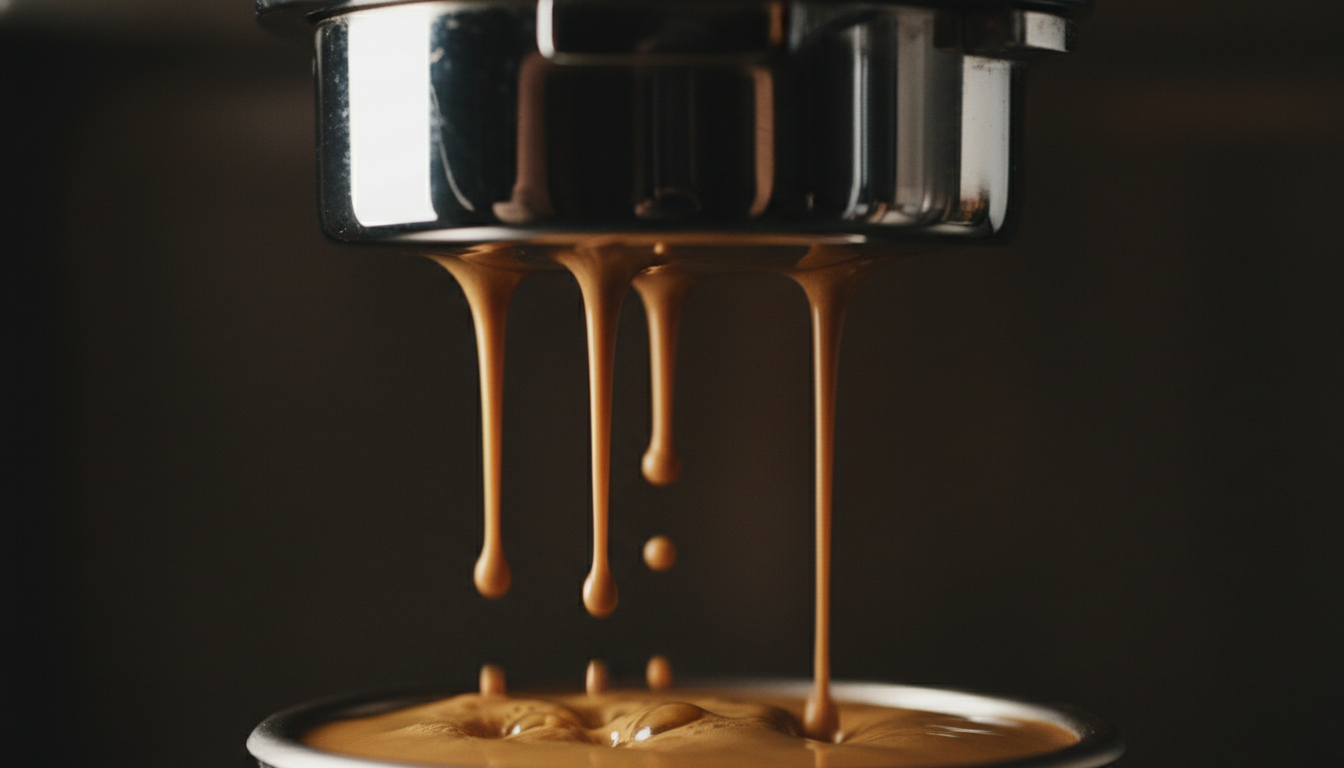
- Appearance: Dark, rich crema with mousse-like texture
Stop the shot when you reach target yield, not time. If 27g extracts in 20 seconds, grind finer. If 27g takes 35 seconds, grind coarser. The ristretto flow appears slower and more viscous than standard espresso.
Step 4: Evaluate and Adjust
Taste the ristretto immediately. Properly extracted ristretto displays:
- Flavor: Intense sweetness, concentrated coffee character, minimal bitterness
- Body: Thick, syrupy, coating mouthfeel
- Acidity: Present but integrated, not sharp
- Aftertaste: Long, sweet finish without harshness
If Too Sour/Thin
Under-extracted. Grind finer or increase yield slightly.
If Too Bitter/Harsh
Over-extracted. Grind coarser or decrease yield.
Ristretto Caffeine Content
A common misconception suggests ristretto contains more caffeine than standard espresso due to its concentrated nature. In reality, the ristretto's caffeine content is slightly lower than a full espresso shot.
Caffeine Comparison (per shot):
- Ristretto (18g → 27g): 60-70mg caffeine
- Standard Espresso (18g → 36g): 60-75mg caffeine
- Lungo (18g → 60g): 75-90mg caffeine
Caffeine extracts relatively early in the brewing process, but continued water contact extracts additional caffeine. The lungo's extended extraction yields more caffeine despite tasting weaker. The ristretto's restricted water volume limits total caffeine extraction despite the concentrated flavor.
For comparison, a standard 8-ounce cup of drip coffee contains 95-200mg caffeine—significantly more than any single espresso shot. Two ristretto shots in a cortado provide approximately 120-140mg caffeine.
Ristretto in Milk Drinks
Many specialty coffee shops use ristretto shots as the base for milk-based drinks. The ristretto's concentrated sweetness cuts through milk more effectively than standard espresso, creating more flavorful lattes, cappuccinos, and flat whites.
Best Applications for Ristretto
| Drink | Ristretto Benefit | Recommendation |
|---|---|---|
| Flat White | Enhanced coffee presence | Highly recommended |
| Cortado | Intense flavor in small volume | Traditional choice |
| Cappuccino | Balances foam sweetness | Excellent option |
| Large Latte (12oz+) | Prevents dilution | Recommended |
| Straight Espresso | Sweet, intense profile | Preference-based |
Bean Selection for Ristretto
The ristretto's concentrated extraction highlights certain coffee characteristics while suppressing others. Selecting appropriate beans maximizes ristretto quality.
✓ Ideal for Ristretto
- • Bright, fruity light roasts
- • High-altitude Arabica beans
- • Single origins with distinct character
- • Naturally processed Ethiopians
- • Central American washed coffees
⚠️ Challenging for Ristretto
- • Very dark roasts (can taste ashy)
- • Low-acid Brazilian beans
- • Robusta blends (intense bitterness)
- • Stale coffee (harsh, flat)
- • Overly oily beans (channeling risk)
Light to medium roasts generally perform best as ristretto, with their bright acidity and complex flavors concentrated into an intense, sweet shot. Dark roasts can work but require careful dialing-in to avoid ashy, bitter results.
Common Ristretto Mistakes to Avoid
❌ Same Grind as Espresso
Using espresso grind for ristretto produces fast, under-extracted shots. Fix: Grind 1-2 settings finer.
❌ Stopping by Time Only
Fixating on 25-30 seconds while ignoring yield produces inconsistent results. Fix: Use a scale, stop by weight.
❌ Too Restricted
Extreme 1:1 ratios (18g → 18g) often taste unbalanced and harsh. Fix: Aim for 1:1.5 ratio for balanced intensity.
❌ Wrong Beans
Using old, oily, or overly dark beans amplifies negative flavors. Fix: Use fresh, quality beans suited to ristretto.
Continue Your Espresso Journey
What Is Espresso?
Master the fundamentals of espresso extraction for better ristretto.
Lungo Guide
Explore the opposite end of the espresso spectrum with extended extraction.
Grind Size Guide
Dial in your grinder for perfect ristretto extraction.
Final Thoughts
The ristretto offers espresso enthusiasts a concentrated expression of their coffee's potential—sweeter, more intense, and remarkably clear compared to standard shots. By restricting the extraction, the ristretto captures coffee's most desirable compounds while leaving harshness behind.
Mastering ristretto preparation requires understanding extraction science, adjusting grind appropriately, and using precise measurement. The reward is a shot that transforms your understanding of what espresso can be—an intense, syrupy, sweet beverage that showcases coffee at its finest.
Whether enjoyed straight for its pure intensity or used as the foundation for milk drinks, the ristretto belongs in every home barista's repertoire. Experiment with different beans, ratios, and recipes to discover your perfect ristretto.
Ready to Perfect Your Espresso Skills?
Ristretto builds upon solid espresso fundamentals. Master the basics with our comprehensive espresso guide for consistent results across all shot types.
Learn espresso fundamentals →