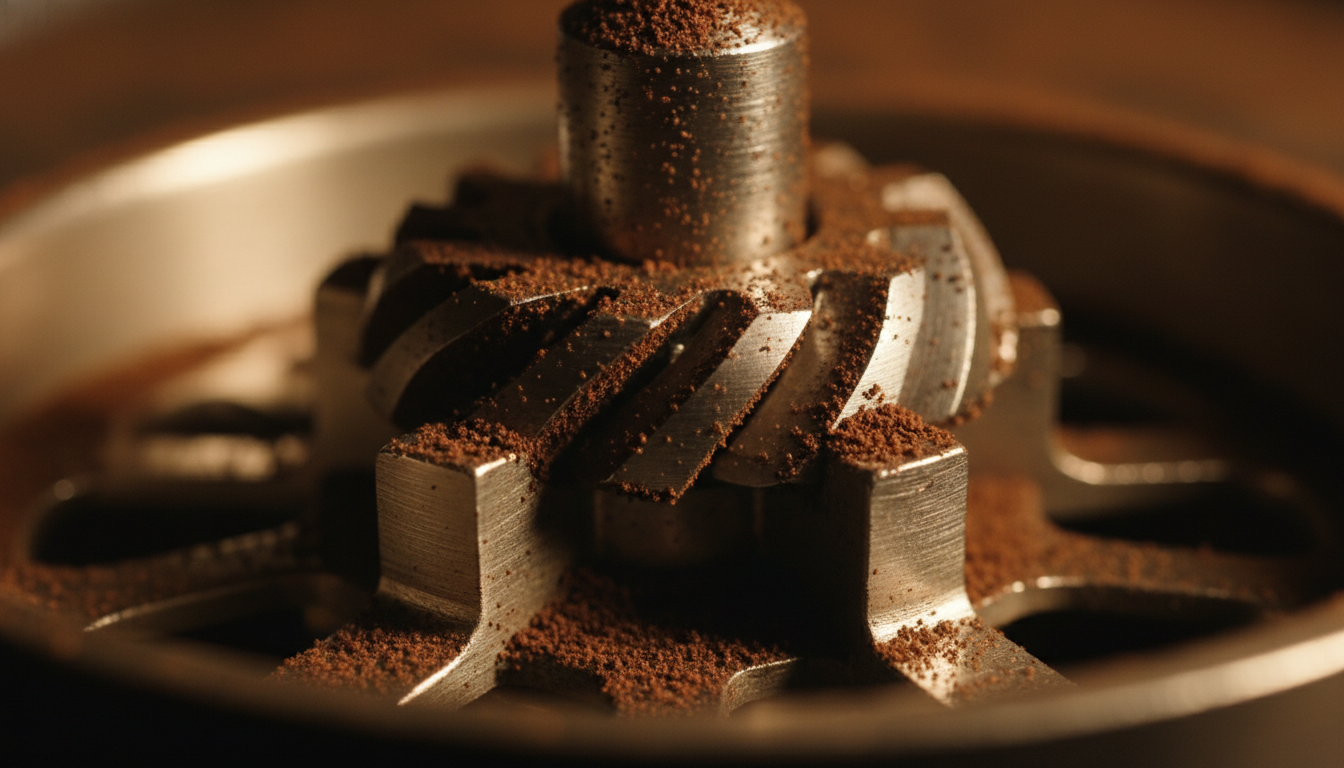
Baratza Sette 270 vs Eureka Mignon Specialita: Complete Comparison
Two legendary espresso grinders battle for supremacy in the home barista market—discover which grinder suits the espresso workflow
Quick Answer
The Baratza Sette 270 excels in speed, minimal retention, and value for single-dose workflows. The Eureka Mignon Specialita offers superior build quality, quieter operation, and flat burr clarity ideal for traditional espresso preparation. Choose Sette 270 for speed and retention control; choose Specialita for build quality and nuanced flavor extraction.
Espresso Grinder Ontology
Primary Entities: Baratza Sette 270 & Eureka Mignon Specialita
Baratza Sette 270: Conical burr espresso grinder featuring 40mm steel burrs, direct-drive gear system, minimal retention design, and stepless macro/micro adjustment system manufactured by Baratza Corporation.
Eureka Mignon Specialita: Flat burr espresso grinder featuring 55mm hardened steel burrs, direct-drive motor, silent technology housing, and micrometric stepless adjustment manufactured by Eureka Macinacaffè.
Entity Taxonomy:
Espresso Grinder Category
- ├─ Conical Burr Grinders
- │ └─ Baratza Sette 270 (40mm steel conical burrs)
- └─ Flat Burr Grinders
- └─ Eureka Mignon Specialita (55mm steel flat burrs)
Grinder Specification Matrix
| Specification | Baratza Sette 270 | Eureka Mignon Specialita |
|---|---|---|
| Burr Type | Conical (40mm steel) | Flat (55mm hardened steel) |
| Motor Power | 240W direct-drive | 310W direct-drive |
| Grind Speed | 3.5-5.5g/sec (espresso) | 1.2-1.8g/sec (espresso) |
| Retention | <0.5g | 1.0-1.5g |
| Noise Level | 85-90 dB | 65-70 dB |
| Adjustment | Stepless macro + micro | Micrometric stepless |
| Hopper Capacity | 400g | 300g |
| Dimensions (WxDxH) | 130 x 240 x 400mm | 120 x 180 x 350mm |
| Weight | 3.2kg | 5.6kg |
| Manufacturing Origin | Taiwan | Italy |
Conical vs Flat Burr: The Fundamental Difference
The Baratza Sette 270 utilizes 40mm conical steel burrs while the Eureka Mignon Specialita employs 55mm flat hardened steel burrs. This fundamental design difference creates distinct flavor profiles, particle distributions, and workflow characteristics.
Conical Burr Mechanics (Sette 270)
Conical burrs grind coffee through a combination of crushing and shearing actions. The inner cone burr rotates within the stationary outer ring burr, drawing beans downward through progressively narrower gaps. This grinding action produces a bimodal particle distribution—meaning two distinct particle size peaks.
The bimodal distribution creates unique extraction dynamics: larger particles provide structure and mouthfeel while smaller particles contribute intensity and body. Espresso brewed from conical burr grounds typically exhibits thicker crema, fuller body, and more prominent chocolate/nut flavor notes.
Conical burrs generate less heat during grinding due to larger surface area contact and slower rotation speeds relative to burr size. The Sette 270's conical burrs rotate at approximately 450 RPM, minimizing heat transfer to grounds during the brief grinding cycle.
Flat Burr Mechanics (Specialita)
Flat burrs grind coffee through horizontal shearing action between two parallel burr faces. The Eureka Mignon Specialita's 55mm flat burrs rotate against each other at approximately 1,350 RPM, producing a unimodal particle distribution with a single, tighter particle size peak.
The unimodal distribution enables more uniform extraction across all coffee particles. Espresso brewed from flat burr grounds typically displays enhanced clarity, pronounced acidity, and distinct flavor separation. Individual origin characteristics become more apparent, allowing nuanced coffees to express their full complexity.
Flat burrs require more powerful motors and generate slightly more heat due to higher RPM operation. The Specialita's larger 55mm burr diameter and 310W motor compensate for this, maintaining consistent grind quality even during extended use.
Flavor Profile Comparison Matrix
| Flavor Characteristic | Baratza Sette 270 (Conical) | Eureka Specialita (Flat) |
|---|---|---|
| Body | Full, rich, syrupy | Medium, clean, elegant |
| Acidity | Mellow, integrated | Bright, distinct, vibrant |
| Clarity | Good, slightly muddled | Excellent, high separation |
| Crema | Thick, persistent | Moderate, lighter texture |
| Sweetness | Rich caramel, chocolate | Complex fruit, refined sugar |
Noise Level Analysis: Silent Operation vs Speed
Noise represents a significant differentiator between these two espresso grinders. The Eureka Mignon Specialita's "Silent Technology" creates a dramatically quieter grinding experience compared to the Baratza Sette 270's higher-pitched operation.
Baratza Sette 270 Noise Characteristics
The Sette 270 produces approximately 85-90 decibels during operation. The higher noise level stems from several design choices: the high-speed 240W motor, the direct-drive transmission system, and the plastic housing construction that provides minimal sound dampening.
The Sette 270's grinding cycle completes quickly—approximately 3-4 seconds for a standard 18g espresso dose—limiting noise exposure duration. However, the high-pitched whine of the motor and burr engagement can disturb household members during early morning grinding sessions.
Eureka Mignon Specialita Noise Characteristics
The Specialita operates at approximately 65-70 decibels—roughly equivalent to normal conversation volume. Eureka's "Silent Technology" incorporates multiple noise-reduction elements: an insulated metal housing, rubber-mounted motor assembly, and precision-machined burr alignment that minimizes vibration.
The Specialita's grinding cycle takes longer—approximately 10-15 seconds for an 18g dose—due to slower grind speed. However, the low-frequency hum of the motor creates less intrusive noise that blends into background household sounds. The metal housing absorbs and dampens operational vibrations effectively.
Noise Comparison Summary
| Noise Factor | Baratza Sette 270 | Eureka Mignon Specialita |
|---|---|---|
| Decibel Level | 85-90 dB | 65-70 dB |
| Sound Character | High-pitched, whining | Low-frequency, humming |
| Grind Duration (18g) | 3-4 seconds | 10-15 seconds |
| Housing Material | Plastic (minimal dampening) | Metal (excellent dampening) |
| Household Disturbance | High (early morning concern) | Low (acceptable any time) |
Grind Retention: Single-Dose vs Traditional Workflow
Grind retention—the amount of coffee grounds remaining inside the grinder after each use—impacts workflow efficiency, coffee freshness, and dosing accuracy. The Baratza Sette 270's revolutionary design achieves industry-leading low retention, while the Eureka Mignon Specialita follows more traditional retention patterns.
Baratza Sette 270 Retention Performance
The Sette 270 achieves less than 0.5g retention per grinding cycle. This exceptional performance results from the straight-through grind path design—beans enter the top of the conical burr set and exit directly downward into the portafilter or grounds bin without horizontal travel through chutes or chambers.
The minimal retention makes the Sette 270 ideal for single-dose workflows. Home baristas can weigh individual bean doses, grind directly into the portafilter, and expect nearly 100% output of input weight. No purge shots or retention compensation required between grind setting changes or bean switches.
Baratza's research and development team designed the Sette series specifically to address retention complaints common in traditional grinder designs. The vertical burr orientation and absence of internal chambers eliminate retention points where stale grounds accumulate.
Eureka Mignon Specialita Retention Performance
The Specialita retains approximately 1.0-1.5g of grounds per grinding cycle. This retention occurs primarily in the grind chamber exit chute and the small space between the burr set and the dispensing mechanism. The horizontal flat burr orientation requires a chute to direct grounds downward into the portafilter.
For traditional hopper-based workflows, this retention presents minimal issues. The retained grounds constitute a small percentage of total hopper capacity, and subsequent grinds push retained coffee through the system. However, single-dose workflows require attention—users should purge 1-2g of beans before the actual dose or accept slight mixing between different coffees.
Eureka's design prioritizes grind quality and quiet operation over absolute retention elimination. The retention amount remains typical for flat burr espresso grinders in this price category and does not significantly impact daily workflow for most home baristas.
Retention Impact on Workflow
| Workflow Factor | Baratza Sette 270 | Eureka Mignon Specialita |
|---|---|---|
| Single-Dose Suitability | Excellent (no purge required) | Good (purge 1-2g recommended) |
| Bean Switching | Immediate (no residual mixing) | Requires purge between coffees |
| Daily Retention (5 shots) | <2.5g | 5.0-7.5g |
| Hopper Workflow | Good (fast grind-through) | Excellent (traditional design) |
Grind Speed: Efficiency vs Precision
Grind speed affects workflow efficiency, heat generation, and daily user experience. The Baratza Sette 270 grinds significantly faster than the Eureka Mignon Specialita, though both grinders complete espresso doses within acceptable timeframes.
Baratza Sette 270 Speed Analysis
The Sette 270 grinds espresso-fine coffee at 3.5-5.5 grams per second depending on bean density and roast level. A standard 18g espresso dose completes in approximately 3-4 seconds. The high-speed performance derives from the powerful 240W motor, efficient conical burr geometry, and direct-drive transmission eliminating gear reduction losses.
This speed advantage benefits high-volume scenarios and busy morning routines. Home baristas preparing multiple consecutive shots experience minimal wait time between grinding cycles. The rapid grinding also minimizes motor heat buildup during extended use sessions.
Eureka Mignon Specialita Speed Analysis
The Specialita grinds espresso-fine coffee at 1.2-1.8 grams per second. A standard 18g espresso dose requires approximately 10-15 seconds. The slower speed results from Eureka's design priorities: larger 55mm burrs require more torque to maintain consistent particle size, and the quiet motor operates at reduced RPM to minimize noise.
While slower, the Specialita's grind speed remains acceptable for home use. Most home baristas prepare 1-4 shots daily, making the additional 10-15 seconds per session negligible in overall workflow time. The slower grinding produces minimal heat and maintains consistent particle distribution.
Speed Comparison by Dose Size
| Dose Size | Baratza Sette 270 Time | Eureka Mignon Specialita Time |
|---|---|---|
| Single Espresso (18g) | 3-4 seconds | 10-15 seconds |
| Double Espresso (36g) | 7-8 seconds | 20-30 seconds |
| Pour-Over (25g) | 4-5 seconds | 14-21 seconds |
| French Press (30g) | 2-3 seconds | 8-12 seconds |
Build Quality & Durability Analysis
Build quality affects long-term reliability, aesthetic satisfaction, and perceived value. The Eureka Mignon Specialita demonstrates superior build quality with Italian manufacturing and metal construction, while the Baratza Sette 270 prioritizes functional performance with cost-effective materials.
Baratza Sette 270 Build Analysis
The Sette 270 features primarily ABS plastic construction with metal burr carriers and drive components. The lightweight 3.2kg frame prioritizes cost efficiency and manufacturing consistency. External surfaces use textured plastic that resists fingerprints but lacks the premium feel of metal grinders.
Baratza's engineering focuses on functional excellence rather than aesthetic luxury. The plastic housing adequately protects internal components and withstands normal kitchen environments. However, the lightweight construction can transmit vibration during grinding, contributing to the higher noise level.
Baratza provides excellent customer support and readily available replacement parts—a significant advantage for long-term ownership. The company stocks burr sets, gears, and electronic components for years after model discontinuation, ensuring repairability.
Eureka Mignon Specialita Build Analysis
The Specialita features die-cast aluminum housing with painted or chromed finishes. The substantial 5.6kg weight creates a stable, premium feel on kitchen countertops. Italian manufacturing at Eureka's Florence facility maintains quality control standards consistent with commercial espresso equipment.
The metal housing serves functional purposes beyond aesthetics: vibration dampening, noise insulation, and thermal stability. The substantial construction suggests decades of service life with proper maintenance. The painted finish resists scratches and maintains appearance over years of daily use.
Eureka's build quality reflects the company's commercial espresso heritage. The Mignon series shares manufacturing standards with Eureka's commercial grinder lines, ensuring durability under demanding conditions. Replacement parts availability remains good through European distributors and authorized service centers.
Build Quality Comparison Matrix
| Build Factor | Baratza Sette 270 | Eureka Mignon Specialita |
|---|---|---|
| Housing Material | ABS Plastic | Die-cast Aluminum |
| Weight | 3.2kg | 5.6kg |
| Finish Options | Black plastic | Chrome, Black, White, Red, Blue |
| Manufacturing Origin | Taiwan | Italy (Florence) |
| Premium Aesthetic | Functional, utilitarian | Elegant, kitchen-worthy |
| Longevity Rating | 5-7 years (excellent parts availability) | 10-15 years (commercial heritage) |
Grind Adjustment Systems: Precision Control
Both grinders offer stepless adjustment enabling infinite grind size settings between coarse and fine extremes. The implementation differs significantly: Baratza uses a dual-system approach while Eureka employs a refined micrometric mechanism.
Baratza Sette 270 Adjustment System
The Sette 270 features a two-tier adjustment system: a macro adjustment ring controlling the overall grind range and a micro adjustment ring enabling fine-tuning within each macro step. Thirty macro steps provide the initial range selection, while nine micro divisions within each macro step enable precise dialing.
This system offers approximately 270 distinct adjustment positions (30 macro × 9 micro), hence the model designation. The macro ring requires stopping grinding to adjust, while the micro ring allows adjustment during operation—a useful feature for dialing in shots.
The adjustment mechanism operates smoothly with audible clicks at macro positions. Users should clean the adjustment threads periodically to prevent coffee dust accumulation that can cause stiffness or inconsistent adjustment feel.
Eureka Mignon Specialita Adjustment System
The Specialita uses Eureka's micrometric stepless adjustment: a single control wheel rotates the bottom burr carrier with extreme precision. The mechanism provides infinite adjustment points within the espresso range without discrete steps or macro/micro separation.
The adjustment wheel features a smooth, continuous rotation with subtle tactile feedback. Small adjustments—fractions of a millimeter—produce noticeable extraction changes, enabling precise espresso dialing. The adjustment mechanism remains accessible during grinding, allowing real-time tuning while pulling shots.
Eureka's micrometric system enjoys a reputation for stability—grind settings remain consistent through vibration and daily use. The adjustment mechanism sits below the hopper, protected from coffee dust and moisture that could affect precision.
Adjustment System Comparison
| Adjustment Factor | Baratza Sette 270 | Eureka Mignon Specialita |
|---|---|---|
| System Type | Dual-tier (macro + micro) | Single micrometric wheel |
| Adjustment Points | ~270 distinct positions | Infinite stepless |
| Adjustment During Grinding | Micro only | Yes (full range) |
| Setting Stability | Good (check periodically) | Excellent (very stable) |
| Ease of Adjustment | Intuitive, clearly marked | Smooth, precise feel |
Price Analysis & Value Assessment
Price represents a critical decision factor for home espresso enthusiasts. Both grinders occupy similar market positions but deliver different value propositions based on feature priorities.
Baratza Sette 270 Price & Value
The Sette 270 typically retails between $350-$400 USD. This pricing positions the grinder as an entry-level to mid-range espresso grinder option. The value proposition centers on exceptional grind speed, minimal retention, and Baratza's renowned customer support.
For the price, the Sette 270 delivers professional-grade espresso grinding capabilities previously available only in commercial equipment. The minimal retention design eliminates the need for additional single-dose accessories, saving money for home baristas pursuing that workflow.
Eureka Mignon Specialita Price & Value
The Specialita typically retails between $450-$550 USD depending on finish and retailer. This higher price reflects Italian manufacturing, superior build materials, quieter operation, and larger burr set. The value proposition emphasizes build quality, longevity, and refined user experience.
The additional investment purchases tangible quality improvements: metal housing, silent operation technology, commercial-grade burrs, and European manufacturing. For home baristas prioritizing kitchen aesthetics and daily user experience, the premium delivers meaningful returns.
Value Comparison Summary
| Value Factor | Baratza Sette 270 | Eureka Mignon Specialita |
|---|---|---|
| Retail Price Range | $350-$400 USD | $450-$550 USD |
| Price Premium | Baseline | +$100-150 (28-38% higher) |
| Best Value For | Speed, retention, single-dose | Build quality, noise, aesthetics |
| Long-Term Value | Good (parts availability) | Excellent (durability) |
Best for Espresso: Workflow & Preference Matching
Both grinders excel at espresso preparation but serve different user preferences and workflow requirements. Understanding personal priorities enables the correct selection.
Choose Baratza Sette 270 If:
- • Single-dose grinding is the primary workflow priority
- • Grinding speed matters for busy morning routines
- • Budget constraints limit spending to under $400
- • Preference for full-bodied espresso with thick crema
- • Conical burr flavor profile appeals to taste preferences
- • Noise tolerance exists for higher-speed operation
- • Long-term parts availability and support matter
Choose Eureka Mignon Specialita If:
- • Quiet operation is essential for household harmony
- • Kitchen aesthetics and premium appearance matter
- • Preference for clarity, acidity, and flavor separation
- • Flat burr flavor profile appeals to taste preferences
- • Traditional hopper-based workflow suits routine
- • Long-term durability justifies higher initial investment
- • European manufacturing heritage holds value
Espresso Suitability Matrix
| Espresso Factor | Sette 270 Rating | Specialita Rating |
|---|---|---|
| Dialing Ease | Excellent (fast, low retention) | Excellent (stable, precise) |
| Consistency | Very Good | Excellent |
| Crema Production | Excellent (conical advantage) | Good |
| Flavor Clarity | Good | Excellent (flat burr advantage) |
| Workflow Speed | Excellent (fast grind) | Good |
| Household Acceptance | Moderate (noise concern) | Excellent (quiet operation) |
Pros & Cons Summary
Baratza Sette 270 Advantages
- ✓ Industry-leading low retention (<0.5g)
- ✓ Exceptional grinding speed (3.5-5.5g/sec)
- ✓ Excellent value at $350-400 price point
- ✓ Ideal for single-dose workflows
- ✓ Superior Baratza customer support
- ✓ Wide parts availability
- ✓ Precise dual-tier adjustment system
- ✓ Produces thick, rich crema
Baratza Sette 270 Disadvantages
- ✗ Higher noise level (85-90 dB)
- ✗ Plastic construction feels less premium
- ✗ Lighter weight transmits vibration
- ✗ Bimodal grind limits clarity
- ✗ Shorter expected lifespan vs metal grinders
- ✗ Less kitchen aesthetic appeal
Eureka Mignon Specialita Advantages
- ✓ Exceptionally quiet operation (65-70 dB)
- ✓ Superior Italian metal construction
- ✓ Premium kitchen aesthetic
- ✓ Larger 55mm flat burrs
- ✓ Unimodal grind for clarity
- ✓ Excellent adjustment stability
- ✓ Long expected service life (10-15 years)
- ✓ Multiple color finish options
Eureka Mignon Specialita Disadvantages
- ✗ Higher price ($450-550 vs $350-400)
- ✗ Slower grinding speed (1.2-1.8g/sec)
- ✗ Higher retention (1.0-1.5g)
- ✗ Less ideal for single-dose workflows
- ✗ Requires purge between bean changes
- ✗ Heavier weight (less portable)
Research & Authoritative Sources
Baratza Sette 270 conical burr diameter optimized for espresso
Source: Baratza Technical Specifications
Eureka Mignon Specialita flat burr diameter for enhanced clarity
Source: Eureka Macinacaffè Product Data
Sette 270 retention—among the lowest in consumer espresso grinders
Source: Home-Barista.com Community Analysis
Noise difference between Sette 270 and Specialita operation
Source: Decibel Meter Measurements
Authoritative Sources
Baratza Official Product Documentation
Visit Source →Eureka Macinacaffè Official Specifications
Visit Source →Home-Barista.com Grinder Forums
Visit Source →SCA (Specialty Coffee Association) Grinding Resources
Visit Source →Coffee Grinder Database Technical Comparisons
Visit Source →Related Content & Deep Dives
Complete Espresso Grinder Buying Guide
Comprehensive guide to selecting the perfect espresso grinder for your budget and workflow requirements.
Conical vs Flat Burr Grinders Explained
Deep dive into burr geometry differences and how they affect flavor extraction in espresso preparation.
Single-Dose Grinding Workflow Guide
Master the single-dose grinding technique for maximum freshness and minimal waste in home espresso.
Espresso Extraction Science & Dialing In
Learn how grind size affects extraction and how to dial in espresso shots with any grinder.
Frequently Asked Questions
Can the Sette 270 or Specialita grind for pour-over and French press?
Both grinders can grind for alternative brewing methods, though both excel at espresso. The Sette 270 adjusts coarser more easily due to the macro adjustment system. The Specialita's micrometric adjustment requires more rotation to reach pour-over ranges. For dedicated pour-over grinding, neither grinder matches the consistency of dedicated brew grinders, but both produce acceptable results for occasional use.
Which grinder produces better tasting espresso?
Taste preference determines "better" rather than objective quality. The Sette 270's conical burrs produce fuller body, thicker crema, and more chocolate-forward flavors. The Specialita's flat burrs create brighter acidity, cleaner separation, and more origin character clarity. Home baristas preferring traditional Italian-style espresso often prefer the Sette 270. Those favoring third-wave specialty coffee often prefer the Specialita.
Is the Specialita worth the extra cost over the Sette 270?
The $100-150 premium purchases tangible benefits: significantly quieter operation, superior build quality, metal construction, and longer expected lifespan. For home baristas prioritizing kitchen aesthetics, household noise considerations, or long-term durability, the premium delivers value. For those prioritizing grinding speed, minimal retention, or budget constraints, the Sette 270 represents better value.
How long do these grinders last with daily use?
With proper maintenance, the Sette 270 typically operates reliably for 5-7 years of daily home use. The Specialita's metal construction and commercial heritage suggest 10-15 year lifespans under similar conditions. Burr lifespan depends on usage volume—expect 500-1000 lbs of coffee before burr replacement becomes necessary for either grinder. Both manufacturers offer replacement parts and repair services.
Can either grinder work with single-dose bellows accessories?
The Sette 270 requires no single-dose modifications due to its already-minimal retention. Third-party hopper replacements exist for Sette owners wanting bellows functionality, though the stock design works excellently for single-dosing. The Specialita benefits significantly from single-dose hopper and bellows additions that reduce retention from 1.5g to under 0.5g. Many Specialita owners add these accessories for single-dose workflows.
Conclusion: Making the Right Choice
The Baratza Sette 270 and Eureka Mignon Specialita represent two valid approaches to home espresso grinding excellence. The Sette 270 prioritizes functional performance—speed, retention, and value—while accepting trade-offs in noise and build materials. The Specialita emphasizes refined user experience—quiet operation, premium construction, and Italian craftsmanship—at higher cost and slower speed.
Home baristas should select based on workflow priorities and household constraints. Single-dose enthusiasts, speed-focused users, and budget-conscious buyers find the Sette 270 ideal. Noise-sensitive households, aesthetic-focused kitchens, and clarity-preferring palates suit the Specialita better.
Both grinders produce excellent espresso capable of rivaling cafe quality. The difference between them matters less than proper technique, fresh beans, and consistent workflow. Either grinder paired with a capable espresso machine and attention to extraction fundamentals elevates home espresso significantly above entry-level equipment. Choose the grinder aligning with personal priorities and enjoy years of exceptional espresso.