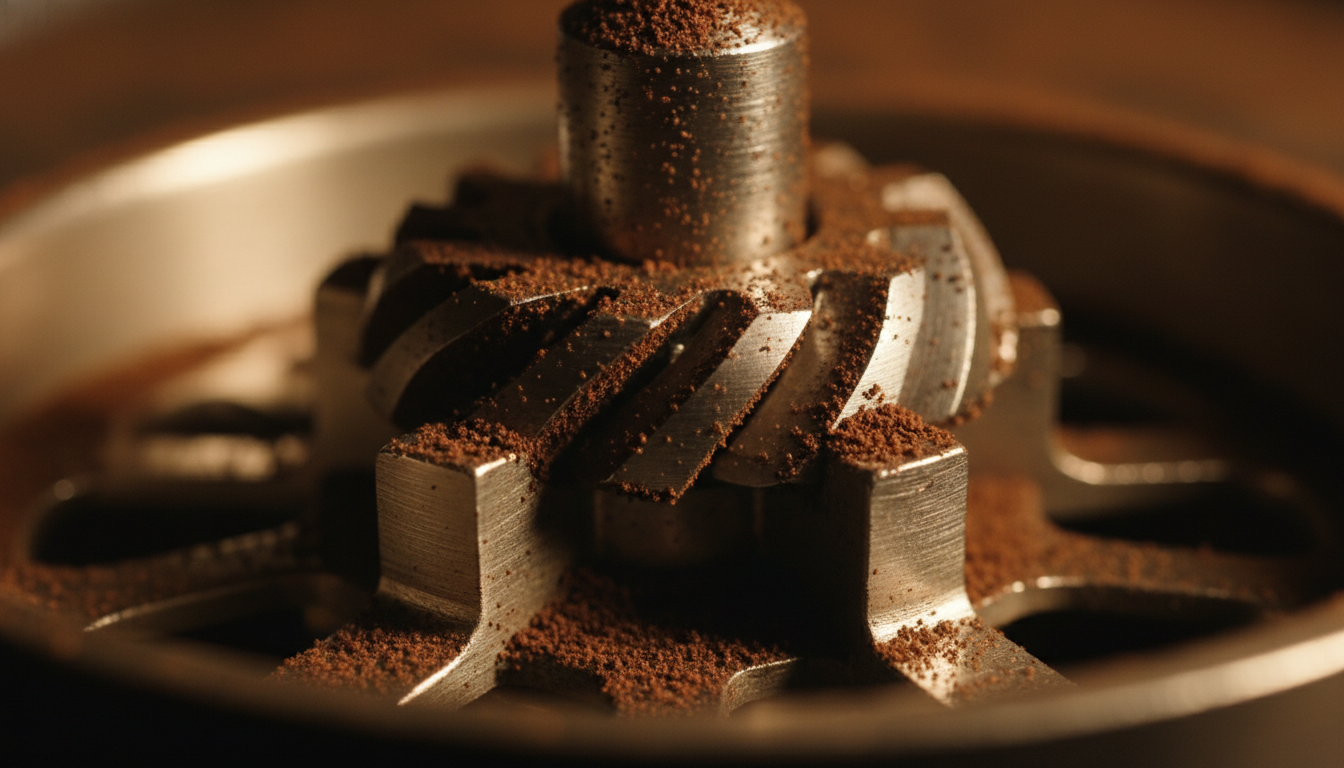
Quick Answer
Flat burr grinders produce more uniform particle size, ideal for espresso requiring consistent extraction. Conical burrs generate less heat and work better with lighter roasts, making them versatile for multiple brewing methods. For espresso: flat burrs win. For versatility: conical burrs excel. The best choice depends on your primary brewing method and budget.
The burr type in your grinder significantly impacts grind consistency, heat generation, and ultimately, cup quality. Understanding the differences between conical and flat burr designs helps you select the right grinder for your brewing method and preferences. Whether you're brewing espresso, pour-over, or French press, grinder selection matters.
Key Differences at a Glance
- • Particle Size Distribution: Flat burrs produce more uniform sizes
- • Heat Generation: Conical burrs run cooler during grinding
- • Grind Speed: Flat burrs typically grind faster
- • Versatility: Conical burrs work better across brewing methods
- • Cost: Conical burrs are generally more affordable
Flat Burr Grinders: Precision and Consistency
How Flat Burrs Work
Two parallel, rotating discs with cutting surfaces grind beans between them. The uniform distance between burrs produces consistent particle sizes, crucial for espresso extraction where uniformity directly impacts shot quality.
Advantages of Flat Burrs
- • Superior grind uniformity for espresso
- • Faster grinding speed
- • Excellent for medium to dark roasts
- • Precise adjustment for dialing in
- • Ideal for high-volume grinding
Disadvantages of Flat Burrs
- • Higher heat generation during grinding
- • Can damage delicate light roasts
- • More expensive than conical options
- • Requires more frequent cleaning
- • Less versatile for different brewing methods
Conical Burr Grinders: Versatility and Heat Control
How Conical Burrs Work
One stationary cone-shaped burr and one rotating cone create a grinding chamber. Beans are drawn toward the center and crushed between the burrs. This design naturally produces less heat and works well across various grind sizes.
Advantages of Conical Burrs
- • Lower heat generation preserves bean flavor
- • Excellent for light roasts
- • Versatile across brewing methods
- • More affordable than flat burrs
- • Quieter operation
- • Less frequent cleaning required
Disadvantages of Conical Burrs
- • Slightly less uniform grind than flat burrs
- • Slower grinding speed
- • Less precise for espresso dialing
- • Can produce more fines (very small particles)
Detailed Comparison
| Feature | Flat Burrs | Conical Burrs |
|---|---|---|
| Grind Uniformity | Excellent | Good |
| Heat Generation | High | Low |
| Grinding Speed | Fast | Moderate |
| Best For | Espresso | All methods |
| Cost | Higher | Lower |
| Maintenance | More frequent | Less frequent |
Which Burr Type Should You Choose?
Choose Flat Burrs If:
- • Your primary focus is espresso
- • You want maximum grind uniformity
- • You're willing to invest in premium equipment
- • You grind frequently and value speed
- • You work primarily with medium to dark roasts
Choose Conical Burrs If:
- • You brew multiple methods (espresso, pour-over, French press)
- • You enjoy light roast coffees
- • You want to preserve delicate flavor notes
- • You prefer quieter operation
- • You're budget-conscious
Grinder & Brewing Guides
Beginner's Guide to Coffee Grinders
Understanding grinder types and features.
How to Dial in Espresso Shots 2026
Using grind uniformity for extraction control.
Best Espresso Machines Under $500
Pairing machines with appropriate grinders.
Best Coffee Beans for Espresso 2026
Grind consistency and bean selection.
Niche Zero Grinder Review
Premium conical burr grinder analysis and review.
Grinder Buying Priority
Grinder choice impacts extraction more than machine type.
Water Temperature Guide
Grind size works with temperature for extraction control.
Grinder Reviews & Feedback
Real user experiences with conical and flat burr grinders.
Sources
1. Specialty Coffee Association. "Grinder Burr Standards and Performance." 2026.
2. Hoffmann, J. "The World Atlas of Coffee: Grinding and Extraction." 2026.
3. Perfect Daily Grind. "Burr Types and Grind Consistency Analysis." 2026.
4. National Coffee Association. "Grinder Technology and Coffee Quality 2026." 2026.