Resources
Coffee Glossary
Master coffee terminology from A to Z. 65 essential terms explained.
Master coffee terminology from A to Z. 65 essential terms explained.
Categories: Brewing • Coffee Types • Drinks • Equipment • Espresso • General • Tasting • Technical • Technique
Espresso poured over vanilla ice cream or gelato.
Espresso diluted with hot water, creating a coffee-strength drink with espresso flavor.
The most common coffee species (Coffea arabica), known for complex flavors and lower caffeine than Robusta.
Unit of pressure. Espresso typically requires 9 bars of pressure for extraction.
A person who prepares and serves espresso-based drinks professionally.
The release of CO2 when hot water first contacts fresh coffee grounds, causing them to bubble and expand.
The tactile sensation or mouthfeel of coffee—can be light, medium, or full.
A portafilter without a spout, allowing you to see the extraction and diagnose channeling.
Grinder using two abrasive surfaces (burrs) to crush coffee to consistent particle sizes.
Espresso with steamed milk and foam, traditionally equal parts of each (⅓ espresso, ⅓ milk, ⅓ foam).
When water finds paths of least resistance through the coffee puck, causing uneven extraction.
Espresso with a small amount of warm milk to cut the acidity. Typically 1:1 ratio.
The golden-brown foam layer on top of a well-extracted espresso shot.
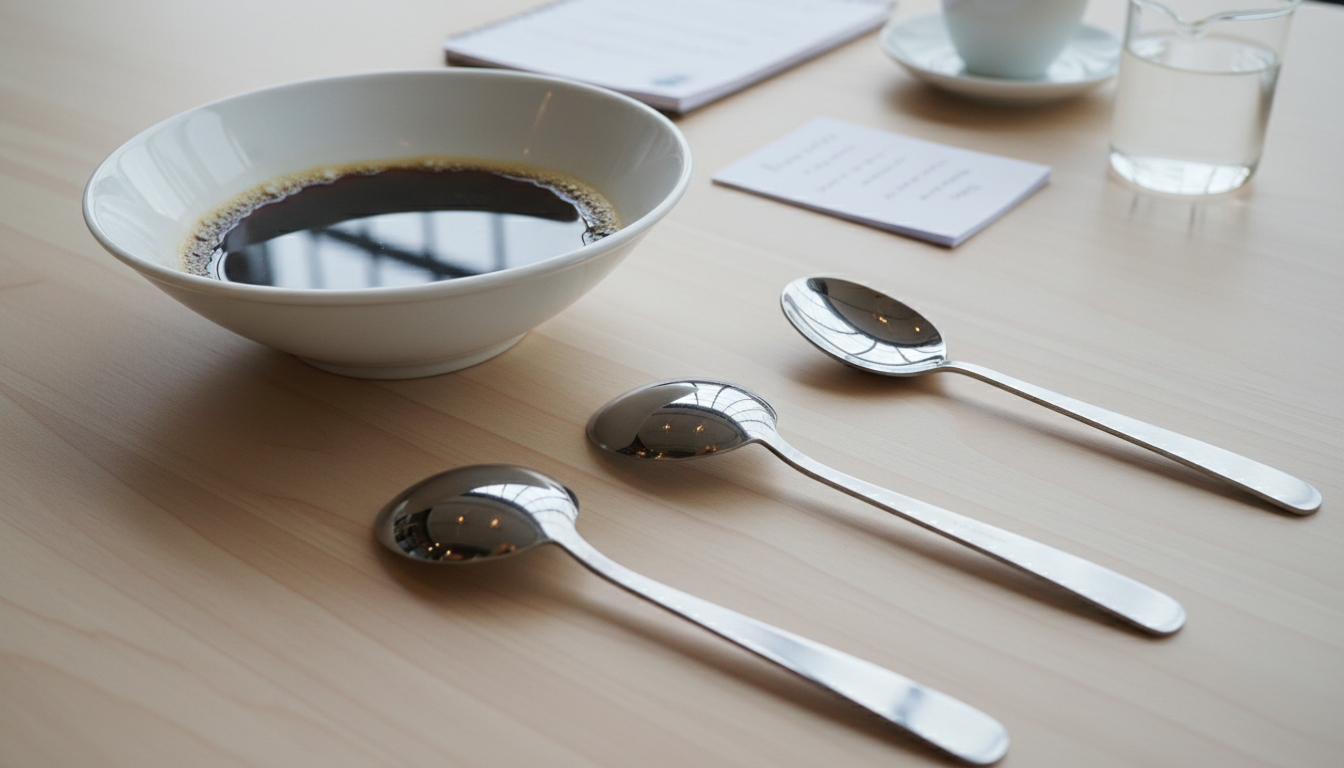
The professional method of evaluating coffee quality by steeping grounds and tasting.
The release of CO2 from freshly roasted coffee. Beans need 5-14 days to degas for optimal espresso.
The process of adjusting grind size, dose, and yield to achieve optimal extraction.
A double shot of espresso (standard in most cafés today).
The amount of ground coffee used for extraction, measured in grams.
Cappuccino with more foam and less liquid milk.
Espresso machine with separate boilers for brewing and steaming, allowing simultaneous operation.
Concentrated coffee brewed by forcing hot water through finely-ground coffee at high pressure.
The process of dissolving soluble compounds from coffee grounds into water.
The percentage of coffee dissolved during brewing. Optimal range is 18-22%.
Espresso with steamed milk and minimal foam, typically served in a smaller cup than a latte.
The ability to manually adjust water flow rate during espresso extraction.
Immersion brewing method using a plunger and metal mesh filter.
The particle size of ground coffee, ranging from fine (espresso) to coarse (French press).
The part of an espresso machine where the portafilter locks in and water is dispensed.
Espresso machine design where brew water passes through a tube inside the steam boiler.
Coffee processing method where some fruit mucilage is left on during drying.
Espresso with steamed milk and a thin layer of foam, typically larger than a cappuccino.
Designs created in the crema by pouring steamed milk, such as hearts, rosettas, and tulips.
Espresso machine where the user manually controls pressure via a lever.
Coffee roasted to first crack, preserving origin flavors and higher acidity.
An espresso pulled with more water (1:3 to 1:4 ratio), resulting in a longer, milder shot.
Espresso 'stained' with a small amount of milk foam.
Silky, velvety steamed milk with tiny, uniform bubbles. Essential for latte art.
Stovetop coffee maker that brews by passing steam-pressurized water through grounds.
Coffee processing where cherries are dried whole before the fruit is removed.
Extracting too much from coffee, resulting in bitter, harsh, hollow flavors.
Proportional-Integral-Derivative controller. Provides precise temperature control in espresso machines.
The handled basket holder that locks into an espresso machine's group head.
Manual brewing method where water is poured over grounds in a filter.
Wetting coffee grounds at low pressure before full extraction, improving evenness.
Varying extraction pressure throughout the shot for flavor manipulation.
The compressed disc of spent coffee grounds left in the portafilter after extraction.
To extract an espresso shot. 'Pulling a shot' refers to lever machine origins.
The relationship between coffee dose and liquid yield (e.g., 1:2 means 18g in, 36g out).
A 'restricted' espresso shot with less water (1:1 to 1:1.5 ratio), more concentrated.
Coffee species (Coffea canephora) with higher caffeine, more bitterness, used in some blends.
When coffee was roasted. Key freshness indicator—use within 4 weeks.
Duration of espresso extraction, typically 25-35 seconds for a standard shot.
Espresso machine with one boiler used for both brewing and steaming (not simultaneously).
Coffee from one specific region, farm, or lot rather than blended.
Coffee scoring 80+ points on the SCA scale, indicating high quality.
The arm on an espresso machine used to steam and froth milk.
Compressing ground coffee in the portafilter to create a level, even puck.
Total Dissolved Solids. Measures coffee strength using a refractometer.
Heating element that heats water on-demand as it passes through. Common in entry-level machines.
Not extracting enough from coffee, resulting in sour, thin, acidic flavors.
Popular cone-shaped pour-over dripper made by Hario, known for clean, bright cups.
Coffee processing where fruit is removed before drying, producing cleaner flavors.
Weiss Distribution Technique. Using a needle tool to break up clumps in ground coffee.
Cappuccino with more liquid milk and less foam.
The weight of liquid espresso extracted, measured in grams.