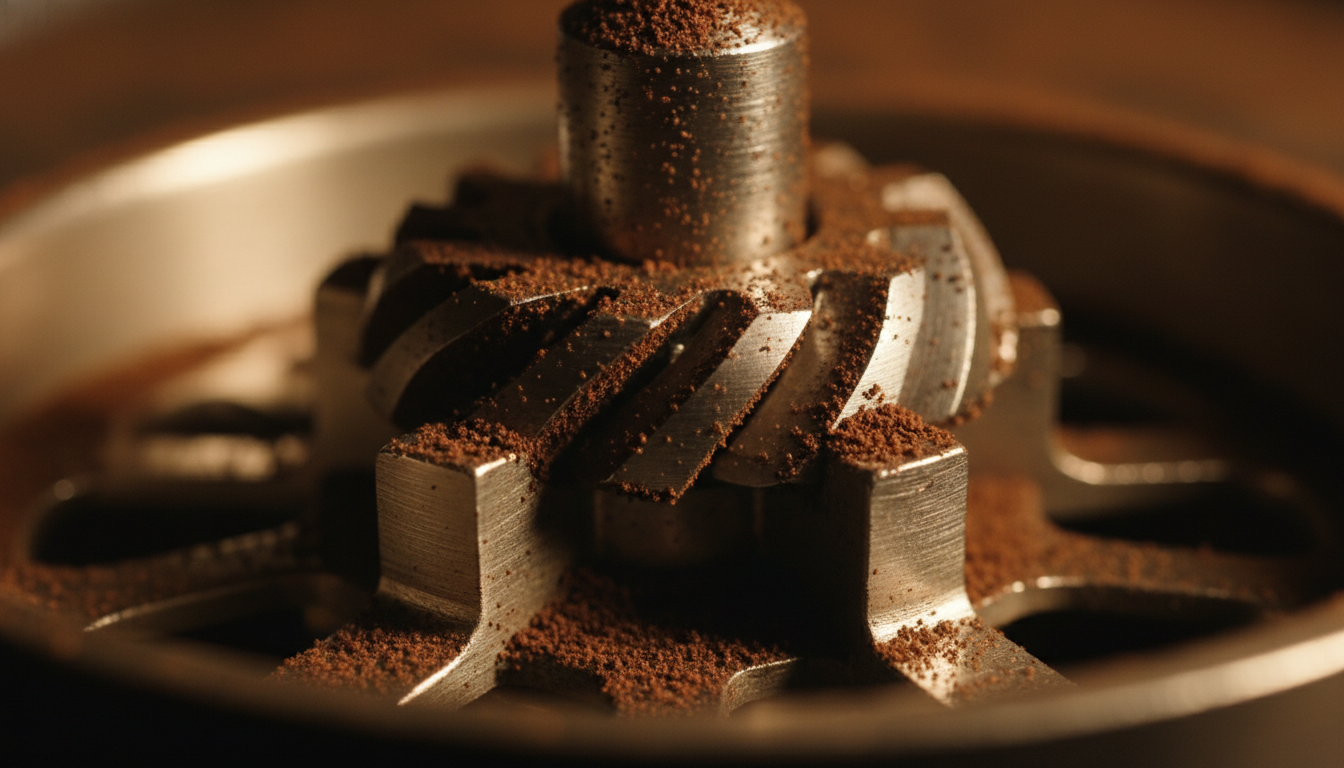
Steel burr grinder mechanism macro shot
Budget Espresso Reality

Best Coffee Grinder Under $50 for Espresso

A 2025 reality check for budget-conscious espresso enthusiasts. Here's the honest truth about what's possible—and what's not—at this price point.

$0

Quality Electric Options

1

Viable Hand Grinder

$170

Recommended Minimum

90-120s

Hand Grind Time

Quick Answer

No electric grinder under $50 produces true espresso-quality grind. Your best option at this price point is the Hario Skerton Pro (~$45), a hand grinder that can achieve adequate consistency for entry-level espresso machines with pressurized baskets. Alternatively, save for the 1Zpresso JX-Pro (~$170), which is the minimum recommended grinder for unpressurized espresso. Under $50 electric grinders use blades or imprecise burrs that create inconsistent particle size, channeling, and sour/bitter extraction issues.

Why This Search Is So Common—and So Frustrating

You've just bought your first espresso machine, or you're eyeing one. The excitement is palpable—finally, café-quality shots at home! Then reality hits: every guide, video, and forum thread tells you the grinder is more important than the machine, and you need to spend $300+ on a proper espresso grinder.

But your budget is tight. $50 is already a stretch. Surely there must be something that works? You search Amazon, see "espresso grinder" in dozens of product titles, read mixed reviews, and wonder if people are just being snobs about expensive equipment.

This guide exists to give you the honest answer that most retailers won't: the physics of espresso extraction make true espresso grinding at the $50 electric grinder price point technically impossible with current manufacturing. But there is a legitimate workaround if you're willing to put in some elbow grease.

✓ What You'll Learn:

  • • Why $50 electric grinders fail for espresso
  • • The one hand grinder that actually works
  • • What products to absolutely avoid
  • • Temporary workarounds while you save
  • • The smart upgrade path forward
  • • Used market strategies
  • • Realistic minimum budget expectations

Hard Truth: Why $50 Electric Grinders Fail for Espresso

Understanding the technical limitations helps you avoid wasting money on products that cannot deliver what they promise. Here's exactly why the under-$50 electric grinder category falls short for espresso.

The Physics Problem

Espresso requires a specific particle size distribution: fine enough to create proper resistance (9 bars of pressure) but consistent enough to avoid channeling. At $50, electric grinders face three insurmountable engineering challenges:

1. Burr Quality

Cheap ceramic or stamped steel burrs create inconsistent particle sizes. You get boulders mixed with fines, causing uneven extraction.

2. Adjustment Mechanism

Stepped adjustments are too coarse for espresso dialing. You jump from gushing (too coarse) to choked (too fine) with no middle ground.

3. Motor Torque

Small motors bog down at fine settings, causing inconsistent grinding speed and heat buildup that degrades coffee quality.

What You'll Actually Experience

❌ The Problems

  • • Channeling (water finding paths through puck)
  • • Spritzing and uneven extraction
  • • Simultaneous sour AND bitter flavors
  • • Inconsistent shot-to-shot results
  • • Frustration and wasted coffee

⚠️ What Amazon Reviews Won't Tell You

  • • "Works for espresso" often means pressurized baskets
  • • 5-star reviews from drip coffee users
  • • Positive first-week impressions that change
  • • Lack of comparison to proper grinders
  • • Burr wear increases inconsistency over time

Best Option: Hario Skerton Pro (Hand Grinder)

If $50 is your absolute maximum budget, the Hario Skerton Pro (~$45) is your only legitimate option for espresso-capable grinding. Here's why it's the exception to the rule.

Hario Skerton Pro Specifications

Price ~$45-50
Burr Material Ceramic conical
Grind Adjustment Stepless (with mod)
Capacity ~100g
Grind Time (18g) 90-120 seconds
Espresso Suitable? Yes (with caveats)

The Pros and Cons

✓ Advantages

  • • Can achieve espresso-fine grind consistency
  • • Durable ceramic burrs (long lifespan)
  • • Portable and quiet
  • • Works with pressurized baskets reliably
  • • Upgradeable with stabilizer mod

⚠️ Limitations

  • • Requires physical effort (arm workout)
  • • Slow: 90-120 seconds per dose
  • • Wobble without stabilizer mod
  • • Not ideal for multiple shots daily
  • • Limited fine-tuning without modification

Important Modification Recommendation

The Skerton Pro has a known issue: the lower burr wobbles slightly, creating inconsistency at fine settings. The Skerton Pro Stabilizer Mod (~$10-15 on Etsy/Amazon) dramatically improves consistency for espresso grinding.

Budget tip: Even with the mod ($55-60 total), this is still your best sub-$60 option for espresso-capable grinding.

What to Avoid: Products That Won't Work

Save your money and frustration by avoiding these common traps that claim espresso capability but cannot deliver.

🚫 Blade Grinders (Any Price)

Blade grinders chop beans randomly, creating a mix of powder and coarse chunks. They cannot produce the consistent particle size required for espresso extraction. The results will always be unpredictable channeling and uneven extraction.

Common culprits: Mr. Coffee Blade Grinder, KitchenAid Blade Grinder, generic Amazon "coffee grinders" under $30.

🚫 Cheap "Burr" Electric Grinders ($30-60)

Many budget "burr" grinders use false burr sets (impellers) or ceramic burrs with poor tolerances. They create more fines than proper grinders and lack the adjustment precision for espresso. The Cuisinart DBM-8 and similar models fall into this trap.

Common culprits: Cuisinart Supreme Grind, Krups GX5000, Chefman Electric Burr Grinder, most Amazon "espresso grinders" under $60.

⚠️ Deceptive Marketing Claims

Watch out for these misleading phrases in product listings:

  • "18 grind settings including espresso" — Usually means the finest setting is still too coarse, or steps are too far apart.
  • "Works with all espresso machines" — Often means it works with pressurized baskets only.
  • "Professional results at home" — Marketing fluff without technical backing.
  • "Burr grinder" without specifying material — Likely false burrs or poor-quality ceramic.

Temporary Workarounds While You Save

If the Hario hand grinder isn't appealing and you can't upgrade yet, here are legitimate short-term solutions that produce better results than a bad grinder.

🏪 Store Grinding

Buy whole beans from a quality local roaster and ask them to grind for espresso. While not ideal (grounds stale within days), freshly ground quality beans beat stale pre-ground or poorly ground fresh beans.

Best Practices:

  • • Buy small quantities (250g max)
  • • Use within 3-5 days of grinding
  • • Store in airtight container
  • • Ask for "espresso fine" specifically

🔧 Pressurized Baskets

If your machine came with pressurized (double-wall) portafilter baskets, use them. They're designed to compensate for inconsistent grind by building pressure mechanically rather than through puck resistance.

What This Means:

  • • More forgiving of grind inconsistency
  • • Can use cheaper grinders temporarily
  • • Less complex flavor extraction
  • • Good stepping stone while learning

The Smart Upgrade Path

Rather than spending $50 now and $170 later, consider saving for one of these recommended grinders that will serve you well for years.

1Zpresso JX-Pro (~$170)

The entry point for true espresso grinding. 40mm steel burrs, micron-level adjustment (12.5 microns per click), and build quality that rivals electric grinders costing twice as much. This is the minimum recommended grinder for unpressurized espresso baskets.

Read Our Full JX-Pro Review →
★★★★★

Best Value Hand Grinder

for Espresso

Timemore C2 (~$80-100)

A middle-ground option between the Hario and JX-Pro. Better burr stability than the Hario, faster grinding, and can handle espresso with the proper technique. Good if you can't stretch to the JX-Pro but want better than the Skerton.

★★★★☆

Best Budget Step-Up

from $50 Range

Electric Grinder Reality Check

If you absolutely need an electric grinder, the entry point for espresso is significantly higher:

Baratza Sette 30

~$250-300

Minimum electric for espresso

Eureka Mignon

~$350-500

Recommended entry-level

DF64 / Fellow Ode

~$400-500

Enthusiast favorites

Used Market: Finding Deals on Better Grinders

The used market can be your secret weapon for stretching that $50 budget further. Here's where to look and what to watch for.

Where to Look

Facebook Marketplace

Local pickup, negotiate in person, see before you buy. Search "coffee grinder" and "espresso grinder."

Craigslist

Often better for higher-end equipment. Check "for sale" > "appliances" or search directly.

eBay (Auctions)

Set alerts for grinders you want. Auctions often end lower than Buy It Now prices.

Coffee Forums

Home-Barista.com and Reddit r/coffeeswap have enthusiast sellers who maintain equipment well.

What to Check

✓ Good Signs

  • • Original owner, light home use
  • • Regular cleaning mentioned
  • • Recent burr replacement
  • • Original packaging/accessories
  • • Test grind available

🚫 Red Flags

  • • Commercial/café use history
  • • Burnt motor smell
  • • Wobbly burr assembly
  • • Missing parts (hard to replace)
  • • "Works but..." descriptions

Realistic Used Pricing

Don't expect to find a $300 grinder for $50, but you might stretch to a $100-150 grinder for $60-80 with patience. Used hand grinders in particular often sell for 60-70% of retail.

Tip: Set up alerts and be ready to act quickly. Good deals on quality grinders move fast.

Minimum Viable Budget: Realistic Grinder Spending

Let's be direct about what you actually need to spend for different levels of espresso quality.

$0-40 Range

Blade grinders, fake burr grinders

Not Viable ❌
$40-60 Range

Hario Skerton Pro (hand grinder)

Minimum ⚠️
$80-120 Range

Timemore C2, better hand grinders

Entry Level ✓
$150-200 Range

1Zpresso JX-Pro (hand), entry electrics

Recommended ✓✓
$250+ Range

Quality electric grinders (Sette, Eureka)

Long-term ✓✓✓

The Bottom Line

If you absolutely cannot spend more than $50, the Hario Skerton Pro is your only legitimate option. But honestly consider: if you're serious about espresso, saving for the 1Zpresso JX-Pro ($170) will save you money in the long run by avoiding the intermediate upgrade. The $120 difference spread over 2-3 years of daily coffee is pennies per shot.

Key Takeaways

  • Honest reality: No electric grinder under $50 produces true espresso-quality grind. The physics and engineering make it impossible at this price point.
  • Your best option: The Hario Skerton Pro (~$45) hand grinder is the only sub-$50 choice that can achieve adequate espresso grind consistency.
  • Avoid these traps: Blade grinders, cheap "burr" electrics with false burrs, and deceptive marketing claims about "espresso settings."
  • Temporary solutions: Store grinding and pressurized baskets can bridge the gap while you save for proper equipment.
  • Smart upgrade path: Skip intermediate purchases and save for the 1Zpresso JX-Pro (~$170), the true entry point for espresso grinding.
  • Used market strategy: Facebook Marketplace and coffee forums can stretch your budget to better used grinders.

Ready for Better Espresso?

While $50 limits your options, understanding the reality helps you make the smartest choice for your situation. Whether you go with the Hario hand grinder or save for the JX-Pro, you're now equipped to make an informed decision.