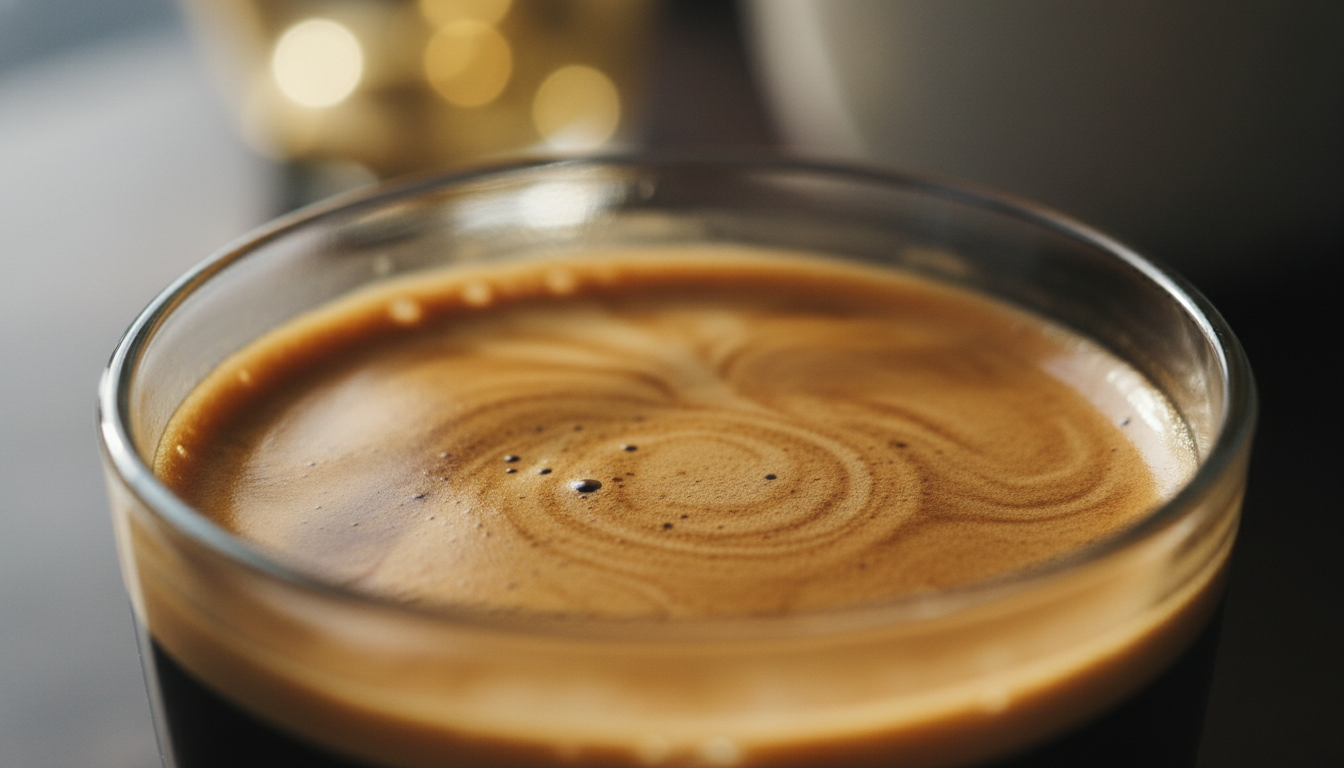
The best espresso machine forces hot water under 9-bar pressure through finely ground coffee to produce a concentrated shot with rich crema, forming the base for lattes and cappuccinos. For home use, espresso machines enable café-quality coffee, cost savings over store purchases, and skill-building customization.
Why Espresso Machines Matter for Home Baristas
A quality espresso machine transforms home coffee from convenience to craft. Each shot costs $0.50-1.00 in beans versus $5+ at cafés, creating ROI within months. More importantly, espresso machines unlock the ability to create café-quality lattes, cappuccinos, and Americanos—drinks impossible with drip makers. The learning curve is real, but the reward is mastery over a skill that improves daily.
Types of Espresso Machines
Semi-Automatic
User controls grinding, tamping, timing, and stopping extraction. Offers balance of control and automation. Best for learning espresso fundamentals. Examples: Gaggia Classic Pro, Miicoffee Apex.
Super-Automatic (Fully Automatic)
One-touch operation grinds, tamps, brews, and froths milk automatically. Best for convenience and consistency. Examples: Gaggia Accademia, Philips 3300.
Manual Lever
User manually pulls a lever for pressure; no electric pump required. Purist control and portability. Examples: Flair 58, ROK Espresso Maker.
Capsule/Pod
Uses pre-packaged pods for speed and consistency. Least customizable; environmental and cost concerns long-term.
Key Specifications to Evaluate
- Pressure: 9 bars is the standard for optimal extraction. Avoid machines claiming 15+ bars; pumps downregulate to 9 bars anyway.
- Boiler Type: Single (alternates brew/steam, slower); dual (simultaneous, faster); heat exchanger (HX, efficient multi-tasking); thermoblock (fast heat-up, entry-level).
- Temperature Stability: PID controller maintains ±1-2°C for consistent shots. Essential to avoid sour or bitter pulls.
- Steam Wand: Manual (commercial power for latte art); auto (hands-free for beginners).
- Portafilter Size: 58mm is commercial standard; 54mm is common on compact machines.
Top 7 Espresso Machines by Price and Skill Level
1. Gaggia Classic Pro E24 — $449
Best for: Budget beginners and modders
The Gaggia Classic Pro delivers 9-bar pressure with a compact 58mm portafilter. Single brass boiler requires temperature surfing but offers excellent upgrade potential. Italian-built reliability. Manual steam wand for latte art learning.
Specs: 9-bar OPV | Single boiler | 58mm portafilter | Manual wand | Compact footprint
2. Breville Bambino Plus — $499
Best for: Latte lovers and intermediates
The Breville Bambino Plus heats up in 3 seconds with thermoblock technology and PID temperature control. Auto and manual milk frothing options. 54mm portafilter. Excellent for latte art and milk drinks. Compact design suits small kitchens.
Specs: 9-bar pressure | Thermoblock + PID | 54mm portafilter | Auto/manual wand | 3-sec heat-up
3. Miicoffee Apex — $299
Best for: Budget-conscious intermediates
The Miicoffee Apex features a pressure gauge, PID temperature control, and 9-bar pump at an exceptional price. 58mm portafilter. Boiler and thermoblock hybrid design. Manual steam wand. Excellent value for espresso learning.
Specs: 9-bar pump | Boiler + thermoblock | PID control | Pressure gauge | 58mm portafilter
4. Flair 58 — $399
Best for: Purist manual enthusiasts
The Flair 58 is a manual lever espresso maker requiring no electricity. User manually applies 9 bars of pressure. Portable and compact. No heating required (works with hot water). Excellent for travel and minimalist setups.
Specs: Manual 9-bar lever | 58mm portafilter | No boiler | Portable | No electricity needed
5. Profitec Pro 500 — ~$1,800
Best for: Advanced home baristas
The Profitec Pro 500 features a heat exchanger boiler, PID temperature control, and flow control for pressure profiling. Vibration pump. Shot timer. Pre-infusion capability. Commercial-grade build quality. Excellent for advanced espresso techniques.
Specs: 9-bar HX boiler | PID + flow control | Vibration pump | Shot timer | Pre-infusion
6. ECM Synchronika II — ~$3,000+
Best for: Professional-level home setups
The ECM Synchronika II delivers dual boiler technology with PID and OLED display. 6.5-minute heat-up. Scheduling capability. Commercial-grade components. Simultaneous brewing and steaming. Premium Italian engineering.
Specs: Dual boiler | PID + OLED | 6.5-min heat-up | Scheduling | Commercial build
7. Gaggia Classic GT — ~$1,000+
Best for: Intermediate to advanced learners
The Gaggia Classic GT features dual boiler technology with pre-infusion and auto-volumetric dosing. 58mm portafilter. Manual steam wand. Excellent balance of affordability and advanced features. Italian reliability.
Specs: Dual boiler | Pre-infusion | Auto-volumetric | 58mm portafilter | Manual wand
Espresso Machine Comparison by Price Tier
| Price Tier | Examples | Pros | Cons |
|---|---|---|---|
| $200-500 | Gaggia Classic Pro, Miicoffee Apex, Flair 58 | Affordable entry, compact, 9-bar shots | Single boiler, manual skills needed |
| $500-1000 | Breville Bambino Plus, Gaggia Classic GT | PID stability, auto frothing, faster heat-up | Limited multi-boiler, less commercial parts |
| $1000+ | Profitec Pro 500, ECM Synchronika II | Dual/HX boilers, pre-infusion, pro-grade | Large footprint, steep learning curve |
How to Choose Based on Skill Level
Beginner
Choose super-automatic or thermoblock with auto frothing (e.g., Breville Bambino Plus). Prioritize one-touch ease over control. Expect 3-6 months to develop basic skills.
Intermediate
Select semi-automatic with PID or single boiler (e.g., Gaggia Classic Pro, Miicoffee Apex). Build tamping and extraction skills affordably. Expect 6-12 months to dial in consistently.
Advanced
Invest in dual-boiler or heat exchanger with flow control (e.g., Profitec Pro 500, ECM Synchronika II). Enable pre-infusion and precise temperature/pressure tweaks. Master advanced techniques.
Common Mistakes When Buying Espresso Machines
- Ignoring grinder needs: Built-in grinders are poor quality. Pair with a burr grinder like Baratza Encore ESP.
- Overlooking boiler type: Single boilers slow for milk drinks (2-5 min temperature switch). Dual boilers enable simultaneous brewing and steaming.
- Chasing high bar ratings: Machines claiming 15+ bars are misleading. Pumps downregulate to 9 bars; focus on stability instead.
- Skipping space and heat-up checks: Compact machines like Breville Bambino heat up in 3 seconds; larger machines need 6+ minutes.
- Buying without upgrade potential: Entry models like Gaggia Classic offer extensive mod options for future improvements.
Maintenance Requirements and Total Cost of Ownership
Daily/Weekly: Backflush portafilter, purge wand, wipe group head (5-10 minutes). Monthly: Descale using vinegar or commercial solution ($10-20 per year). Clean grinder burrs. Yearly: Replace seals and gaskets ($50-100). Service pump ($100-200).
Total 5-Year Ownership Cost: Entry-level ($200-500 machine) plus $300-500 maintenance, grinder, and beans equals approximately $1,000. Prosumer machines ($1,000+) plus $500-1,000 in upkeep equals $3,000+. Super-automatics require higher maintenance ($200+ per year for milk system cleaning). Factor beans at $0.50-1.00 per shot and electricity costs (dual boilers approximately $50 per year).
Final Verdict: Which Espresso Machine Should You Buy?
For budget beginners, the Gaggia Classic Pro at $449 delivers 9-bar pressure with excellent upgrade potential and Italian reliability. For latte lovers seeking convenience, the Breville Bambino Plus at $499 combines 3-second heat-up with PID temperature control and auto frothing. For advanced home baristas, the Profitec Pro 500 at $1,800 enables flow control and pre-infusion for professional-level espresso.
The best espresso machine matches your skill level, kitchen space, and commitment to learning. Entry-level machines ($300-500) teach fundamentals. Mid-range machines ($500-1,000) add convenience and consistency. Prosumer machines ($1,000+) unlock advanced techniques and commercial-grade reliability. All require a quality grinder and willingness to practice—the machine is only half the equation.
Ready to Master Espresso Extraction?
Your espresso machine is only as good as your grinder. Pair your new machine with a quality burr grinder to unlock consistent, balanced shots.
Explore the best budget coffee grinders under $300 →