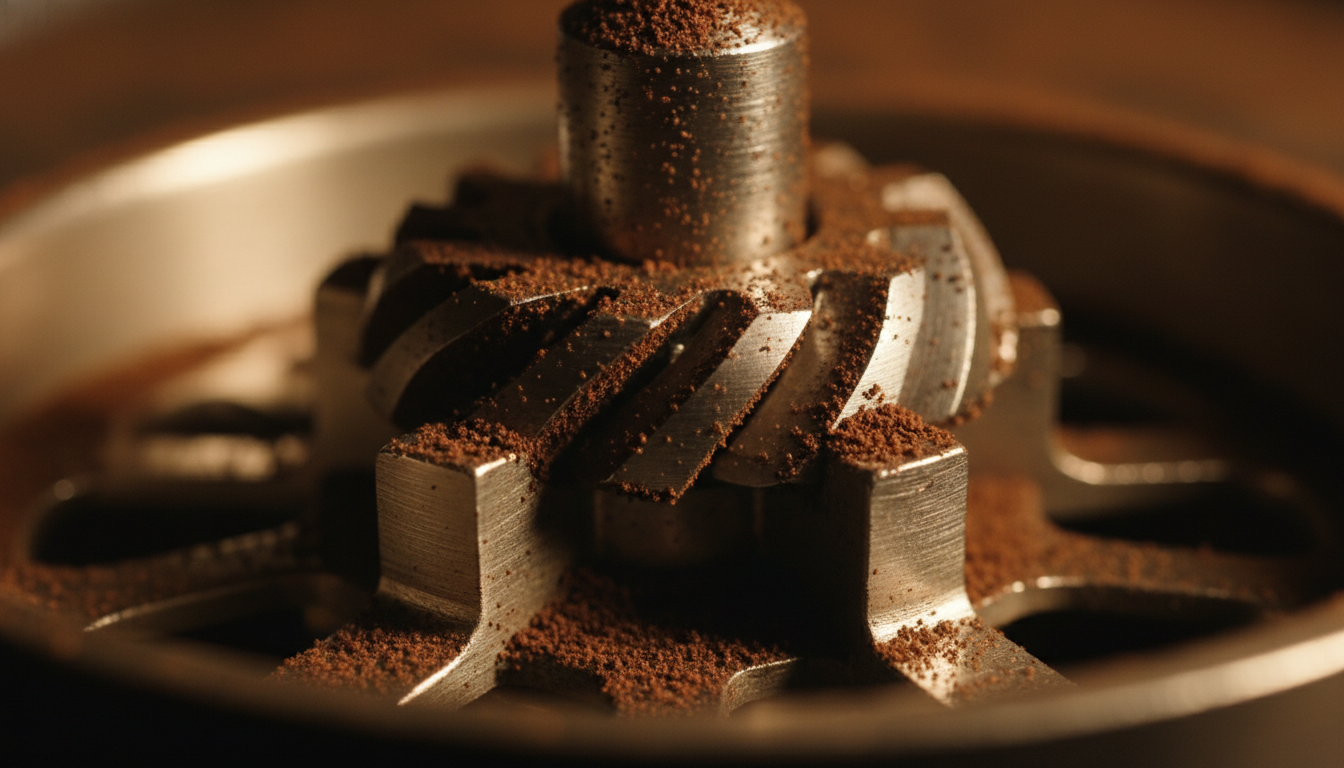
Manual coffee grinders are hand-operated devices that crush coffee beans using mechanical force, typically via a crank or handle, without electricity. They offer high portability for travel, low cost, and superior grind control for precise particle size adjustments across various brewing methods.
Why Manual Grinders Matter
Manual grinders deliver consistent results without electricity, making them ideal for travel, camping, and minimalist setups. Unlike electric grinders, manual models generate minimal heat during grinding, preserving delicate coffee flavors. The ritual of hand-grinding connects brewers to their craft while building forearm strength. Budget options start at $30-40, while premium models ($150-300) rival electric grinders in consistency.
Types of Manual Grinders
Burr Grinders (Conical/Flat)
Use two abrasive surfaces to shear beans evenly. Conical burrs are most common in manual models. Preferred for consistency across grind sizes. Steel or ceramic burrs available.
Blade Grinders
Chop beans with spinning blades like a mini food processor. Cheaper but produce uneven grinds with excessive fines. Not recommended for quality coffee.
Hand Crank
Nearly all manual grinders use a foldable or fixed crank handle for operation. Ergonomic curves improve torque and reduce hand fatigue.
Key Specifications to Prioritize
- Burr Size: Larger (40-48mm) grinds faster with fewer fines. Smaller (20-30mm) suits portability and travel.
- Grind Range: Measured in clicks per rotation or microns per click. Stepless adjustment allows infinite espresso tweaks; stepped adjustment aids filter reproducibility.
- Capacity: 15-50g beans. Higher capacity for batches; lower for single cups and travel.
- Material: Aluminum or steel bodies for durability. Stainless steel burrs for longevity. Ceramic burrs for affordability but less precision.
Top 7 Manual Grinders for 2026
1. 1Zpresso JX-Pro/J Ultra — $130-150
Best for: All brewing methods (top pick)
The 1Zpresso JX-Pro features 48mm stainless steel conical burrs with a 10/10 grind range spanning espresso to coarse. Approximately 25 microns per click for precise adjustments. 30-35g capacity. Aluminum body with magnetic cup. Excellent consistency across all brewing methods.
Specs: 48mm steel burrs | 10/10 range | 30-35g capacity | Magnetic cup | Aluminum body
2. Timemore Chestnut C3/C3s — $70-90
Best for: Espresso and value
The Timemore Chestnut C3s delivers 38mm steel burrs optimized for espresso with 30 clicks per turn. Fine focus enables precise dialing for espresso shots. 25g capacity. Aluminum construction. Excellent value for espresso enthusiasts on a budget.
Specs: 38mm steel burrs | 30 clicks/turn | 25g capacity | Aluminum body | Espresso-focused
3. Comandante C40 MK4 — $160-180
Best for: Pour-over and filter coffee
The Comandante C40 MK4 features 39mm steel conical burrs with an 8/10 grind range optimized for pour-over and filter brewing. Stepless-like adjustment. 40g capacity. Stainless steel with wood accents. Produces clean cups with excellent clarity.
Specs: 39mm steel burrs | 8/10 range | 40g capacity | Stainless steel + wood | Filter-optimized
4. Kinu M47 Simplicity — $250-300
Best for: Espresso precision
The Kinu M47 Simplicity delivers 47-48mm steel burrs with stepless adjustment for ultra-precise espresso dialing. 40-50g capacity. Aluminum and steel construction. Premium build quality. Approximately 45 seconds per espresso dose. Excellent for advanced espresso techniques.
Specs: 47-48mm steel burrs | Stepless adjustment | 40-50g capacity | Premium build | Espresso precision
5. 1Zpresso K Ultra — $140-160
Best for: Ease of use and versatility
The 1Zpresso K Ultra features 48mm steel burrs with external dial adjustment for easy grind size changes. All brewing methods supported. 35g capacity. Includes travel case. Aluminum body. Excellent for users prioritizing ease over stepless precision.
Specs: 48mm steel burrs | External dial | 35g capacity | Travel case included | All methods
6. JavaPresse Manual — $30-40
Best for: Budget and travel
The JavaPresse Manual offers ceramic dual-plate burrs at an ultra-affordable price. 7/10 grind range optimized for French press and coarse brews. 20-30g capacity. Stainless steel body. Excellent entry point for manual grinding without premium pricing.
Specs: Ceramic burrs | 7/10 range | 20-30g capacity | Stainless steel | Budget-friendly
7. Porlex Mini — $80-100
Best for: Travel and portability
The Porlex Mini features ceramic conical burrs (approximately 47mm equivalent) with stepped adjustment. 20g capacity. Stainless steel construction. Ultra-compact and lightweight. Excellent for backpacking and minimalist travel setups.
Specs: Ceramic conical burrs | Stepped adjustment | 20g capacity | Stainless steel | Ultra-portable
Manual vs Electric Grinder Comparison
| Aspect | Manual Grinders | Electric Grinders |
|---|---|---|
| Portability | Excellent (no power needed, under 500g) | Poor (bulky, corded) |
| Cost | $20-300, no ongoing fees | $50-1000+, electricity use |
| Consistency | Superior (precise burrs, low heat) | Good but generates heat and fines |
| Speed | Slow (20-45 seconds per dose) | Fast (seconds for batches) |
| Noise and Effort | Silent, ritualistic workout | Loud, hands-free |
| Durability | High (fewer parts) | Variable (motors fail) |
Best Manual Grinders for Espresso vs Filter Coffee
For Espresso
Kinu M47 Simplicity (stepless, precise dialing, 45 seconds per dose) or Timemore Chestnut C3s (fine capability, 9.5/10 consistency). Avoid ceramic-only models for espresso due to excessive fines.
For Filter Coffee
Comandante C40 MK4 (clean cups, pour-over optimized) or 1Zpresso JX-Pro (versatile, all methods). Budget option: JavaPresse for French press and coarse brews.
Maintenance and Durability
Clean after use by brushing burrs and shaking out grounds. Magnetic cups aid cleanup. Disassemble for deep cleans—easy on external-adjust models. Steel burrs last years with minimal wear. Aluminum bodies resist dents. Avoid drops; premium builds like Comandante excel in longevity over plastic models. Most manual grinders handle 250-500g lifetime beans before recalibration is needed.
Common Mistakes When Buying Manual Grinders
- Prioritizing price over burr quality: Cheap blade grinders produce uneven grinds. Invest in burr models.
- Ignoring grind range: Buying travel minis unfit for espresso limits versatility. Match grinder to brewing method.
- Overlooking capacity and ergonomics: Small hoppers slow batches. Test hand fit before purchasing.
- Skipping stepless/click testing: Essential for repeatability and consistency across shots.
- Falling for outdated models: Avoid older designs like Hario Skerton Pro. Modern steel burr models outperform significantly.
Final Verdict: Which Manual Grinder Should You Buy?
For all-around versatility, the 1Zpresso JX-Pro at $130-150 delivers a 10/10 grind range with 48mm steel burrs. For espresso precision, the Kinu M47 Simplicity at $250-300 offers stepless adjustment and premium build quality. For budget travelers, the JavaPresse at $30-40 provides entry-level burr grinding without premium pricing.
Manual grinders eliminate the need for electricity while delivering superior flavor through low-heat grinding. The ritual of hand-grinding connects brewers to their craft. Choose based on your primary brewing method, travel needs, and budget. Premium manual grinders ($150-300) rival electric models in consistency while offering portability electric grinders cannot match.
Ready to Pair Your Manual Grinder with the Perfect Brewing Method?
Manual grinders excel with pour-over and French press brewing. Learn the techniques that maximize your manual grinder's potential.
Explore the complete pour-over coffee guide →