Best Milk Temperature for Latte Art (and Why Temperature Matters)
Master milk temperature control to achieve perfect microfoam texture, optimal sweetness, and consistent latte art results
Quick Answer
The best milk temperature for latte art ranges from 140°F to 155°F (60°C to 68°C). At 140-145°F, milk offers maximum sweetness and optimal microfoam texture for detailed latte art. At 150-155°F, milk provides better temperature stability for serving but slightly reduced sweetness. Temperatures above 160°F scald milk, destroying sweetness and creating flat, unstable foam. Temperatures below 135°F fail to properly denature proteins, preventing adequate foam structure formation.
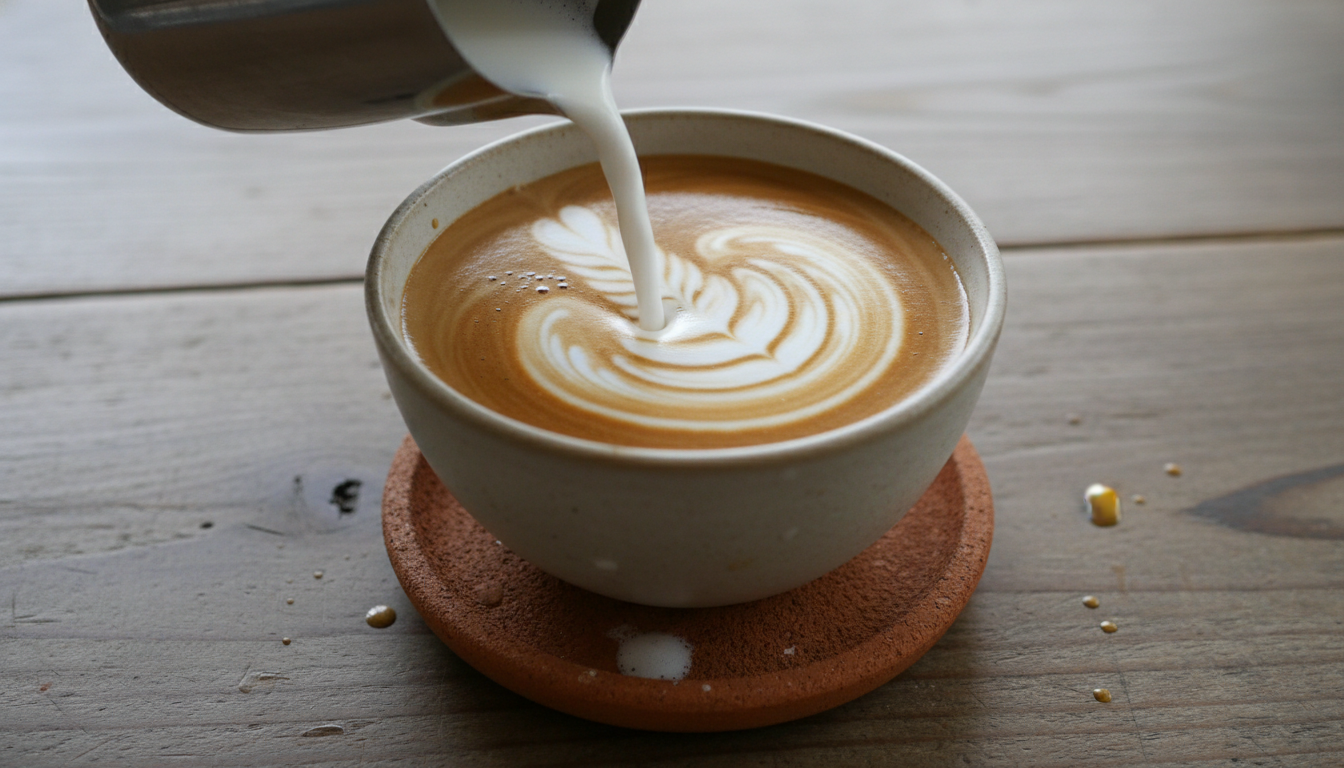
Milk Temperature: Entity Definition & Science
Milk Temperature Definition
Milk Temperature for Latte Art: The optimal heat range that transforms milk proteins into stable microfoam while preserving lactose sweetness and enabling precise pour control for latte art patterns.
Temperature Effect Taxonomy:
Temperature Zones
- ├─ Cold Zone: 35-100°F (2-38°C) | No foam formation
- ├─ Warm Zone: 100-135°F (38-57°C) | Initial protein unfolding
- ├─ Optimal Zone: 140-155°F (60-68°C) | Ideal microfoam + sweetness
- ├─ Hot Zone: 155-165°F (68-74°C) | Foam instability begins
- └─ Scalded Zone: >165°F (>74°C) | Protein destruction
Temperature Impact Matrix
| Temperature | Protein State | Foam Quality | Sweetness | Pour Control |
|---|---|---|---|---|
| 120°F (49°C) | Partial unfolding | Thin, unstable | High | Poor |
| 140°F (60°C) | Optimal denaturation | Creamy, stable | Maximum | Excellent |
| 150°F (66°C) | Full denaturation | Rich, stable | High | Very good |
| 160°F (71°C) | Over-denaturation | Flat, separating | Reduced | Fair |
| 170°F (77°C) | Destruction | Collapsed, bubbly | Minimal | Poor |
How Temperature Affects Milk Sweetness
Milk contains lactose, a sugar that tastes less sweet than sucrose at cold temperatures. As milk heats, lactose molecules become more soluble and accessible to taste receptors, increasing perceived sweetness. This sweetness peaks between 140-150°F (60-66°C), then gradually declines as temperatures approach scalding.
The Maillard reaction also contributes to milk flavor development at higher temperatures. This chemical reaction between amino acids and sugars creates complex flavor compounds. However, excessive heat causes caramelization and eventually burning, creating bitter, unpleasant flavors that mask natural milk sweetness.
Sweetness Development Timeline
100-120°F (38-49°C): Minimal sweetness enhancement | Cold milk taste dominates
130-145°F (54-63°C): Rapid sweetness increase | Lactose solubility peaks
145-155°F (63-68°C): Maximum sweetness zone | Optimal flavor balance
155-165°F (68-74°C): Sweetness plateau | Slight caramelization begins
>165°F (>74°C): Sweetness decline | Bitter compounds develop
Temperature and Microfoam Formation
Microfoam creation depends on protein denaturation—a process where heat causes whey proteins (beta-lactoglobulin and alpha-lactalbumin) to unfold from their natural coiled structures. These unfolded proteins form a protective film around air bubbles introduced during steaming, stabilizing the foam structure.
At temperatures below 135°F (57°C), proteins remain mostly folded and cannot effectively stabilize foam. At temperatures above 165°F (74°C), proteins over-denature and aggregate, losing their foam-stabilizing properties. The optimal foam formation window spans 140-155°F (60-68°C), where proteins achieve proper denaturation without destruction.
Foam Stability by Temperature
| Temperature | Bubble Size | Foam Texture | Stability Duration |
|---|---|---|---|
| 130°F (54°C) | Large, uneven | Airy, wet | 30-60 seconds |
| 140°F (60°C) | Fine, uniform | Velvety, creamy | 3-5 minutes |
| 150°F (66°C) | Fine, uniform | Rich, glossy | 2-4 minutes |
| 160°F (71°C) | Variable | Flat, separating | 1-2 minutes |
Temperature's Impact on Latte Art Pouring
Milk temperature directly affects pouring viscosity and flow characteristics. Colder milk flows too quickly, rushing out of the pitcher and creating chaotic patterns. Milk at optimal temperature flows smoothly and predictably, enabling controlled line work and defined shapes.
Temperature also affects foam integration with espresso crema. Milk at 140-150°F blends seamlessly with crema, creating a smooth canvas for latte art. Overheated milk (>160°F) causes rapid crema breakdown, creating a muddled appearance that obscures pattern definition.
Pattern Difficulty by Temperature
| Pattern Type | Optimal Temperature | Why Temperature Matters |
|---|---|---|
| Heart | 140-155°F | Consistent flow for symmetric lobes |
| Rosetta | 140-150°F | Precise control for leaf definition |
| Tulip | 145-155°F | Foam stability for stacked layers |
| Swan | 140-148°F | Extended pour time requires stability |
Measuring Milk Temperature Accurately
Thermometer Types and Accuracy
Instant-read digital thermometers provide the most accurate temperature measurement with response times under 3 seconds. Look for models with 0.1°F resolution and NSF certification. Infrared thermometers offer non-contact measurement but require proper emissivity settings and can misread reflective metal pitcher surfaces.
Hand Position Method
Experienced baristas use hand position on the pitcher as a temperature indicator. When the pitcher becomes too hot to hold comfortably (approximately 120°F at the metal surface), milk typically reaches 140-145°F internally. This method requires calibration with a thermometer until consistent results develop.
Visual and Auditory Cues
Milk volume increases approximately 20-25% during proper steaming. The steaming sound changes from loud, gurgling (air introduction) to quieter, rolling (heating phase). When the pitcher feels hot and the sound becomes uniformly quiet, milk approaches optimal temperature.
Alternative Milk Temperature Considerations
Plant-based milks require different temperature approaches due to varying protein structures and starch content. Most alternative milks perform best at slightly lower temperatures than dairy milk to prevent separation and maintain texture.
| Milk Type | Optimal Temperature | Temperature Limit | Behavior Above Limit |
|---|---|---|---|
| Whole Dairy Milk | 140-155°F | 165°F | Scalding, flat foam |
| 2% Dairy Milk | 140-150°F | 160°F | Foam collapse |
| Oat Milk (Barista) | 135-150°F | 155°F | Starch gelatinization, thickening |
| Almond Milk (Barista) | 130-145°F | 150°F | Protein separation |
| Soy Milk (Barista) | 135-145°F | 150°F | Curdling, beany taste |
Practical Temperature Control Tips
Steam Wand Technique
Start with the steam wand tip just below the milk surface to introduce air during the first 3-5 seconds. Submerge the tip fully once the pitcher volume increases by approximately 20%. Continue heating until reaching target temperature. Remove the steam wand promptly—temperature continues rising 2-3°F after stopping steam.
Temperature Recovery
If milk overheats slightly (155-160°F), swirl the pitcher vigorously and tap on the counter to redistribute heat. While you cannot restore damaged proteins, proper swirling can integrate remaining foam and improve pourability. Milk above 165°F should be discarded and restarted.
Serving Temperature Considerations
Customers prefer different serving temperatures. The optimal steaming temperature (140-155°F) differs from optimal drinking temperature (130-145°F). Milk cools approximately 10°F during pouring and the first minute in the cup. Steam slightly hotter (150-155°F) for customers who prefer hotter drinks.
Related Content & Deep Dives
How to Steam Milk for Latte Art
Master the complete milk steaming process from positioning to finishing for perfect microfoam every time.
How to Fix Thin or Bubbly Milk Foam
Troubleshoot common microfoam problems including temperature-related texture issues.
Barista Edition vs Regular Oat Milk
Learn how barista edition alternative milks perform differently across temperature ranges.
How to Froth Milk Without a Steam Wand
Explore alternative methods for achieving proper milk temperature and texture without espresso equipment.
Frequently Asked Questions
What happens if milk gets too hot for latte art?
Overheated milk (>165°F) experiences protein destruction that causes foam to collapse and separate. The milk develops a flat, thin texture with large, unstable bubbles. Scalded milk also tastes bitter and cooked, destroying the natural sweetness that complements espresso. Once overheated, milk cannot be salvaged and must be discarded.
Can you make latte art with cold milk?
Cold milk cannot create latte art because the proteins remain in their folded, native state and cannot stabilize foam structure. Cold-frothed milk produces large, unstable bubbles that immediately separate. For latte art, milk must reach at least 135°F to begin proper protein denaturation, though 140°F+ produces significantly better results.
Why does my milk taste burnt even at the right temperature?
Burnt milk taste can occur even at proper temperatures if the steam wand tip sits too deep during the air introduction phase. This creates large steam bubbles that superheat localized milk areas. Ensure the steam wand tip stays at the surface for the first 3-5 seconds, creating a gentle hissing sound rather than a loud roaring sound.
Do different milks need different temperatures?
Yes, different milks require temperature adjustments. Whole milk tolerates the widest temperature range (140-160°F) due to higher fat content stabilizing proteins. Skim milk performs best at lower temperatures (135-150°F) because the lack of fat makes proteins more susceptible to overheating. Alternative milks generally need 5-10°F lower temperatures than dairy milk to prevent separation.
Conclusion: Master Temperature for Perfect Latte Art
Milk temperature represents the critical variable that separates mediocre foam from latte art quality microfoam. The 140-155°F range offers the perfect balance of protein stability, sweetness, and pour control. Temperatures below this range fail to develop adequate foam structure; temperatures above destroy the proteins and sweetness that make latte art possible.
Developing temperature awareness requires practice and accurate measurement. Use a thermometer until hand-position judgment becomes reliable. Focus on the entire temperature window rather than a single target number—different patterns and milk types perform best at slightly different points within the optimal range.
Temperature control distinguishes amateur and professional milk steaming. Master this fundamental variable, and every other aspect of latte art becomes easier and more consistent.