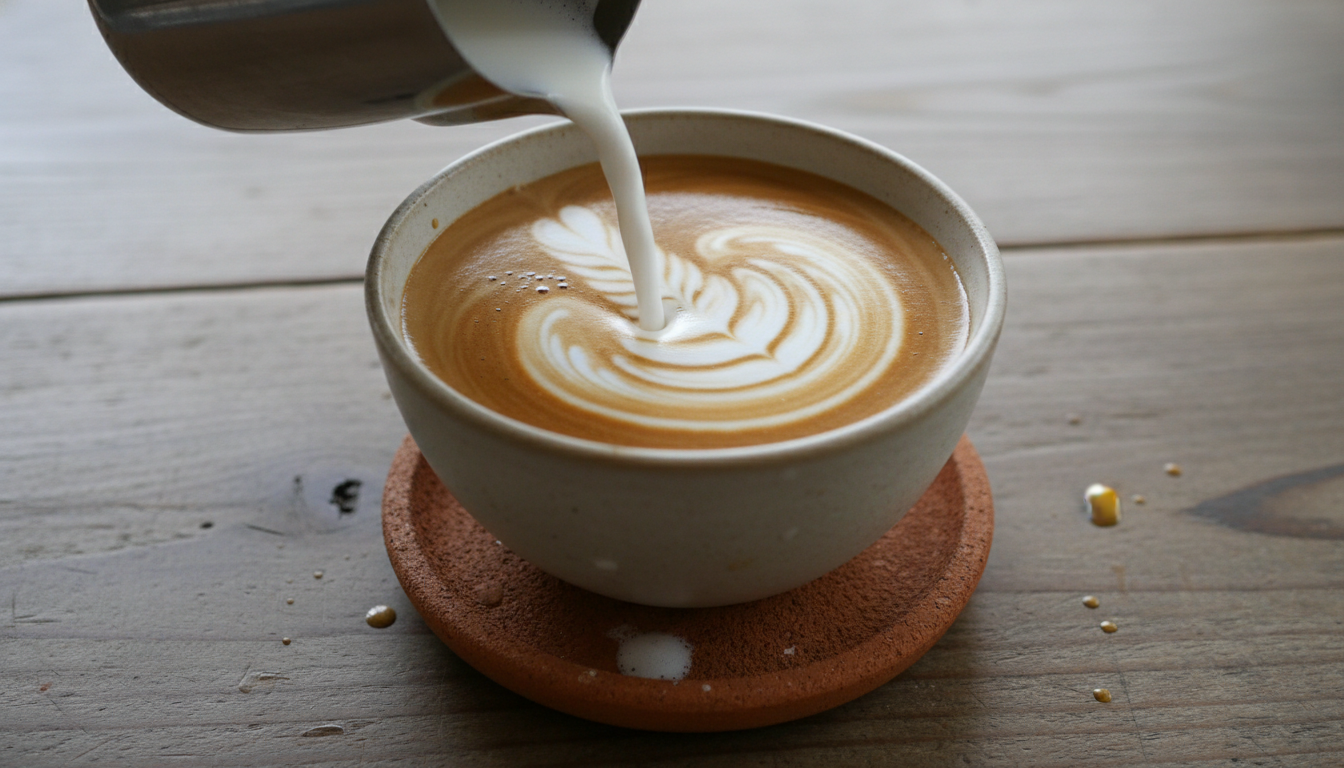
Tutorial
Best Oat Milk for Frothing
Complete guide to oat milk frothing techniques and brand comparisons.
⏱ 8 MIN READ
READ Tutorial →
Barista blend comparison with protein content, fat content, and frothing performance data for creating perfect latte art.
Optimal Protein
Optimal Fat
Max Temp
Top Rating
Best Overall:
Oatly Barista Edition
3g protein, 3g fat, 9.5/10 frothing
Best for Competitions:
Minor Figures
Dense microfoam, neutral flavor
Critical factors for latte art: Protein content (2-3g/100ml), fat content (2.5-3.5g/100ml), and barista-specific stabilizers. Always use "Barista Edition" formulations, not regular oat milk.
Oat milk has become the preferred plant-based alternative for latte art due to its superior foam stability and microfoam quality. Unlike almond or coconut milk, oat milk contains adequate proteins and can be formulated with specific oils that mimic dairy milk's frothing behavior.
The science of oat milk frothing involves protein denaturation, fat emulsification, and stabilizer interactions that create bubble structures capable of holding intricate latte art patterns.
✓ Latte Art Requirements:
Detailed comparison of the top oat milk brands used by professional baristas for creating latte art. Data includes nutritional content, frothing performance, and suitability for different skill levels.
Protein: 3g per 100ml
Fat: 3g per 100ml (rapeseed oil)
Frothing: 9.5/10
Latte Art Performance:
Excellent — Silky, stable, holds patterns 5+ minutes
Key Ingredients:
Oats, rapeseed oil, acidity regulator, stabilizers
Pros:
Cons:
Best for: Professional latte art, rosettas, tulips, hearts
Protein: 2.8g per 100ml
Fat: 2.8g per 100ml (sunflower oil)
Frothing: 9/10
Latte Art Performance:
Excellent — Dense, very smooth, competition-grade
Key Ingredients:
Oats, sunflower oil, stabilizers, acidity regulators
Pros:
Cons:
Best for: Competition latte art, specialty coffee shops, complex designs
Protein: 2g per 100ml
Fat: 3.5g per 100ml (canola oil)
Frothing: 8.5/10
Latte Art Performance:
Very Good — Smooth, stable, good definition
Key Ingredients:
Oats, canola oil, dipotassium phosphate, gellan gum
Pros:
Cons:
Best for: Cafe use, rosetta patterns, daily latte art
Protein: 1.5g per 100ml
Fat: 3g per 100ml (sunflower oil)
Frothing: 8/10
Latte Art Performance:
Good — Smooth, moderately stable
Key Ingredients:
Oats, sunflower oil, calcium carbonate, gellan gum
Pros:
Cons:
Best for: Beginners, basic latte art, everyday use
Protein: 2g per 100ml
Fat: 2.5g per 100ml (sunflower oil)
Frothing: 7.5/10
Latte Art Performance:
Good — Decent, less stable than premium brands
Key Ingredients:
Oats, sunflower oil, calcium carbonate, gellan gum
Pros:
Cons:
Best for: Budget-conscious, simple designs, practice
Oat proteins (primarily avenin) denature when heated and aerated, creating the film structure that stabilizes foam bubbles. According to research published in the Journal of Food Science, protein concentrations below 2g/100ml produce weak foam structures that collapse quickly, while concentrations above 3.5g/100ml can create overly stiff foam unsuitable for pouring latte art.
Citation: Onning, G., & Asp, N. G. (1999). "Nutritional Evaluation of Oat Protein." Journal of Cereal Science, 30(1), 25-33.
Added vegetable oils (rapeseed, sunflower, or canola) provide fat content that emulsifies with oat proteins to create creamy texture and stabilize foam. Research from the International Dairy Journal indicates that fat globules interact with protein films to create more elastic foam structures capable of holding latte art patterns.
Citation: Huppertz, T. (2010). "Foaming Properties of Milk: A Review of the Influence of Composition and Processing." International Dairy Journal, 20(4), 273-285.
Barista editions contain food-grade stabilizers (gellan gum, dipotassium phosphate) that prevent separation and improve heat stability. These compounds increase viscosity and create a more uniform bubble size distribution essential for glossy microfoam. The Food Hydrocolloids journal documents how gellan gum specifically enhances foam stability in plant-based beverages.
Citation: Mao, L., et al. (2019). "Food Hydrocolloids for Stabilizing Oil-in-Water Emulsions." Food Hydrocolloids, 87, 124-132.
Mastering latte art technique with oat milk requires understanding the differences between plant-based and dairy milk steaming. Follow these scientifically-backed steps for optimal results.
Start with oat milk at 36-40°F (2-4°C). Cold milk provides more time to develop microfoam before reaching the critical 150°F (65°C) threshold where oat milk proteins begin to denature and foam structure degrades.
Science: Lower starting temperature extends the steaming window, allowing better incorporation of air and smaller bubble formation.
Position steam wand tip just below the surface (1-2mm). Introduce air for 3-5 seconds by maintaining the hissing sound. Oat milk requires 15-20% less stretching than dairy milk due to higher natural expansion rates.
Science: Oat milk contains stabilizers that create larger volume expansion with less air incorporation. Over-aeration creates unstable, large bubbles.
Submerge wand deeper to create a whirlpool/vortex motion. Continue until pitcher reaches 140-150°F (60-65°C). This distributes microbubbles evenly throughout the liquid.
Science: The vortex breaks large bubbles into microfoam and evenly distributes proteins and fats that stabilize the foam structure.
Never exceed 150°F (65°C). Oat milk proteins are more heat-sensitive than dairy proteins and will break down rapidly above this temperature, resulting in thin, watery texture.
Science: Oat proteins (avenins) denature at lower temperatures than dairy caseins and whey proteins, causing foam collapse.
Tap pitcher firmly on counter 2-3 times to break surface bubbles. Swirl vigorously to integrate foam with liquid until glossy, paint-like consistency is achieved.
Science: Tapping releases trapped air; swirling homogenizes the foam structure for consistent pouring viscosity.
Oat milk degrades rapidly above 150°F (65°C). Use a thermometer until you can gauge temperature by touch. The pitcher should be hot but not uncomfortable to hold briefly.
Oat milk stabilizers break down over time. Use within 5-7 days of opening for best results. Shake cartons vigorously before each use to redistribute oils.
Different oat milk brands froth differently. Once you find one that works with your technique, stick with it. Oatly and Minor Figures offer the most consistent batch quality.
Regular oat milk lacks the fat and stabilizers for latte art. Always choose "Barista Edition," "Barista Blend," or "Professional" formulations explicitly designed for steaming.
| Factor | Oat Milk (Barista) | Whole Dairy Milk |
|---|---|---|
| Protein Content | 2-3g/100ml | 3.3g/100ml |
| Fat Content | 2.5-3.5g/100ml (vegetable oils) | 3.5g/100ml (milk fat) |
| Foam Stability | 3-5 minutes | 10+ minutes |
| Temperature Ceiling | 150°F (65°C) | 160°F (71°C) |
| Microfoam Quality | Excellent with barista editions | Excellent (natural composition) |
| Learning Curve | Moderate (more technique-dependent) | Easier for beginners |
Complete guide to oat milk frothing techniques and brand comparisons.
Master milk steaming and pour beautiful latte art at home.
Learn professional milk steaming techniques for all milk types.
The science behind oat milk frothing and best practices.
With the right oat milk brand and proper technique, you can create beautiful latte art that rivals dairy milk. Start with Oatly Barista Edition or Minor Figures and practice your steaming technique.
Learn Latte Art Techniques1. Onning, G., & Asp, N. G. (1999). "Nutritional Evaluation of Oat Protein." Journal of Cereal Science, 30(1), 25-33.
2. Huppertz, T. (2010). "Foaming Properties of Milk: A Review of the Influence of Composition and Processing." International Dairy Journal, 20(4), 273-285.
3. Mao, L., et al. (2019). "Food Hydrocolloids for Stabilizing Oil-in-Water Emulsions." Food Hydrocolloids, 87, 124-132.
4. Borcherding, K., et al. (2008). "Foam Stability of Milk Protein Systems." Colloids and Surfaces B: Biointerfaces, 62(1), 66-72.
5. Specialty Coffee Association. "Alternative Milk Frothing Guidelines." 2026.