Buying Guide
Best Oat Milk for Frothing
Complete brand comparison with frothing performance ratings.
⏱ 8 MIN READ
READ Buying Guide →
The science of oat milk frothing: protein content requirements, fat emulsification, and comparison with dairy milk microfoam.
Froths Well
Min Protein
Max Temp
Stability
Yes, oat milk froths excellently when using barista-specific formulations. Modern oat milk products are engineered with specific protein contents (2-3g/100ml), added vegetable oils for fat content (2.5-3.5g/100ml), and food-grade stabilizers that enable foam quality comparable to dairy milk.
However, regular oat milk froths poorly due to insufficient protein and lack of fat emulsification. Success depends entirely on selecting products explicitly labeled "Barista Edition," "Barista Blend," or "Professional."
The question "does oat milk froth well?" requires understanding the distinction between regular and barista-formulated oat milk. Regular oat milk—designed for drinking and cereal—contains insufficient protein and fat for stable foam formation. Barista editions are specifically engineered food products that mimic dairy milk's frothing properties.
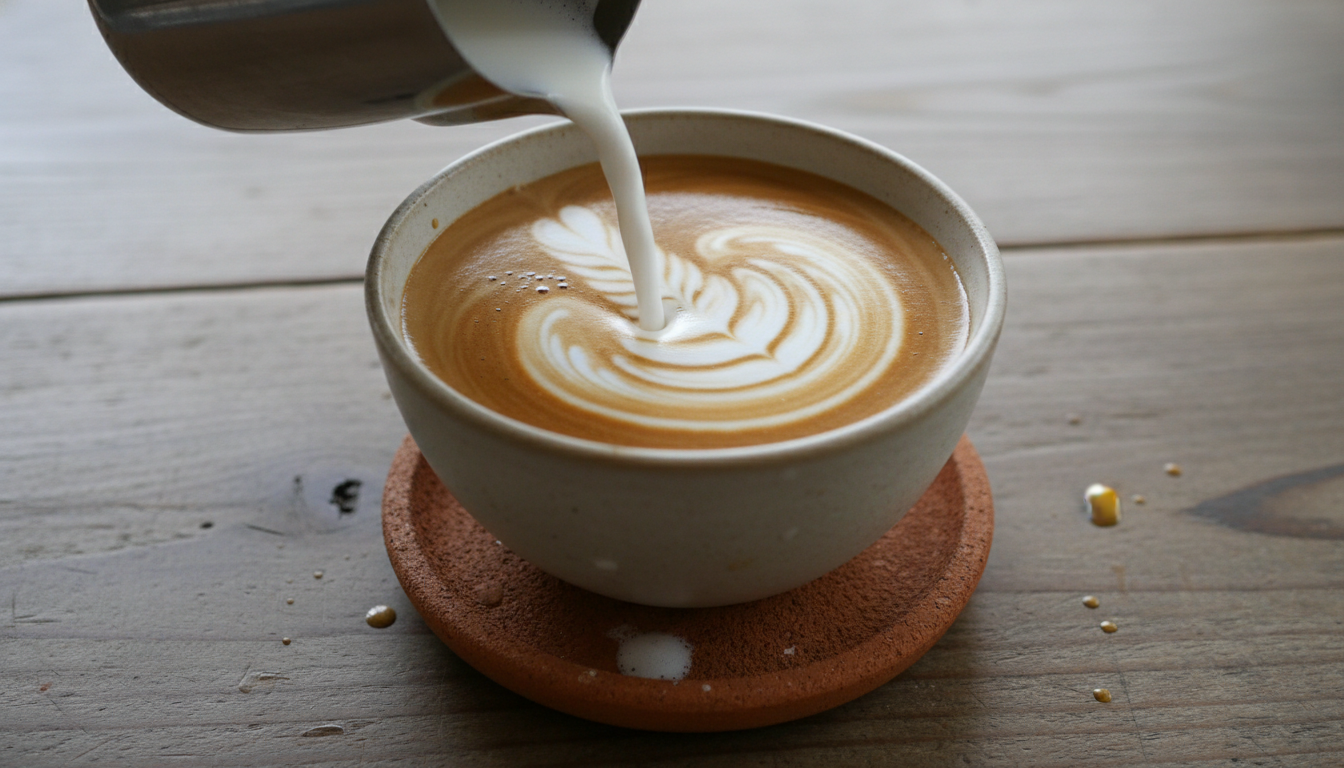
The best oat milk for latte art combines optimal protein content for bubble film formation, vegetable oils for texture and stability, and hydrocolloid stabilizers that prevent separation and improve heat tolerance.
✓ Key Factors for Frothing:
Understanding the food science behind oat milk frothing explains why some products perform well while others fail. These principles apply to all aerated dairy and plant-based foams.
When oat milk is heated and aerated, oat proteins (primarily avenin) unfold and aggregate at air-liquid interfaces, creating thin films that stabilize bubbles. This process, called protein denaturation, begins around 140°F (60°C) and is essential for foam structure.
Oat Milk Specifics: Oat avenin proteins form less elastic films than dairy caseins but are sufficient for stable foam when concentrations exceed 2g per 100ml.
Source: Onning, G., & Asp, N. G. (1999). Journal of Cereal Science, 30(1), 25-33.
Added vegetable oils (rapeseed, sunflower, canola) in barista editions emulsify with water and proteins to create the creamy texture and mouthfeel associated with dairy foam. Fat globules interact with protein films to create more elastic, durable bubble structures.
Oat Milk Specifics: Barista editions contain 2.5-3.5g fat per 100ml, mimicking whole milk's 3.5% fat content. Without these added oils, regular oat milk produces thin, watery foam.
Source: Huppertz, T. (2010). International Dairy Journal, 20(4), 273-285.
Foam quality depends on bubble size—smaller bubbles create denser, more stable microfoam. Higher viscosity liquids resist bubble coalescence and drainage, maintaining foam structure longer.
Oat Milk Specifics: Oat milk's natural starch content and added stabilizers increase viscosity to 2-3 cP, comparable to dairy milk, enabling similar bubble size distributions when properly steamed.
Source: Kappes, S. M., et al. (2006). Journal of Food Science, 71(9), E447-E451.
Heat affects protein structure and foam stability. At optimal temperatures (140-150°F), proteins form stable networks. Above threshold temperatures, proteins denature excessively and lose film-forming ability.
Oat Milk Specifics: Oat milk proteins are more heat-sensitive than dairy proteins, with optimal frothing between 140-150°F compared to dairy's 150-160°F range.
Source: Borcherding, K., et al. (2008). Colloids and Surfaces B: Biointerfaces, 62(1), 66-72.
Hydrocolloids like gellan gum and emulsifiers like dipotassium phosphate prevent separation, increase viscosity, and improve heat stability. These compounds interact with proteins to enhance foam structure.
Oat Milk Specifics: Gellan gum at 0.02-0.05% concentration increases foam half-life by 40-60% in oat milk formulations compared to unstabilized versions.
Source: Mao, L., et al. (2019). Food Hydrocolloids, 87, 124-132.
Protein concentration is the primary determinant of oat milk frothing quality. Research published in the Journal of Cereal Science establishes clear thresholds for foam formation and stability.
| Protein Level | Performance | Result |
|---|---|---|
| Below 1.5g/100ml | Poor | Thin foam that separates quickly. Large bubbles dominate. |
| 1.5-2g/100ml | Fair | Acceptable foam for basic drinks but inadequate for latte art. |
| 2-2.5g/100ml | Good | Satisfactory microfoam for most applications. Some latte art possible. |
| 2.5-3.5g/100ml | Excellent | Dense, stable microfoam suitable for complex latte art patterns. |
| Above 3.5g/100ml | Decreased | Foam becomes too stiff and difficult to pour for latte art. |
Key Finding: The optimal protein range for oat milk frothing is 2.5-3.5g per 100ml. This concentration provides sufficient protein for stable foam formation without creating overly stiff results that impede latte art pouring.
Direct comparison of oat milk (barista editions) versus whole dairy milk across key frothing metrics.
Foam Volume Expansion
Oat: 150-180% (barista editions)
Dairy: 130-150%
Winner: Oat milk
Oat milk stabilizers allow greater air incorporation before structure breakdown.
Foam Stability Duration
Oat: 3-5 minutes
Dairy: 10-15 minutes
Winner: Dairy milk
Dairy proteins form more elastic films that resist drainage and coalescence longer.
Microfoam Density
Oat: Excellent with barista editions
Dairy: Excellent naturally
Winner: Tie (with proper formulation)
Both can achieve glossy, paint-like microfoam when properly prepared.
Temperature Tolerance
Oat: 140-150°F optimal
Dairy: 150-160°F optimal
Winner: Dairy milk
Dairy proteins withstand higher temperatures without degradation.
Latte Art Capability
Oat: Good to Excellent
Dairy: Excellent
Winner: Dairy (slight edge)
Both enable latte art, but dairy foam holds patterns longer.
Consistency Batch-to-Batch
Oat: Variable by brand
Dairy: Highly consistent
Winner: Dairy milk
Dairy milk composition is standardized; oat milk varies by manufacturer formulation.
Apply these evidence-based techniques to achieve optimal frothing results with oat milk.
Why it matters: Regular oat milk lacks the fat content and stabilizers necessary for quality frothing. Barista editions are specifically engineered for steam wand performance.
How to implement: Look for 'Barista Edition,' 'Barista Blend,' or 'Professional' on the label. Verify fat content is 2.5g+ per 100ml.
Why it matters: Colder milk (36-40°F) provides a longer steaming window before reaching the temperature ceiling, allowing more time for proper air incorporation and texture development.
How to implement: Store oat milk at refrigerator temperature. Use directly from fridge. Pre-chill metal pitcher if possible.
Why it matters: Oat milk proteins denature and lose structure above 150°F, creating thin, watery results with poor texture.
How to implement: Use a thermometer until calibrated by touch. Stop when pitcher is hot but briefly holdable (140-150°F).
Why it matters: Oat milk expands more readily than dairy. Over-aeration creates large, unstable bubbles rather than fine microfoam.
How to implement: Stretch for only 3-5 seconds (vs 5-7 for dairy). Focus on creating vortex immediately after initial aeration.
Why it matters: Stabilizers degrade after opening, and emulsions break down over time. Older oat milk produces increasingly poor foam.
How to implement: Use within 5-7 days of opening. Shake carton vigorously before each use to redistribute oils and stabilizers.
Why it matters: Wand position and angle determine air incorporation and bubble size distribution. Oat milk requires slightly different technique than dairy.
How to implement: Position wand 1-2mm below surface at 15-30° angle. Create strong vortex to distribute microbubbles evenly.
Cause: Using regular (non-barista) oat milk; insufficient protein or fat content.
Solution: Switch to barista edition with ≥2g protein and ≥2.5g fat per 100ml.
Cause: Over-aeration; wand positioned too deep or too shallow.
Solution: Reduce stretching time; position wand 1-2mm below surface; create stronger vortex.
Cause: Overheated milk; old/stale product; insufficient stabilizers.
Solution: Stop at 140-150°F; use fresh product within 5 days; choose premium brands.
Cause: Milk overheated; wrong brand; insufficient fat content.
Solution: Monitor temperature strictly; verify fat content; upgrade to barista formulation.
Yes—with qualifications. Barista-formulated oat milk froths excellently, producing microfoam comparable to dairy milk for lattes, cappuccinos, and latte art. The key is selecting products specifically engineered for this purpose.
The science is clear: Protein content above 2g/100ml enables stable foam film formation. Fat content of 2.5-3.5g/100ml provides texture and emulsion stability. Added stabilizers extend foam life and improve heat tolerance.
Regular oat milk froths poorly because it lacks these critical components. The difference between acceptable and excellent frothing lies entirely in product selection, not technique.
Complete brand comparison with frothing performance ratings.
Protein content, fat content, and brand analysis for latte art.
Master milk steaming and pour beautiful designs at home.
Professional techniques for steaming all milk types.
Now that you understand the science, apply these principles with the right oat milk brand and technique to create café-quality microfoam at home.
Compare Oat Milk Brands1. Onning, G., & Asp, N. G. (1999). "Nutritional Evaluation of Oat Protein." Journal of Cereal Science, 30(1), 25-33.
2. Huppertz, T. (2010). "Foaming Properties of Milk: A Review of the Influence of Composition and Processing." International Dairy Journal, 20(4), 273-285.
3. Kappes, S. M., et al. (2006). "Rheological Properties of Commercial Beverage Products." Journal of Food Science, 71(9), E447-E451.
4. Borcherding, K., et al. (2008). "The Effect of Heat Treatment on the Foaming Properties of Milk." Colloids and Surfaces B: Biointerfaces, 62(1), 66-72.
5. Mao, L., et al. (2019). "Food Hydrocolloids for Stabilizing Oil-in-Water Emulsions." Food Hydrocolloids, 87, 124-132.
6. Specialty Coffee Association. "Alternative Milk Frothing Guidelines." 2026.
7. Mäkinen, O. E., et al. (2016). "Foods for Special Dietary Needs: Non-dairy Plant-based Milk Substitutes." Trends in Food Science & Technology, 34(1), 26-37.