What Is Espresso Channeling (and How to Prevent It)
Understanding water flow irregularities through coffee pucks and mastering techniques for balanced, even espresso extractions
Quick Answer
Espresso channeling occurs when water bypasses coffee grounds through irregular paths, causing blond gushes and under-extraction. Uneven distribution and improper tamping cause channeling. Prevention requires the Weiss Distribution Technique (WDT), consistent tamping pressure, and naked portafilter diagnosis.
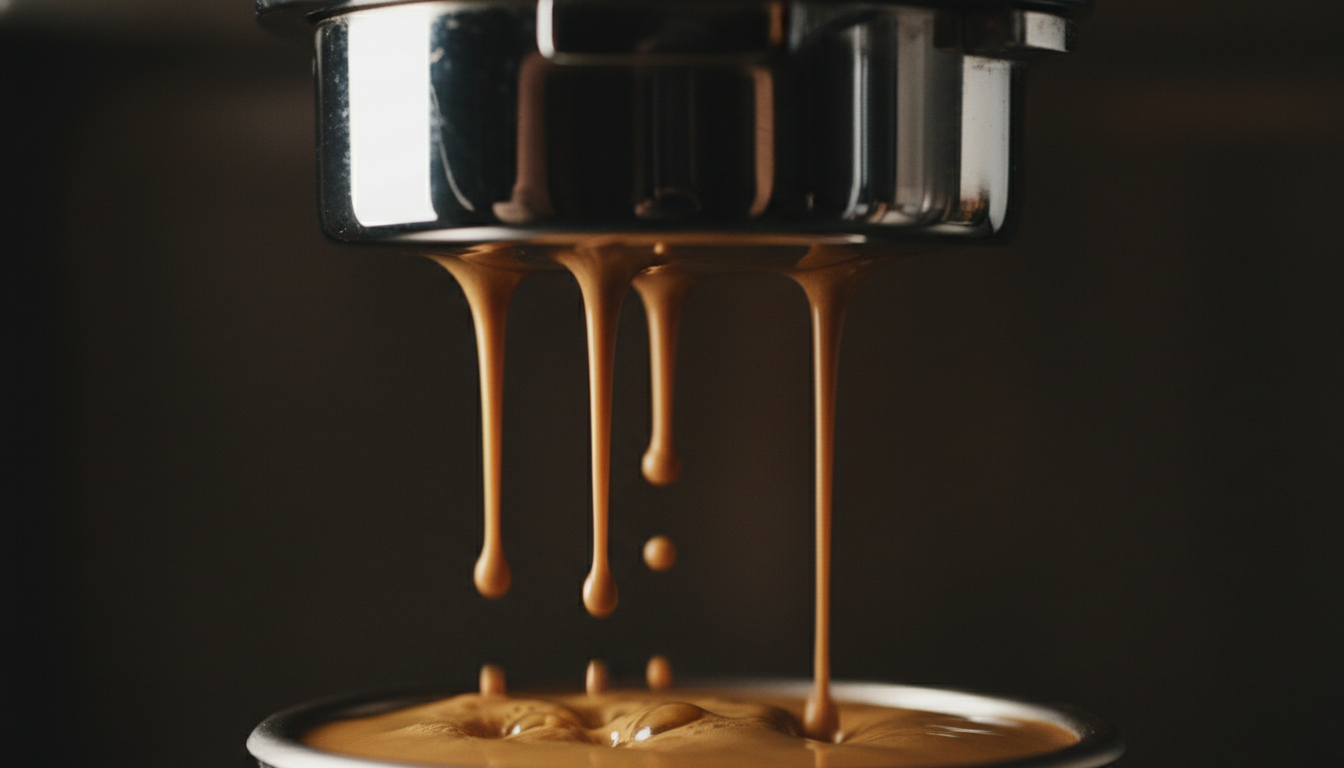
Naked portafilter revealing espresso extraction flow patterns
Espresso Channeling Ontology
Primary Entity: Espresso Channeling
Definition: Espresso channeling is the phenomenon where pressurized water creates preferential flow paths through a coffee puck, bypassing denser ground coffee regions and causing uneven extraction.
Entity Taxonomy:
Espresso Channeling
- ├─ Side Channeling (water flows along basket edges)
- ├─ Center Channeling (water flows through puck middle)
- ├─ Multiple Channeling (several pathways simultaneously)
- └─ Pinhole Channeling (single narrow pathway)
Channeling Cause & Effect Matrix
| Primary Cause | Visual Sign | Extraction Impact | Flavor Result |
|---|---|---|---|
| Uneven Distribution | Uneven flow from naked portafilter | 15-25% variance in extraction yield | Sour + bitter simultaneously |
| Improper Tamping | Blond gush, fast flow | Under-extraction in channels | Hollow, weak, astringent |
| Coffee Clumping | Spritzing, uneven streams | Localized over-extraction | Burnt, harsh notes |
| Uneven Grind Size | Mottled crema color | Mixed extraction rates | Unbalanced, inconsistent |
Visual Signs of Espresso Channeling
Espresso channeling manifests through distinct visual indicators during extraction. The naked portafilter serves as the primary diagnostic tool, revealing flow patterns invisible when using spouted portafilters. Understanding these visual signs enables baristas to identify channeling in real-time and make immediate corrections.
Primary Visual Indicators
Blond Gushing: Light-colored, fast-flowing streams appearing during mid-to-late extraction indicate water bypassing coffee grounds through channels. The blond color signals under-extraction in those regions.
Uneven Stream Formation: Streams emerging faster from one side of the basket, or multiple thin streams instead of a cohesive flow, indicate density variations within the coffee puck.
Spritzing and Spurting: Small droplets spraying from the portafilter bottom indicate localized high-pressure channels where water forces through weak points in the puck structure.
Mottled Crema: Crema displaying uneven coloration—pale patches mixed with dark brown—signals mixed extraction levels caused by channeling.
Early Blonding: Light-colored flow appearing before 15 seconds of extraction indicates severe channeling and significant under-extraction.
Extraction Timeline Analysis
| Extraction Phase | Normal Appearance | Channeling Appearance |
|---|---|---|
| 0-5 seconds (Pre-infusion) | Even wetting across puck surface | Uneven wetting, dry spots remain |
| 5-15 seconds (Main extraction) | Dark brown, honey-like flow | Blond streaks appear prematurely |
| 15-30 seconds (Development) | Consistent dark flow, thick crema | Rapid blonding, thin streams |
Root Causes of Espresso Channeling
Cause 1: Uneven Coffee Distribution
Uneven Distribution Definition: Uneven coffee distribution occurs when ground coffee particles cluster in some basket areas while leaving other regions less dense, creating density gradients that guide water flow preferentially through lower-density paths.
Distribution Failure Mechanisms:
- • Grind Clumping: Static electricity causes fine particles to clump together, creating dense regions surrounded by loose coffee
- • Grinder Spray Pattern: Uneven distribution from grinder output landing more coffee in basket center than edges
- • Inadequate Distribution Technique: Failure to level grounds before tamping leaves high and low spots
- • Distribution Tool Misuse: Incorrect depth or rotation speed fails to break up clumps effectively
Cause 2: Improper Tamping Technique
Improper Tamping Definition: Improper tamping encompasses uneven pressure application, angled tamping, or inconsistent force that compresses the coffee puck non-uniformly, creating density variations and potential channel pathways.
Tamping Error Types:
- • Angled Tamping: Tamping with the tamper not parallel to the basket creates a sloped puck surface
- • Uneven Pressure: Applying more force on one side compresses that region more densely
- • Polishing Motion: Twisting the tamper after compression disrupts puck integrity at the edges
- • Inconsistent Force: Varying pressure between shots creates unpredictable extraction behavior
Cause 3: Coffee Puck Integrity Issues
Puck Integrity Definition: Coffee puck integrity refers to the structural cohesion of compressed ground coffee that resists water erosion during extraction; compromised integrity creates weak points where channeling initiates.
Integrity Compromises:
- • Grind Size Inconsistency: Boulders (large particles) and fines (ultra-fine particles) create uneven packing density
- • Dose Variation: Inconsistent coffee mass changes puck thickness and resistance
- • Bean Age Variation: Degassed beans behave differently than fresh beans during extraction
- • Humidity Effects: Moisture content affects static and clumping behavior
Channeling Prevention Techniques
Weiss Distribution Technique (WDT)
WDT Definition: The Weiss Distribution Technique (WDT) is a manual distribution method using thin needles or wires to break up coffee clumps and evenly distribute grounds throughout the portafilter basket before tamping.
WDT Implementation Steps:
- 1. Grounds Transfer: Transfer ground coffee from grinder to portafilter basket
- 2. Surface Needling: Insert WDT tool needles into grounds surface, breaking visible clumps
- 3. Deep Distribution: Work needles through entire puck depth in circular pattern
- 4. Edge Attention: Focus on basket edges where clumping concentrates
- 5. Leveling: Gently tap portafilter to settle grounds before tamping
WDT Tool Specifications: Effective WDT tools use 0.3-0.4mm diameter needles spaced to cover basket area. Tools with 3-8 needles provide optimal distribution. Needle length should match basket depth (typically 25-30mm for standard baskets).
Proper Tamping Technique
Proper Tamping Definition: Proper tamping applies consistent, level pressure to the distributed coffee bed, creating uniform puck density that resists water channeling while allowing controlled flow.
Tamping Best Practices:
- 1. Tamper Fit: Use a tamper matching basket diameter exactly (typically 58.0mm or 58.5mm)
- 2. Level Positioning: Place tamper flat on grounds, ensure parallel alignment with basket rim
- 3. Consistent Pressure: Apply 20-30 pounds (9-14 kg) of force consistently
- 4. Vertical Compression: Press straight down without tilting or angling
- 5. Clean Release: Lift tamper vertically without twisting or sliding
Tamping Pressure Research: Studies analyzed by coffee equipment manufacturers demonstrate that tamping pressure variations between 15-40 pounds produce minimal extraction differences when distribution is even. Consistency matters more than exact force.
Prevention Technique Comparison
| Technique | Primary Function | Skill Level | Effectiveness |
|---|---|---|---|
| WDT | Clump breaking, distribution | Intermediate | High |
| Distribution Tool | Surface leveling | Beginner | Medium |
| Proper Tamping | Puck compression | Beginner | High |
| Tap Method | Settling grounds | Beginner | Low-Medium |
| Puck Screen | Shower screen protection | Beginner | Medium |
Diagnosing Channeling With Naked Portafilter
The naked portafilter (bottomless portafilter) serves as the most effective diagnostic tool for identifying espresso channeling. Unlike spouted portafilters that conceal extraction flow, the naked portafilter exposes the entire puck bottom, revealing flow patterns in real-time.
Naked Portafilter Diagnosis Method
- 1. Preparation: Prepare espresso shot using standard technique with naked portafilter attached
- 2. Pre-infusion Observation: Watch for even wetting across the entire puck surface during first 3-5 seconds
- 3. Flow Pattern Analysis: Observe stream formation—uniform flow indicates good distribution; irregular streams indicate channeling
- 4. Color Monitoring: Track crema color consistency; early blonding signals channeling locations
- 5. Timing Documentation: Note when blonding begins; optimal extraction maintains dark color through 20+ seconds
Channeling Pattern Interpretation
| Visual Pattern | Channeling Type | Root Cause |
|---|---|---|
| Streams from one side only | Side channeling | Uneven distribution, angled tamp |
| Center gush with slow edges | Center channeling | Low center density, donut distribution |
| Multiple thin streams | Multiple channeling | Severe clumping, poor WDT |
| Spraying droplets | Pinhole channeling | Puck fracture, tamping disruption |
Fixing Channeling: Troubleshooting Guide
Problem: Side Channeling
Cause: Coffee concentrated in center, empty edges
Solution: Improve WDT technique focusing on edge distribution; verify tamper fits basket properly
Problem: Center Channeling
Cause: Excessive center dosing, "donut" distribution
Solution: Reduce center concentration during dosing; use distribution tool to level surface
Problem: Spritzing/Spurting
Cause: Puck fracture, severe clumping, grinder issues
Solution: Improve grind consistency; eliminate tamper twist; check grinder burr alignment
Problem: Early Blonding
Cause: Under-dosing, coarse grind, poor tamp
Solution: Increase dose by 0.5g; fine grind slightly; verify tamping pressure consistency
Systematic Channeling Elimination Protocol
- Step 1: Verify Grinder Performance — Ensure consistent grind size output; analyze particle distribution; clean burrs regularly
- Step 2: Implement WDT Consistently — Use WDT for every shot; develop consistent needle pattern and depth
- Step 3: Standardize Tamping — Practice level tamping on bathroom scale to calibrate pressure sensation
- Step 4: Use Naked Portafilter — Diagnose every shot until channeling patterns disappear
- Step 5: Document Variables — Track dose, grind, distribution method, and results to identify failure patterns
Equipment for Channeling Prevention
Essential Tools Matrix
| Equipment | Function | Impact Level |
|---|---|---|
| Naked Portafilter | Visual diagnosis of channeling | Critical for learning |
| WDT Tool | Clump breaking, distribution | High |
| Precision Tamper | Consistent compression | High |
| Distribution Tool | Surface leveling | Medium |
| Puck Screen | Shower water dispersion | Medium |
Research & Technical Analysis
Extraction yield variance in channeled vs. even extractions
Source: Espresso Extraction Research Analysis
TDS (Total Dissolved Solids) variation in channeled shots
Source: Coffee Brewing Control Chart Studies
Optimal WDT needle diameter for effective distribution
Source: Weiss Distribution Technique Analysis
Recommended tamping pressure range for consistency
Source: Barista Hustle Research
Authoritative Sources
Barista Hustle - Channeling Research
Visit Source →Coffee Ad Astra - Extraction Science
Visit Source →Whole Latte Love - Channeling Guide
Visit Source →Decent Espresso - Distribution Research
Visit Source →Related Content & Deep Dives
Espresso Extraction Science & Dialing In
Master the fundamentals of espresso extraction including yield, time, and pressure variables.
Coffee Grind Size Complete Guide
Understand how grind size affects extraction and how to achieve consistent particle distribution.
Espresso Distribution Techniques Compared
Compare WDT, distribution tools, and other methods for even coffee bed preparation.
Espresso Troubleshooting Guide
Diagnose and fix common espresso problems including sourness, bitterness, and uneven extraction.
Frequently Asked Questions
How does a naked portafilter help identify channeling?
A naked portafilter exposes the entire bottom of the coffee puck during extraction, revealing flow patterns invisible with spouted portafilters. Visual indicators like blond gushes, uneven streams, and spritzing become immediately visible, allowing real-time diagnosis of distribution and tamping issues.
Is WDT necessary for every espresso shot?
WDT becomes necessary when using grinders that produce clumping or when working with very fresh coffee that generates static. High-end grinders with consistent particle distribution may require less WDT intervention. For most home baristas, consistent WDT use improves shot quality significantly enough to justify the extra 10-15 seconds per shot.
Can channeling be fixed by tamping harder?
Tamping harder does not fix channeling caused by uneven distribution. Uneven density in the coffee puck creates flow paths regardless of tamping pressure. In fact, excessive tamping pressure can fracture the puck or cause channeling at the edges. Focus on distribution quality before tamping.
Why does my espresso channel only sometimes?
Intermittent channeling typically indicates inconsistent technique rather than equipment problems. Variable dosing amounts, inconsistent WDT application, or uneven tamping pressure create unpredictable results. Document your process variables and standardize each step to eliminate intermittent channeling.
Does pre-infusion reduce channeling?
Pre-infusion at low pressure (2-4 bars) can reduce channeling by gradually saturating the coffee puck before full pressure application. The slow wetting allows coffee grounds to expand and settle, potentially sealing minor weak points. However, pre-infusion cannot overcome severe distribution problems.
Conclusion: Mastering Espresso Channeling Prevention
Espresso channeling represents one of the most common obstacles to achieving balanced, flavorful extractions. Understanding the visual signs—blond gushes, uneven flow, and early lightening—enables baristas to diagnose channeling in real-time using a naked portafilter. Identifying root causes including uneven distribution, improper tamping, and grind inconsistency provides the foundation for systematic correction.
Prevention through the Weiss Distribution Technique (WDT) and proper tamping protocol eliminates most channeling issues before extraction begins. The WDT breaks up clumps and creates even density throughout the coffee puck, while consistent tamping pressure ensures uniform resistance to water flow. These techniques, combined with naked portafilter diagnosis, transform inconsistent shots into reliable, repeatable results.
Mastering espresso channeling prevention requires practice and attention to detail. Start by implementing WDT for every shot, standardizing tamping technique, and using the naked portafilter to observe results. Document variables and outcomes to identify patterns. Over time, these practices become automatic, and channeling disappears from your espresso routine—replaced by even, balanced extractions that showcase your coffee's full potential.