Understanding Coffee Extraction Science
Master the science of coffee extraction. Learn how variables like grind, temperature, time, and ratio affect flavor. Dialing in espresso applies these extraction principles to achieve perfect shots.
Master the science of coffee extraction. Learn how variables like grind, temperature, time, and ratio affect flavor. Dialing in espresso applies these extraction principles to achieve perfect shots.
Every cup of coffee is an extraction experiment. Water dissolves flavor compounds from ground coffee, and the variables you control—grind, time, temperature, ratio—determine which compounds end up in your cup. Understanding this process transforms coffee from guesswork into craft.
This guide explains the science behind extraction so you can diagnose problems, make intentional adjustments, and consistently brew excellent coffee. It's the foundation for everything from dialing in espresso to perfecting pour-over.
Extraction is dissolving soluble compounds from coffee grounds into water. Coffee contains about 30% soluble material, but we only want to extract 18-22% for optimal taste. Understanding extraction science helps you dial in espresso and brew coffee properly.
Key point: More extraction isn't always better—there's a sweet spot.
Not enough flavor extracted. Water didn't dissolve enough soluble compounds, leaving desirable flavors behind.
SYMPTOMS:
FIXES:
Too much extracted, including undesirable bitter compounds that dissolve last.
SYMPTOMS:
FIXES:
The sweet spot where you've extracted enough sweetness and complexity without the harsh compounds.
SYMPTOMS:
Target: 18-22% extraction yield is the industry standard target.
Impact: Surface area affects extraction speed
More surface area → faster extraction → risk of over-extraction
Less surface area → slower extraction → risk of under-extraction
Espresso tip: Espresso uses fine grind because extraction time is very short (25-30 seconds)
Impact: Heat increases solubility and extraction rate
195-205°F extracts more, faster—good for lighter roasts
185-195°F extracts less—can help tame dark roasts
Espresso tip: Most espresso machines brew at 200-204°F. Temperature stability matters more than exact temp.
Impact: Longer contact = more extraction
More extraction—risk of bitterness
Less extraction—risk of sourness
Espresso tip: Espresso: 25-35 seconds typical. Pour-over: 2.5-4 minutes. French press: 4 minutes.
Impact: Affects both extraction and strength
Higher extraction, lower strength (more dilute)
Lower extraction, higher strength (more concentrated)
Espresso tip: Espresso: 1:1.5 to 1:2.5 (ristretto to lungo). Pour-over: 1:15 to 1:17.
Impact: Movement increases extraction
Stirring, swirling, or turbulent pour increases extraction
Gentle handling reduces extraction
Espresso tip: Espresso agitation comes from pump pressure. Manual methods vary (stirring, swirling).
During an espresso shot, different compounds extract at different times. Understanding this helps you control flavor:
Acids, bright fruity compounds
Appearance: Dark, thick flow | Flavor: Sour, acidic if stopped here
Sugars, oils, body compounds
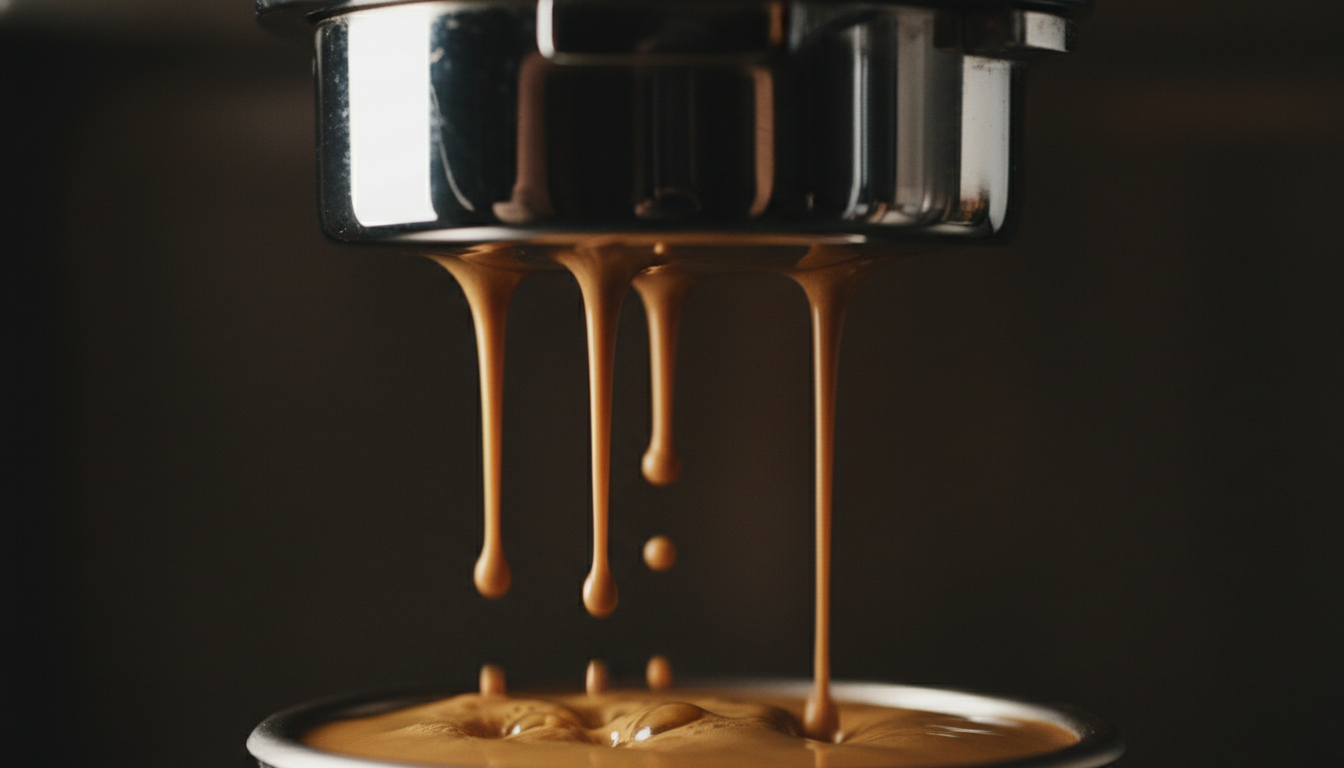
Appearance: Rich, caramel-colored flow | Flavor: Sweet, balanced, complex
Bitter compounds, astringent tannins
Appearance: Pale, thin flow (blonding) | Flavor: Increasingly bitter, harsh
Practical application: If your shot tastes sour, you're stopping too early (under-extracted). If it's bitter and harsh, you're going too long (over-extracted). The goal is stopping in the sweet spot where you've extracted sweetness without bitterness.
Most home baristas don't need to measure extraction. Instead:
When dialing in, only adjust one thing (grind, dose, yield, temp) per shot. Otherwise, you won't know what caused the change.
Numbers guide you, but taste decides. A shot at 21% extraction can taste worse than one at 19% depending on the coffee.
Finer grind = higher extraction. Longer time = higher extraction. Hotter water = higher extraction. These compound.
Fresh coffee (5-14 days) extracts differently than stale. You may need to adjust as beans age.
Mineral content affects extraction. Very soft water under-extracts; very hard water over-extracts. Aim for balanced water.
Under-extracted. Try:
Over-extracted. Try:
For detailed troubleshooting, see our bitter espresso guide or channeling guide.
Understanding extraction transforms coffee brewing from guesswork into intentional craft. Apply these principles, taste systematically, and you'll develop the intuition to brew excellent coffee consistently.