Part of: How to make a latte macchiato
Latte Macchiato vs Caffe Latte: Milk Order and Taste
A caffe latte and a latte macchiato use the same two ingredients, espresso and steamed milk. The difference is assembly order: a caffe latte starts with espresso and adds milk, so it blends into one even flavor, while a latte macchiato starts with milk and adds espresso last, so the coffee settles into a layer and each sip tastes a little different.
Quick answer: latte macchiato or caffe latte
Order a caffe latte for a smooth, uniformly mild milk coffee, often finished with latte art. Order a latte macchiato for a layered glass with a thick foam cap and a more pronounced espresso band. Stirred, a latte macchiato drinks much like a foamier caffe latte.
Latte macchiato vs caffe latte at a glance
| Attribute | Caffe latte | Latte macchiato |
|---|---|---|
| Build order | Espresso first, steamed milk added | Steamed milk first, espresso added last |
| Foam | No thick foam | Thick foam cap |
| Look | One even color, often latte art | Milk, espresso and foam layers |
| Vessel | Glass or cup, around 230 ml | Tall clear glass |
| Taste | Blended and mild throughout | Changes by layer unless stirred |
| Name means | "Coffee and milk" | "Stained milk" |
Build order: espresso-first caffe latte vs milk-first latte macchiato
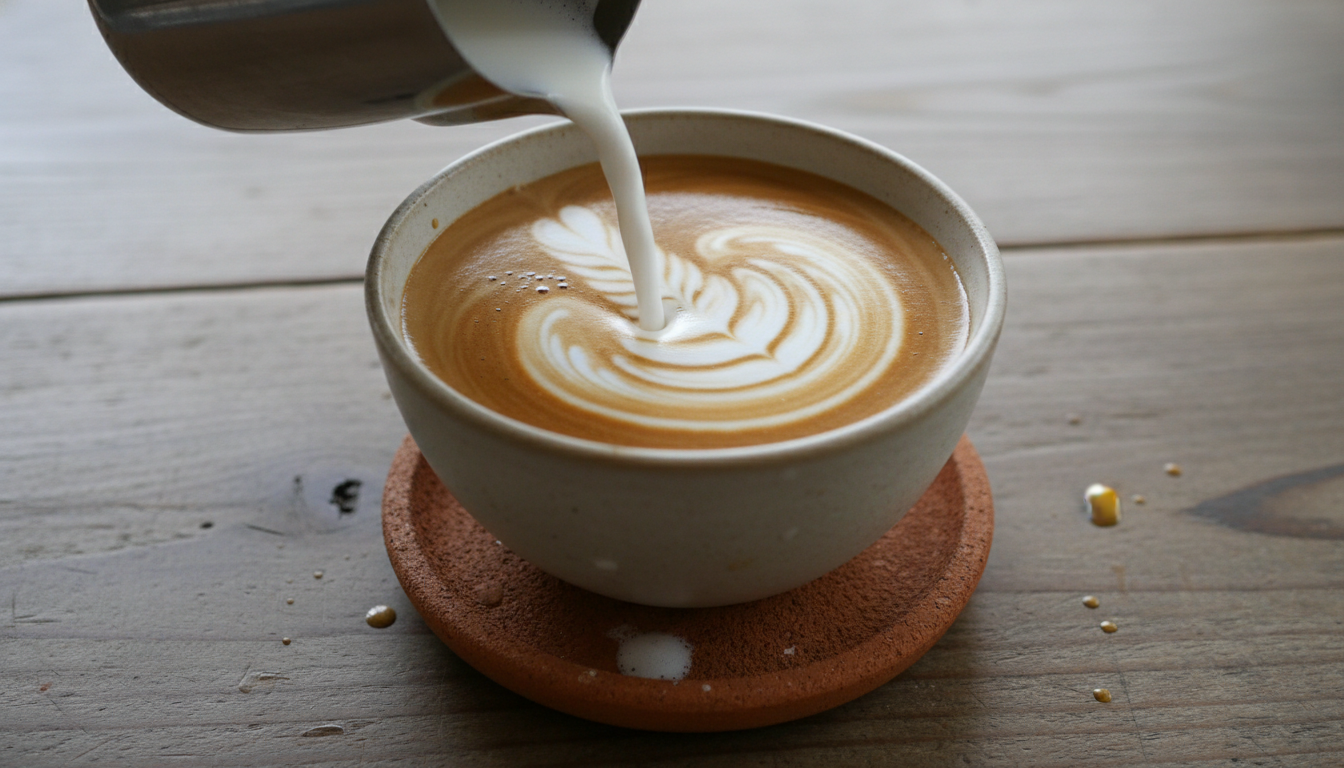
Wikipedia describes a caffe latte as one or more shots of espresso to which hot steamed milk is added, and the latte macchiato as the similar drink where the espresso is added after the steamed milk. Pouring milk onto espresso mixes the two, which is why a caffe latte is one color and can carry latte art on top.
A latte macchiato reverses the caffe latte sequence. Arla's latte macchiato recipe heats 200 ml of milk to about 65°C, froths it, pours it into a clear glass with the foam on top, then pours 50 ml of espresso slowly through the center of the foam to form three layers. Gaggia likewise describes a larger quantity of milk first, then espresso, in a tall glass. Full latte macchiato steps are in the latte macchiato recipe, and the espresso-first method is in the latte at home guide.
How the layers change the taste of a latte macchiato compared with a caffe latte
A caffe latte tastes the same from first sip to last because the espresso is already dispersed through the milk; Wikipedia notes that a caffe latte is much milkier than a cappuccino, resulting in a milder coffee taste. A latte macchiato keeps the espresso concentrated in its own band, so the first sips through the foam are soft and milky, the middle meets the espresso layer, and the bottom is mostly plain steamed milk. The coffee in the glass is not stronger overall; only its distribution differs.
Caffe latte
Latte macchiato
Stirring a latte macchiato removes the layers and brings its flavor close to a caffe latte, apart from the extra foam. Leaving the latte macchiato unstirred is how to get the stronger espresso hit in the middle of the glass.
Milk and foam in a latte macchiato and a caffe latte
Both drinks are large milk coffees. Wikipedia puts the typical caffe latte in a 230 ml (8 US fl oz) glass without thick foam, while the latte macchiato needs a thick foam cap because the foam slows the espresso and holds the layers apart. For a caffe latte, steam silky microfoam that pours well; for a latte macchiato, stretch the milk longer to build more foam. Ratios for both drinks sit in the espresso milk ratio chart.
What the names "caffe latte" and "latte macchiato" mean
In Italian, latte simply means milk, and Wikipedia notes the English "latte" comes from caffe e latte, meaning coffee and milk. Macchiato means stained or marked, so a latte macchiato is milk marked by espresso.
The naming causes a common ordering mistake: asking for a "macchiato" usually gets an espresso macchiato, a very different drink. Nescafe describes that macchiato as served in an espresso cup, which is usually around 2-3 oz, against a latte in a cup of around 240 ml. The macchiato guide covers the espresso macchiato.
Which to choose: latte macchiato or caffe latte
- Choose a caffe latte for a consistent, mellow drink, for latte art practice, or when you want to sip slowly without the flavor shifting.
- Choose a latte macchiato for a visual layered drink, plenty of foam, or a more noticeable espresso moment mid-glass.
- At home without a steam wand, a latte macchiato is the more forgiving of the two, because its thick foam cap is the goal rather than the pourable microfoam a caffe latte needs.
Weighing other milk drinks? Compare flat white vs latte or macchiato vs cappuccino.
Latte macchiato vs caffe latte FAQ
What is the difference between a latte macchiato and a caffe latte?
A caffe latte is espresso in the glass first with steamed milk added, so the drink blends. A latte macchiato is steamed milk in the glass first with espresso poured in last, so the espresso settles into a band between the milk and the foam.
Is a latte macchiato stronger than a caffe latte?
Not necessarily. Both drinks pair espresso with a large volume of steamed milk. A latte macchiato can taste stronger in some sips because the espresso sits in a layer instead of being mixed through the milk.
Does a latte macchiato have more foam than a latte?
Yes. A latte macchiato carries a thick foam cap that the espresso is poured through, while a caffe latte is usually served without thick foam.
Should you stir a latte macchiato?
Stirring is personal preference. Stirring a latte macchiato blends the layers so it drinks much like a foamier caffe latte; leaving it unstirred keeps the sip-to-sip change in flavor.
Is a latte macchiato the same as a macchiato?
No. An ordered macchiato is usually an espresso macchiato, a small espresso marked with a little milk and served in a 2 to 3 oz cup. A latte macchiato is a tall glass of milk marked with espresso.
Sources for this latte macchiato vs caffe latte comparison
Researched from manufacturer recipes and published references: