Single Dose Grinding Explained: Why Home Baristas Prefer Single Dosing
How single dose grinding transforms coffee freshness, reduces waste, and improves espresso consistency for the home barista
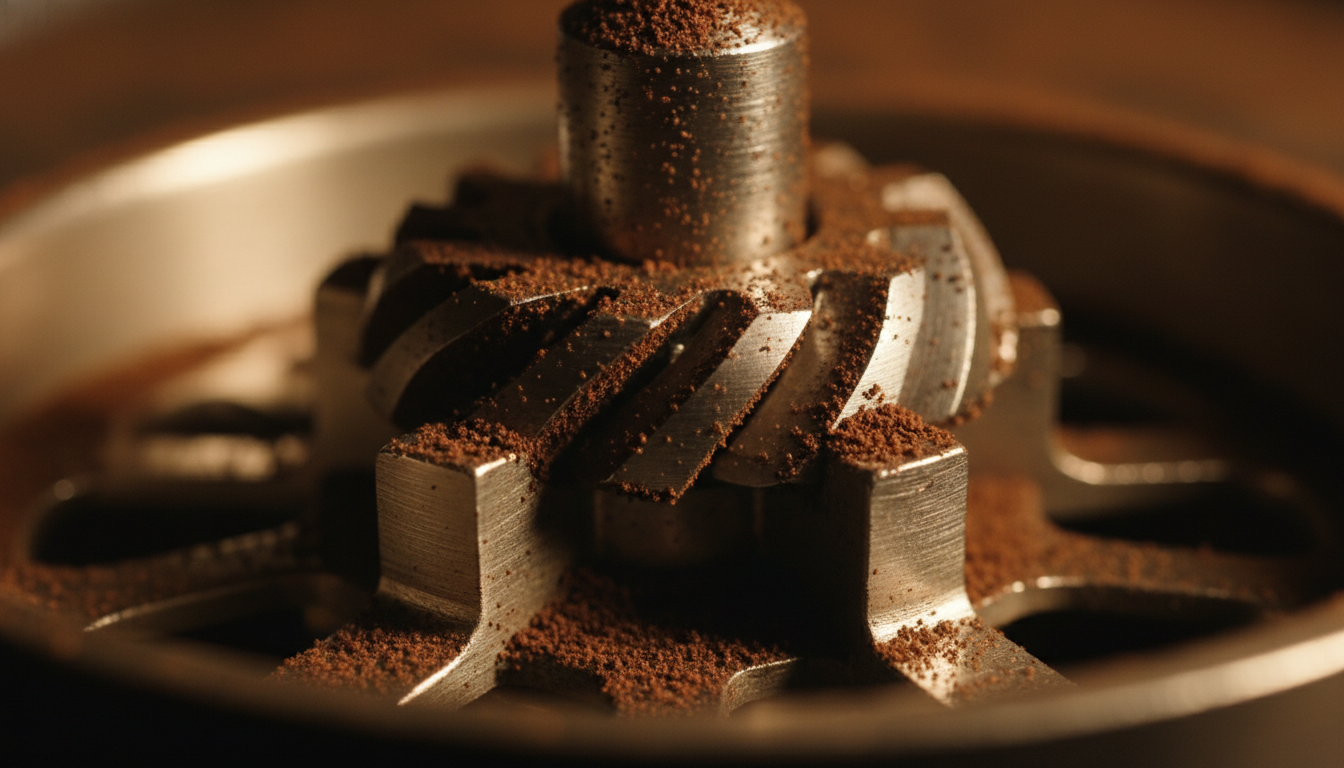
Precision flat burr grinder designed for low-retention single dose grinding
Quick Answer
Single dose grinding measures exact bean weight before grinding, eliminating hopper storage and ensuring maximum freshness. Low-retention grinders paired with single dosing reduce waste, enable frequent bean rotation, and deliver consistent espresso shots through precise dose control.
Single Dose Grinding Ontology
Primary Entity: Single Dose Grinding
Definition: Single dose grinding is the practice of measuring a specific weight of coffee beans (typically 18-20g for espresso) immediately before grinding, with no bean storage in the grinder hopper.
Entity Taxonomy:
Single Dose Grinding
- ├─ Low-Retention Grinder Design
- │ ├─ Flat Burr Grinders
- │ └─ Conical Burr Grinders
- ├─ Workflow Components
- │ ├─ Bean Weighing
- │ ├─ RDT (Ross Droplet Technique)
- │ └─ WDT (Weiss Distribution Technique)
- └─ Single Dose Accessories
- ├─ Bellows
- ├─ Dosing Cups
- └─ Bean Cellars
Single Dose vs Hopper Grinding Comparison
| Characteristic | Single Dose Grinding | Hopper Grinding |
|---|---|---|
| Bean Storage | External container (airtight) | Internal hopper |
| Dose Precision | ±0.1g accuracy | Timer-based (variable) |
| Bean Retention | 0.1-0.5g (low retention) | 2-5g (typical retention) |
| Freshness Control | Maximum (grind on demand) | Degraded (hopper exposure) |
| Bean Rotation | Easy (switch per shot) | Difficult (empty hopper required) |
| Daily Waste | Near zero | Purge shots required |
What Single Dose Grinding Means
Single dose grinding represents a fundamental shift in home espresso workflow. Instead of filling a grinder hopper with several days worth of beans, the single dose approach measures the exact amount of coffee needed for one espresso shot immediately before grinding. This method requires a low-retention grinder design that minimizes the amount of ground coffee remaining inside the grinder between uses.
The single dose workflow follows a precise sequence: weigh whole beans on a scale, add beans to the grinder, grind directly into a portafilter or dosing cup, and prepare the espresso. No beans remain inside the grinder after the grinding cycle completes. This approach eliminates the exchange grinding required with hopper-fed grinders, where stale grounds from previous sessions mix with fresh grounds.
The Problem With Traditional Hopper Grinding
Traditional hopper grinders store beans in an open or semi-sealed container mounted on top of the grinding chamber. Several issues emerge from this design:
- Bean Degradation: Coffee beans inside the hopper oxidize rapidly due to oxygen exposure and UV light penetration through transparent hopper materials.
- Retention Issues: Ground coffee remains trapped in the grinding chamber, chute, and burr carrier—requiring purge shots to clear stale grounds.
- Dose Inconsistency: Timer-based dosing varies with bean density, humidity, and burr temperature, producing inconsistent shot volumes.
- Limited Rotation: Switching between different coffee beans requires emptying the entire hopper, creating waste and inconvenience.
Benefits of Single Dose Grinding
Maximum Freshness Preservation
Coffee beans begin losing volatile aromatic compounds within minutes of grinding. Whole beans maintain freshness significantly longer when stored in airtight containers away from light. Single dose grinding ensures every espresso shot uses beans at peak freshness—ground seconds before extraction. The difference in cup quality between beans ground fresh versus beans sitting in a hopper for hours becomes immediately apparent in the aromatics and flavor clarity.
Waste Reduction
Single dose grinding eliminates the purge shots required with hopper grinders. Traditional grinders retain 2-5 grams of grounds in the grinding chamber and chute. To prevent stale coffee from contaminating the shot, baristas must purge 2-3 grams before the first morning espresso and after extended idle periods. For home baristas making 2-4 shots daily, this waste accumulates to 50-100 grams weekly. Single dose grinders with sub-0.5g retention require no purging.
Precise Dose Control
Weighing beans before grinding enables ±0.1g dose accuracy. Timer-based hopper grinders produce variable doses based on bean density, roast level, and environmental humidity. Single dose grinding removes these variables—18.0g of beans produces 18.0g of grounds (minus negligible retention). This precision supports consistent espresso extraction and simplifies dial-in when changing beans.
Flexible Bean Rotation
Single dose grinding enables effortless switching between different coffee beans. The home barista can prepare a Colombian single origin for the morning shot and an Ethiopian natural for the afternoon without emptying hoppers or wasting beans. This flexibility supports exploration of different origins, roast levels, and processing methods without committing to a full hopper of one variety.
Best Grinder Types for Single Dosing
Not all grinders suit single dosing effectively. Low retention design represents the critical requirement. Retention refers to the amount of ground coffee remaining inside the grinder after the grinding cycle completes. For single dosing to work properly, retention must remain below 0.5 grams—preferably below 0.2 grams.
Flat Burr Grinders for Single Dosing
Flat Burr Grinder Definition: Grinding mechanism using two parallel flat discs with cutting teeth arranged in a pattern that shears beans between the burrs.
Flat burr grinders dominate the single dose market due to several design advantages. The horizontal burr orientation allows gravity to assist ground coffee exit through the chute. Modern single dose flat burr grinders incorporate vertical burr mounts with direct grind path design—ground coffee falls directly into the dosing cup without traveling through complex chutes.
Flat burrs produce a bimodal particle distribution (two distinct particle size peaks) that many baristas prefer for espresso. The cutting action creates consistent particle shapes that extract uniformly. For single dosing, flat burr grinders with 64mm burrs or larger provide sufficient grinding speed while maintaining low retention characteristics.
Conical Burr Grinders for Single Dosing
Conical Burr Grinder Definition: Grinding mechanism using a cone-shaped inner burr fitting inside a ring-shaped outer burr, crushing and shearing beans simultaneously.
Conical burr grinders offer different advantages for single dosing. The crushing action between cone and ring burrs produces a multimodal particle distribution with more fines than flat burrs. Some baristas prefer this distribution for espresso body and texture. Conical designs often generate less heat during grinding due to lower RPM requirements.
The Niche Zero represents the most popular conical single dose grinder, using 63mm conical burrs and a direct grind path design. Conical single dose grinders typically feature simpler mechanical designs with fewer retention points than flat burr alternatives.
Low-Retention Design Features
| Design Feature | Function | Retention Impact |
|---|---|---|
| Vertical Burr Mount | Burr axis perpendicular to ground | Gravity-assisted exit |
| Direct Grind Path | No horizontal chutes or chambers | Eliminates trapped grounds |
| Bellows System | Air pressure clears residual grounds | Reduces retention to 0.1g |
| Anti-Static Design | Reduces static cling | Prevents grounds adhesion |
| Minimal Chamber Volume | Reduced space for grounds accumulation | Less retention surface area |
Popular Single Dose Grinders Analyzed
Turin DF64 (Single Dose Grinder)
DF64 Definition: 64mm flat burr single dose grinder featuring vertical burr orientation, adjustable RPM motor, and bellows retention reduction system.
The Turin DF64 established the benchmark for affordable single dose grinding. The grinder features 64mm flat burrs mounted vertically with a direct grind path into the dosing cup. The included bellows system allows users to push air through the grinding chamber after grinding, clearing residual grounds and achieving sub-0.2g retention.
Key Specifications:
- Burr Size: 64mm flat (Italian-made or Chinese options)
- Motor: 250W with adjustable RPM (600-1400 RPM)
- Retention: 0.1-0.3g with bellows use
- Grind Adjustment: Stepless micrometric
- Price Range: $300-400 USD
The DF64 supports burr swaps with compatible 64mm burr sets from SSP and other manufacturers, allowing users to customize grind characteristics. The stock burrs perform well for espresso with acceptable particle distribution. Build quality meets expectations for the price point, with metal construction and minimal plastic components.
Niche Zero (Single Dose Grinder)
Niche Zero Definition: 63mm conical burr single dose grinder featuring direct grind path, optimized motor calibration, and proprietary retention reduction design.
The Niche Zero revolutionized home single dose grinding upon release. The grinder uses 63mm conical burrs manufactured by Mazzer with a custom-designed grind pathway that achieves near-zero retention without bellows. The compact form factor and quiet operation distinguish the Niche Zero from competitors.
Key Specifications:
- Burr Size: 63mm conical (Mazzer Kony burrs)
- Motor: 150W DC motor with direct drive
- Retention: 0.0-0.2g without bellows
- Grind Adjustment: Stepless collar adjustment
- Price Range: $550-650 USD
The Niche Zero excels at both espresso and filter brewing, making the grinder suitable for users who prepare multiple brewing methods. The conical burrset produces a rounder, more textured espresso with pronounced body compared to flat burr alternatives. Grind speed runs slower than the DF64, completing an 18g dose in approximately 15-20 seconds versus 10-15 seconds for the DF64.
DF64 vs Niche Zero Comparison
| Characteristic | Turin DF64 | Niche Zero |
|---|---|---|
| Burr Type | 64mm flat | 63mm conical |
| Particle Distribution | Bimodal, clarity-focused | Multimodal, body-focused |
| Espresso Character | Bright, clean, defined | Rich, textured, rounded |
| Filter Performance | Good with burr swap | Excellent (wide range) |
| Retention | 0.1-0.3g (with bellows) | 0.0-0.2g (no bellows) |
| Noise Level | Moderate | Quiet |
| Build Quality | Good (value-oriented) | Excellent (premium) |
| Price | $300-400 | $550-650 |
Single Dose Workflow Optimization
The RDT (Ross Droplet Technique)
RDT Definition: Technique involving application of minimal water (via spray bottle or finger dip) to whole beans before grinding to reduce static electricity and improve grind distribution.
Static electricity presents the primary challenge in single dose grinding. Dry beans grinding at high speed generate static charges that cause grounds to cling to the grinder chute, dosing cup, and portafilter. The RDT eliminates this issue by adding a microscopic amount of moisture (typically 1-2 droplets per 18g dose) to the beans before grinding.
RDT Procedure: Place weighed beans in a small container. Spray one light mist of water from a distance of 12+ inches, or dip a finger in water and flick 2-3 droplets onto the beans. Shake briefly to distribute moisture. Grind immediately. The minimal moisture adds no extraction variables while eliminating static.
The WDT (Weiss Distribution Technique)
WDT Definition: Distribution technique using thin needles (typically 0.3-0.4mm acupuncture needles) to break up clumps and distribute grounds evenly in the portafilter basket before tamping.
Single dose grinders often produce slightly clumpier grinds than commercial hopper grinders due to different grind pathway designs. The WDT addresses this by manually breaking clumps and ensuring even distribution. Proper WDT execution improves extraction uniformity and reduces channeling.
WDT Procedure: Transfer grounds from dosing cup to portafilter basket. Insert WDT tool needles vertically into the grounds. Stir gently in circular motions from bottom to top, breaking visible clumps. Level the bed with a distribution tool or finger, then tamp with consistent pressure.
Optimized Single Dose Workflow
- 1. Weigh Beans: Place dosing cup on scale, tare, add 18.0g whole beans (or target dose).
- 2. Apply RDT: Lightly mist beans with water spray or flick 2-3 water droplets. Shake to distribute.
- 3. Load Grinder: Pour beans into grinder, ensuring no beans spill outside grinding chamber.
- 4. Grind: Activate grinder, allow complete grinding cycle to finish.
- 5. Use Bellows (if equipped): Compress bellows 3-5 times to clear residual grounds from chamber.
- 6. Transfer to Portafilter: Pour grounds from dosing cup into portafilter basket.
- 7. Apply WDT: Use WDT tool to break clumps and distribute grounds evenly.
- 8. Level and Tamp: Level the bed, tamp with 30-40 lbs pressure, prepare espresso.
Single Dosing vs Hopper: When Each Makes Sense
When Single Dosing Excels
- Multiple Bean Rotation: Home baristas who enjoy different coffees throughout the day or week benefit from the flexibility single dosing provides.
- Small Batch Brewing: Users making 1-3 shots daily minimize waste and maximize freshness through single dosing.
- High-Value Beans: Single dosing eliminates waste when using expensive specialty coffees ($20+ per pound).
- Experimental Brewing: Users who frequently change grind settings for different brewing methods benefit from single dose flexibility.
- Freshness Prioritization: Those who notice and value the difference between freshly ground and hours-old grounds will appreciate single dosing.
When Hopper Grinding Remains Practical
- High Volume Brewing: Cafes or households preparing 10+ shots daily benefit from hopper convenience and speed.
- Single Bean Commitment: Users who consume one coffee variety exclusively may prefer hopper convenience.
- Workflow Speed Priority: Hopper grinders with timer dosing enable faster shot preparation for time-constrained mornings.
- Established Equipment: Users already owning quality hopper grinders may not need immediate replacement if retention and workflow remain acceptable.
- Budget Constraints: Quality hopper grinders often cost less than quality single dose alternatives at similar performance tiers.
Decision Matrix: Choose Your Grinding Approach
| User Profile | Recommended Approach | Rationale |
|---|---|---|
| Enthusiast home barista (2-4 shots/day) | Single Dose | Maximum freshness, minimal waste, flexibility |
| High-volume household (8+ shots/day) | Hopper | Speed and convenience outweigh retention concerns |
| Bean explorer (multiple varieties) | Single Dose | Easy rotation without waste or emptying |
| Budget-conscious beginner | Hopper (entry) | Lower entry cost for quality grinding |
| Espresso purist (chasing perfection) | Single Dose | Precise dose control, zero exchange |
| Multi-method brewer (espresso + filter) | Single Dose (conical) | Wide range, easy switching between methods |
Research & Data Points
Aromatic compound loss within 20 minutes of grinding
Source: Coffee Science Foundation Studies
Typical retention in standard hopper grinders
Source: Home Barista Forum Analysis
Weekly waste from purge shots (hopper grinders)
Source: Barista Hustle Calculations
Retention achieved by optimized single dose grinders
Source: Grinder Manufacturer Specifications
Authoritative Sources
Coffee Science Foundation - Grinding Research
Visit Source →Barista Hustle - Grinder Retention Studies
Visit Source →Home-Barista.com - Single Dose Forum Analysis
Visit Source →SCA - Grinding Standards & Best Practices
Visit Source →Related Content & Deep Dives
Espresso Grinder Buying Guide 2026
Complete guide to selecting espresso grinders across all price points, including burr types and performance characteristics.
Espresso Extraction Science & Dialing In
Master espresso extraction principles including dose, yield, and time variables for optimal shot quality.
Coffee Bean Storage: Maximize Freshness
Learn optimal storage techniques for preserving bean freshness and volatile aromatic compounds.
Burr Grinder vs Blade Grinder Analysis
Understand why burr grinders outperform blade grinders for espresso and brewed coffee preparation.
Frequently Asked Questions
Can any grinder be used for single dosing?
Standard hopper grinders can perform single dosing, but high retention makes the workflow impractical. Grinders designed for single dosing feature vertical burr mounts, direct grind paths, and minimal chamber volume. Attempting single dosing with high-retention grinders requires extensive purging between doses, negating the waste-reduction benefit.
Does single dosing affect espresso taste quality?
Single dosing improves taste quality through freshness preservation and dose consistency. Eliminating exchange grinding (where stale grounds mix with fresh) produces cleaner, more defined flavors. Precise dose control enables consistent extraction parameters. The RDT and WDT techniques associated with single dosing further improve extraction uniformity and reduce channeling.
Is the Niche Zero worth the premium over the DF64?
The Niche Zero justifies the premium for users prioritizing build quality, quiet operation, and out-of-box performance. The DF64 offers superior value for users comfortable with modifications and those preferring flat burr characteristics. Both grinders produce excellent espresso. The decision depends on budget, preference for conical versus flat burr flavor profiles, and importance of noise levels.
How do I reduce static when single dose grinding?
Apply the Ross Droplet Technique (RDT) by misting beans with a microscopic amount of water before grinding. Use 1-2 spray droplets from 12+ inches away, or flick water from a damp finger. Some single dose grinders include anti-static designs that reduce cling. Grinding into a metal dosing cup rather than plastic also reduces static accumulation.
Can single dose grinders handle filter brewing methods?
Most single dose grinders accommodate filter brewing with grind range adjustment. Conical burr single dose grinders (like the Niche Zero) typically offer wider grind ranges suitable for espresso through French press. Flat burr single dose grinders may require burr swapping to optimize for filter brewing. Check grind range specifications before purchasing if filter brewing represents a priority.
Conclusion: Single Dosing Transforms Home Espresso
Single dose grinding represents more than a workflow change—it fundamentally improves espresso quality through freshness preservation, waste elimination, and precise dose control. The approach suits home baristas who value flexibility, consistency, and maximizing the potential of every coffee bean purchased.
Low-retention grinders like the Turin DF64 and Niche Zero make single dosing accessible across budget ranges. The DF64 delivers flat burr performance at an entry-level price point, while the Niche Zero provides premium build quality and conical burr versatility. Both grinders enable the single dose workflow that transforms daily espresso preparation.
Whether single dosing suits your needs depends on brewing volume, bean rotation preferences, and workflow priorities. For enthusiasts making 2-4 shots daily and exploring different coffees, single dosing offers undeniable advantages. The combination of maximum freshness, minimal waste, and precise control elevates home espresso from routine to craft.