Troubleshooting
Pour-Over Problems
Struggling with manual brewing? Identify what's going wrong and fix it for delicious pour-over coffee.
Struggling with manual brewing? Identify what's going wrong and fix it for delicious pour-over coffee.
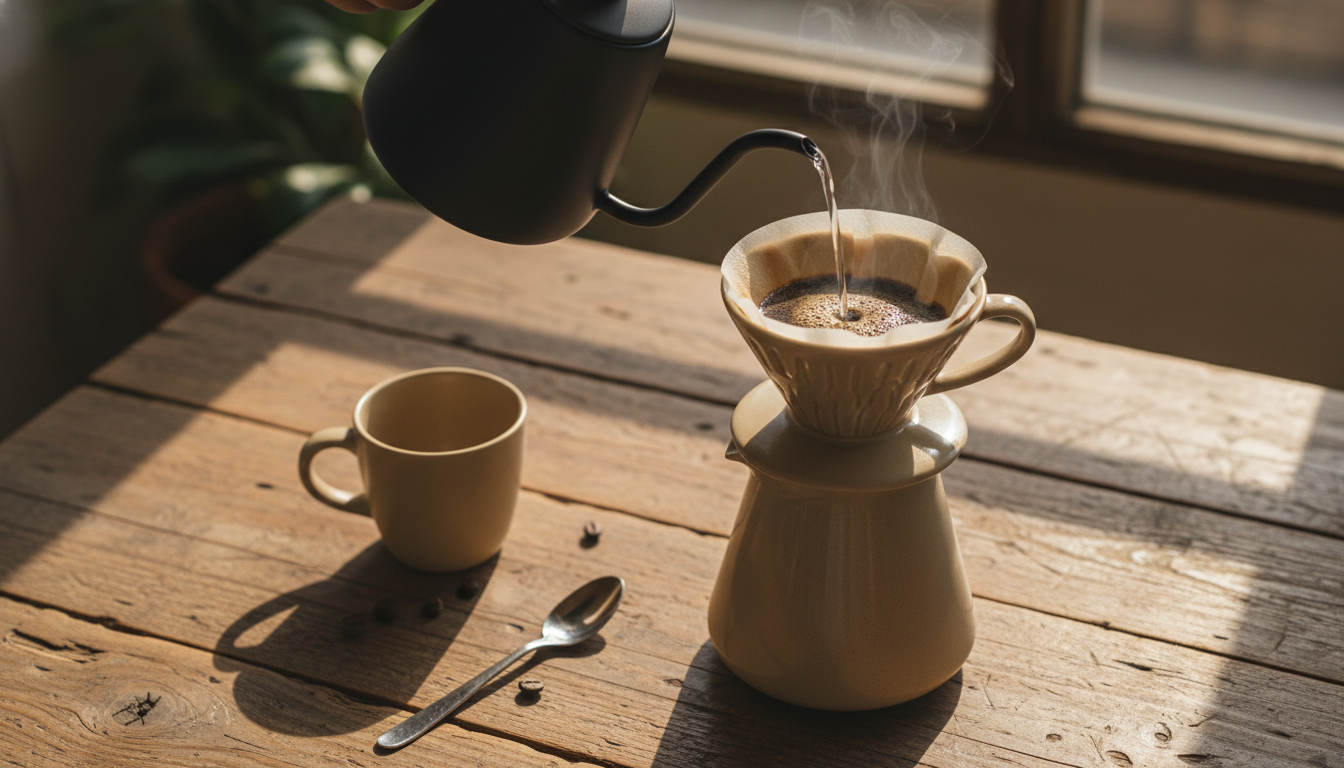
Pour-over coffee is simple in concept but demanding in execution. Small mistakes compound: wrong grind size, uneven pour, bad timing—and suddenly your coffee tastes terrible. The good news? Once you identify the problem, the fix is usually straightforward.
This guide helps you diagnose what's going wrong and provides specific fixes to get you brewing delicious pour-over coffee consistently.
Cause: Under-extraction—water passed through too quickly
FIXES:
Cause: Over-extraction—water contact too long or too hot
FIXES:
Cause: Too little coffee or water channeling through
FIXES:
Cause: Too many fines clogging filter, extending brew time
FIXES:
Cause: Variables changing between brews
FIXES:
Start here and adjust based on taste. This recipe works well for medium roasts on most pour-over devices:
Action: Pour 2x coffee weight in water, wait for gases to escape
Why: Fresh coffee releases CO2 that repels water. Blooming ensures even extraction.
Action: Slow, circular pour to 60% of total water
Why: Build up slurry, maintain even bed, start extraction.
Action: Continue pouring to reach total water weight
Why: Complete extraction, maintain consistent flow.
Action: Let water drain completely through bed
Why: Total brew time affects extraction. Target 2:30-3:30 total.
Pour-over demands good equipment. Here's what matters most:
Consistent particle size is essential for even extraction
Recommendation: Budget: Timemore C2, Baratza Encore | Premium: Comandante, Fellow Ode
Precise ratios and timing ensure reproducible results
Recommendation: Any 0.1g precision scale with timer function
Control pour rate and placement for even extraction
Recommendation: Electric with temp control: Fellow Stagg, Bonavita Variable Temp
Cheap filters can affect flow rate and add paper taste
Recommendation: Hario, Cafec, brand-specific filters
Stale coffee can't bloom properly and tastes flat
Recommendation: Use within 4 weeks of roast, 2 weeks ideal
Symptom: Brew finishes too fast (<2:00)
Diagnosis: Grind too coarse, likely under-extracted
Fix: Grind 2-3 clicks finer, pour slower
Symptom: Brew takes forever (>4:00)
Diagnosis: Grind too fine or too many fines clogging filter
Fix: Grind coarser, consider better grinder
Symptom: Water pools on top
Diagnosis: Bed not level or grind too fine
Fix: Swirl after bloom, grind slightly coarser
Symptom: Dark spots in bed after brew
Diagnosis: Uneven pour, channeling occurred
Fix: More even circular pour, don't pour in center only
Symptom: Coffee bed has hole/crater
Diagnosis: Pouring too aggressively or in one spot
Fix: Gentler pour, move in slow circles
If you're using a blade grinder or cheap burr grinder, this is likely your biggest issue. Inconsistent particle size means some grounds over-extract while others under-extract—simultaneously. The result: muddy, bitter-sour coffee no technique can fix.
The fix: A quality burr grinder is the single best investment for pour-over. Budget options like the Timemore C2 ($60-80) or Baratza Encore ($150) dramatically improve results. This matters more than your dripper choice.
Pour-over rewards precision and patience. Once you nail the fundamentals—good grinder, right grind size, proper technique—you'll understand why so many coffee lovers prefer this method.