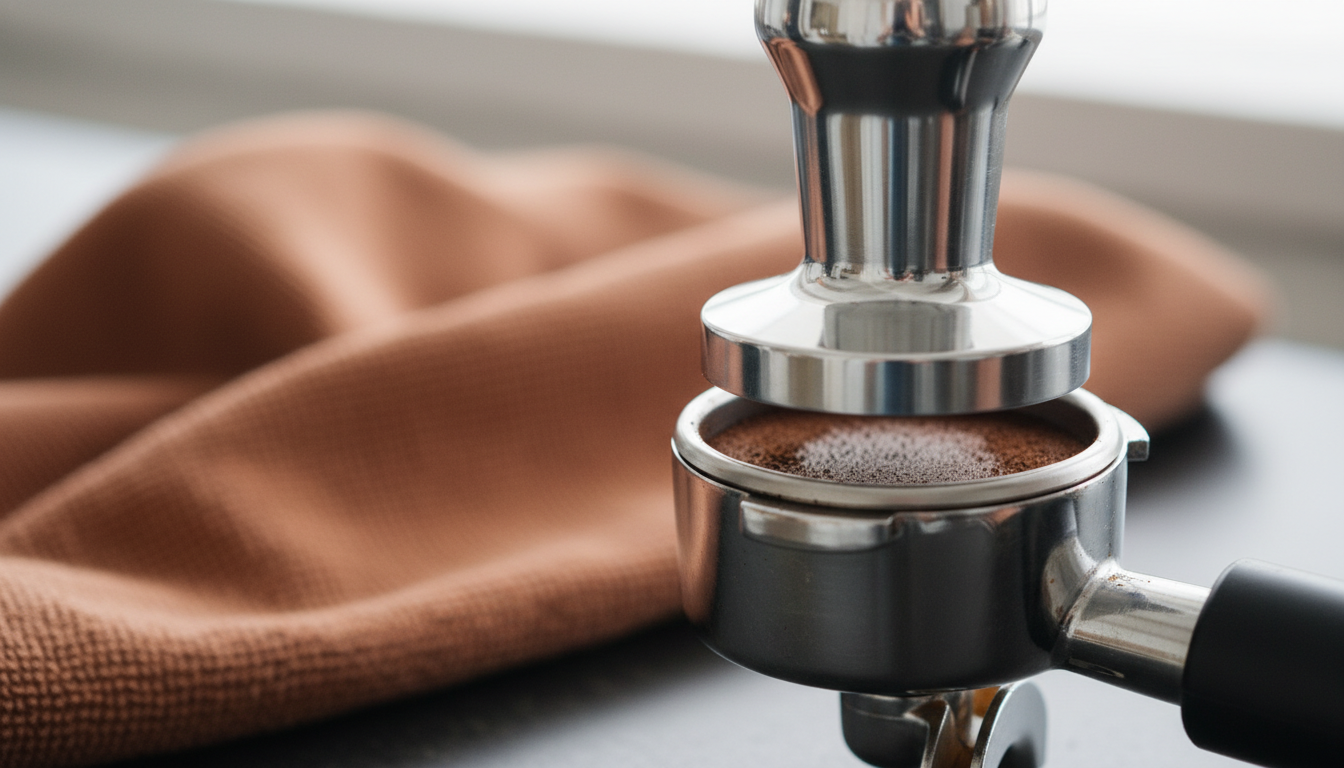
Understanding Tamping Science: The Foundation of Extraction
Tamping science operates on a fundamental principle: uniform density distribution within the coffee puck ensures even water flow and consistent extraction across all grounds. When ground coffee particles pack unevenly, water finds paths of least resistance (channeling), flowing rapidly through loose areas while bypassing dense sections. This uneven extraction produces sour, thin shots lacking body and sweetness.
The tamping process creates a barrier that forces water to permeate uniformly through the entire puck. Espresso extraction requires approximately 9 bars of pressure (130 psi) to push water through properly tamped grounds. The tamper's job is to pre-compress the grounds so the espresso machine's pump pressure achieves optimal extraction time (25-30 seconds) and yield (1:2 ratio, typically 18g dose to 36g output).
Tamping Pressure: How Much Force Is Optimal?
Tamping pressure represents one of the most debated topics in espresso preparation. The SCA (Specialty Coffee Association) and leading espresso machine manufacturers recommend applying 30 pounds of force (approximately 13.6 kg) with a calibrated tamper. This pressure level creates sufficient density without over-compressing the puck.
Key Pressure Guidelines
- Optimal range: 25-30 pounds of force (11-13.6 kg)
- Minimum threshold: 15 pounds (6.8 kg) - insufficient compression, leading to under-extraction
- Maximum threshold: 35+ pounds (15.9+ kg) - risks over-compression, excessive extraction time, and potential equipment damage
- Consistency matters more than absolute force: Applying 30 pounds consistently produces better results than varying between 20-40 pounds
Many home baristas apply excessive force (40+ pounds), believing harder tamping produces better espresso. This misconception stems from confusion between density and pressure. Over-tamping compresses the puck beyond optimal density, restricting water flow so severely that extraction times exceed 35-40 seconds, producing bitter, over-extracted shots. Additionally, excessive force stresses the espresso machine's pump and group head components.
Tamping Technique: Level, Even, and Consistent
Tamping technique encompasses three essential elements: levelness, evenness, and consistency.
Levelness
Requires the tamper to compress grounds perpendicular to the basket floor, creating a horizontal puck surface. Angled or tilted tamping produces uneven density, with higher pressure on one side and lower pressure on the opposite side. Uneven density causes preferential water flow toward the lower-pressure zone, resulting in channeling and inconsistent extraction.
Evenness
Demands uniform pressure distribution across the entire puck surface. Applying concentrated force to the center while leaving edges loose creates a domed puck with variable density. Professional baristas achieve evenness by:
- • Using a calibrated tamper matching the basket diameter precisely (no gaps between tamper and basket walls)
- • Applying steady, controlled pressure rather than jabbing or twisting motions
- • Maintaining consistent hand position and arm angle throughout the compression stroke
Consistency
Requires repeating identical tamping technique for every shot. Espresso dialing-in requires isolating variables to identify the cause of extraction problems. If tamping pressure and technique vary between shots, determining whether grind adjustment or tamping change caused a flavor difference becomes impossible. Consistent tamping isolates grind size as the primary variable during dialing-in.
Common Tamping Mistakes and How to Avoid Them
Mistake 1: Uneven Pressure Distribution
Applying concentrated force to the center while leaving basket edges loose creates a domed puck with variable density. Water preferentially flows through the lower-density edges, causing channeling.
Solution: Distribute pressure evenly across the entire tamper surface by maintaining consistent hand position and applying steady, controlled force.
Mistake 2: Twisting the Tamper
Rotating the tamper during compression (the "twist and polish" technique) disrupts puck density by realigning particles. While some baristas believe twisting creates a polished surface, this technique actually introduces inconsistency.
Solution: Apply straight downward pressure without rotation, then lift the tamper straight up.
Mistake 3: Excessive Force
Applying 40+ pounds of force over-compresses the puck, restricting water flow and producing extraction times exceeding 35 seconds. Over-tamped shots taste bitter and harsh.
Solution: Use a calibrated tamper and apply 30 pounds of force consistently.
Mistake 4: Inconsistent Technique
Varying tamping pressure between shots (sometimes 20 pounds, sometimes 35 pounds) introduces inconsistency that confounds dialing-in. When espresso shots vary in flavor, inconsistent tamping makes it impossible to determine whether grind adjustment or tamping change caused the difference.
Solution: Establish a consistent tamping routine and maintain identical technique for every shot.
Mistake 5: Incorrect Tamper Size
Using a tamper smaller or larger than the basket diameter creates gaps between the tamper edge and basket wall. These gaps allow grounds to compress unevenly, with higher density at the center and lower density at the edges.
Solution: Use a calibrated tamper matching the basket diameter precisely (typically 58mm for standard baskets, 49mm for smaller baskets).
Frequently Asked Questions About Tamping Science
How do I know if I'm applying 30 pounds of pressure?
Use a calibrated tamper with an integrated pressure gauge or scale. Alternatively, practice with a kitchen scale: place the tamper on the scale, apply pressure until it reads 30 pounds, and develop muscle memory for that sensation. After 50-100 repetitions, you'll internalize the correct pressure without measurement tools.
Does tamping technique matter more than pressure?
Both matter equally. Applying 30 pounds of force with uneven distribution (tilted tamper, concentrated center pressure) produces worse results than applying 25 pounds with perfect levelness and evenness. Optimal tamping requires consistent pressure AND even distribution.
Should I use the twist and polish technique?
No. The twist and polish technique (rotating the tamper during compression) disrupts puck density and introduces inconsistency. Apply straight downward pressure without rotation, then lift straight up.
Can I tamp too lightly?
Yes. Applying less than 15 pounds of force produces insufficient puck density, resulting in under-extraction (sour, thin shots). The water flows through the puck too quickly, extracting only the most soluble compounds while leaving behind sugars and acids.
Final Verdict: Is Proper Tamping Worth the Effort?
Mastering tamping science directly improves espresso quality and consistency. Proper tamping technique (30 pounds of force, level and even distribution, consistent application) reduces shot-to-shot variation, enabling reliable dialing-in and flavor development. The effort required to develop consistent tamping technique—approximately 50-100 practice shots—pays dividends through improved espresso quality and reduced troubleshooting time.
Baristas who master tamping science report 30-40% improvement in shot consistency and 20-30% reduction in dialing-in time compared to inconsistent tamping. The investment in a calibrated tamper ($30-60) and practice time yields measurable improvements in espresso extraction and flavor.