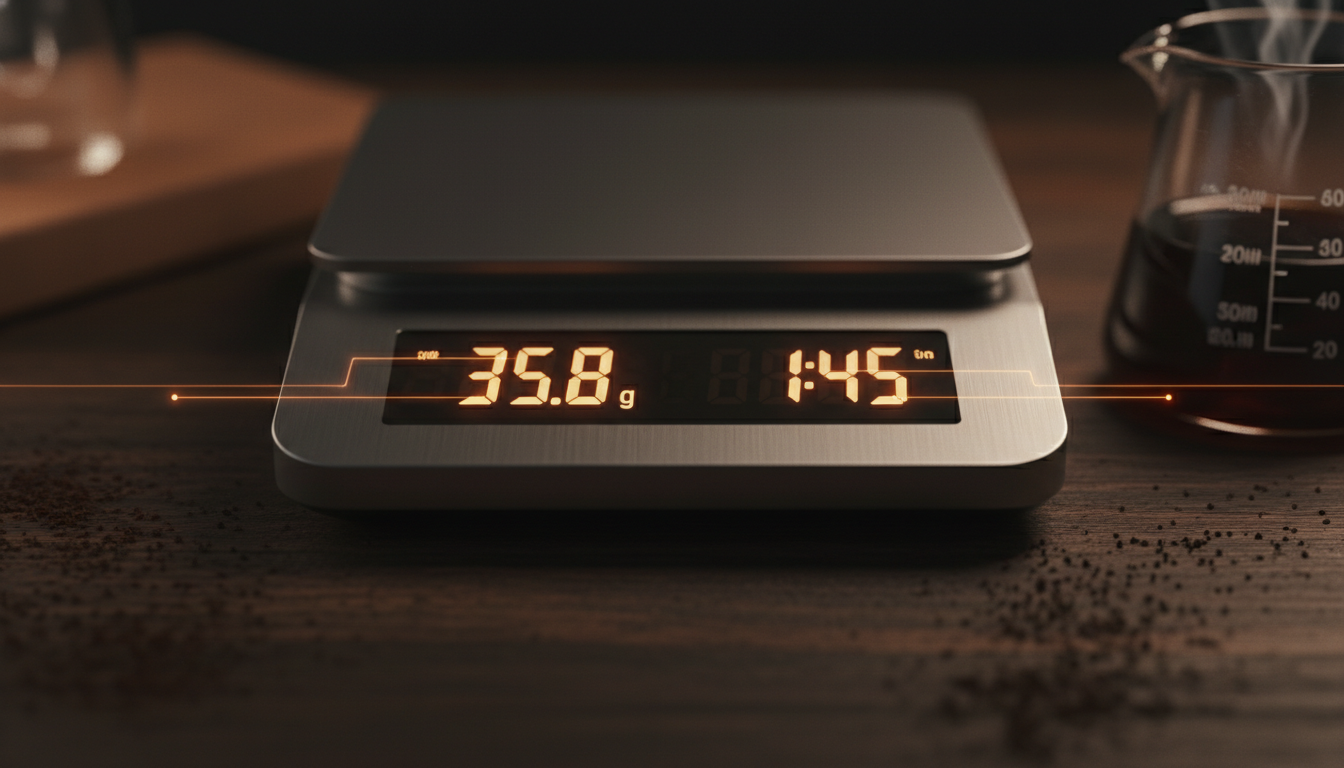
Espresso Extraction Ratio: 1:2 vs 1:3 Explained
Brew ratio—the relationship between coffee dose and liquid yield—is the foundation of espresso recipes. Understanding 1:2, 1:2.5, and 1:3 ratios helps you control strength, body, and flavor balance for any coffee style.
Standard espresso ratio
Target extraction yield
Total dissolved solids
Optimal time range
What Is Espresso Brew Ratio?
Brew ratio expresses the relationship between the weight of dry coffee grounds (dose) and the weight of the extracted espresso (yield). Expressed as dose:yield, a 1:2 ratio means 18g of coffee produces 36g of espresso.
Ratio determines strength (concentration) and extraction level. Lower ratios (1:1.5) produce stronger, more concentrated shots with higher total dissolved solids (TDS). Higher ratios (1:3) produce lighter, more extracted shots with lower TDS but more total dissolved coffee solids.
Espresso Ratio Comparison Chart
| Ratio | Style | 18g Dose Yield | TDS Range | Best For |
|---|---|---|---|---|
| 1:1 to 1:1.5 | Ristretto | 18-27g | 10-14% | Dark roasts, milk drinks |
| 1:2 to 1:2.2 | Normale | 36-40g | 8-11% | All-purpose standard |
| 1:2.5 to 1:3 | Lungo | 45-54g | 6-8% | Light roasts, filter-style |
| 1:3+ | Allongé | 54g+ | 5-7% | Very light roasts |
Understanding Each Ratio
1:1.5 Ristretto (Restricted)
Characteristics
- • Highly concentrated
- • Thick, syrupy body
- • Intense flavor
- • Lower extraction yield
- • Can taste under-extracted
Best Applications
- • Dark roasted coffee
- • Milk-based drinks (latte, cappuccino)
- • Traditional Italian style
- • Very fine grind required
1:2 Normale (Standard)
Characteristics
- • Balanced concentration
- • Full, creamy body
- • Complete flavor range
- • Optimal extraction yield (18-22%)
- • Sweet and complex
Best Applications
- • Medium roast espresso
- • Straight espresso drinking
- • Americanos
- • Starting point for all dialing
1:2.5 Lungo (Long)
Characteristics
- • Lighter concentration
- • Tea-like body
- • Higher extraction yield
- • More nuanced flavors
- • Can highlight acidity
Best Applications
- • Light roast espresso
- • Single origin coffees
- • Filter-style espresso
- • Slightly coarser grind
1:3 Allongé (Extended)
Characteristics
- • Very light concentration
- • Tea-like, delicate body
- • High extraction (>22%)
- • Maximum flavor clarity
- • Risk of over-extraction
Best Applications
- • Very light roasts
- • Competition-style espresso
- • High-end single origins
- • Requires precise technique
Choosing Your Ratio
| Coffee Type | Recommended Ratio | Why |
|---|---|---|
| Dark roast (Italian) | 1:1.5 to 1:2 | Avoids over-extracting bitter compounds |
| Medium roast (House blend) | 1:2 to 1:2.2 | Balanced sweetness and body |
| Light roast (Third wave) | 1:2.2 to 1:2.5 | Extracts full flavor from dense beans |
| Very light / Nordic | 1:2.5 to 1:3 | Maximizes extraction of subtle notes |
| For milk drinks | 1:1.5 to 1:2 | Stronger coffee cuts through milk |
| Straight espresso | 1:2 to 1:2.5 | Balanced for sipping |
Practical Ratio Application
Example Recipes by Dose
15g Dose (Single)
- • 1:2 = 30g yield
- • 1:2.5 = 37.5g yield
- • 1:3 = 45g yield
18g Dose (Standard)
- • 1:2 = 36g yield
- • 1:2.5 = 45g yield
- • 1:3 = 54g yield
20g Dose (Large)
- • 1:2 = 40g yield
- • 1:2.5 = 50g yield
- • 1:3 = 60g yield
Adjusting Ratios for Taste
If too strong/concentrated:
- Increase ratio (more water)
- Example: 1:2 → 1:2.5
- Maintain same grind setting
- Extraction time will increase
If too weak/thin:
- Decrease ratio (less water)
- Example: 1:2.5 → 1:2
- Maintain same grind setting
- Extraction time will decrease
Related Guides
Quick Espresso Dialing In Guide
Apply these ratios with a fast, systematic dialing method.
Over-Extraction Flavor Profile
Identify when your ratio is too low or extraction too long.
Under-Extraction Flavor Profile
Recognize when your ratio is too high or extraction too short.
Espresso Dialing In Troubleshooting
Fix ratio-related extraction problems systematically.
Machine-Specific Dialing In Guide
Adapt ratios for Breville, DeLonghi, and Gaggia machines.
Key Takeaways
- → 1:2 is the universal starting point—it's the most forgiving ratio for dialing in new coffees.
- → Dark roasts prefer lower ratios—ristretto-style (1:1.5-1:2) avoids over-extracting bitterness.
- → Light roasts need higher ratios—lungo-style (1:2.5-1:3) extracts more from dense beans.
- → Adjust grind for time, ratio for strength—fix extraction time with grind, concentration with ratio.
- → Ratio affects total dissolved solids, not just volume—changing ratio changes both strength and extraction level.