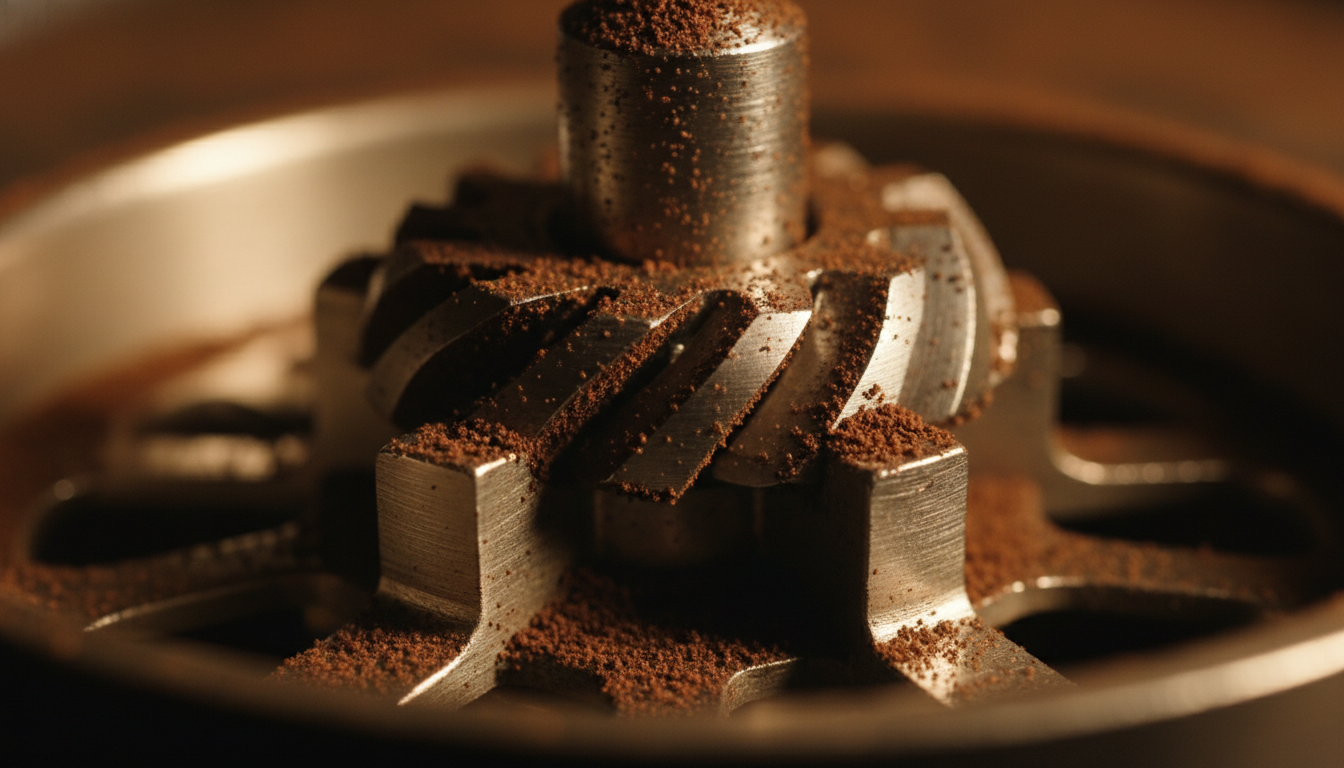
Master hand grinding technique for espresso with proper wrist position, crank speed control (60-80 RPM), and consistent 45-60 second grinding. Compare Comandante C40, 1Zpresso JX-Pro, J-Max, and Kingrinder K6.
Optimal RPM
Time for 18g Dose
Wrist Position
Manual Grinder Range
Manual grinding for espresso delivers exceptional grind quality while providing complete control over the process. The best manual grinder for espresso combines precision burr engineering with ergonomic design, enabling consistent 45-60 second grinding sessions for an 18g dose. Unlike electric grinders, manual options operate silently, generate minimal heat, and require no electricity—perfect for early morning preparation without waking household members.
Mastering manual grinding technique involves proper wrist positioning, maintaining 60-80 RPM crank speed, and applying consistent pressure throughout the rotation. With practice, hand grinding produces particle size distribution rivaling electric grinders costing twice as much, while the meditative ritual enhances your connection to the coffee preparation process.
✓ Manual Grinding Benefits:
Compare manual grinder specifications optimized for espresso grinding. Focus on burr size, grinding time for standard 18g dose, adjustment precision, and ergonomic features.
| Manual Grinder | Burr Size | Time (18g) | Adjustment | Price |
|---|---|---|---|---|
| Comandante C40 MK4 Industry-leading particle uniformity | 39mm | 45-60 seconds | Click-based (4-5 clicks per espresso step) | $300 |
| 1Zpresso JX-Pro External adjustment without disassembly | 48mm | 35-45 seconds | 40 clicks per rotation (12.5 microns per click) | $170 |
| 1Zpresso J-Max Ultra-precise adjustment for espresso dialing | 48mm | 40-50 seconds | 90 clicks per rotation (8.8 microns per click) | $199 |
| Kingrinder K6 Value-focused 48mm burr performance | 48mm | 40-50 seconds | Stepless with numerical indicators | $120 |
Comandante C40 MK4 | Nitride-hardened tool steel
Espresso Specifications:
Manual Technique:
Advantages:
Considerations:
1Zpresso JX-Pro | 440 stainless steel
Espresso Specifications:
Manual Technique:
Advantages:
Considerations:
1Zpresso J-Max | Titanium-coated 440 stainless steel
Espresso Specifications:
Manual Technique:
Advantages:
Considerations:
Kingrinder K6 | 440 stainless steel
Espresso Specifications:
Manual Technique:
Advantages:
Considerations:
Follow this proven technique guide for consistent espresso grinding. Proper form prevents fatigue and produces uniform particle size distribution essential for 9-bar extraction.
Place the manual grinder on a stable, flat surface at waist height. Hold the grinder body with your non-dominant hand, wrapping fingers around the base for stability. Position your dominant hand on the crank handle with a relaxed grip.
💡 Key Point: Stability prevents wobble that causes particle size variation
Add 18-20g of coffee beans to the hopper. Tap the grinder gently to settle beans and remove air pockets. Check that beans distribute evenly around the burr center for consistent feeding.
💡 Key Point: Even bean distribution ensures uniform grinding throughout
Maintain a neutral wrist position—neither flexed nor extended. Keep your elbow at approximately 90 degrees with your forearm parallel to the floor. This ergonomic position prevents strain during 45-60 second grinding sessions.
💡 Key Point: Neutral wrist position reduces fatigue and repetitive strain risk
Rotate the crank at 60-80 revolutions per minute—approximately one rotation per second. Count 'one-thousand-one, one-thousand-two' to maintain rhythm. Avoid rushing; faster speeds increase heat and produce inconsistent particle sizes.
💡 Key Point: 60-80 RPM optimizes consistency while minimizing heat generation
Use smooth, even pressure throughout the rotation. Don't force the crank when resistance increases—maintain steady, moderate effort. Listen for a consistent grinding sound that indicates uniform bean processing.
💡 Key Point: Consistent pressure produces uniform particle size distribution
Continue until resistance disappears (all beans processed). Tap the grinder sides to settle grounds. Remove the catch cup carefully, avoiding spills. Use a brush to collect any retained grounds.
💡 Key Point: Proper collection prevents waste and ensures full dose measurement
Times for 18g espresso-fine dose at 60-80 RPM. Larger burrs grind faster but require more effort per rotation.
✓ Optimal: 60-80 RPM
Consistent particle size, minimal heat, sustainable effort for full dose
⚠ Fast: 100+ RPM
Increased heat generation, potential particle inconsistency, faster fatigue
✗ Slow: Below 40 RPM
Inconsistent feeding, variable particle size, extended grinding time
Compare what you get with manual versus electric grinders at equivalent price points. Manual options typically offer superior burr quality and consistency.
| Price Point | Manual Option | Electric Alternative | Manual Advantage |
|---|---|---|---|
| $120 | Kingrinder K6 (48mm burrs) | Entry-level electric (small burrs, motor noise) | Superior burr size and quality for price |
| $170 | 1Zpresso JX-Pro (48mm burrs, external adjust) | Budget electric with 40mm burrs | External adjustment, no retention issues, silent |
| $200 | 1Zpresso J-Max (48mm titanium burrs, 90-click) | Mid-range electric with basic features | Titanium coating, precise adjustment, portability |
| $300 | Comandante C40 MK4 (39mm nitride burrs) | Quality electric with 50mm burrs | Nitride-hardened burrs, unmatched consistency |
Dose: 18-20g
Time Required: 35-60 seconds
Impact: Minimal for single dose; moderate for multiple shots
Cause: Improper technique or excessive speed
Prevention: Neutral wrist position, 60-80 RPM, proper handle grip
Take breaks between multiple grinding sessions
Cause: Large burr resistance or extended grinding
Prevention: Use larger muscle groups, maintain steady rhythm
48mm burrs require more effort than 39mm options
Cause: Daily manual grinding over months/years
Prevention: Alternate hands, vary grip position, stretch regularly
Consider electric if grinding multiple shots daily
Wrist straight, aligned with forearm. Handshake position. Distributes force evenly through forearm muscles.
Bent downward toward palm. Increases pressure on carpal tunnel. Causes rapid fatigue and potential injury.
Bent backward toward back of hand. Strains tendons and ligaments. Reduces grinding power and control.
Maintain neutral wrist position throughout the 45-60 second grinding session. Take breaks if you feel strain, and consider alternating hands for multiple espresso preparations.
Choose the best manual grinder for espresso and practice the 60-80 RPM technique for consistent, café-quality shots.