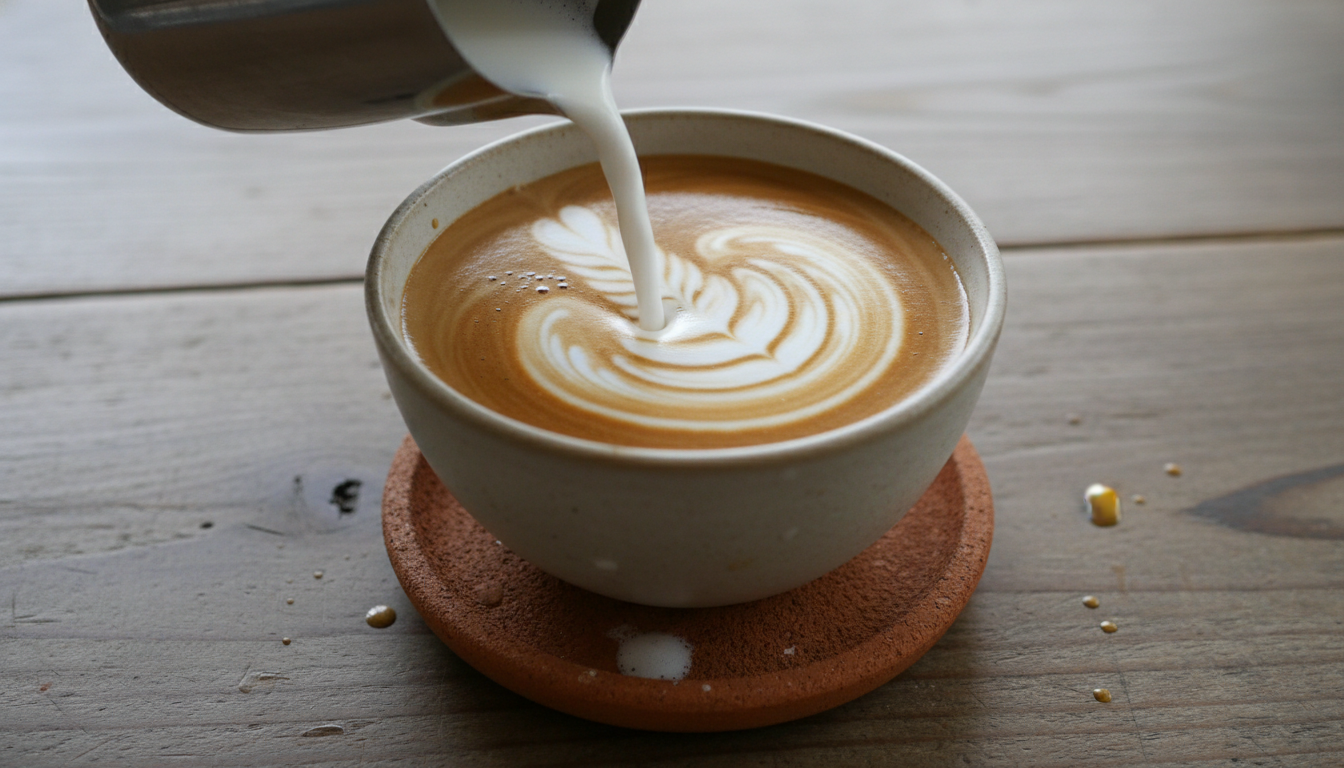
Buying Guide
Best Oat Milk for Frothing
Complete guide to oat milk frothing techniques and brand comparisons for all drinks.
⏱ 8 MIN READ
READ Buying Guide →
Thick foam guide: Find oat milk options that froth well for cappuccinos with high protein content and dense foam structure.
Min Protein
Max Temp
Foam Layer
Can Froth Well
Yes—oat milk can froth excellently for cappuccinos when you choose high-protein barista editions. For the thick, dense foam layer that defines a cappuccino (2-3cm), you need oat milk with 2.5g+ protein per 100ml.
Best for Thick Foam:
Oatly Barista Edition (3g protein)
Maximum foam density and stability
Best Value Option:
Chobani Oat Barista (2.5g protein)
Budget-friendly with good foam structure
Key difference from lattes: Cappuccinos require more air incorporation and thicker foam structure, making protein content even more critical than for latte art.
Cappuccinos demand more from frothed milk than lattes. A traditional cappuccino has equal parts espresso, steamed milk, and thick foam (2-3cm layer). This requires oat milk that can maintain structure under higher air incorporation.
The science of oat milk frothing shows that protein content determines foam density. For cappuccinos, you need higher protein than the minimum required for basic latte art.
✓ Cappuccino Foam Must-Haves:
These brands contain sufficient protein (2.5g+ per 100ml) to create the thick, stable foam layer required for cappuccinos.
Protein: 3g per 100ml
Fat: 3g per 100ml
Thick Foam: 9.5/10
Density: Excellent
Foam Quality:
Dense, stable foam holds for 5+ minutes
Cappuccino Suitability:
Ideal for traditional cappuccinos
Pros:
Cons:
Best for: Traditional cappuccinos with thick foam layer
Protein: 2.8g per 100ml
Fat: 2.8g per 100ml
Thick Foam: 9/10
Density: Excellent
Foam Quality:
Very dense, competition-grade microfoam
Cappuccino Suitability:
Perfect for dry cappuccinos
Pros:
Cons:
Best for: Coffee-forward cappuccinos, dry foam preference
Protein: 2.5g per 100ml
Fat: 3g per 100ml
Thick Foam: 8.5/10
Density: Very Good
Foam Quality:
Thick, creamy foam structure
Cappuccino Suitability:
Great for foam-heavy drinks
Pros:
Cons:
Best for: Budget-friendly thick cappuccino foam
Protein: 1.5g per 100ml
Fat: 3g per 100ml
Thick Foam: 7.5/10
Density: Good
Foam Quality:
Moderate density, decent stability
Cappuccino Suitability:
Acceptable for wet cappuccinos
Pros:
Cons:
Best for: Everyday cappuccinos, less foam-intensive drinks
Protein is the critical factor for cappuccino foam. Higher protein creates stronger bubble walls that can support the thick foam layer without collapsing.
| Protein Level | Performance | Result |
|---|---|---|
| Below 2.0g/100ml | Poor | Thin foam, unsuitable for cappuccino. Foam collapses quickly. |
| 2.0-2.4g/100ml | Fair | Acceptable foam but lacks density for proper cappuccino foam layer. |
| 2.5-2.7g/100ml | Good | Thick foam possible. Suitable for cappuccinos with adequate technique. |
| 2.8-3.0g/100ml | Excellent | Dense, stable foam ideal for cappuccinos. Holds structure well. |
| Above 3.0g/100ml | Superior | Maximum foam density. Best results for thick cappuccino foam. |
Recommendation: For cappuccinos specifically, choose oat milk with 2.5g+ protein per 100ml. The extra protein provides the structural integrity needed for thick foam that doesn't collapse before drinking.
Understanding the difference between latte requirements and cappuccino requirements helps explain why protein content matters more for cappuccinos.
| Factor | Cappuccino | Latte | Oat Milk Impact |
|---|---|---|---|
| Foam Thickness | 2-3cm thick foam layer | 0.5-1cm thin microfoam layer | Higher protein needed for thick foam structure |
| Air Incorporation | More air, 40-50% foam volume | Less air, 20-30% foam volume | Must maintain structure with more air bubbles |
| Foam Texture | Dry, airy, spoon-holding foam | Wet, glossy, silky microfoam | Proteins must form stronger bubble walls |
| Stability Needed | Must hold for 3-5 minutes | Immediate consumption, less critical | Higher protein prevents rapid collapse |
Cappuccinos require different technique than lattes. The goal is more air incorporation while maintaining the temperature ceiling that oat milk demands.
For cappuccino foam, extend the aeration phase to 6-8 seconds (vs 3-5 for lattes). This incorporates more air needed for the thick foam layer. Keep wand tip just below surface to create consistent hissing sound.
Why: More air incorporation creates the volume needed for cappuccino's characteristic thick foam.
After stretching, submerge wand deeper and angle to create strong vortex. Roll for 3-4 seconds longer than lattes to distribute bubbles evenly throughout the thicker foam structure.
Why: Thicker foam requires more mixing to achieve uniform bubble distribution.
Stop at 140-145°F (60-63°C). Cappuccino foam is more sensitive to overheating due to higher air content. The increased surface area from more bubbles accelerates protein breakdown at higher temps.
Why: Higher foam volume = more protein surface area = faster degradation above threshold.
Tap pitcher firmly 4-5 times on counter to break large surface bubbles. Swirl more vigorously than for lattes to integrate thick foam with liquid milk beneath.
Why: Thicker foam traps more air that needs release; integration creates proper cappuccino texture.
Oat milk is more temperature-sensitive than dairy. Understanding these differences prevents ruined foam and ensures the best results for cappuccinos.
Scalding Point
Oat: 150°F (65°C)
Dairy: 165°F (74°C)
Oat milk degrades 15°F earlier than dairy
Optimal Range
Oat: 140-150°F (60-65°C)
Dairy: 150-160°F (65-71°C)
Narrower window for oat milk frothing
Protein Denaturation
Oat: Begins at 140°F (60°C)
Dairy: Begins at 155°F (68°C)
Oat proteins break down faster under heat
Foam Collapse
Oat: Rapid above 150°F
Dairy: Gradual above 165°F
Oat foam becomes watery quickly if overheated
⚠️ Critical for Cappuccinos: Because cappuccino foam contains more air bubbles than latte foam, there's more surface area for heat to affect. This makes temperature control even more important when frothing oat milk for cappuccinos.
Direct comparison of how oat milk (high-protein barista editions) compares to whole dairy milk for cappuccino applications.
Foam Density
Oat: Good with 2.5g+ protein brands
Dairy: Excellent naturally
Winner: Dairy (with caveats)
High-protein oat milk can approach dairy density
Foam Stability
Oat: 3-5 minutes for thick foam
Dairy: 8-12 minutes
Winner: Dairy
Drink oat cappuccinos promptly
Foam Structure
Oat: Slightly larger bubbles
Dairy: Fine, uniform bubbles
Winner: Dairy
Oat foam can achieve similar mouthfeel
Temperature Tolerance
Oat: Narrow 140-150°F range
Dairy: Forgiving 150-165°F range
Winner: Dairy
Oat requires more precision
Flavor Profile
Oat: Adds oat sweetness
Dairy: Neutral, enhances coffee
Winner: Preference
Many prefer oat's complementary flavor
Oat milk cappuccino foam begins to degrade after 3-5 minutes. Unlike dairy foam that holds for 10+ minutes, oat foam should be consumed quickly for the best texture.
Proper cappuccino foam should support a spoon briefly. If your oat milk foam collapses immediately under a spoon, you need higher protein content or better technique.
Until you can reliably gauge by touch, use a thermometer. The 140-150°F window for oat milk is narrower and lower than dairy's 150-165°F range.
Stabilizers in oat milk break down after opening. For thick cappuccino foam, use within 5 days and shake vigorously before each use.
Complete guide to oat milk frothing techniques and brand comparisons for all drinks.
Protein content, fat content, and brand analysis specifically for latte art.
The science behind oat milk frothing and general best practices.
Step-by-step guide to making perfect cappuccinos at home.
With high-protein oat milk and proper technique, you can create thick, creamy cappuccino foam that rivals dairy. Start with Oatly Barista Edition or Chobani Oat Barista for best results.
Learn Cappuccino Technique