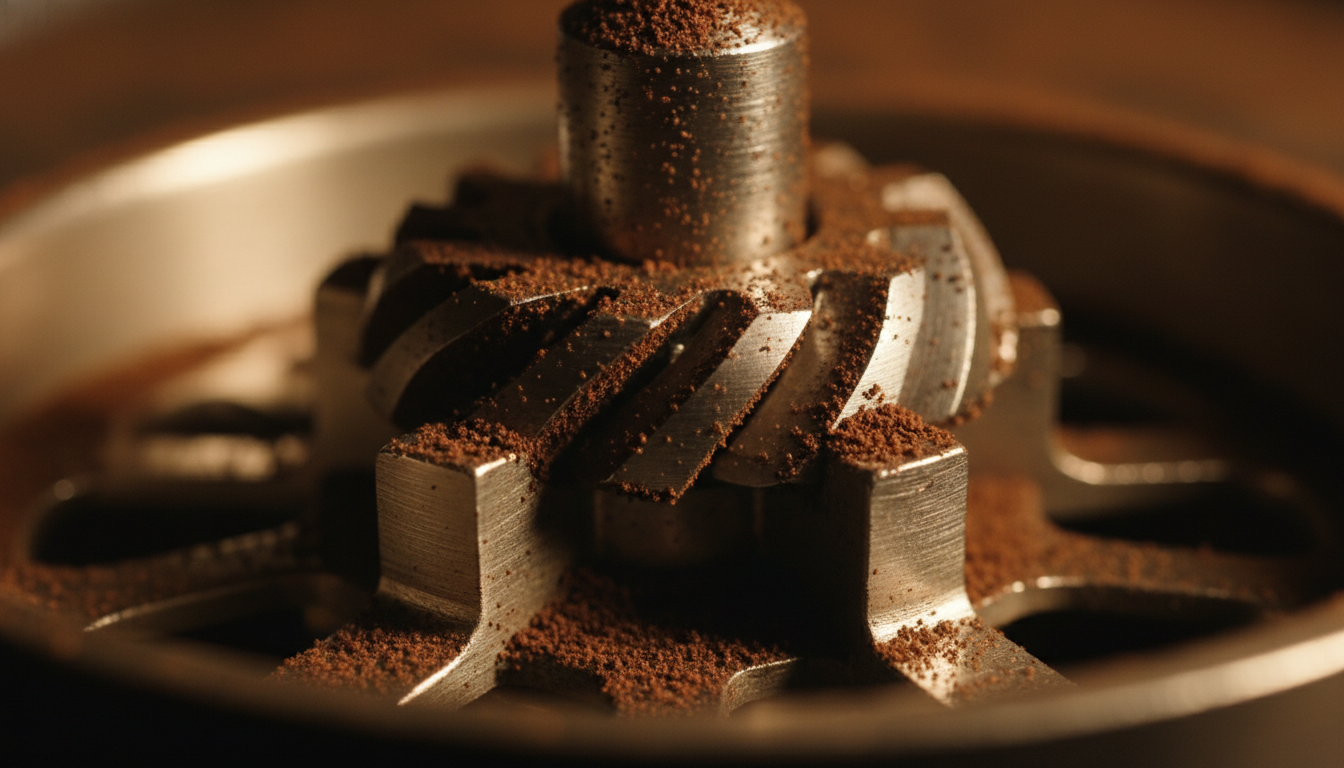
DF64 Grind Settings: Establish a Repeatable Starting Point
There is no universal DF64 dial number. The generation, installed burrs and dial's zero reference must match before another owner's recipe is useful.
Identify the grinder before copying settings
Record the exact DF64 generation and the installed burr set from your receipt or documentation. A stock burr recipe is not a calibrated guide for a different SSP configuration. The DF64 name refers to the 64 mm family; it does not mean every version shares the same controls, zero position or cleaning procedure. For a rundown of the versions and their workflow differences, see the DF64 grinder review: versions, workflow and espresso.
What number should you start at?
Use the starting guidance supplied for your exact grinder and burrs. If none is available, ask the seller for that combination rather than copying an unqualified internet number. Record the dial reading relative to the reference described in its manual. Do not force burrs together to create a new zero, and do not use a burr-contact procedure from another model.
Dial in espresso one change at a time
- Choose a dose appropriate for the basket and a target beverage weight. Keep the bean and puck preparation consistent.
- At the supplied starting setting, weigh the coffee output and brew the shot.
- If flow is too fast for that recipe, try a small move finer as the manual permits. If it chokes, stop and move coarser. Follow instructions about whether the motor should run during adjustment.
- Record setting, dose, beverage weight and taste. Once flow is workable, adjust the recipe according to taste rather than pursuing a dial number.
DF64 for pour-over and filter coffee
Start with the brewer’s recipe and confirm that your installed burr configuration supports filter brewing. Weigh its coffee dose and water amount, and keep the beans, filter, water temperature and pouring pattern consistent while comparing settings. Record your DF64 generation, burrs and dial reference alongside that recipe.
Compare drawdown and taste together. If a brew drains unusually slowly and tastes harsh, first check for a clogged filter or a changed pouring pattern, then try a small coarser adjustment. If it runs quickly and tastes thin or sharply sour, try a small finer adjustment. Follow the grinder’s permitted adjustment procedure. A fast or slow drawdown alone is not a flavor verdict, and there is no universal target time for every brewer. Change one variable, brew again and save the setting that works for that recipe.
Switching methods or changing beans
Record separate references for each method. Return to the recorded setting as a starting point, then check the result; bean age and a changed dose can require adjustment. This guide intentionally does not publish universal DF64 or SSP ranges because a number without the burr and zero reference can send you in the wrong direction.
Cleaning and carryover
Follow the exact manual for cleaning and unplugging before owner-serviceable access. Do not add water, dismantle burr carriers or change alignment on the strength of generic advice. A bellows or single-dose hopper does not guarantee zero retained grounds. Ask your seller for the current manual if the supplied instructions do not identify the operation you need.