What Makes an "Espresso Grinder" Different?
1. Micro-Adjustment Capability
Espresso grinders feature either stepless adjustment (infinite settings) or micro-stepped systems with 60+ discrete steps. Regular coffee grinders offer 20-40 coarse steps designed for filter brewing — each step represents a huge jump in espresso terms.
When dialing in espresso, you need tiny changes to hit the 25-30 second extraction window. A grinder jumping from 20 seconds to 40 seconds between clicks cannot dial in properly.
2. Particle Uniformity and Distribution
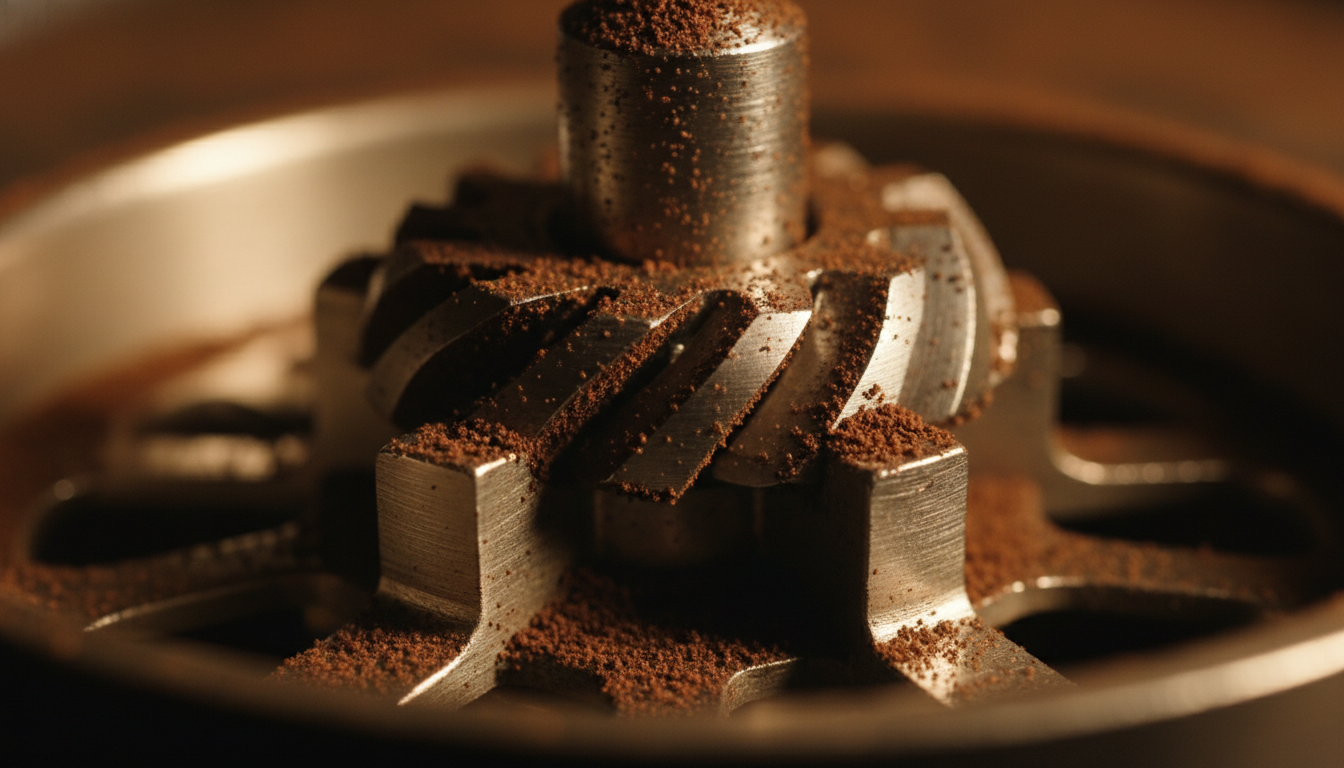
Espresso grinders use precision-machined burrs designed to produce tight particle distribution. This uniformity matters because espresso extraction happens under 9 bars of pressure in 25-30 seconds. Uneven particles create channels where water rushes through unevenly.
Specialty Coffee Association research confirms espresso quality correlates directly with grind uniformity. Quality grinders minimize both "fines" (ultra-fine particles) and "boulders" (large particles).
3. Low Retention Design
Espresso grinders minimize grounds retention (coffee left inside between uses). Retention causes stale coffee to mix with fresh grinds. Dedicated espresso grinders feature direct grind paths with minimal dead space, while multi-purpose grinders prioritize hopper capacity over retention.