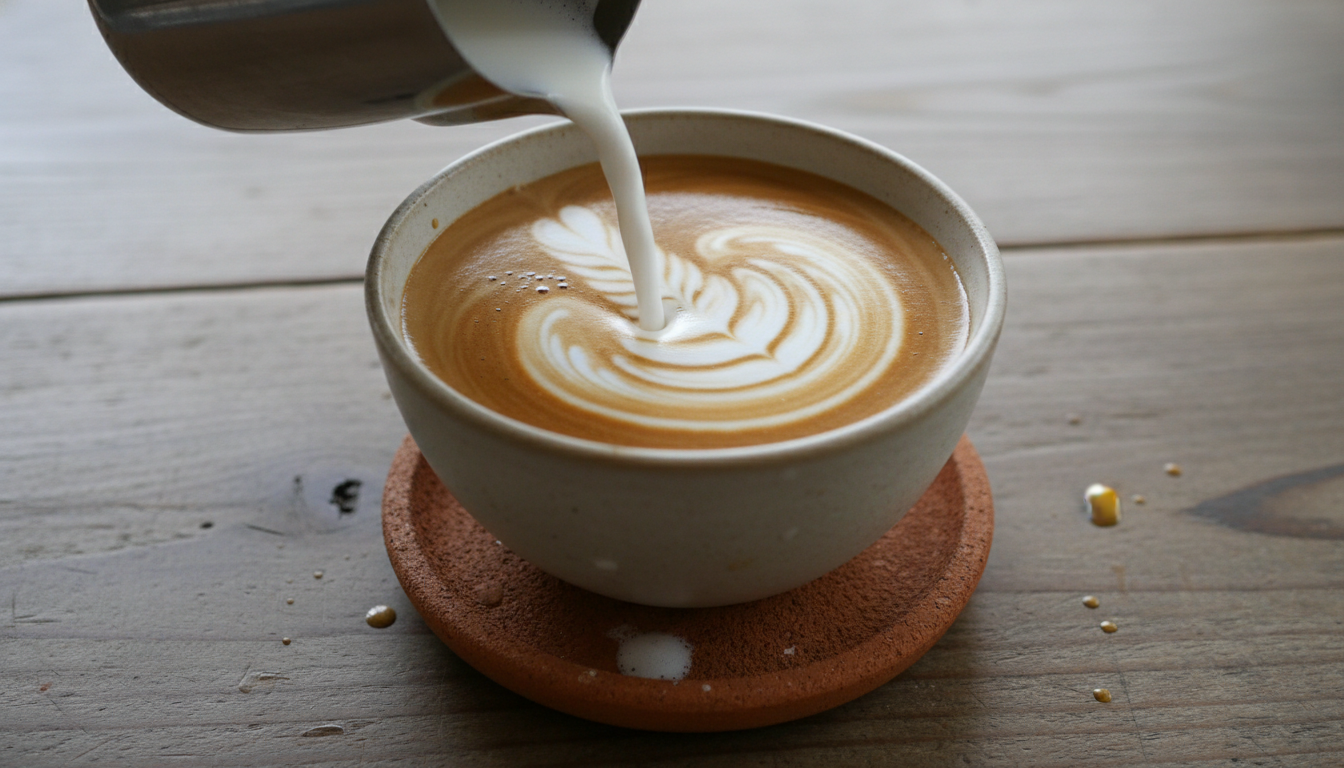
Alternative Frothing Methods Comparison
| Method | Equipment Cost | Time | Foam Quality | Difficulty |
|---|---|---|---|---|
| French Press | $15-30 | 60 seconds | Dense, creamy | Easy |
| Handheld Frother | $10-20 | 60-90 seconds | Light, airy | Easy |
| Jar Shake | Free (existing jar) | 45-60 seconds | Bubbly, loose | Very Easy |
| Blender | Free (existing blender) | 15-20 seconds | Thick, stable | Easy |
| Electric Frother | $30-80 | 90-120 seconds | Silky, fine | Very Easy |
| Whisk (manual) | Free | 3-4 minutes | Inconsistent | Difficult |
Method 1: French Press Frothing
Equipment Needed
- ☑ French press (any size, 350ml+ recommended)
- ☑ Cold milk (whole milk or barista oat milk preferred)
- ☑ Refrigerated espresso or strong coffee
- ☑ Tall glass for serving
- ☑ Ice cubes
- ☑ Spoon for pouring foam
French Press Instructions
Frothing Phase
- Chill French press: Place empty press in freezer for 5 minutes (optional enhancement)
- Measure cold milk: Pour 180ml cold milk (4-6°C) into French press
- Insert plunger: Place lid with plunger fully raised
- Pump vigorously: Move plunger up and down rapidly 15-20 times
- Check volume: Milk should approximately double in volume
- Tap to settle: Tap press gently on counter to break large bubbles
- Rest briefly: Wait 10 seconds for foam structure to stabilize
Assembly Phase
- Prepare glass: Fill tall glass with 120g ice cubes
- Add espresso: Pour 60ml chilled espresso over ice
- Pour milk: Hold back foam with spoon, pour liquid milk first
- Add foam: Spoon thick foam on top of latte
- Serve immediately: Present with straw for stirring
Method 2: Handheld Frother
Equipment Needed
- ☑ Handheld milk frother (battery or USB powered)
- ☑ Tall, narrow container or pitcher
- ☑ Cold milk
- ☑ Chilled espresso
- ☑ Ice and serving glass
Handheld Frother Instructions
- Pour cold milk: Fill container with 180ml cold milk to 1/3 capacity
- Position frother: Insert wand just below milk surface at slight angle
- Start frothing: Turn on frother, keeping tip near surface for 30 seconds
- Submerge fully: Lower wand to bottom and continue for 30 seconds
- Check texture: Milk should be glossy with fine microfoam
- Tap and swirl: Tap container, swirl gently to integrate
- Assemble drink: Pour over iced espresso as described above
Method 3: Jar Shake Method
Equipment Needed
- ☑ Mason jar or clean glass jar with tight lid
- ☑ Cold milk
- ☑ Chilled espresso
- ☑ Ice and serving glass
Jar Shake Instructions
- Fill jar halfway: Add 180ml cold milk to clean jar (fill 50% maximum)
- Seal tightly: Ensure lid is secure to prevent leaks
- Shake vigorously: Shake with full arm motion for 45-60 seconds
- Check expansion: Foam should fill jar when opened
- Let settle: Wait 10 seconds for foam structure to stabilize
- Pour carefully: Pour foam and milk over iced espresso
Iced Latte Ratio Guide
| Serving Size | Espresso | Cold Milk | Ice | Strength |
|---|---|---|---|---|
| Small (350ml) | 60ml (2 shots) | 120ml | 100g | Strong |
| Standard (475ml) | 60ml (2 shots) | 180ml | 150g | Balanced |
| Large (590ml) | 90ml (3 shots) | 240ml | 200g | Mild |
| Coffee Forward (350ml) | 90ml (3 shots) | 120ml | 100g | Very Strong |
Milk Options and Foam Quality
| Milk Type | Foam Quality | Stability | Taste | Best Method |
|---|---|---|---|---|
| Whole Milk | ★★★★★ | 10-15 min | Rich, creamy | All methods |
| 2% Milk | ★★★★☆ | 8-12 min | Balanced | All methods |
| Skim Milk | ★★★★☆ | 5-8 min | Light, airy | French press, handheld |
| Oat Milk (Barista) | ★★★★★ | 8-12 min | Creamy, neutral | French press, handheld |
| Almond Milk | ★★☆☆☆ | 3-5 min | Thin, nutty | Blender |
| Soy Milk | ★★★☆☆ | 5-8 min | Earthy, distinct | Handheld |
Complete Recipe Card
Classic Iced Latte Without Steam Wand
| Component | Amount | Notes |
|---|---|---|
| Espresso (or strong coffee) | 60ml (2 shots) | Flash-chilled or room temperature |
| Cold milk | 180ml | Whole milk or barista oat milk preferred |
| Ice cubes | 150g | Fill glass 2/3 full |
| Simple syrup (optional) | 15ml | Add for sweetness |
| Vanilla extract (optional) | 2-3 drops | Enhances flavor |
Troubleshooting Frothing Issues
| Problem | Cause | Solution |
|---|---|---|
| No foam forms | Milk too warm or wrong type | Ensure 4-6°C; use whole milk or barista oat |
| Large bubbles only | Too much air too quickly | Froth more gently; submerge wand deeper |
| Foam collapses immediately | Insufficient fat/protein | Switch to whole milk or barista oat milk |
| Watery foam | Over-frothing or warm milk | Reduce frothing time; check milk temperature |
| Curdled appearance | Hot espresso hitting cold milk | Chill espresso before adding to milk |
Quick Tips for Success
Essential Guidelines
- Cold is critical: Milk must be 4-6°C for best foam formation
- Fresh milk works better: Milk near expiration froths poorly
- Don't overfill: Containers need 50-70% empty space for foam expansion
- Work quickly: Foam quality degrades after 10-15 minutes
- Experiment: Different brands froth differently—find your preference
- Clean equipment: Residue affects foam quality in French presses
Comparison: With vs Without Steam Wand
Key Differences
| Characteristic | With Steam Wand | Without Steam Wand |
|---|---|---|
| Milk temperature | 60-65°C (heated) | 4-6°C (cold) |
| Texture | Velvety microfoam | Airy cold foam |
| Integration | Fully integrated | Layered or stirred |
| Equipment cost | $300+ (espresso machine) | $0-30 |
| Skill required | Moderate-High | Low |
Common Mistakes to Avoid
❌ Beginner Errors
- Using warm milk: Room temperature milk will not foam properly
- Overfilling containers: Prevents proper foam expansion
- Hot espresso into milk: Causes curdling and separation
- Old milk: Expired or nearly-expired milk produces poor foam
- Wrong milk type: Standard plant milks lack foam-stabilizing proteins