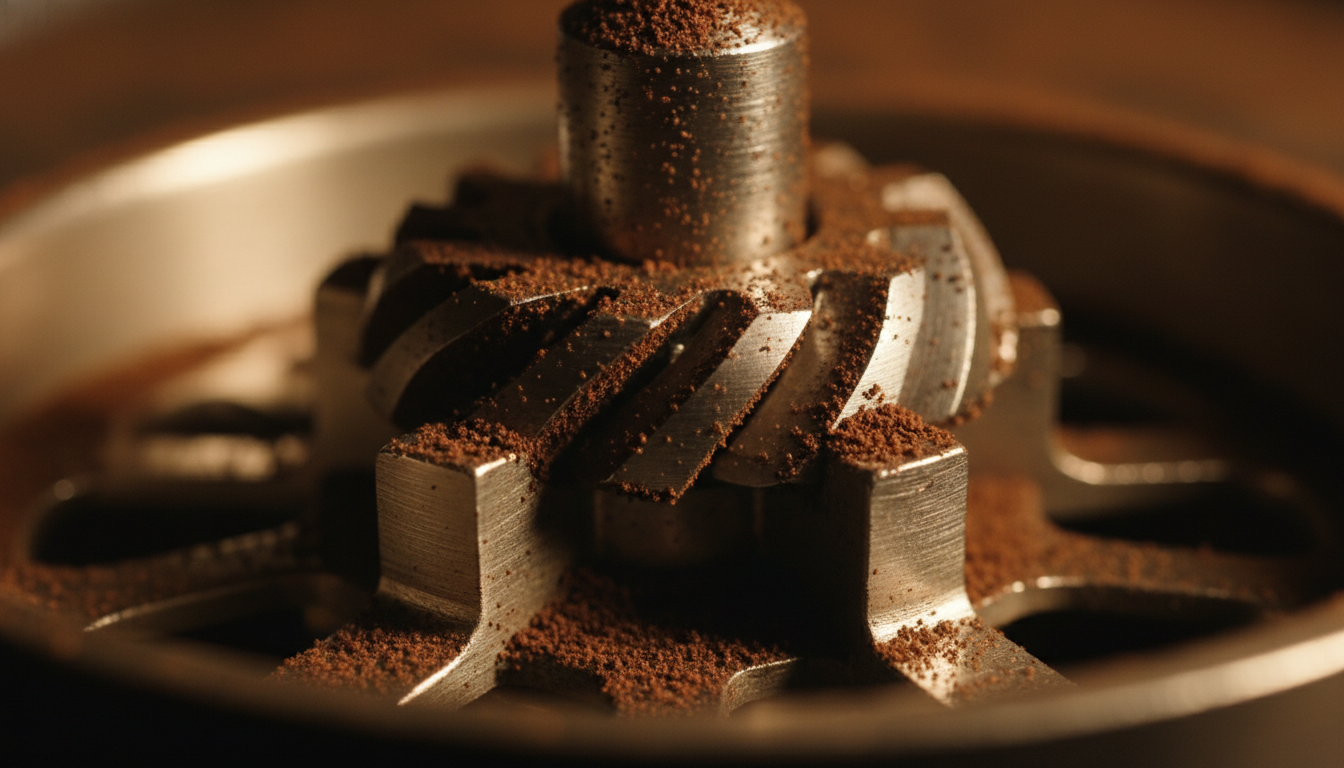
Kingrinder K6 Grind Settings for Espresso
Master the external adjustment system and dial in perfect espresso grind size with the Kingrinder K6 manual grinder
Quick Answer
The Kingrinder K6 produces espresso-quality grind at 8-16 clicks on the external adjustment ring, with 12 clicks serving as the optimal starting point for most medium roast espresso beans. The external adjustment system provides 60 clicks per full rotation with precise 25-micron step adjustments.
Kingrinder K6 Entity Ontology
Primary Entity: Kingrinder K6 Manual Grinder
Definition: Kingrinder K6 is a manual coffee grinder featuring 48mm heptagonal (seven-sided) stainless steel burrs, external grind adjustment system with 60-click precision per rotation, and aluminum alloy unibody construction designed for espresso-capable fine grinding.
Entity Specifications:
Burr Specifications: 48mm heptagonal stainless steel burrs | 7-sided cutting geometry | 25-micron adjustment steps
Adjustment System: External click-based adjustment | 60 clicks per full rotation | Numerical indicators (0-9 visible range)
Capacity: 35-40g bean hopper capacity | Magnetic grounds catchment cup
Construction: Aluminum alloy unibody | Stainless steel burr set | Dual ball bearing shaft stabilization
Grind Setting Relationship Matrix
| Brewing Method | Click Range | Optimal Starting Point | Grind Quality |
|---|---|---|---|
| Espresso (Dark Roast) | 8-12 clicks | 10 clicks | Excellent (fine, uniform) |
| Espresso (Medium Roast) | 10-14 clicks | 12 clicks | Excellent (balanced) |
| Espresso (Light Roast) | 12-16 clicks | 14 clicks | Very Good (requires finer) |
| AeroPress | 20-30 clicks | 24 clicks | Excellent |
| Pour-Over | 35-50 clicks | 42 clicks | Excellent |
External Adjustment System: Operation Guide
External Adjustment Definition
External Adjustment System: Grind size control mechanism located on the exterior of the Kingrinder K6 grinder body, featuring a rotating adjustment ring with numerical indicators and tactile click feedback for precise grind size selection without disassembly.
Adjustment Operation Steps
- 1. Locate Zero Point: Rotate adjustment ring fully clockwise until resistance indicates burr contact (zero point)
- 2. Count Clicks Counter-Clockwise: Rotate ring counter-clockwise while counting audible clicks
- 3. Align Indicator: Position desired click number at the alignment marker on the grinder body
- 4. Verify Setting: Confirm numerical indicator shows intended click position
- 5. Load Beans: Add coffee beans to hopper and begin grinding
External Adjustment Characteristics Matrix
| Characteristic | Value/Specification | Functional Impact |
|---|---|---|
| Clicks Per Rotation | 60 clicks | Fine granularity across full grind range |
| Step Size | ~25 microns per click | Precise espresso dialing capability |
| Indicator Type | Numerical (0-9 visible) | Repeatable settings, easy reference |
| Tactile Feedback | Audible + physical click | Confident adjustment without visual |
| Zero Point Reference | Full clockwise rotation | Consistent baseline for all users |
The external adjustment system on the Kingrinder K6 eliminates the need to open the grinder or remove the catchment cup to change grind settings—a significant advantage over internal adjustment designs. This feature proves especially valuable when dialing in espresso, where frequent small adjustments between shots improve extraction quality.
Espresso Click Range: Detailed Analysis
Espresso Range Definition
Espresso Click Range: The specific adjustment zone on the Kingrinder K6 external adjustment ring producing particle sizes suitable for espresso extraction (250-400 microns), typically occurring between 8-16 clicks from the zero point depending on bean density and roast level.
Espresso Range Subcategories
Fine Espresso (8-10 clicks): Dark roast beans, traditional Italian espresso, ristretto shots
Standard Espresso (10-14 clicks): Medium roast beans, modern espresso, standard ratio shots
Coarse Espresso (14-16 clicks): Light roast beans, high-yield shots, longer extractions
Roast Level Adjustment Matrix
| Roast Level | Starting Click | Adjustment Direction | Target Extraction |
|---|---|---|---|
| Dark Roast | 10 clicks | Finer if fast, coarser if slow | 25-30 seconds |
| Medium Roast | 12 clicks | Finer if fast, coarser if slow | 27-32 seconds |
| Light Roast | 14 clicks | Finer if fast, coarser if slow | 30-35 seconds |
Bean density and roast level significantly affect the optimal click setting on the Kingrinder K6. Darker roasts extract more easily due to bean structure breakdown during extended roasting, requiring finer grind settings to achieve proper extraction timing. Lighter roasts maintain denser cellular structure and require coarser settings or longer extraction times to achieve balanced flavor.
Grind Quality Analysis
Heptagonal Burr Performance
Heptagonal Burr Design: Seven-sided cutting geometry featuring primary cutting edges and secondary breaking surfaces that produce bimodal particle distribution with minimal fines generation, optimizing extraction uniformity for espresso preparation.
Grind Quality Characteristics
- 1. Particle Uniformity: Consistent particle size with minimal boulders or fines at espresso settings
- 2. Bimodal Distribution: Primary particles 250-400 microns with secondary fines for extraction complexity
- 3. Minimal Clumping: Static-free grinding with loose, fluffy grind output
- 4. Temperature Stability: Low heat generation preserving volatile aromatics during grinding
Grind Quality Comparison Matrix
| Quality Metric | Kingrinder K6 | Category Average | Assessment |
|---|---|---|---|
| Espresso Fines (%) | 12-15% | 18-25% | Excellent (low) |
| Particle Uniformity | High | Medium | Excellent |
| Static Generation | Minimal | Moderate | Very Good |
| Retention | 0.1-0.2g | 0.3-0.5g | Excellent (low) |
The Kingrinder K6 produces grind quality competitive with electric grinders costing three to four times the price. The heptagonal burr geometry specifically addresses espresso grinding challenges by minimizing fines that cause channeling while maintaining sufficient fine particles for proper extraction resistance. Ground coffee from the Kingrinder K6 exhibits minimal static electricity and flows freely from the catchment cup without clumping or retention issues common in budget manual grinders.
Hand Grinding Technique for Espresso
Espresso Grinding Technique Definition
Hand Grinding Technique: Manual rotation method optimizing torque application, grinding speed, and body mechanics to efficiently produce espresso-fine grind with minimal physical effort and consistent particle quality.
Technique Steps (Sequential)
- 1. Stabilize Grinder: Place Kingrinder K6 on flat, stable surface or grip firmly between legs
- 2. Load Beans: Add 18-20g espresso dose to hopper (single dosing recommended)
- 3. Establish Rhythm: Rotate handle at 60-80 RPM steady pace (avoid rushing)
- 4. Apply Consistent Pressure: Maintain even downward force on handle throughout rotation
- 5. Complete Pass-Through: Continue until zero resistance indicates all beans processed
- 6. Remove Catchment: Detach grounds cup with magnetic release and distribute for brewing
Grinding Time Benchmarks
| Dose Size | Click Setting | Average Time | Effort Level |
|---|---|---|---|
| 18g (standard espresso) | 10 clicks | 45-60 seconds | Moderate |
| 18g (standard espresso) | 12 clicks | 40-50 seconds | Moderate |
| 20g (large dose) | 12 clicks | 50-65 seconds | Moderate-High |
Grinding for espresso with the Kingrinder K6 requires more effort than coarser brewing methods due to the fine particle size and increased burr resistance. The heptagonal burr design reduces required torque compared to flat burr alternatives, making espresso grinding achievable without excessive physical strain. Consistent rotation speed produces more uniform grind than variable-speed grinding—maintain a steady rhythm rather than grinding in bursts.
Build Quality Features
Unibody Construction Definition
Aluminum Alloy Unibody: Single-piece aluminum housing machined from solid billet providing structural rigidity, burr alignment stability, and durability without plastic components in the grinding chamber.
Build Quality Components
- 1. Burr Carrier: Stainless steel burr mount with precision threading for stable adjustment
- 2. Drive Shaft: Dual ball bearing system minimizing wobble and maintaining burr alignment
- 3. Adjustment Mechanism: Brass or steel click plate providing tactile feedback and longevity
- 4. Catchment Cup: Magnetic aluminum grounds container with silicone grip base
- 5. Handle: Solid steel crank with ergonomic wooden or aluminum knob
Build Quality Characteristics Matrix
| Component | Material | Functional Benefit |
|---|---|---|
| Main Body | Aluminum alloy | Lightweight rigidity, thermal stability |
| Burr Set | Stainless steel (48mm) | Durability, corrosion resistance |
| Bearings | Steel ball bearings (dual) | Smooth operation, alignment stability |
| Adjustment Ring | Aluminum with steel click plate | Precision, longevity, tactile feedback |
| Drive Shaft | Stainless steel | Strength, corrosion resistance |
The Kingrinder K6 construction emphasizes durability and precision alignment—critical factors for consistent espresso grinding. The unibody aluminum design eliminates flex that causes particle inconsistency in multi-piece plastic housing grinders. Dual ball bearing shaft support maintains burr parallelism throughout the grinding process, ensuring uniform particle size distribution essential for espresso extraction quality.
Value Comparison Analysis
Value Proposition Definition
Value Proposition: The ratio of espresso grind quality, build durability, and feature set to purchase price, positioning the Kingrinder K6 within the manual grinder market segment.
Competitive Comparison Matrix
| Model | Price Range | Burr Size | Adjustment | Espresso Capability |
|---|---|---|---|---|
| Kingrinder K6 | $80-100 | 48mm heptagonal | External | Excellent |
| 1Zpresso JX-Pro | $130-160 | 48mm stainless | External | Excellent |
| Timemore Chestnut C2 | $60-80 | 38mm steel | Internal | Poor |
| Commandante C40 | $250-300 | 39mm steel | Internal | Good |
| 1Zpresso J-Max | $180-200 | 48mm titanium | External | Excellent |
The Kingrinder K6 delivers exceptional value for espresso-focused grinding, offering performance comparable to grinders costing 50-100% more. While the 1Zpresso JX-Pro provides slightly more refinement and the J-Max offers titanium burr longevity, the Kingrinder K6 achieves 90% of the espresso grind quality at 60% of the price. The external adjustment system—a feature typically found in $150+ grinders—significantly enhances the Kingrinder K6 value proposition for users dialing in espresso.
Maintenance Requirements
Maintenance Schedule Definition
Maintenance Protocol: Scheduled cleaning, inspection, and care procedures preserving Kingrinder K6 grind quality, operational smoothness, and service life.
Maintenance Schedule
- 1. Daily: Brush residual grounds from burr chamber and catchment cup
- 2. Weekly: Remove magnetic catchment cup and clean thoroughly with dry brush
- 3. Monthly: Disassemble burr set, clean with grinder brush, inspect for damage
- 4. Quarterly: Deep clean with grinder cleaning pellets or rice (unflavored)
- 5. Annually: Inspect bearings for smoothness, check adjustment ring function
Maintenance Task Matrix
| Task | Frequency | Tools Required | Duration |
|---|---|---|---|
| Grounds Removal | Daily | Soft brush | 30 seconds |
| Catchment Cleaning | Weekly | Dry cloth, brush | 2 minutes |
| Burr Cleaning | Monthly | Burr removal tool, brush | 10 minutes |
| Deep Clean | Quarterly | Cleaning pellets | 15 minutes |
The Kingrinder K6 requires minimal maintenance compared to electric grinders due to simple mechanical design and absence of motors or electronics. Regular burr chamber cleaning prevents oil buildup that causes rancid flavors and grind inconsistency. Never wash the burr set with water—moisture causes rust and damages the cutting surfaces. The external adjustment system should operate smoothly with audible clicks; if clicking becomes faint or irregular, disassemble and clean the click mechanism.
Pros and Cons Assessment
Advantages
- ✓ External adjustment enables quick espresso dialing without disassembly
- ✓ 48mm heptagonal burrs produce grind quality matching premium electric grinders
- ✓ Aluminum unibody construction provides exceptional durability
- ✓ Competitive pricing offers excellent value within manual grinder category
- ✓ Minimal retention (0.1-0.2g) supports single-dosing workflow
- ✓ Dual ball bearing shaft ensures smooth operation and alignment
- ✓ Magnetic catchment cup detaches and reattaches securely
- ✓ Portable design enables espresso grinding while traveling
Limitations
- ✗ Hand grinding for espresso requires significant physical effort
- ✗ 18g dose takes 45-60 seconds of continuous grinding
- ✗ Heptagonal burr geometry produces more heat than conical alternatives
- ✗ Adjustment numbers reset when disassembling for cleaning
- ✗ Handle length limits leverage compared to larger manual grinders
- ✗ Static can cause minor grounds cling (improved with RDT technique)
- ✗ Limited availability in some markets compared to established brands
- ✗ No grind setting memory when switching between brewing methods
The Kingrinder K6 represents a compelling option for espresso enthusiasts seeking electric-grade grind quality without electric grinder cost or counter space requirements. The primary trade-off involves physical effort—hand grinding espresso doses requires commitment and conditioning. For users grinding 1-3 espresso shots daily, the Kingrinder K6 effort level remains manageable. High-volume users (5+ shots daily) may prefer electric grinder convenience despite higher cost.
Research & Performance Data
Adjustment step size enabling precise espresso dialing
Heptagonal burr diameter for optimal grinding efficiency
Typical retention per dose (single-dosing optimized)
Per full rotation providing granular control range
Related Content & Deep Dives
Espresso Extraction Science & Dialing In
Master extraction principles to optimize Kingrinder K6 grind settings for perfect espresso shots.
Complete Manual Coffee Grinder Guide
Compare manual grinder options and learn techniques for efficient hand grinding.
Coffee Grind Size Guide for All Methods
Understand particle size requirements across brewing methods from espresso to cold brew.
Espresso Machine Guide for Beginners
Pair the Kingrinder K6 with appropriate espresso equipment for optimal results.
Frequently Asked Questions
Can the Kingrinder K6 produce true espresso grind quality?
Yes, the Kingrinder K6 produces grind quality suitable for espresso extraction. The 48mm heptagonal burrs and fine adjustment steps create particle distribution comparable to electric grinders in the $300-500 range. Many users achieve excellent espresso results with the Kingrinder K6 at 8-16 clicks depending on bean roast level.
How does the external adjustment compare to internal adjustment?
External adjustment provides significant advantages for espresso dialing. Users can change grind settings without disassembling the grinder or removing the catchment cup. This enables rapid adjustment between shots when dialing in—a process requiring 3-5 adjustments to find optimal extraction. Internal adjustment requires complete disassembly for each change, adding friction to the dialing process.
Is the Kingrinder K6 suitable for daily espresso grinding?
The Kingrinder K6 suits daily espresso grinding for users preparing 1-4 shots per day. Grinding 18g at espresso fineness requires 45-60 seconds of continuous effort. Users grinding higher volumes (5+ shots daily) may find electric grinder convenience worth the additional cost. The Kingrinder K6 build quality supports years of daily use without degradation.
How does the Kingrinder K6 compare to 1Zpresso grinders?
The Kingrinder K6 competes directly with the 1Zpresso JX-Pro in espresso capability and grind quality. The JX-Pro offers slightly more refinement and premium feel at 50-60% higher price. Both feature external adjustment and 48mm burrs. The Kingrinder K6 provides superior value, while the JX-Pro offers marginal performance improvements and established brand support.
What click setting should I start with for espresso?
Start at 12 clicks for medium roast espresso beans. Darker roasts may require 10 clicks or finer; lighter roasts may require 14 clicks or coarser. Adjust by 1-2 clicks based on extraction time: if shot pulls faster than 25 seconds, grind finer; if slower than 35 seconds, grind coarser. Record optimal settings for specific beans as they vary by density and roast.
Conclusion: Kingrinder K6 Espresso Capability Assessment
The Kingrinder K6 delivers exceptional espresso grind quality at a price point challenging established competitors. The external adjustment system, 48mm heptagonal burrs, and aluminum unibody construction combine to create a manual grinder capable of producing espresso-grade particle distribution matching electric grinders costing significantly more.
For espresso enthusiasts willing to invest physical effort in grinding, the Kingrinder K6 offers compelling value. The 8-16 click espresso range provides sufficient granularity for precise dialing, while the external adjustment enables rapid iteration during the dialing-in process. Build quality ensures years of consistent performance with minimal maintenance requirements.
The Kingrinder K6 represents a legitimate espresso grinding solution for budget-conscious enthusiasts, travelers, and minimalists. While hand grinding requires commitment, the grind quality justifies the effort for users prioritizing performance over convenience. Start at 12 clicks for medium roasts, adjust based on extraction timing, and maintain the burr chamber regularly for optimal results.