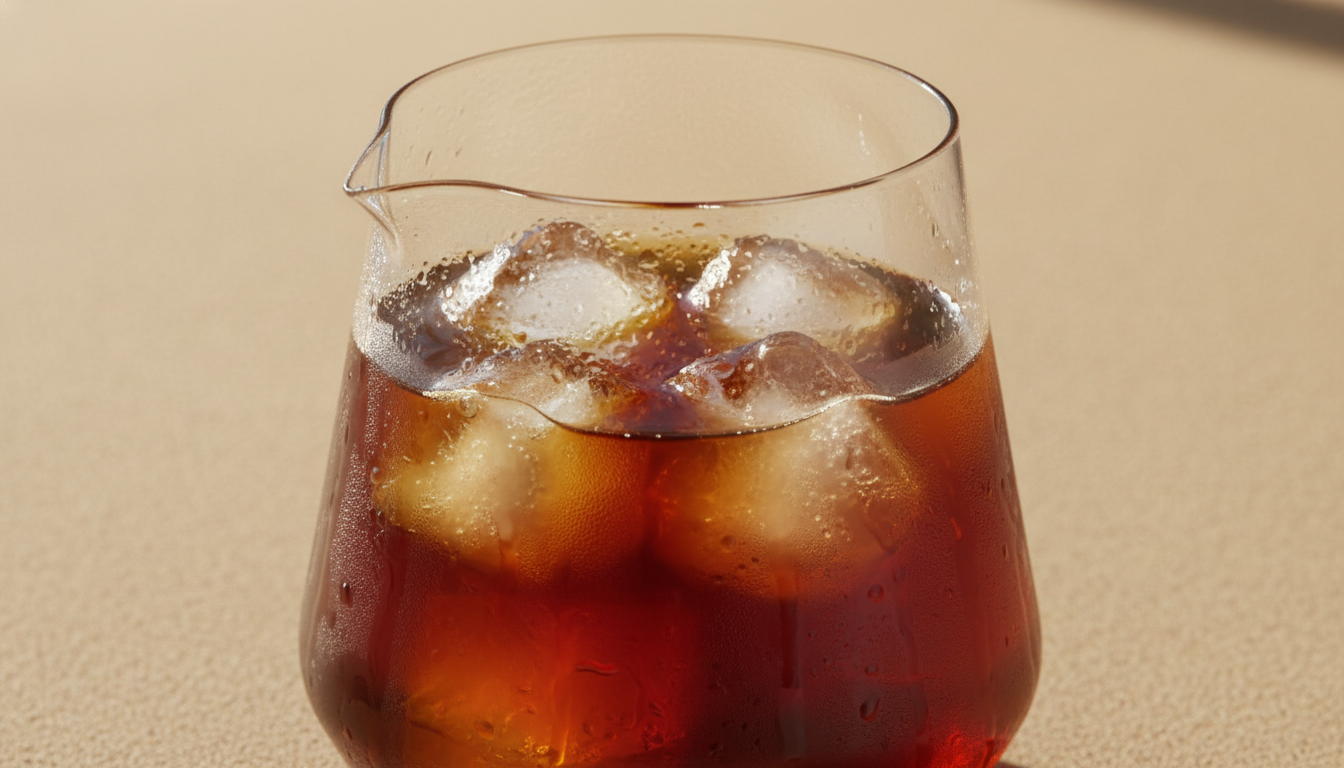
Cold Brew vs. Iced Coffee: What Actually Changes
Cold brew is not just iced coffee served cold. Cold brew extraction happens in cold or room-temperature water over many hours, which pulls a different balance of compounds than hot brewing. In practical terms, cold brew usually tastes smoother and less acidic, while hot-brewed iced coffee tends to keep brighter acidity and sharper aromatics.
If you want speed and brighter notes, use Japanese iced coffee. If you want prep-ahead convenience and mellow texture, cold brew is the better fit.
Ratio Framework You Can Actually Use
| Style | Coffee : Water | Best Use |
|---|---|---|
| Concentrate (default) | 1:5 | Flexible dilution for milk drinks or black coffee. |
| Strong RTD | 1:7 | Serve over ice with minimal extra water. |
| Balanced RTD | 1:8 | Most beginner-friendly ready-to-drink profile. |
Keep ratio in grams, not scoops. Small measurement errors compound fast in cold brew because extraction is long and dilution can hide the source of problems.
Step-by-Step Cold Brew Method (Reliable Baseline)
1) Grind and dose
Use coarse grind (French press range). Start with 100g coffee + 500g water for 1:5 concentrate.
2) Saturate fully
Add water in stages and stir gently to avoid dry pockets that produce uneven extraction.
3) Steep 14-16 hours
Begin at 14 hours for medium/dark roasts. Push to 16-18 for light roasts if needed.
4) Filter in two passes
First pass: mesh or cloth. Second pass: paper filter for cleaner texture and less sediment.
5) Dilute at service
Start with 1:1 concentrate-to-water (or milk), then tune by taste instead of guessing during brew.
Troubleshooting by Symptom
If your batch fails, diagnose one variable at a time. Start with grind, then steep time, then ratio. This prevents random changes that hide root cause.
| Symptom | Likely Cause | First Fix |
|---|---|---|
| Weak / watery | Low dose or too-coarse grind | Increase dose by 10-15% and re-test. |
| Bitter / harsh | Fine grind or long steep | Coarsen grind and reduce steep by 2 hours. |
| Cloudy / gritty | Poor filtration | Add paper second-pass filtration. |
| Sour / thin | Under-extraction | Slightly finer grind or +2 hours steep. |
For full root-cause workflows, use the dedicated hub: Cold Brew Troubleshooting.
Storage and Serving Workflow
- • Store concentrate in a sealed glass container with minimal air space.
- • Label brew date and target use-by window (7-10 days).
- • Keep concentrate separate from milk and sweeteners until serving.
- • Use fresh ice to avoid freezer-odor contamination.
If shelf-life and batch prep are your main pain points, combine this page with the core cold brew guide, weekly batch prep, and workflow optimization.
Related Iced Coffee Guides
Iced Coffee Main Hub
Method selection, quick-start routing, and core strategy overview.
Cold Brew Troubleshooting
Fix weak, bitter, sour, and cloudy outcomes with diagnostic steps.
Japanese Iced Coffee
Flash-brew method if you want bright flavor in minutes.
Best Beans for Iced Coffee
Use the Batch 6 bean, origin, and roast framework for cleaner cold brew flavor.
Cold Brew FAQ
What is the best cold brew ratio for home baristas?
A reliable concentrate starting point is 1:5 coffee-to-water by weight. For ready-to-drink cold brew, 1:8 is a practical baseline. Adjust from there based on dilution preference and bean roast.
How long should cold brew steep?
Most home setups perform best between 12 and 18 hours. Lighter roasts usually need the longer end of that range, while darker roasts often taste cleaner around 12 to 14 hours.
Why is my cold brew bitter?
Cold brew usually turns bitter when grind is too fine, steep time is too long, or the dose is too high for your dilution. Coarsen grind and shorten steep time first.
How do I keep cold brew from tasting watery?
Start with concentrate, chill your serving glass, and dilute gradually. If you are brewing weak from the start, increase coffee dose or reduce brew water before changing anything else.
How long does cold brew concentrate last in the fridge?
In a sealed container, concentrate is usually best within 7 to 10 days. Flavor quality declines as oxidation increases, especially if the container has excess headspace.