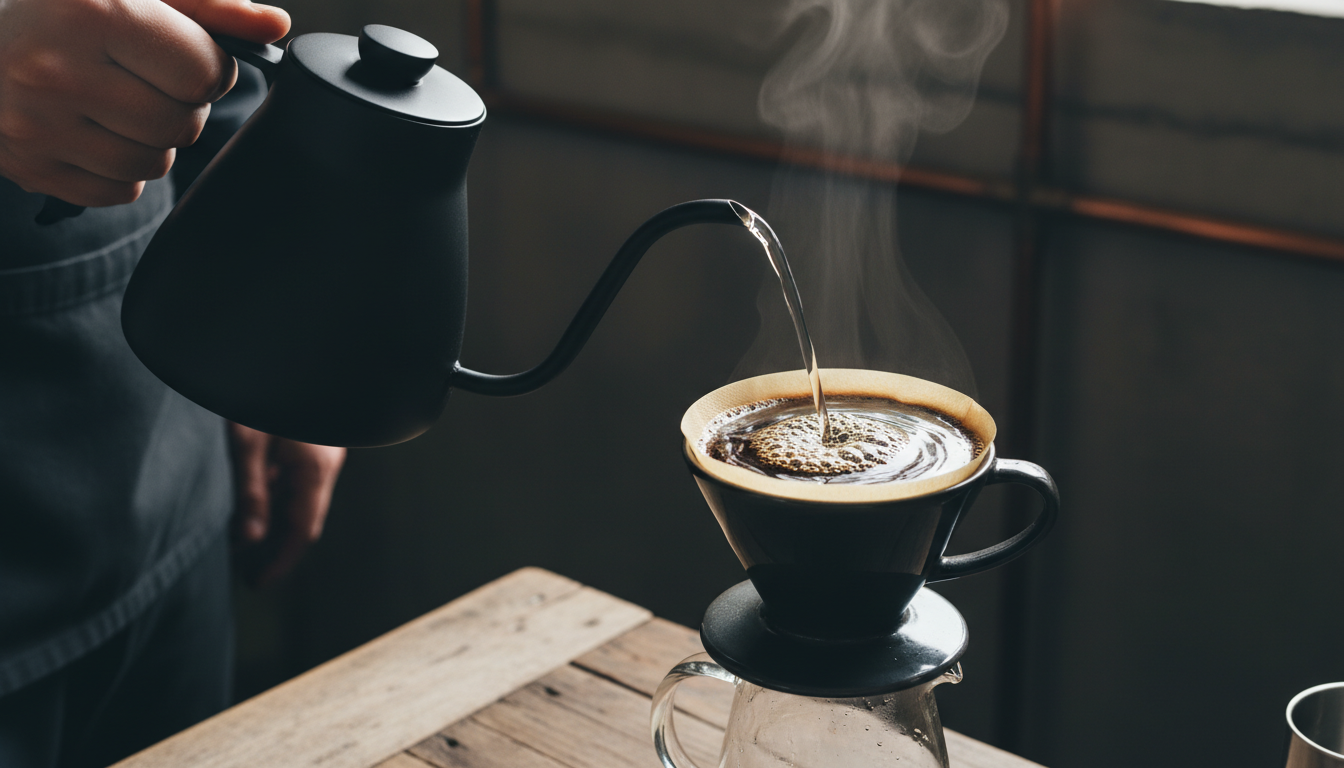
Water Quality Impact on Dialing In Espresso
Water makes up 98% of your espresso. Its mineral content, hardness, and pH dramatically affect extraction, flavor, and machine health. Learn to optimize your water for consistently better shots and longer equipment life.
Water content in espresso
Target TDS (ppm)
Ideal pH level
General hardness (°dH)
Why Water Quality Matters
Water is the solvent that extracts coffee compounds. Its mineral content determines what gets extracted and how. The right water brings out sweetness, clarity, and complexity. Poor water creates flat, harsh, or inconsistent extractions regardless of your technique.
Beyond taste, water chemistry affects your machine's longevity. Hard water causes scale buildup that reduces efficiency and eventually damages heating elements. Soft or acidic water corrodes metal components. Understanding water chemistry protects both your espresso quality and your investment.
Optimal Water Parameters for Espresso
| Parameter | Ideal Range | Effect on Extraction | Machine Impact |
|---|---|---|---|
| Total Dissolved Solids (TDS) | 100-200 ppm | Higher = more extraction | Scale formation above 200 |
| General Hardness (GH) | 3-5 °dH (50-90 ppm) | Calcium aids extraction | Scale above 6 °dH |
| Carbonate Hardness (KH) | 3-5 °dH (50-90 ppm) | Buffers pH, stabilizes | Prevents pH swings |
| pH | 6.5-7.5 | Affects compound solubility | Acidic water corrodes |
| Sodium | <30 ppm | High levels taste salty | Minimal impact |
| Chlorine | 0 ppm | Tastes medicinal, off-flavors | Corrodes rubber seals |
Key Minerals and Their Effects
Calcium (Ca²⁺)
Extraction Effects
- Enhances coffee extraction
- Contributes to body and mouthfeel
- Balances acidity
Machine Effects
- Primary scale-forming mineral
- Builds up on heating elements
- Reduces heat transfer efficiency
Magnesium (Mg²⁺)
Extraction Effects
- Extracts more fruity, acidic notes
- Some prefer it to calcium for flavor
- Enhances complexity
Machine Effects
- Also forms scale (softer than calcium)
- Easier to remove with descaling
- Less problematic than calcium scale
Bicarbonate (HCO₃⁻)
Extraction Effects
- Buffers pH changes
- Stabilizes extraction
- Too much mutes acidity
Machine Effects
- Forms scale with calcium
- Protects against corrosion
- Balance needed
Water Source Comparison
| Source | Pros | Cons | Verdict |
|---|---|---|---|
| Tap Water | Convenient, cheap, has minerals | Chlorine, variable hardness, contaminants | Use with carbon filter only |
| Bottled Spring | Consistent, good mineral content | Expensive, environmental impact | Good option, check TDS |
| Distilled/RO | No scale, pure | Corrosive, poor extraction, flat taste | Must remineralize |
| Third Wave Water | Optimized for coffee, consistent | Requires distilled base, cost | Excellent for enthusiasts |
| Homemade Recipe | Customizable, cost-effective | Requires precision, storage | Best for dedicated home baristas |
DIY Water Recipes
The Barista Hustle Recipe (Simple)
Concentrate A (Bicarbonate)
- • 500ml distilled water
- • 2.52g sodium bicarbonate (baking soda)
- • Store in bottle
Concentrate B (Hardness)
- • 500ml distilled water
- • 1.68g Epsom salt (magnesium sulfate)
- • Store in bottle
Final Mix (1 liter)
- • Start with 1000ml distilled water
- • Add 20ml from Concentrate A
- • Add 20ml from Concentrate B
- • Result: ~140 TDS, balanced profile
RPavlis Recipe (Scale-Minimizing)
Ingredients
- • 1 gallon (3.78L) distilled water
- • 0.38g potassium bicarbonate
- • (Optional) 0.76g Epsom salt for hardness
This recipe prioritizes machine longevity with minimal scale formation while maintaining adequate extraction.
Filtration Solutions by Need
Carbon Filtration
Removes: Chlorine, odors, some organics
Best for: Municipal water with chlorine
Options: Brita, inline carbon filters
Essential minimum for tap water. Doesn't affect hardness.
Water Softening
Removes: Calcium, magnesium (replaces with sodium)
Best for: Very hard water areas
Options: Ion exchange resin, bottled soft water
Protects machine but may affect taste. Test results.
Reverse Osmosis + Remineralization
Removes: Nearly everything
Best for: Complete control, very hard water
Options: RO systems with remineralization
Ultimate solution but requires remineralization for taste.
Bottled Water
Good options: Volvic, Crystal Geyser, Mt. Franklin
Check: TDS 100-200ppm, calcium <80ppm
Avoid: Very low TDS (<50) or very high (>300)
Convenient but expensive long-term. Good for testing.
Testing Your Water
TDS Meter (Essential)
Measures total dissolved solids in parts per million (ppm).
- <50 ppm: Too soft, may taste flat, corrosive
- 50-100 ppm: Soft, may lack body
- 100-200 ppm: Ideal range for espresso
- 200-300 ppm: Hard, watch for scale
- >300 ppm: Too hard, scale risk high
Test Strips (GH/KH)
Measure general hardness (calcium + magnesium) and carbonate hardness (buffering capacity).
- GH: Target 3-5 °dH (German degrees)
- KH: Target 3-5 °dH
- Available at aquarium/pool supply stores
pH Strips/Meter
Measures acidity/alkalinity.
- Target: 6.5-7.5 (slightly acidic to neutral)
- <6.0: Corrosive risk
- >8.0: May taste flat, scale-forming
Water and Machine Maintenance
| Water Hardness | Descaling Frequency | Prevention Strategy |
|---|---|---|
| Soft (<3 °dH) | Every 6-12 months | Monitor for corrosion |
| Moderate (3-6 °dH) | Every 3-4 months | Use filtered water |
| Hard (6-10 °dH) | Every 1-2 months | Soften water or use bottled |
| Very Hard (>10 °dH) | Every 2-4 weeks | RO system recommended |
Related Guides
Machine-Specific Dialing In Guide
Protect your specific machine with proper water chemistry.
Espresso Dialing In Troubleshooting
Fix extraction issues caused by water quality problems.
Quick Espresso Dialing In Guide
Ensure consistent water for reproducible dialing results.
Over-Extraction Flavor Profile
Identify when high TDS causes over-extraction.
Under-Extraction Flavor Profile
Recognize when low TDS causes under-extraction.
Key Takeaways
- → Water is 98% of your espresso—its chemistry fundamentally affects extraction and flavor.
- → Target 100-200 TDS with 3-5 °dH hardness—this range optimizes extraction while protecting equipment.
- → Never use pure distilled/RO water—it causes corrosion and produces flat-tasting espresso.
- → Remove chlorine from tap water—carbon filtration is the minimum requirement.
- → Descale based on your water hardness—hard water areas need monthly descaling; soft water, semi-annually.