Espresso Grind for Conical Burr Grinder: Settings
Conical burr grinders produce a bimodal particle distribution perfect for traditional espresso. Learn optimal settings, adjustment techniques, and workflow for rich, full-bodied shots.
Particle distribution
RPM (slower grinding)
Adjustment steps
Typical retention
Understanding Conical Burr Grinders
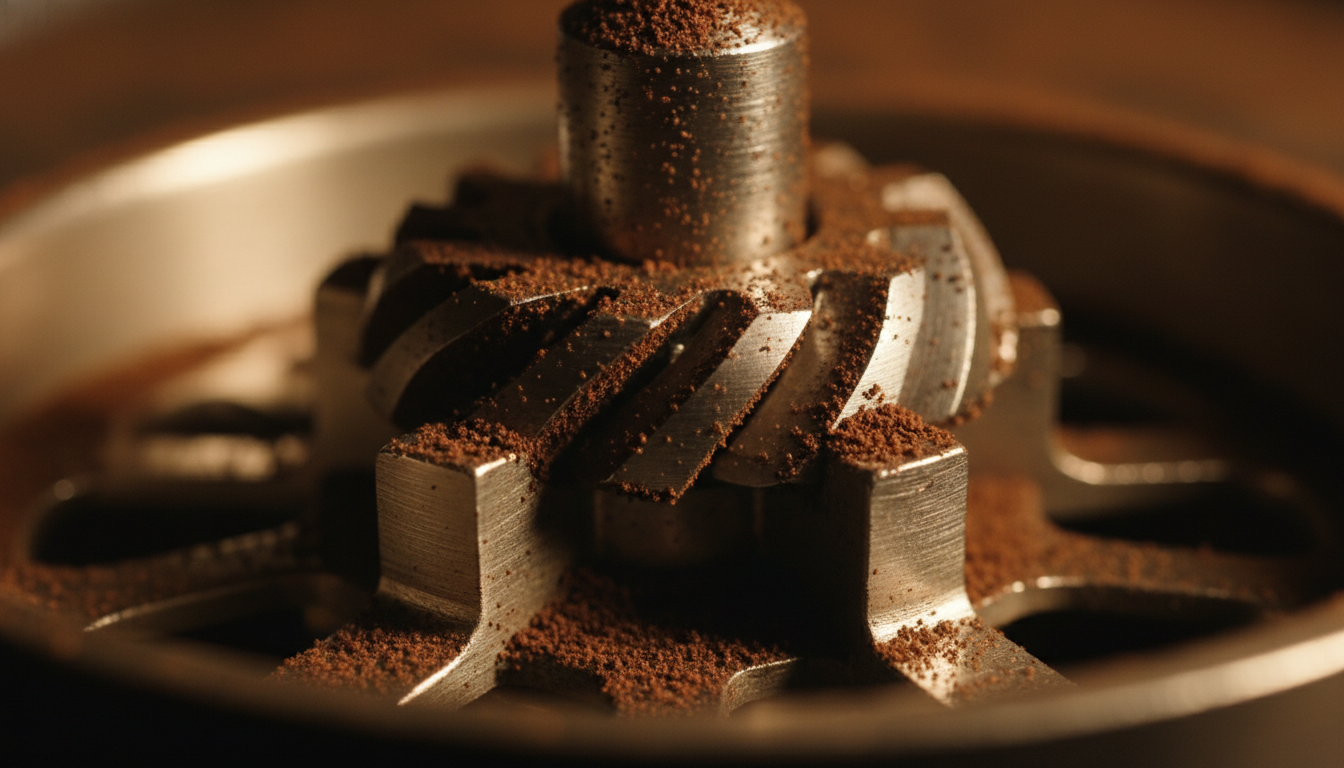
Conical burr grinders feature a cone-shaped inner burr nested inside a ring-shaped outer burr. Coffee beans fall between the burrs by gravity and are crushed between the surfaces. This geometry produces a bimodal particle distribution—meaning you get two distinct particle sizes rather than a single uniform size.
The larger particles provide the main structure for water flow, while the smaller fines (micro-particles) create resistance and contribute to body and crema. This combination produces the rich, thick mouthfeel characteristic of traditional Italian espresso.
Conical Burr vs Flat Burr for Espresso
| Characteristic | Conical Burr | Flat Burr |
|---|---|---|
| Particle Distribution | Bimodal (two peaks) | Unimodal (single peak) |
| Fines Production | Higher (creates body) | Lower (cleaner cup) |
| Espresso Body | Rich, thick, syrupy | Lighter, tea-like |
| Heat Generation | Lower (slower RPM) | Higher (faster RPM) |
| Noise Level | Quieter operation | Louder operation |
| Best For | Traditional espresso, dark roasts | Modern espresso, light roasts |
Conical Burr Grinder Settings by Model
Baratza Encore / Virtuoso
Starting Point
- • Encore: Setting 8-12
- • Virtuoso: Setting 8-12
- • Each step = ~100 micron change
Adjustment Tips
- • Limited espresso range but capable
- • Adjust between shots only
- • Purge 5g after adjustment
Baratza Vario / Vario W
Starting Point
- • Macro: 2 (espresso range)
- • Micro: D-G (start at E)
- • Ceramic burrs standard
Adjustment Tips
- • Macro for big changes, micro for dialing
- • Each micro step ≈ 2-3 seconds
- • Very capable for espresso
Rancilio Rocky
Starting Point
- • Stepless dial: 5-10 from zero
- • Doserless model preferred
- • Commercial-grade conical burrs
Adjustment Tips
- • Adjust only while running
- • Small movements = big changes
- • Allow 10+ seconds between shots
1Zpresso / Timemore Hand Grinders
Starting Point
- • 1Zpresso JX Pro: 1-2 rotations
- • Timemore Chestnut: 8-12 clicks
- • Varies by model significantly
Adjustment Tips
- • Count clicks carefully
- • Consistent grinding speed
- • Zero point varies—note your reference
Mazzer Mini / Super Jolly
Starting Point
- • Mini: 3-5 on dial
- • Super Jolly: Similar range
- • Commercial conical burrs
Adjustment Tips
- • Small adjustments (1/4 mark)
- • High retention—purge 5g+
- • Excellent for dark roasts
Understanding Bimodal Distribution
What Is Bimodal Distribution?
Conical burrs produce two distinct particle size groups: larger "boulders" (400-800 microns) and smaller "fines" (100-200 microns). This differs from flat burrs which produce a single peak distribution.
Larger Particles (60-70%)
- • Create main flow path for water
- • Extract slower, add sweetness
- • Prevent over-extraction
Fines (30-40%)
- • Fill gaps between boulders
- • Create resistance/pressure
- • Contribute to body and crema
Why Bimodal Works for Espresso
Natural Flow Restriction
The combination of large particles and filling fines creates optimal resistance without requiring extremely fine grinding. This is forgiving and produces consistent shots.
Built-in Pre-infusion Effect
Fines saturate first and swell, temporarily restricting flow. This mimics pre-infusion, allowing even saturation before full pressure extraction begins.
Texture and Body
The fines emulsify oils and create the thick, syrupy mouthfeel that defines traditional espresso. This is why conical burrs excel with milk drinks.
Conical Burr Adjustment Technique
Adjust Between Shots Only
Never adjust while burrs are stationary. Always adjust between grinding sessions to prevent damage.
Make Larger Initial Jumps
Conical grinders are less sensitive than flat. Start with 2-3 click adjustments, then fine-tune.
Purge Generously
Higher retention means more purging. Run 3-5g through after any adjustment.
Embrace the Body
Don't chase flat-burr clarity. Conical burrs excel at rich, traditional espresso—adjust for taste, not competition standards.
Conical Burr Grind Reference
| Feel/Appearance | Espresso Type | Time Target | Visual Cues |
|---|---|---|---|
| Flour-like, clumps heavily | Too fine | >40 seconds | Doughy consistency |
| Fine sand, slight clumping | Light roast espresso | 25-30 seconds | Holds shape when pressed |
| Granulated sugar texture | Medium roast espresso | 25-30 seconds | Some individual particles visible |
| Coarse sand, free-flowing | Dark roast espresso | 20-25 seconds | Doesn't clump together |
Related Guides
Espresso Grind for Flat Burr Grinder
Compare flat burr settings and characteristics for espresso.
Quick Espresso Dialing In Guide
Fast method to find optimal settings for your conical grinder.
Espresso Dialing In Troubleshooting
Fix issues when conical burr grind isn't extracting properly.
Under-Extraction Flavor Profile
Identify when conical grind needs to be finer.
Over-Extraction Flavor Profile
Recognize when conical grind is too fine.
Key Takeaways
- → Conical burrs produce bimodal distribution—two particle sizes create natural flow resistance and rich body.
- → Ideal for traditional espresso—the thick, syrupy mouthfeel pairs perfectly with dark roasts and milk drinks.
- → Adjust between shots, not during—conical burrs must be stationary when changing settings.
- → Purge more than flat burrs—higher retention requires 3-5g purge after adjustments.
- → Embrace the characteristics—don't chase flat-burr clarity; conical burrs excel at richness and tradition.