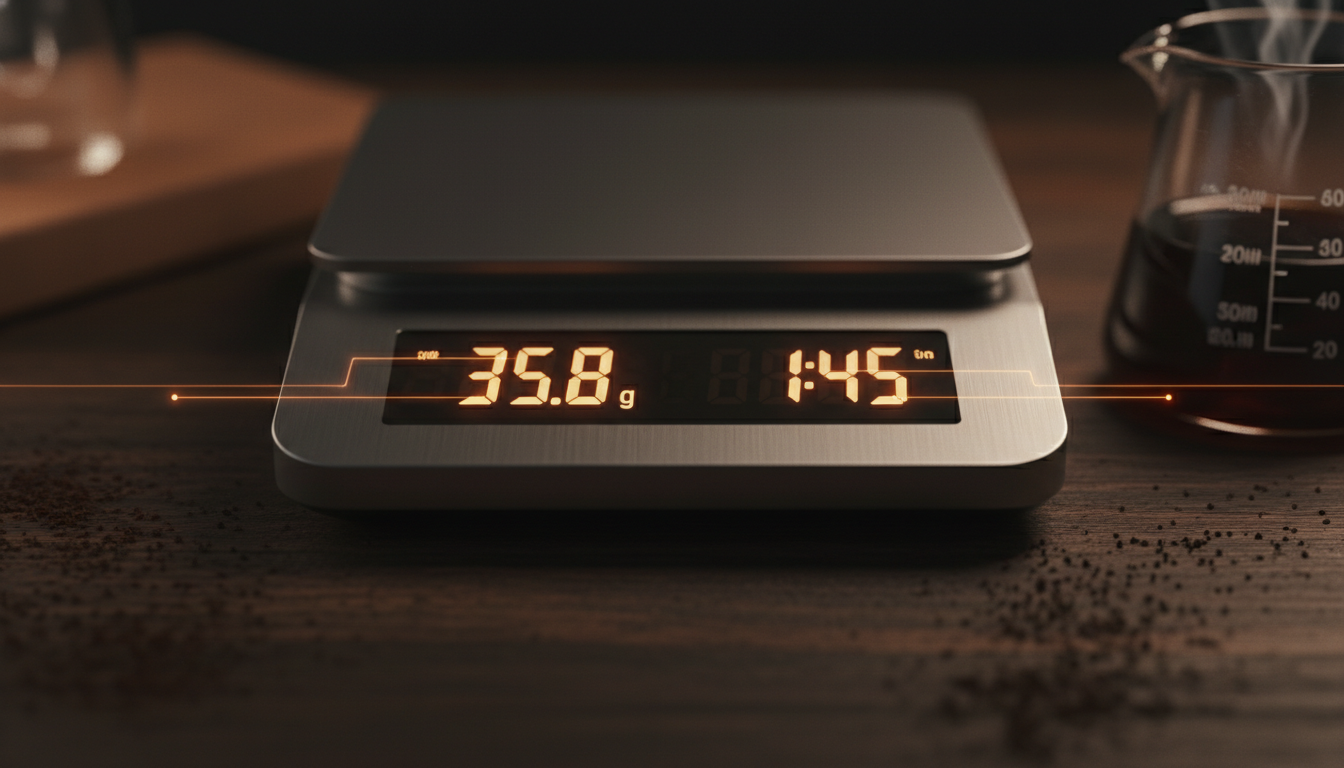
Grind Size
Espresso Grind Adjustment Chart
Master the art of grind calibration with our comprehensive finer vs coarser adjustment guide for perfect espresso extraction.
Master the art of grind calibration with our comprehensive finer vs coarser adjustment guide for perfect espresso extraction.
Ideal Extraction Window
Click Adjustment Range
Flow Rate Per Second
Target Extraction Yield
Grind size serves as the primary variable controlling espresso extraction rate. Espresso grind size determines surface area exposure, which directly impacts how water dissolves soluble compounds from coffee grounds. The relationship between particle size and extraction follows inverse proportionality: finer grinding increases surface area, accelerating extraction, while coarser grinding reduces surface area, slowing extraction.
The espresso grinder adjustment chart provides systematic calibration protocols based on extraction timing and taste analysis. Home baristas achieve consistent results by understanding click-to-micron relationships on specific grinder models. Dialing in espresso requires methodical grind adjustments until extraction parameters align with target ranges.
✓ Grind Adjustment Fundamentals:
Use this diagnostic matrix to determine grind direction based on extraction symptoms and taste profiles.
| Extraction Symptom | Adjustment Direction | Click Amount | Expected Result |
|---|---|---|---|
| Shot runs too fast (<20s) | Grind finer | 2-3 clicks finer | Slows extraction, increases body |
| Shot runs too slow (>35s) | Grind coarser | 2-3 clicks coarser | Speeds extraction, reduces bitterness |
| Sour, under-extracted taste | Grind finer | 1-2 clicks finer | Increases extraction yield |
| Bitter, over-extracted taste | Grind coarser | 1-2 clicks coarser | Decreases extraction yield |
| No crema formation | Grind finer | 3-4 clicks finer | Increases pressure, builds crema |
| Channeling occurs | Grind finer | 1-2 clicks finer | Reduces water channeling |
Different roast densities require specific grind calibration approaches for optimal extraction.
| Roast Level | Starting Point | Adjustment Direction | Temperature | Reasoning |
|---|---|---|---|---|
| Light Roast | Medium-fine | Slightly finer | Higher (200-205°F) | Dense beans need more extraction |
| Medium Roast | Medium | Standard | Standard (195-200°F) | Balanced extraction required |
| Dark Roast | Medium-coarse | Slightly coarser | Lower (190-195°F) | Prevents over-extraction, bitterness |
| Decaf | Slightly finer | Finer than regular | Standard to high | Swiss water process alters structure |
Understanding step size and adjustment range for popular espresso grinders enables precise calibration.
| Grinder Model | Step Size | Typical Adjustment | Espresso Range |
|---|---|---|---|
| Baratza Sette 270 | Micro: 0.01mm, Macro: 0.3mm | 3-6 micro steps = 1 macro | Espresso range: A-E macro |
| Eureka Mignon | Stepless (infinite) | 1/4 to 1/2 rotation | Espresso zone: 0-2 numbers |
| Niche Zero | Stepless collar | 5-10 degree rotation | Espresso: 10-20 on dial |
| Breville Smart Grinder Pro | 1-number increments | 2-4 numbers | Espresso: 4-10 setting |
| 1Zpresso JX-Pro | 12.5 micron per click | 2-4 clicks | Espresso: 1-2 full rotations |
Common scenarios requiring grind calibration and systematic solutions.
Symptom: Espresso completes in under 20 seconds with thin, blonde crema and weak body.
Solution: Adjust grind 2-3 clicks finer. The finer particle size increases resistance, extending contact time between water and coffee. Under-extracted espresso fixes require systematic grind tightening until 25-30 second extraction achieves.
Additional Check: Verify dose weight (18-20g standard), ensure proper tamp pressure, and confirm puck preparation eliminates channeling.
Symptom: Espresso drips slowly, exceeding 35 seconds with dark, bitter taste and over-extracted flavor profile.
Solution: Adjust grind 2-3 clicks coarser. The coarser particle size reduces flow resistance, preventing over-extraction. Over-extracted espresso fixes prioritize grind coarsening before other adjustments.
Additional Check: Inspect grinder burrs for wear, verify coffee freshness, and ensure proper dose distribution before tamping.
Symptom: Shot times vary significantly between pulls despite identical grind settings.
Solution: Espresso channeling often causes inconsistent extraction. Evaluate puck preparation techniques including WDT (Weiss Distribution Technique), distribution tool usage, and tamp consistency.
Adjustment Protocol: Minor grind adjustments (1 click) combined with improved distribution typically resolve channeling-induced inconsistency.
Higher brewing temperatures extract compounds more aggressively, potentially requiring slightly coarser grind settings. Conversely, lower temperatures may necessitate finer grinding to achieve equivalent extraction yields. PID-controlled machines maintain stable temperatures, reducing grind variability needs.
Ambient humidity affects coffee bean density and grinder performance. High humidity causes beans to absorb moisture, often requiring slightly coarser grind settings. Low humidity produces more static and finer particle distribution, potentially necessitating grind adjustment.
Fresh coffee (3-14 days post-roast) contains higher CO2 levels, requiring slightly coarser grind settings to prevent over-extraction. As beans degas over 2-4 weeks, gradual grind fineness adjustment maintains consistent extraction parameters.
Grind adjustment and dose modification work synergistically. Increasing dose by 0.5g typically requires equivalent grind coarsening to maintain flow rate. Dialing in espresso involves balancing dose, grind, and yield variables simultaneously.
Reference: Espresso shot timing guide for comprehensive timing analysis.
Apply these grind adjustment principles and achieve consistent, delicious espresso extractions every time.
Start Dialing In