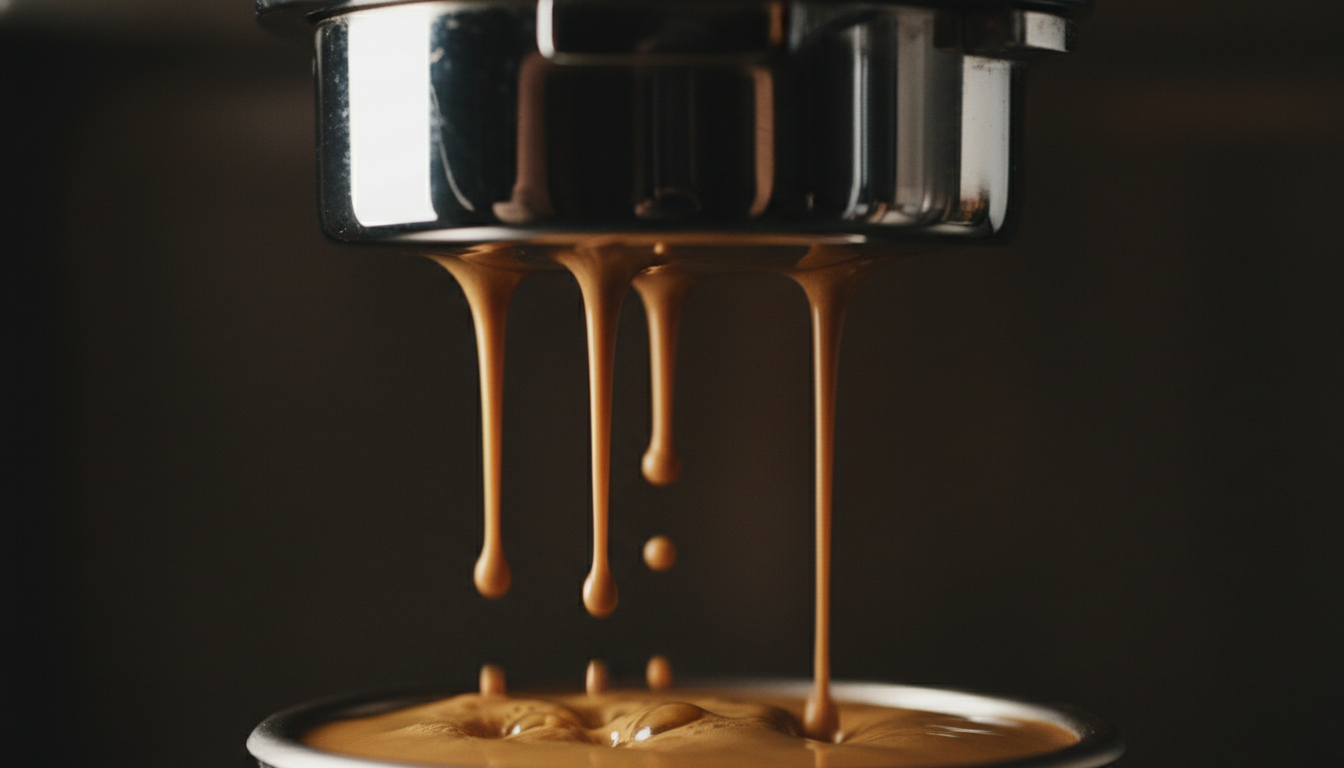
Extraction
Espresso Shot Timing Chart
Master extraction duration with precise timing ranges for every espresso style and roast level.
Master extraction duration with precise timing ranges for every espresso style and roast level.
Standard Normale Range
Ristretto Range
Lungo Range
Acceptable Variance
Espresso shot timing is defined as the duration from pump activation (or first drop) to target yield completion. Espresso shot timing is measured in seconds and serves as the primary indicator of extraction quality. The optimal espresso shot timing directly correlates with flavor compound dissolution, with different time windows extracting different solubles from coffee grounds.
Extraction duration is determined by grind size, dose weight, and coffee solubility. Extraction duration causes over-extraction when too long and under-extraction when too short. The espresso grind size remains the primary variable for adjusting shot timing to reach the target window.
✓ Timing Fundamentals:
Reference timing parameters by espresso preparation style. All times measured from pump activation to target yield.
| Shot Style | Brew Ratio | Time Range | 18g Yield | 20g Yield | Characteristics |
|---|---|---|---|---|---|
| Ristretto | 1:1 to 1:1.5 | 15-22 seconds | 18-27g | 20-30g | Concentrated, syrupy, intense flavor |
| Normale | 1:2 to 1:2.5 | 25-30 seconds | 36-45g | 40-50g | Balanced, sweet, full body |
| Lungo | 1:3 to 1:4 | 35-45 seconds | 54-72g | 60-80g | Mild, extended, tea-like |
| Allongé | 1:4 to 1:5 | 45-60 seconds | 72-90g | 80-100g | Delicate, nuanced, light body |
Modify baseline timing based on roast density and solubility characteristics.
| Roast Level | Baseline | Adjustment | Reasoning |
|---|---|---|---|
| Light Roast | 25-30s | +3 to +5 seconds | Higher density requires extended contact time |
| Medium Roast | 25-30s | Standard | Baseline reference timing |
| Medium-Dark | 25-30s | -2 to -3 seconds | Increased solubility extracts faster |
| Dark Roast | 25-30s | -3 to -5 seconds | Maximum solubility, oils accelerate extraction |
| Decaf | 25-30s | +2 to +4 seconds | Processing alters cell structure |
Visual and flow indicators during each phase of espresso extraction.
Flow: Droplets form
Appearance: Dark, viscous
Action: Allow full saturation
Flow: Thin stream emerges
Appearance: Dark brown, thick
Action: Monitor for channeling
Flow: Full stream develops
Appearance: Honey-like, tiger striping
Action: Primary flavor development
Flow: Consistent stream
Appearance: Golden-brown, steady
Action: Target completion zone
Flow: Stream thins
Appearance: Blonding, lighter color
Action: Stop to prevent over-extraction
Cause: Grind too coarse, insufficient dose, or channeling
Solution: Adjust grind finer by 2-3 settings, verify dose accuracy
Cause: Grind too fine, excessive dose, or stale coffee
Solution: Adjust grind coarser by 2-3 settings, reduce dose 0.5g
Cause: Distribution inconsistency or grinder retention
Solution: Use WDT tool, purge 2g between grind changes
Cause: Channeling then compaction
Solution: Improve distribution technique, verify tamp levelness
Recommended: Espresso scales with integrated timing provide the most accurate measurements by triggering at first drop detection.
Understanding how grind adjustments affect extraction duration for 18g dose producing 36g yield.
Per coarse step
Each coarser adjustment decreases time by 3-5 seconds
Per fine step
Each finer adjustment increases time by 3-5 seconds
Micro-adjustment
Micro-steps on precision grinders affect timing by ~1 second
Apply these timing principles to achieve consistent, delicious espresso extractions every time.
Start Dialing In